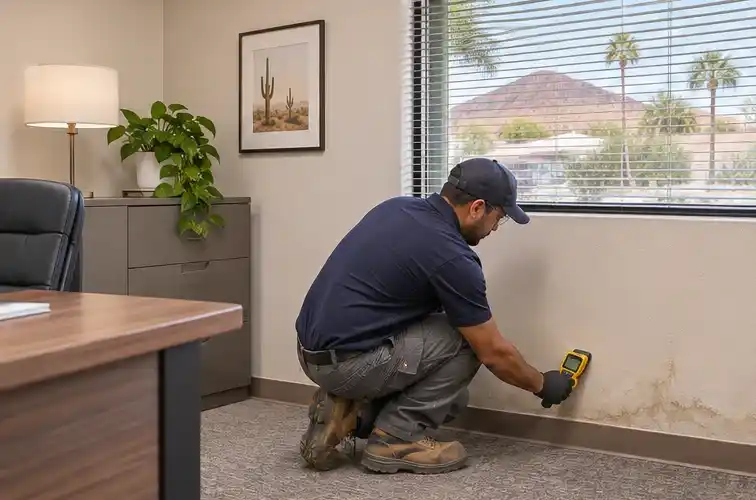
Man in a navy polo and cap kneeling in an office with a moisture meter against a stained baseboard, a desk and a framed desert print behind him

Service 08 of 08 · Tempe, AZ

Commercial Mold Remediation Tempe, AZ

You run an office, a shop or a restaurant and you found mold. Send the form day or night, and someone from our team will call you back soon. A scope built around your hours, removal and clearance follow.

Form open 24/7

Get a call back

Tempe · Maple-Ash · Mitchell Park · Escalante · University Park · Riverside + 29 more towns

01 / What you get

What you get with commercial mold remediation

A commercial mold job is a scheduling problem before it is a remediation problem. The work has to fit around customers, staff, food service, tenants and a lease that says who is responsible for what.

Commercial mold remediation in Tempe covers offices, restaurants, retail shops, salons, clinics and the common areas of apartment and condo buildings. The biology is the same as a house. The logistics are not. A restaurant cannot lose its dining room for a week, an office cannot shut off the AC in July, and a property manager needs a file that shows the work was done and the space was verified.

National remediation ranges run about $1,500 to $9,000 for a typical scope, with HVAC involvement at $3,000 to $10,000 and whole-building work at $10,000 to $30,000. Access, after-hours scheduling and how much of the system is affected can matter as much as the square footage.

  • 01A scope built around opening hours and customers
  • 02Containment planned around the hours the space is open
  • 03Landlord, tenant and lease questions named early
  • 04Clearance before the space reopens to staff
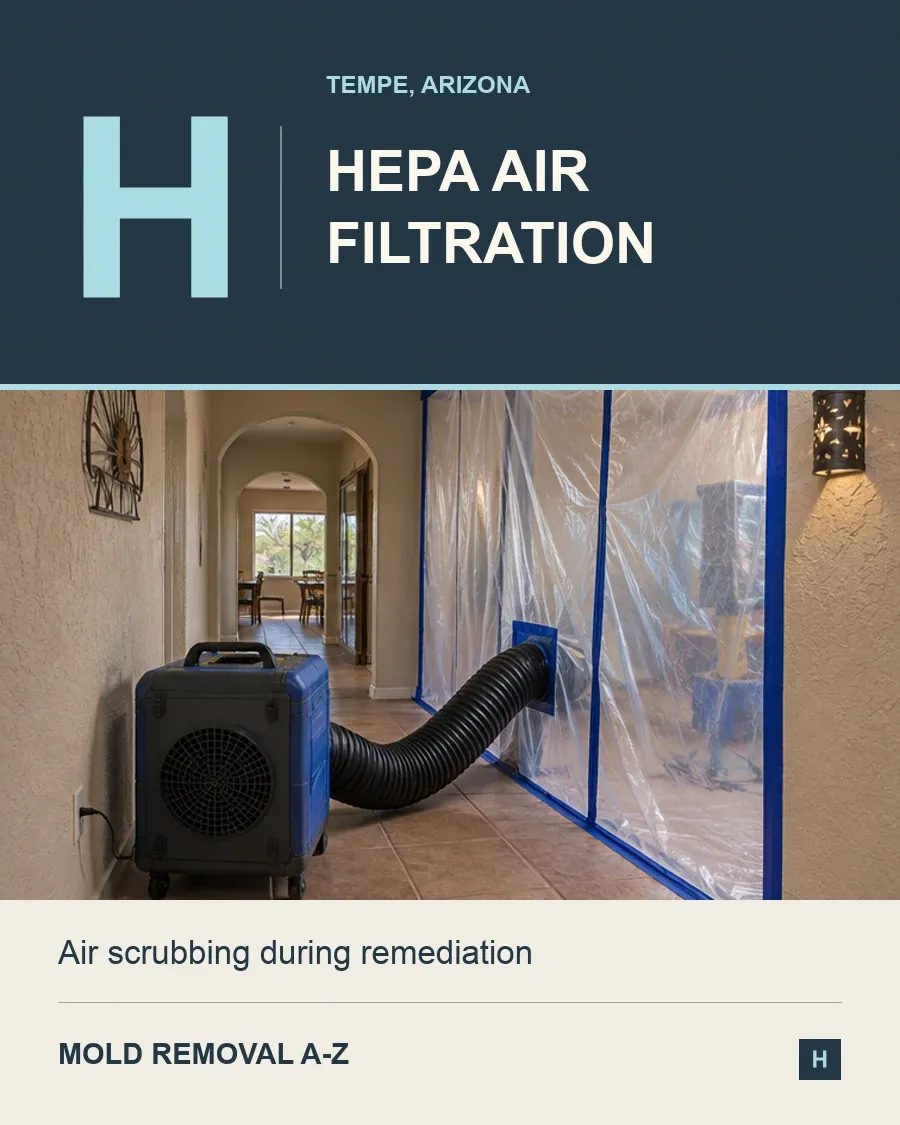
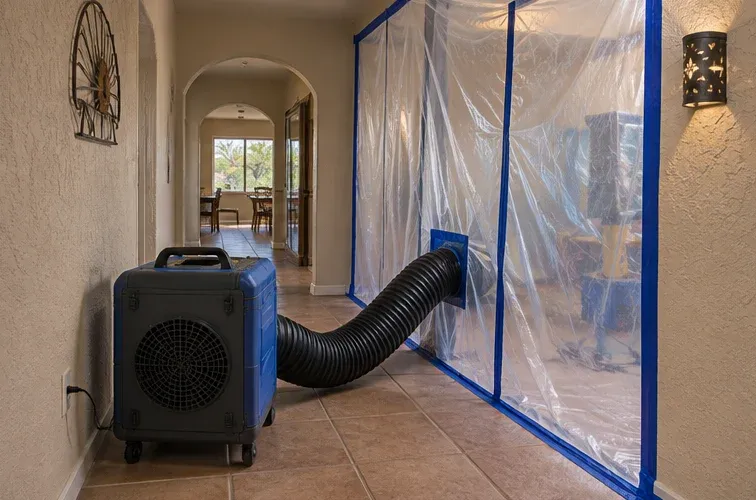
Dark air scrubber with a black duct hose running into plastic sheeting taped in a hallway of a tile-floored house

02 / The signs

Signs a commercial space has a problem

  • 01

    A musty smell in the lobby, hallway or a specific tenant suite.

  • 02

    Stained ceiling tiles, especially in a pattern that grows after rain.

  • 03

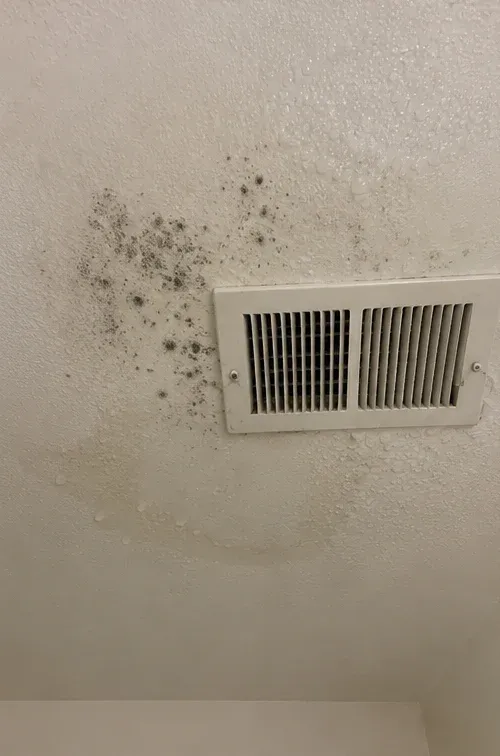
    Dark growth on diffusers, return grilles or the ceiling around them.

  • 04

    Water in a mechanical room, a drain pan or a ceiling cavity.

  • 05

    A roof leak that was repaired but never dried.

  • 06

    A vacant unit that smells closed and damp when the door opens.

In a multi-tenant building, the first step is often a moisture survey of the affected suite and the adjacent common areas. The source may be a roof drain two floors up.

03 / How it works

What happens after you send the form

After you send the form, someone from our team calls you back, then a scheduled scope, removal and clearance follow.

  1. Send the form, day or night

    Say where the mold is, how big it looks and what changed before it appeared.
  2. Someone from our team calls you back

    You go over what you see, who owns the building and what has to happen first.
  3. A scheduled scope, removal and clearance follow

    The work fits around your hours and a check closes the job before reopening.

04 / Costs

What it costs in Tempe

Commercial mold removal in Tempe usually runs $1,500 to $9,000 for a typical job (one national cost guide) and $10,000 to $30,000 for a whole building (national cost guides), national ranges, not Tempe quotes.

ScopeNational rangeSource
Typical remediation$1,500 to $9,000One national cost guide, average range
HVAC remediation$3,000 to $10,000National cost guides
Whole-building remediation$10,000 to $30,000National cost guides
Air duct mold removal$600 to $2,000Another national cost guide
Per square foot$10 to $30One national cost guide

After-hours work, security escorts, elevator use, roof access and disposal fees can add line items that a residential quote does not have. They are usually listed as separate line items.

05 / Paperwork

What a commercial scope covers

The affected area. Ceiling tiles, drywall, wall coverings, cabinet bases, flooring and the structure behind them. The scope names what comes out and what gets cleaned.

The HVAC system. Commercial air handlers, duct runs, VAV boxes, ceiling diffusers and return plenums. A wet coil, a clogged condensate line or a roof leak into the mechanical room can contaminate a large portion of the system.

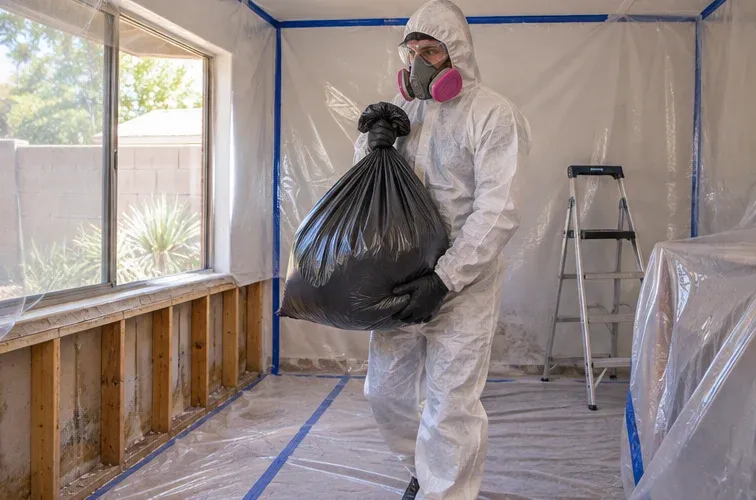
Containment and separation. Plastic and negative air isolate the work zone from occupied space. In a restaurant or a retail shop, the containment plan also has to protect inventory, food surfaces and customer paths.

Documentation. Photos, moisture readings, daily logs, waste removal records and a clearance or verification report. Property managers and insurers ask for this after the invoice.

Coordination. The plumber, roofer or HVAC contractor who fixes the water source, the remediation company, the reconstruction contractor, and the tenant or building manager. The sequence matters.

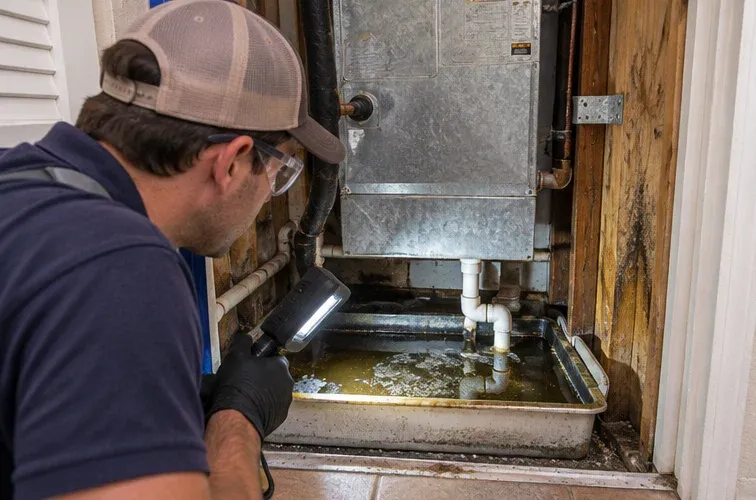
Man in a cap and safety glasses shining a flashlight into an air handler drain pan holding standing water, white drain pipes and a stained wall beside it

06 / Local risk

Why commercial buildings in Tempe get mold

  • Roof leaks in monsoon season. Flat and low-slope commercial roofs pond water. A failed drain, a lifted membrane or a flashing detail wets the ceiling grid and the insulation above it.
  • HVAC condensate. A commercial air handler can produce a lot of condensate. A clogged line or a failed pan wets the mechanical room and the ceiling below.
  • Restaurant steam and grease. Kitchen exhaust, dishwashing and steam create humidity that finds cool surfaces. A poorly maintained hood or make-up air system makes it worse.
  • Vacant units. A closed retail space or office with the AC off in July is a humid box. A slow leak runs unnoticed for weeks.
  • Common-area plumbing. Multi-family buildings have shared supply and drain lines. A leak in a chase can affect several units and the common hallway.
  • Older buildings. Older buildings can have original roof details and mechanical systems.

07 / 7 steps

How the job runs

White wall with dark mold spots around a metal floor vent register
  1. Walk the space and the systems

    Affected area, HVAC, roof, plumbing and the building envelope. Identify the source before scoping the mold work.
  2. Agree the schedule

    After-hours, weekend or staged by zone. The containment plan protects customers, staff and inventory.
  3. Fix the water

    Roofing, plumbing or HVAC repair first. Remediation under an active leak is temporary.
  4. Contain and remove

    Negative air, plastic, HEPA filtration. Remove contaminated porous material; clean what can be cleaned.
  5. Clean the system if affected

    Air handler, coils, plenums and accessible ducts. Replace wet flex duct and contaminated insulation.
  6. Dry and verify

    Moisture readings and a clearance or verification report before the space reopens.
  7. Rebuild and document

    Ceiling tiles, drywall, paint and trim. Deliver a closeout file with photos, readings and waste records.

The closeout file is the part a property manager can send to the owner and the insurer. It is what the property manager sends to the owner and the insurer.

08 / Questions

Landlord, tenant and lease questions

A commercial lease usually assigns responsibility for the roof, the structure, the HVAC and the interior. The mold scope should follow that assignment, not ignore it.

  • Who authorizes the work? The tenant, the property manager or the owner. Get it in writing.
  • Who pays? The lease and the cause. A roof leak may be the landlord; a tenant's overflowing sink may not be.
  • Who talks to the insurer? Usually the party named on the policy.
  • Who closes the space? The tenant or the building manager.

If the building is multi-tenant, the scope should name the boundary between the tenant's premises and the common area, and the work should be staged so other tenants keep access.

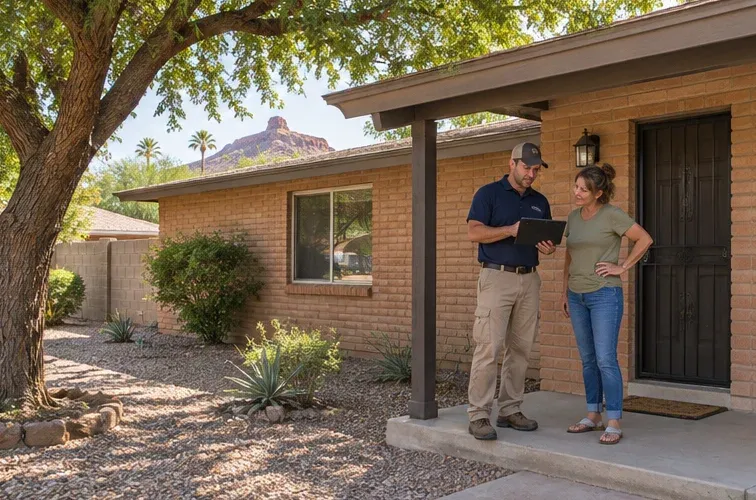
Man in a navy shirt holding a tablet talks with a woman on the walkway of a brick ranch house with a shade tree and a gravel yard

09 / Good to know

Do it yourself or get a call back

Commercial spaces usually need a documented scope, even for a small area, because of three factors: occupancy, liability and documentation. A maintenance person can clean a small patch of surface growth on a metal diffuser. Anything involving ceiling tiles, drywall, insulation, the HVAC system or a tenant complaint needs a documented scope and a verification step.

The EPA's 10 square foot guidance is a residential cleanup guideline. It is not a commercial risk assessment.

Worker in a white suit and respirator carrying a black debris bag across a plastic-covered floor, an opened lower wall and a stepladder behind

10 / Timeline

Working around business hours

A commercial job is a scheduling problem before it is a remediation problem. The building has to keep operating, or the owner has to accept a closure, and that decision is made before the containment goes up.

The usual pattern is phased work. Containment goes around one suite, one kitchen line or one bank of restrooms at a time. Negative air keeps the work area under pressure so dust and spores do not migrate into occupied space. The HVAC serving the work zone is isolated or shut down for the duration.

After-hours work costs more and shortens the schedule. It is often the right call for a restaurant, a clinic or a retail floor where a daytime containment would block customers. The labor differential is usually a separate line item.

Tenant notification is part of the scope. A property manager needs a written notice with the dates, the areas affected, the containment plan and the name of the contact. That notice protects the landlord and gives the tenant a record.

Documentation matters more on commercial work than residential. Property managers, insurers and corporate owners want daily logs, moisture readings, photos before and after, and a clearance report.

Merchandise and equipment protection should be in the scope: poly sheeting, negative air, and a plan for anything that cannot be moved.

A document package for a commercial job usually includes the containment plan, the daily log template, the clearance protocol and the waste disposal method.

A commercial schedule usually lists start and stop times, the areas in scope on each day, the name of the site contact and the name of the supervisor. A daily check-in at the same time keeps a multi-tenant job from turning into a series of surprises. If the building has a security desk or an alarm code, that access detail belongs in the schedule too.
11 / 5 questions

Frequently asked questions

Still have a question?

Send the form. Someone from our team will call you back soon.

Get a call back

Q.01

How much does commercial mold remediation cost in Tempe?

National ranges run about $1,500 to $9,000 for a typical scope, $3,000 to $10,000 when the HVAC system is involved, and $10,000 to $30,000 for whole-building work. After-hours access and documentation add cost.

Q.02

Can the business stay open during remediation?

Often yes, with containment and staged work. A restaurant or retail space may need after-hours scheduling or a temporary closure of one zone. The plan should be in the written scope.

Q.03

Does the landlord or the tenant pay?

The lease and the cause decide. A roof leak may point to the landlord; a tenant-caused overflow may point to the tenant. Get the assignment in writing before work starts.

Q.04

Do I need to shut down the HVAC system?

If the air handler, plenum or ducts are affected, yes, at least for the work zone. The system should be cleaned and verified before it runs again. Mechanical repairs are HVAC trade work.

Q.05

What documentation should I get?

Photos before and after, moisture readings, a written scope, daily logs, waste removal records and a clearance or verification report. The closeout file is normally delivered at the end of the job.

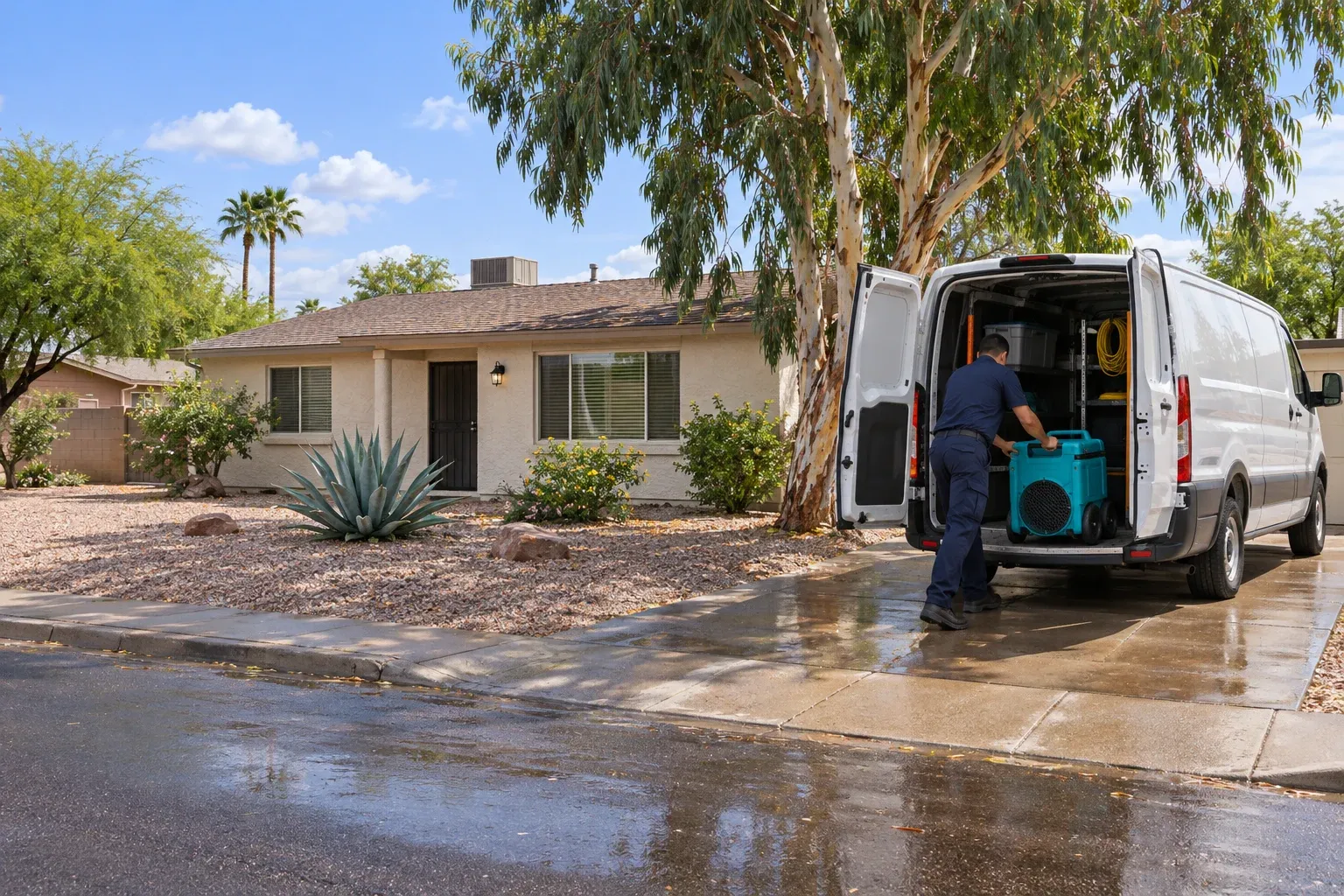
White cargo van with its rear doors open in a driveway, a man in navy work clothes wheeling a teal air machine out in front of a ranch house

Form open 24/7

Get a call back about mold in your home

Send the form. Someone from our team will call you back soon.

Mold in the house?Get a call back

Before you go: want a call back?

Send the request form and someone will call you back about the mold.

Get a call back

Get a call back

Send the form and someone from our team will call you back.