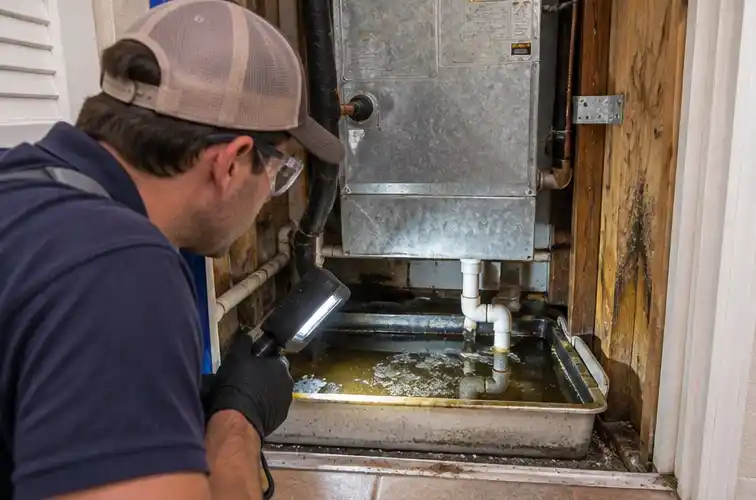
Man in a cap and safety glasses shining a flashlight into an air handler drain pan holding standing water, white drain pipes and a stained wall beside it

Service 04 of 08 · Tempe, AZ

HVAC Mold Removal Tempe, AZ

You smell mold when the air kicks on. Send the form day or night, and someone from our team will call you back soon. A system check, cleaning and clearance follow.

Form open 24/7

Get a call back

Tempe · Maple-Ash · Mitchell Park · Escalante · University Park · Riverside + 29 more towns

01 / What you get

What you get with AC and duct mold work

If the musty smell gets stronger when the air kicks on, the problem is in the system or the space it cools. Drain pans, condensate lines, wet ducts and swamp cooler pads are the usual suspects.

AC mold removal in Tempe starts with a simple test: does the smell get worse when the system runs? If it does, the growth is likely in the air handler, the drain pan, the ductwork or the return chase, and the system can distribute spores each time it cycles. If the smell is steady and localized, the source may be a bathroom, a cabinet or a wall, and the HVAC system is just moving the air past it.

National HVAC remediation ranges run about $3,000 to $10,000. Air duct mold removal is often quoted separately at $600 to $2,000, and vent-level work can be as low as $100 to $500 when the ducts themselves are not affected. Mechanical repair, refrigerant work and electrical work are HVAC trade work.

  • 01The drain pan, condensate line and air handler checked
  • 02Ducts, vents and coil access scoped
  • 03Swamp coolers covered, not only refrigerated AC
  • 04Clearance before the system runs again
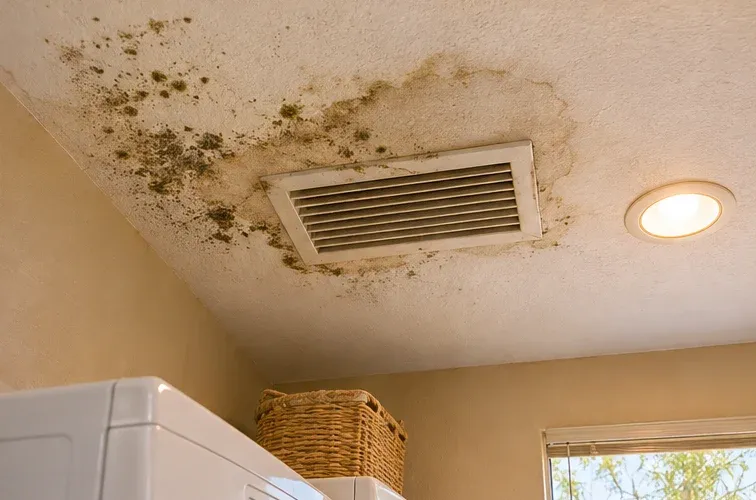
Dark mold speckling and brown staining on a laundry room ceiling around a white vent and a recessed light, a washer at the lower left

02 / The signs

Signs the system is the source

  • 01

    The musty smell appears within a minute of the AC starting and fades after it stops.

  • 02

    Visible dark growth on the supply registers, the return grille or the air handler cabinet.

  • 03

    Standing water or a rust line in the drain pan.

  • 04

    Water stains on the ceiling or platform around the air handler.

  • 05

    A clogged condensate line that has overflowed at least once.

  • 06

    A swamp cooler that smells musty when it runs.

A useful check: turn the system off, remove a supply register, and look at the inside of the boot and the first foot of duct with a flashlight. If the liner is dark, damp or peeling, the duct needs replacement, not a cleaning.

03 / How it works

What happens after you send the form

After you send the form, someone from our team calls you back, then a system check, cleaning and clearance follow.

  1. Send the form, day or night

    Say where the mold is, how big it looks and what changed before it appeared.
  2. Someone from our team calls you back

    You go over what you see, who owns the building and what has to happen first.
  3. System check, cleaning and clearance follow

    The source is fixed, the mold is cleaned out and a check closes the job.

04 / Costs

What it costs in Tempe

AC and duct mold removal in Tempe usually runs $3,000 to $10,000 for HVAC remediation (national cost guides) and $600 to $2,000 for air duct mold removal (another national cost guide), national ranges, not Tempe quotes.

ScopeNational rangeSource
HVAC remediation$3,000 to $10,000National cost guides, location tables
Air duct mold removal$600 to $2,000Another national cost guide, location table
Vent-level growth$100 to $500One national cost guide, location table
Per square foot, general remediation$10 to $30One national cost guide
Typical remediation, all types$1,125 to $3,439Another national cost guide

Duct replacement is usually priced by the run or by the linear foot, not by the square foot. The number of runs, the type of duct and whether the plenum is included change the price.

05 / Mold

What AC and duct mold removal covers

The system has three zones, and each one is handled differently.

The air handler and drain pan. The pan collects condensate from the coil. If the drain line clogs, the pan overflows, and the cabinet, the platform and the nearby deck stay wet. The pan and cabinet are cleaned, the line is cleared, and the surrounding material is inspected for growth.

The ductwork. Flexible duct with a wet liner usually gets replaced, not cleaned. Sheet metal ducts can be cleaned and sealed if they are accessible and structurally sound. Supply and return plenums are common growth spots because they are dark, cool and sometimes damp.

The vents and registers. Surface growth on a register is easy to clean. Growth on the boot or the ceiling around the register suggests water is coming from above, not from the duct.

Swamp coolers. Evaporative coolers add moisture to the air by design. A dirty pad, a clogged water distribution line or a pan that stays wet can seed growth in the unit and in the ductwork downstream. The cooler itself is cleaned or serviced, and the downstream ducts are inspected.

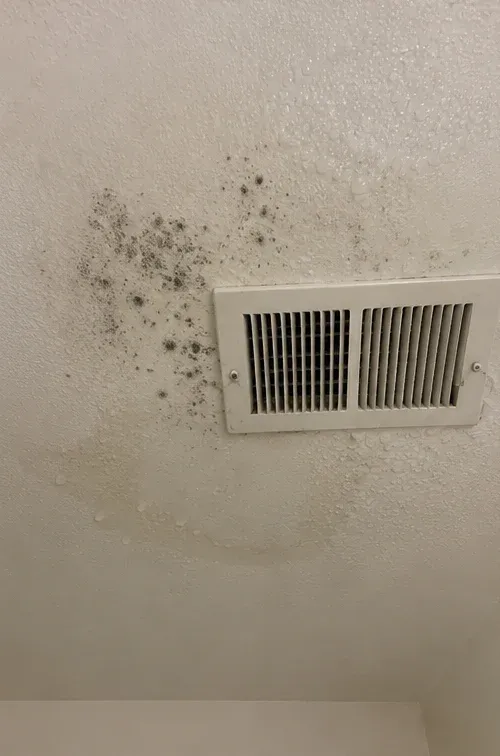
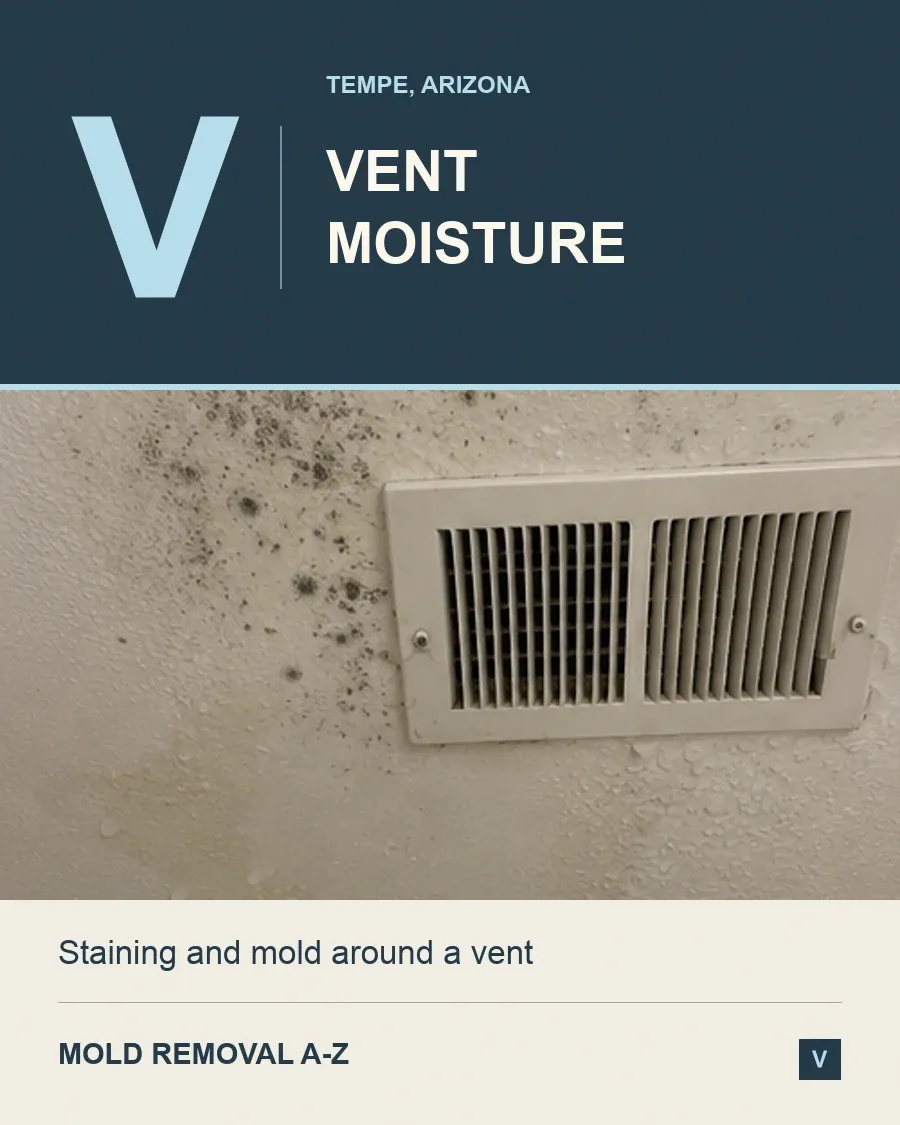
White wall with dark mold spots around a metal floor vent register

06 / Local risk

Why this happens in Tempe

Tempe runs its AC hard through the long summer, and the system can sit in the attic or a closet where a small leak goes unnoticed.

  • Condensate lines clog. Dust, algae and insects block the drain line. The pan overflows, and the cabinet and platform stay wet.
  • Attic air handlers sweat. In a hot attic, a cold plenum and cold ducts condense moisture on the outside. That moisture wets the platform and the insulation around it.
  • Swamp coolers can be found in older homes. They add humidity on purpose. A poorly maintained cooler is a mold generator, especially in a closed-up house.
  • Rentals sit closed. A unit that is vacant for two weeks in July with the AC off and a slow pan leak is a perfect incubation chamber.
  • Duct liners stay wet. Flexible duct insulation absorbs water and does not dry in an attic. Once the liner is wet, replacement is usually cheaper than repeated cleaning.

The local housing numbers explain part of the exposure: 41 percent of Tempe units were built before 1980, and more than four in ten sit in buildings with five or more units (US Census ACS 2024 5-year estimates). Older systems, closet air handlers and original ductwork can be more prone to chronic moisture.

07 / 6 steps

How the job runs

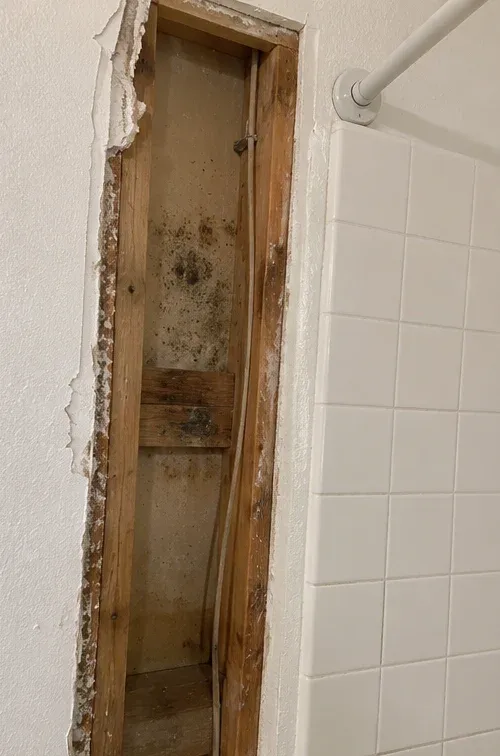
Opened shower wall cavity with wood framing and dark mold above a white tile surround
  1. Inspect the system and the space

    Air handler, pan, drain line, plenums, accessible duct runs, registers and the surrounding building materials.
  2. Fix the mechanical cause

    Clear the drain line, repair the pan, correct the slope, or service the swamp cooler. Refrigerant, electrical and mechanical repairs are HVAC trade work.
  3. Contain the work area

    Seal the closet or attic access and protect the living space. Negative air pressure keeps spores out of the rooms.
  4. Clean or remove

    Clean the air handler cabinet, coil surfaces that are accessible, and sheet metal ducts. Replace wet flexible duct, contaminated insulation and porous material that cannot be cleaned.
  5. Dry and verify

    Dry the platform and surrounding structure, then verify before the system goes back into service.
  6. Restart and check

    Run the system, confirm the drain is clear, and check the registers for the smell.

A common mistake is cleaning the ducts without fixing the pan or the drain line. The system gets recontaminated at the first overflow.

08 / Good to know

Do it yourself or get a call back

Cleaning a register or a vent cover is a homeowner job. Opening an air handler, cleaning a coil, or replacing ductwork is not. The EPA's 10 square foot guidance is about surface area, not about systems: a small patch of growth on a return grille may qualify, but a wet duct liner or a contaminated plenum does not.

If the drain line has never been cleared, start there. A clogged drain line is one cause of pan overflow.

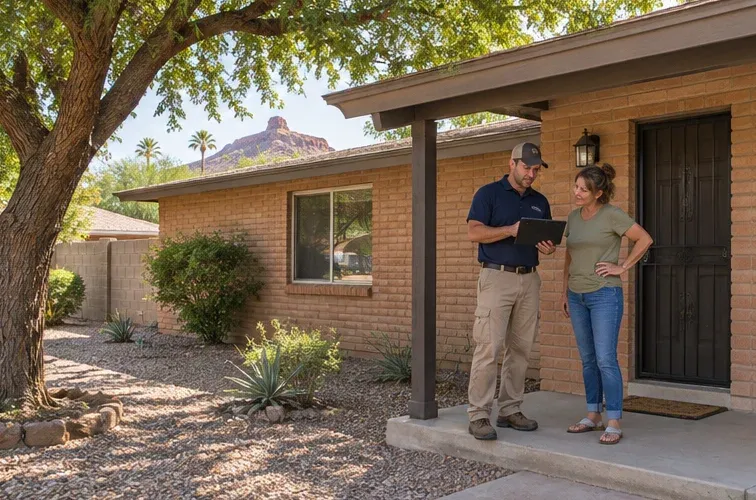
Man in a navy shirt holding a tablet talks with a woman on the walkway of a brick ranch house with a shade tree and a gravel yard

09 / Good to know

If you rent in Tempe

Report the smell and the water in writing. Say when it happens, how long it lasts, and whether you see water in the pan or around the unit. Ask the landlord or property manager to have the system inspected and the drain line cleared. Keep a copy of the message and photos of any standing water.

If the AC is the source, the lease decides who handles the repair. The rental mold page covers the sequence, and the AC drain line guide explains the clog pattern.

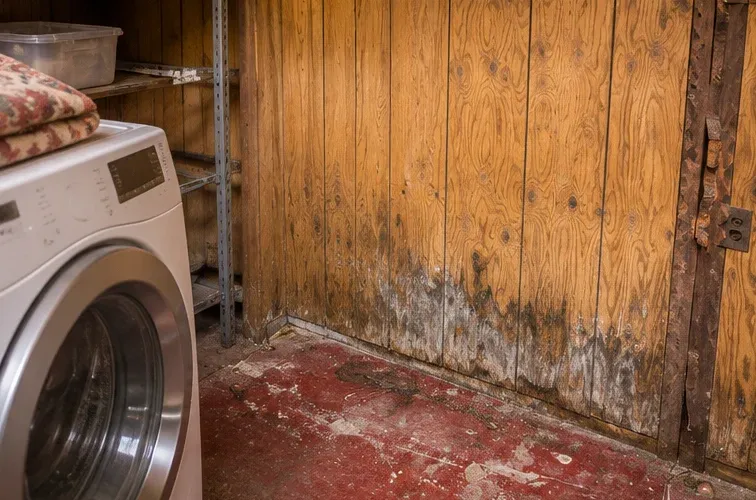
Water-stained wooden plank wall with dark mold marks beside a front-loading washer, red concrete floor at the bottom

10 / Good to know

Ducts, coils and the parts that belong to the HVAC trade

Mold work on an AC system has a boundary, and the boundary matters for the scope. Growth can be removed from the air handler cabinet, the drain pan, the return plenum and the accessible duct runs. Mechanical work belongs to the HVAC trade: refrigerant, coil replacement, compressor, electrical.

Cleaning a coil in place is a mechanical task that belongs to the HVAC trade.

Flex duct is the common replacement item. Corrugated flex duct has ridges that trap dust and moisture, and cleaning it is unreliable. If the interior liner is colonized, replacement is usually cheaper than repeated cleaning. Rigid duct can often be cleaned and sealed.

The return plenum is the part homeowners miss. In some homes the return is a framed chase, not a duct, and it pulls air through a panned cavity. If that cavity is damp, the system distributes spores through every room. A proper scope opens the chase, cleans it, seals it and verifies the seal.

Swamp coolers are separate. Pads are consumables and should be replaced at the start of the season, not cleaned. The water distribution tray and the pan need draining and drying. A cooler that runs with a clogged pad blows moisture into the house.

After remediation, run the system with new filters and check the drain pan for standing water. If water returns, the mechanical fix is not done.
Poster reading Vent Moisture, dark mold spotting on a wall around a floor vent register

Service sheet

HVAC Mold Removal Tempe

If the musty smell gets stronger when the air kicks on, the problem is in the system or the space it cools.

11 / 5 questions

Frequently asked questions

Still have a question?

Send the form. Someone from our team will call you back soon.

Get a call back

Q.01

How much does AC mold removal cost in Tempe?

National HVAC remediation ranges run about $3,000 to $10,000, with air duct mold removal often $600 to $2,000. A vent-level patch can be $100 to $500. The scope depends on whether the ducts, the plenum or the air handler cabinet are affected.

Q.02

Can I just clean the vents?

Cleaning the vents helps the surface but does not fix the source. If the drain pan is overflowing or the duct liner is wet, the growth returns. Fix the moisture first.

Q.03

Is black growth on the vent dangerous?

Color is not a reliable risk measure, and the EPA says no federal limits have been set for mold or mold spores. The practical question is whether the growth is on a surface that can be cleaned or on a wet liner that has to be replaced. A musty smell that appears when the system runs is a good reason to inspect.

Q.04

Do I need a separate HVAC contractor?

Yes for mechanical repair, refrigerant, electrical work and equipment replacement, which are HVAC trade work. The mold work covers containment, cleaning, removal and verification.

Q.05

How long does duct remediation take?

A vent and cabinet cleaning can be a day. Duct replacement, air handler containment and drying can run several days, depending on access and how many runs are affected.

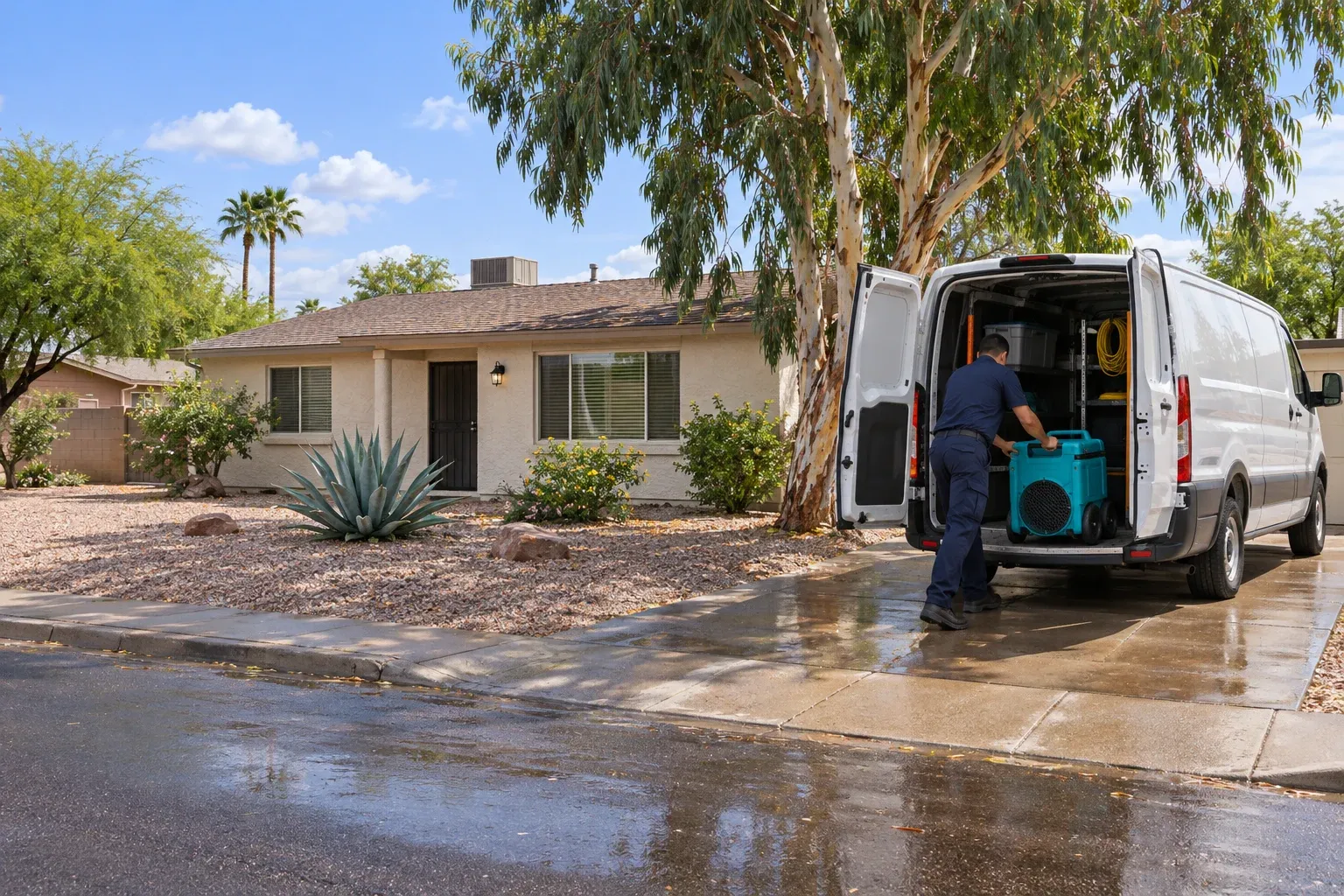
White cargo van with its rear doors open in a driveway, a man in navy work clothes wheeling a teal air machine out in front of a ranch house

Form open 24/7

Get a call back about mold in your home

Send the form. Someone from our team will call you back soon.

Mold in the house?Get a call back

Before you go: want a call back?

Send the request form and someone will call you back about the mold.

Get a call back

Get a call back

Send the form and someone from our team will call you back.