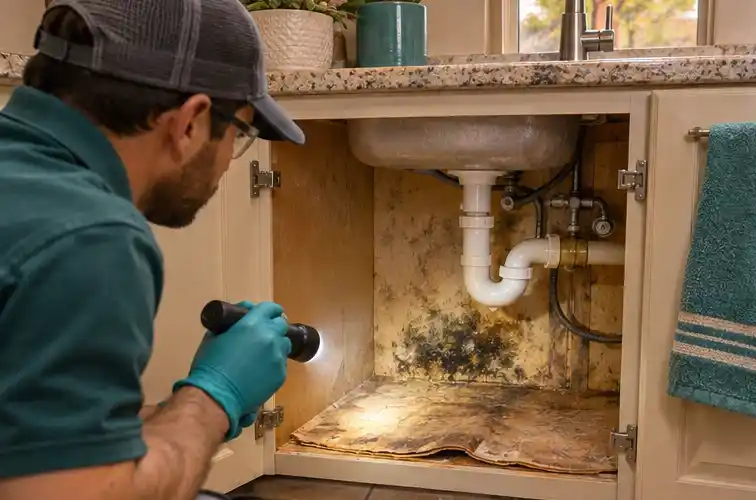
Man in a teal polo shining a flashlight at dark mold on the floor of an under-sink cabinet, a teal striped towel hanging at the right

Service area · Phoenix, AZ

Mold Removal Phoenix, AZ

You found mold or a stain in Phoenix. Send the form day or night, and someone from our team will call you back soon. We serve Phoenix and the towns around it.

Form open 24/7

Get a call back

Tempe · Maple-Ash · Mitchell Park · Escalante · University Park · Riverside + 29 more towns

Phoenix mold almost always follows water that was never dried. The housing mix decides where that water hides and who has to answer for it.

Mold removal in Phoenix usually begins with a water problem the desert climate hides well. A monsoon storm drives rain under a shingle, an AC condensate line clogs in a hallway closet, or an old supply line fails behind a vanity, and the growth shows up weeks later on drywall, baseboard or roof sheathing. Phoenix has 1,642,323 residents, and 42.7 percent of occupied homes are rented (ACS 2024 5-year), so a tenant often notices a smell before the owner knows anything is wet.

The housing stock sets the pattern. 41.6 percent of Phoenix homes were built before 1980, which brings older plumbing, older roofs and bathroom fans that vent into attics instead of outdoors. Another 26.4 percent of units sit in buildings with five or more units, where shared walls, shared chases and shared air handlers move moisture from one unit to the next. The next step is the same in every case: find and stop the water, dry the structure, then remove what cannot be dried.
01 / Mold

What the Phoenix housing stock means for mold

Phoenix is not one housing market. It is a collection of neighborhoods built in different decades, and the decade decides where a leak travels. A 1960s single-story house on a slab hides water in the wall cavity behind bathroom tile and under the flooring at the base of the tub. A 1970s apartment building hides it in the chase behind the kitchen wall, in the closet that holds the water heater, and in the ceiling drywall under the unit above. A newer house with a tight envelope hides it in the same places but dries more slowly, because less air moves through the assembly.

The median owner-occupied value is $420,700 (ACS 2024 5-year). Price does not decide whether a home grows mold. What decides it is how quickly someone notices water and how quickly the assembly is dried.

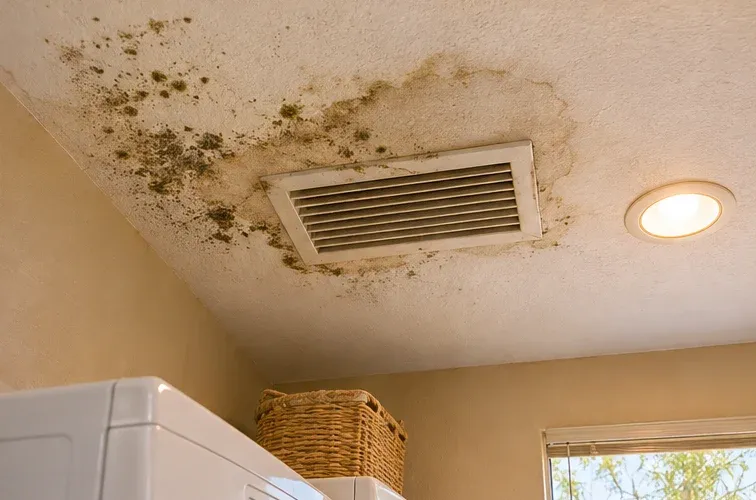
Dark mold speckling and brown staining on a laundry room ceiling around a white vent and a recessed light, a washer at the lower left

02 / Good to know

Where the water comes from in Phoenix

Monsoon rain. The season runs June 15 to September 30. Wind pushes rain sideways into flashing, vent boots and the edges of low-slope roofs. A stain on a ceiling is often the second sign, not the first.

AC condensate. Phoenix cooling runs for months without a break. A drain line that clogs with algae, a pan that rusts through, or an air handler installed in a hot closet all put water where nobody looks. The AC mold page covers that sequence in detail.

Supply and drain lines. Older homes carry older pipe. A pinhole leak inside a wall can wet insulation and framing for a month before it shows on paint.

Bathroom exhaust. A fan that dumps air into the attic adds moisture to the roof deck all summer. The attic stays hot, the deck stays damp, and growth starts on the sheathing.

Shared walls and chases. In a large apartment building, a leak on the third floor can show up on the first. Water follows the path of least resistance, which is usually the chase that carries plumbing.

03 / 5 steps

How the work runs

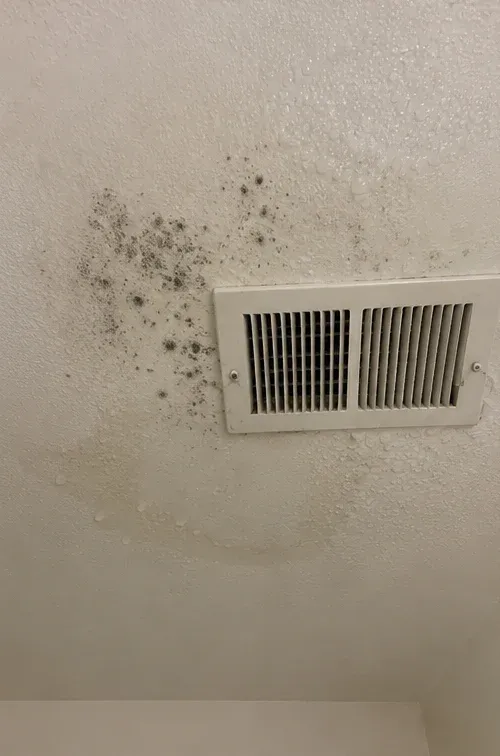
White wall with dark mold spots around a metal floor vent register
  1. Stop the source

    The leak gets repaired or isolated before any removal starts. Remediation under an active leak is temporary work.
  2. Map the moisture

    A moisture meter and a visual inspection define the boundary of wet material, including areas that look dry.
  3. Set containment

    Plastic sheeting and negative air pressure keep spores out of the rooms that are still clean.
  4. Remove and clean

    Porous material that cannot be dried is bagged and removed. Framing and hard surfaces are HEPA vacuumed and cleaned.
  5. Dry and verify

    Air movers and dehumidifiers run until the assembly reaches a measured dry standard, then the area is checked before reconstruction.

04 / Costs

What mold removal costs in Phoenix

The ranges below are national, not quotes for a Phoenix address.

ItemNational range
Inspection$300 to $1,000
Testing, when needed$250 to $500
Remediation, typical$1,500 to $9,000
Small bathroom$500 to $1,500
Attic$1,500 to $9,000
HVAC system$3,000 to $10,000

Remediation averages about $3,500 nationally, or $10 to $30 per square foot. A whole home with widespread growth can reach $10,000 to $30,000. The cost page breaks those ranges down by room.

05 / Good to know

Renting in Phoenix

A.R.S. 33-1324 requires a landlord to keep the premises fit and habitable, and the word mold does not appear in the statute. That means the obligation is real but general, and the record you build matters more than the label.

Put the notice in writing, keep a copy, and describe what you see and smell rather than what you think caused it. Photograph the area with something for scale, note the date, and log every call or visit. If the growth follows a leak the landlord was told about, that written trail is the part that counts.

Do not dry the area and drop it. Moisture returns in the same place if the source is not fixed, and a second episode is harder to document than the first.

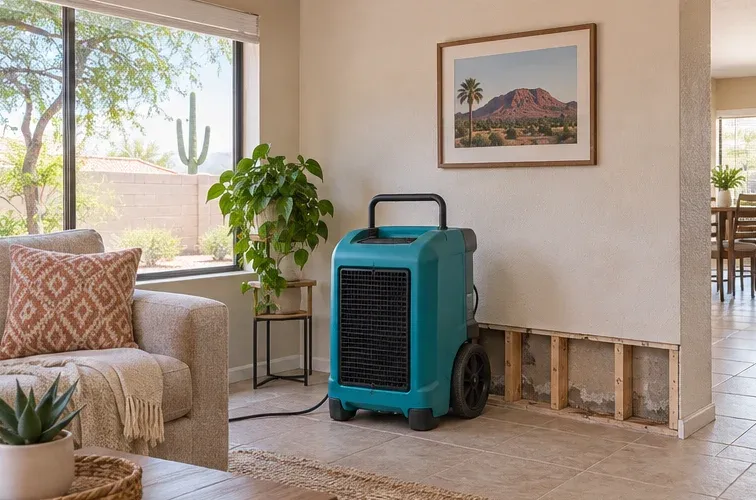
Teal dehumidifier running in a living room with the lower wall opened at the baseboard, a sofa with patterned pillows and a framed desert print

Local numbers

Phoenix by the numbers

  • Homes rented42.7%of occupied homes are rented
  • Built before 198041.6%of Phoenix homes were built before 1980
  • In buildings of 5+ units26.4%of units sit in buildings with five or more units
  • Residents1,642,323

ACS 2024 5-year estimates, as stated in the page text above

06 / 5 questions

Frequently asked questions

Still have a question?

Send the form. Someone from our team will call you back soon.

Get a call back

Q.01

How much does mold removal cost in Phoenix?

The national range for remediation is $1,500 to $9,000, averaging near $3,500, or $10 to $30 per square foot. Inspection adds $300 to $1,000 (national cost guides). Size, access and whether HVAC or attic material is involved move the number.

Q.02

Is monsoon season really the main cause in Phoenix?

It is one of several causes. The season runs June 15 to September 30, and wind-driven rain finds flashing and roof details that a hose test misses. AC condensate and plumbing leaks cause growth year round.

Q.03

Can a landlord charge a tenant for mold in Phoenix?

That depends on the lease and on what caused the growth. The statute sets a general habitability duty and does not name mold. Keep written notice, photos and dates, and read the lease before agreeing to any charge.

Q.04

How long does remediation take?

Timing depends on the size of the area, the containment, how wet the assembly is and how fast materials dry. A small area can take a few days, and a larger job with drying and reconstruction can take longer.

Q.05

Does every leak need testing?

No. The EPA notes that sampling is usually unnecessary when visible mold is present, and there is no federal health-based standard for mold or spores. Testing helps when the source is hidden or the scope is disputed.

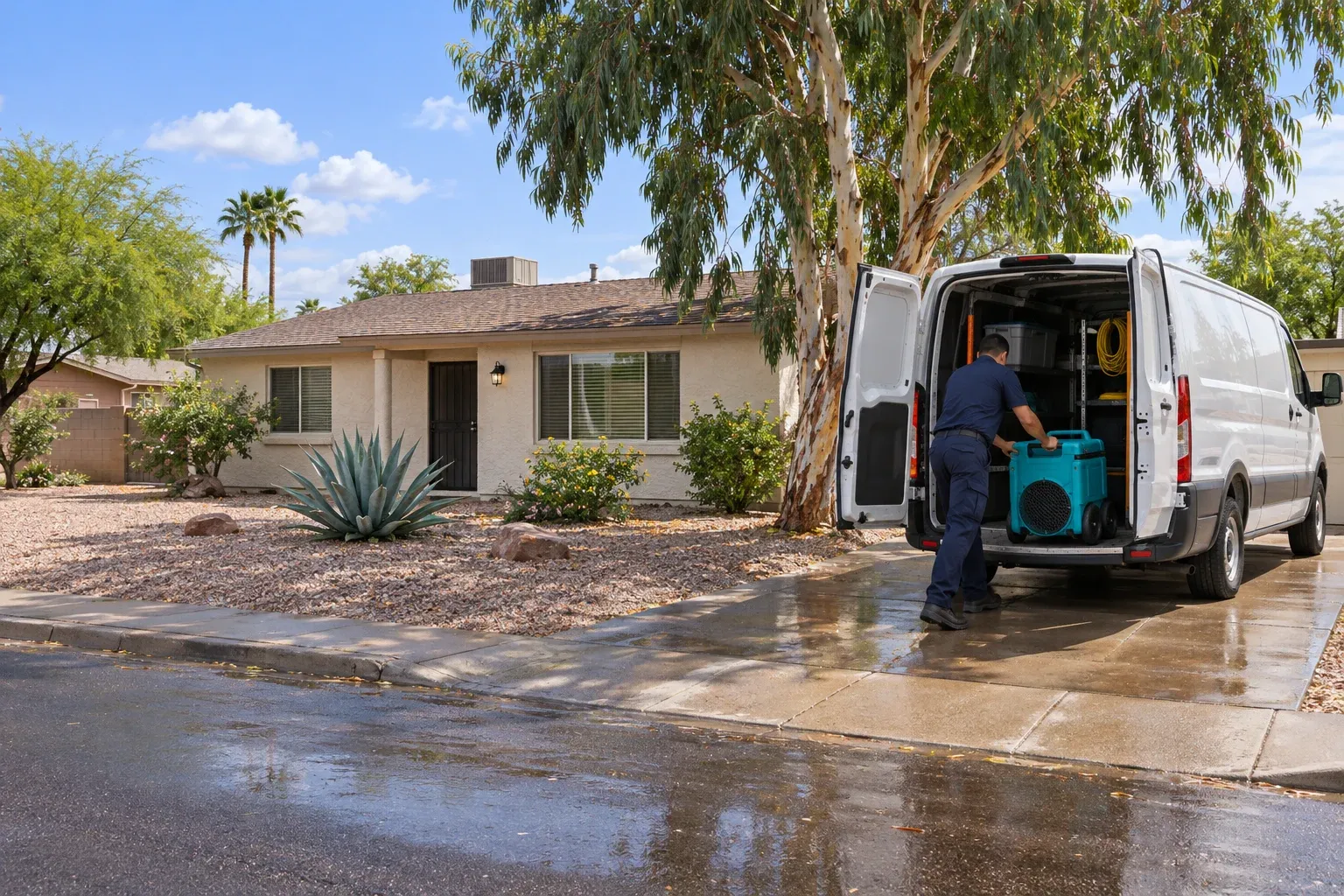
White cargo van with its rear doors open in a driveway, a man in navy work clothes wheeling a teal air machine out in front of a ranch house

Form open 24/7

Get a call back about mold in your home

Send the form. Someone from our team will call you back soon.

Mold in the house?Get a call back

Before you go: want a call back?

Send the request form and someone will call you back about the mold.

Get a call back

Get a call back

Send the form and someone from our team will call you back.