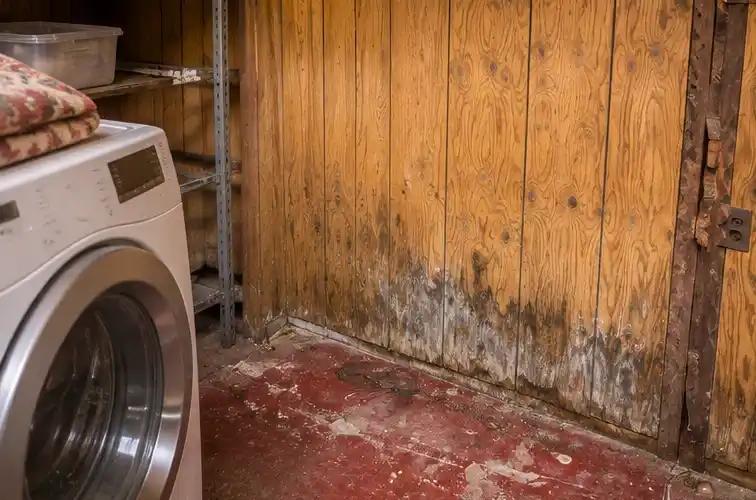
Water-stained wooden plank wall with dark mold marks beside a front-loading washer, red concrete floor at the bottom

Tempe neighborhood · Optimist Park Southeast

Mold Removal Optimist Park Southeast, Tempe

You found mold or a stain in Optimist Park Southeast. Send the form day or night, and someone from our team will call you back soon. We serve Tempe and the towns around it.

Form open 24/7

Get a call back

Tempe · Maple-Ash · Mitchell Park · Escalante · University Park · Riverside + 29 more towns

Patio homes and condos in this south Tempe neighborhood share walls, chases and roofs. The water source decides who pays and who opens the wall.

Optimist Park Southeast is a south Tempe neighborhood of patio homes and condos, and that changes what mold removal means. In a detached house the question is where the water entered. In a patio home or a condo, the first question is often whose wall the water entered through. The ZIP code area that covers the neighborhood is 85283, where 49.1 percent of housing is rented and 44.7 percent was built before 1980, per ACS 2024 5-year figures.

The housing mix sets the pattern: roughly half the units are rentals, and close to half the housing dates from before 1980, when shared walls and low slope roof sections were common. Moisture that starts in one unit can show up in the unit next door, in a common hallway, or in an attic that serves several addresses.
01 / Good to know

Patio homes and condos change the question

A patio home usually shares one wall with the neighbor and sits under its own roof, or under a roof that runs continuously across the row. A condo may share two walls, a floor and a ceiling, with plumbing chases running vertically through the stack. Both designs put water lines and drain lines inside assemblies that belong to more than one owner.

That is why a stain on a shared wall needs a different first step than a stain in a detached house. Before any cleaning, someone has to establish which side of the wall is wet and which unit or association owns the repair. A moisture meter tells you where the water is. The declaration and the association's maintenance schedule tell you who is responsible.

Age adds to it. A building from before 1980 may still have original drain lines in the chase, original bath fans, and a roof that has been patched unit by unit over the years. Each patch is a new place for water to sit.

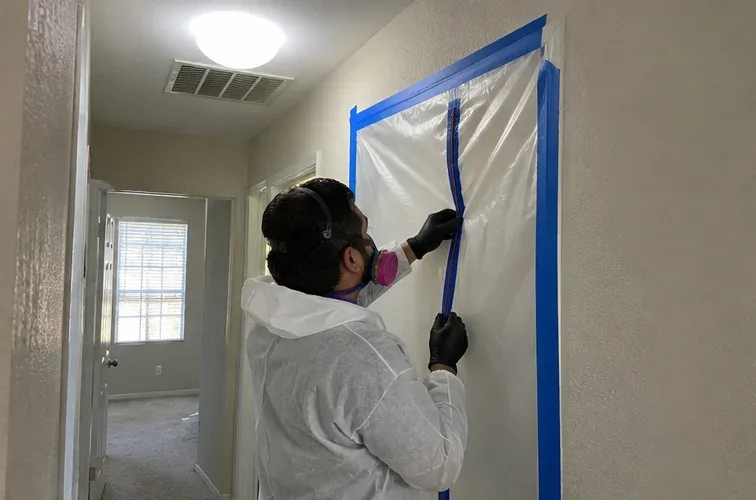
Worker in a white suit and respirator taping plastic sheeting over an apartment doorway with blue tape, a ceiling vent above

02 / Good to know

Where moisture crosses a property line

  • Vertical plumbing chases. A leak at a fitting on an upper floor runs down the chase and shows up in the unit below, often on a ceiling far from the fixture.
  • Shared walls and the roof above them. A roof leak at the party wall wets insulation on both sides. The stain can appear in either unit, or in both.
  • Common attics and crawl spaces. A single attic over a row of patio homes carries moisture from one end to the other along the deck.
  • AC condensate lines that run through common space. A clogged line in a shared soffit or chase drips into a patio or a garage that belongs to someone else.
  • Exterior planters and patio walls. Soil held against stucco keeps the wall wet after irrigation. The damage is on the inside face of a wall the neighbor may own.

Hose bibs and irrigation lines on the exterior of a shared wall are another quiet source. A bib that drips into the stucco every time the hose runs wets the same cavity all summer.

03 / 5 steps

How a shared building job runs

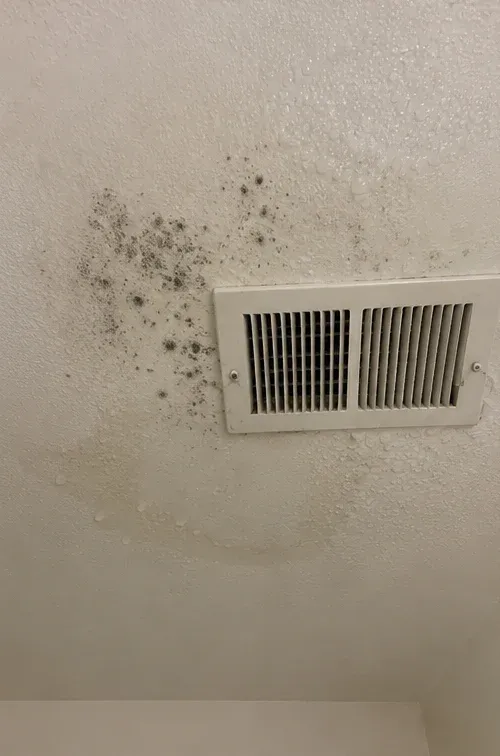
White wall with dark mold spots around a metal floor vent register
  1. Document both sides

    Readings and photos from each affected unit, with the date and the location noted on a simple floor sketch.
  2. Notify the association and the neighbor early

    A written notice protects the timeline and gives the board a chance to send its own inspector.
  3. Confirm the source before demolition

    A plumbing test or a roof inspection settles whether the repair belongs to a unit owner or the association.
  4. Contain the unit, not just the room

    Plastic at doorways, negative air, and a plan for the shared hallway or stairwell if the work touches it.
  5. Repair, clean, dry and verify

    The source repair comes first, then removal of wet material, cleaning, drying and a final moisture check before the wall closes.

Scheduling is the part that catches people out. A shared wall job may need access to both units at once, and a neighbor's schedule can add a week. The mold from neighbor unit guide goes through the notice sequence.

04 / Good to know

What the national ranges show

These are national figures, not quotes for an Optimist Park Southeast address.

ScopeNational range
Inspection, per affected unit$300 to $1,000
Remediation, per square foot$10 to $30
Small bathroom$500 to $1,500
Walls and ceilings$1,000 to $12,000

A bathroom ceiling below an upper unit is often a small area with a large access problem. Two units and a chase can double the inspection time without doubling the square footage. The written scope should list each unit, each room and each access point.

05 / Good to know

Renting in a shared building

With 49.1 percent of the 85283 housing rented, a lot of these units are occupied by tenants. The tenant's job is to report early and in writing, with photos and dates. The owner's job is to pursue the source, whether that is a plumbing repair, a roof repair or a call to the association.

A.R.S. 33-1324 requires a landlord to keep the premises fit and habitable. The word mold does not appear in the statute, and this page is not legal advice. If the source is in a neighboring unit, the landlord and the association need to talk to each other, and the tenant should keep a copy of every notice.

Renters can also document the condition at move in. Photos of the bathroom ceiling, the closet corners and the window walls make it much easier to show what changed.

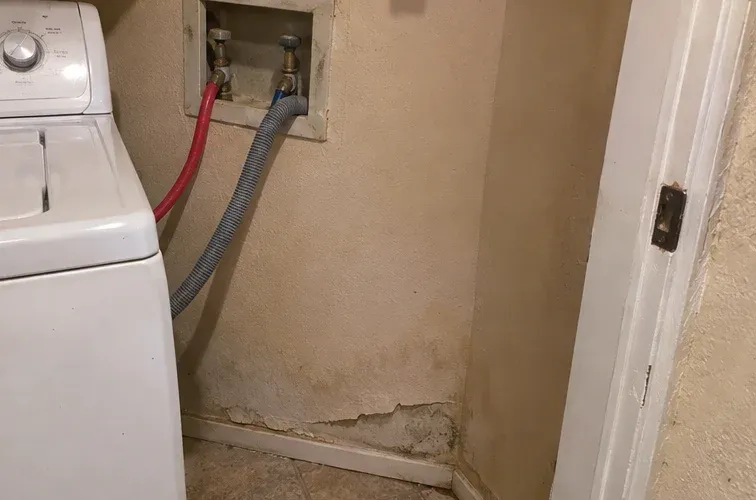
Laundry hookup with red and gray hoses behind a white washer, brown water stains and dark spots on the wall below

Local numbers

Optimist Park Southeast by the numbers

  • ZIP 85283 · Homes rented49.1%of housing is rented
  • ZIP 85283 · Built before 198044.7%was built before 1980

ACS 2024 5-year estimates, as stated in the page text above

06 / 5 questions

Frequently asked questions

Still have a question?

Send the form. Someone from our team will call you back soon.

Get a call back

Q.01

The stain is on my ceiling but the unit above is fine. How is that possible?

Water follows the path of least resistance. A leak in the upper unit can run along a pipe or a joist and soak the ceiling below without ever wetting the floor above. Moisture readings on both sides settle it.

Q.02

Who pays for mold removal in a condo?

It depends on where the source is and what the declaration says. A failure inside one unit is usually that owner's repair. A common roof or a shared chase is usually the association's. Get the source confirmed in writing before work starts.

Q.03

How much does mold removal cost in Optimist Park Southeast?

National ranges are $10 to $30 per square foot, a small bathroom is $500 to $1,500, and walls and ceilings run $1,000 to $12,000. Access to a shared chase and coordination between units can add cost.

Q.04

Do I have to tell the neighbor?

If the work touches a shared wall or the source may be in their unit, yes, and early is better. The association usually needs notice as well. A short written note with the inspection date prevents a dispute later.

Q.05

Can the work be done while I stay in the unit?

For a single bathroom or closet, often yes, with containment. If the HVAC or the only bathroom is involved, the schedule may require another plan. The scope should say which rooms are out of service and for how long.

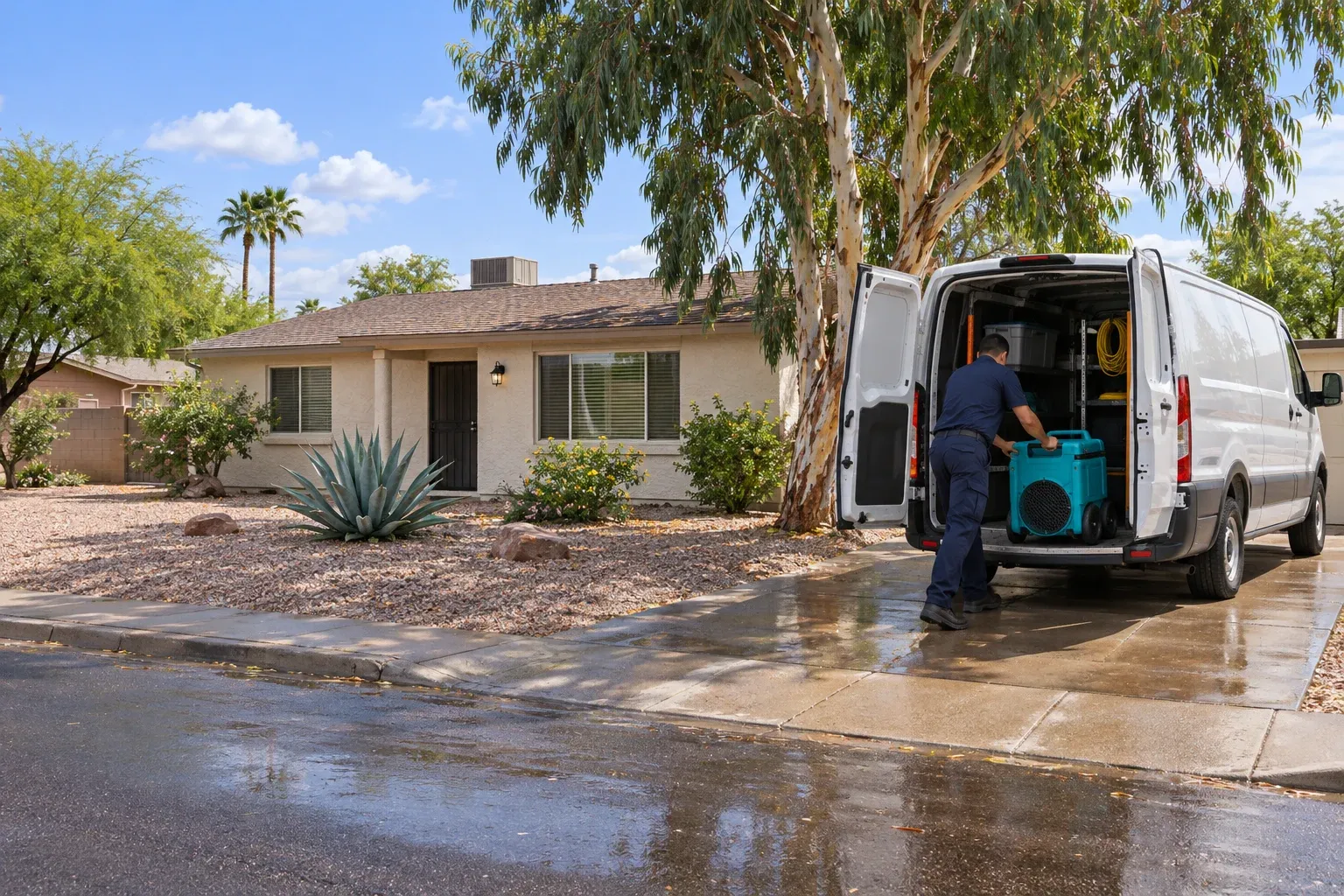
White cargo van with its rear doors open in a driveway, a man in navy work clothes wheeling a teal air machine out in front of a ranch house

Form open 24/7

Get a call back about mold in your home

Send the form. Someone from our team will call you back soon.

Mold in the house?Get a call back

Before you go: want a call back?

Send the request form and someone will call you back about the mold.

Get a call back

Get a call back

Send the form and someone from our team will call you back.