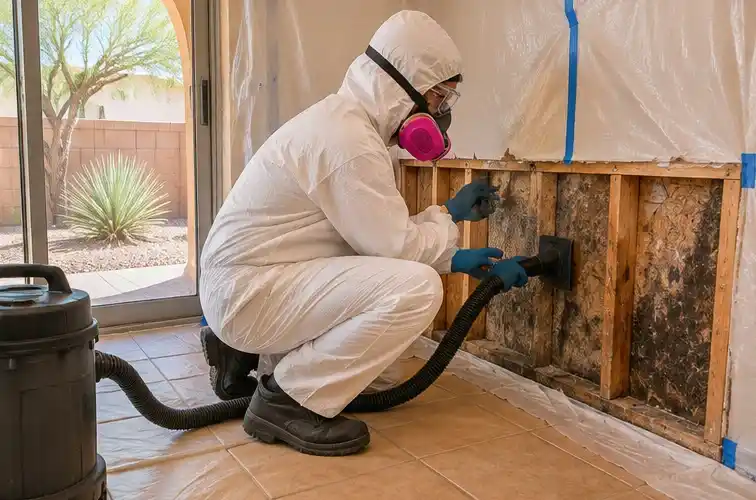
Worker in a white suit and pink respirator vacuuming dark mold from an opened wall cavity beside a sliding glass door, a dark HEPA vacuum at the left

Service area · Gold Canyon, AZ

Mold Removal Gold Canyon, AZ

You found mold or a stain in Gold Canyon. Send the form day or night, and someone from our team will call you back soon. We serve Gold Canyon and the towns around it.

Form open 24/7

Get a call back

Tempe · Maple-Ash · Mitchell Park · Escalante · University Park · Riverside + 29 more towns

Gold Canyon homes sit on sloping ground, and monsoon water follows the slope. The mold often starts where runoff meets a wall, a patio or a roof detail.

Mold removal in Gold Canyon is often a drainage story before it is a mold story. Gold Canyon has 13,107 residents and sits against the foothills, where lots slope and storm water moves fast. Only 2.1 percent of the housing predates 1980, so the housing is relatively new, and the median owner-occupied value is $508,100. The problems here tend to come from water that crossed a patio, seeped behind a retaining wall, or found a gap at a roof valley during a monsoon storm.

If you see a ceiling stain or smell a musty room after a storm, start outside. Trace where the water went during the last heavy rain. In flat parts of the Valley, that trace often ends at a failed roof or an AC line. In Gold Canyon, it may end at a slope above the house, a clogged drainage path, or a wall that holds back wet soil.

The inspection should cover the roof, the exterior walls, the grade around the foundation, and the interior rooms below the stains. Water that enters at grade can travel sideways through a wall before it shows.
01 / Good to know

A small community on sloping ground

Gold Canyon is a small community, and 5.8 percent of its homes are rented. The Census reports 0.0 percent of units in buildings with five or more, so the market is almost entirely detached houses, many with stucco walls and tile roofs. About 9.7 percent of units are mobile or manufactured homes.

Sloping lots change the moisture math. A flat lot sheds water slowly and mostly at the roof. A sloped lot concentrates it. A storm that drops an inch of rain can send a sheet of water across a driveway, through a planter, and against a wall in minutes. The wall may look sound, but stucco cracks and paint seams let water into the framing behind it.

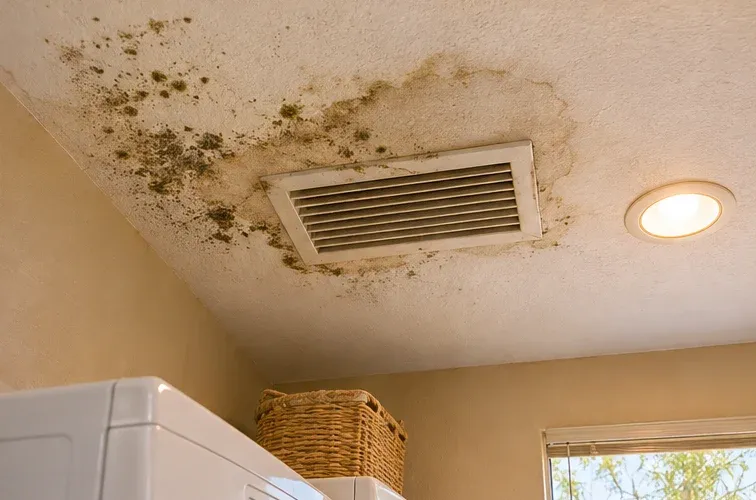
Dark mold speckling and brown staining on a laundry room ceiling around a white vent and a recessed light, a washer at the lower left

02 / Monsoon

Where monsoon water goes

Monsoon season runs June 15 to September 30. The storms are short and intense, and the ground is often dry and crusted, so it absorbs little at first. Water follows the path of least resistance: a swale, a landscape berm, a gap between a patio and the house, or the low corner of a foundation.

Four paths show up often on sloped lots:

  • Overland flow. Water crosses the property and pools against a wall or under a patio slab.
  • Roof discharge. Downspouts and scuppers drop water at the foundation instead of carrying it away.
  • Retaining walls. A wall holding wet soil pushes moisture against the structure behind it.
  • Roof valleys. Two roof planes meet, and the valley carries a large volume of water to one point.

Each path can wet the same wall or slab repeatedly without producing a dramatic leak. The damage builds over a season.

03 / Leaks

Roofs, walls and the details that fail

Tile roofs are common here and generally durable, but the details are the weak points: valley flashings, the boots around vents, the transition where a patio cover meets the house, and the sealant at a stucco wall. When one fails, water enters the attic or the wall cavity and stays there. The ceiling stain may not appear until the insulation is saturated.

Stucco deserves a close look on the uphill side of the house. Hairline cracks are normal, but a crack that runs along a window corner or a wall joint can funnel water into the framing. So can a planter bed built above the interior floor level, or a patio slab that slopes toward the house instead of away.

The EPA's guidance is simple: dry water damaged areas and materials within 24 to 48 hours. The clock starts when the material gets wet, not when the stain appears. The monsoon roof leak guide covers the roof side, and the water damage page covers the drying sequence.

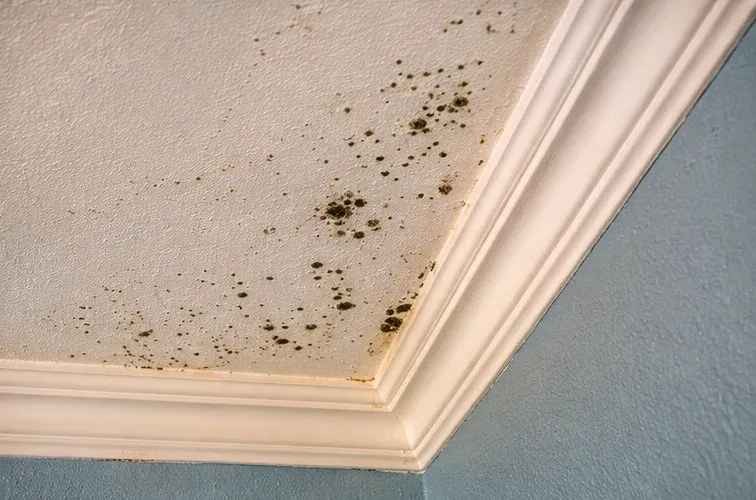
Dark mold speckles on a white ceiling corner above a blue wall and white crown molding

04 / Property types

The rental segment is small but not zero

With 5.8 percent of homes rented, Gold Canyon does not have a large tenant population. But a rented house here can still have a slow roof leak or a drainage problem, and a tenant may be the only person who sees the stain between visits.

Put the report in writing with photos and dates. Describe the water, the stain, and the weather that preceded it. Ask for the source to be repaired, not just the surface cleaned. A.R.S. 33-1324 requires a landlord to keep the premises fit and habitable, and the statute does not name mold. The rental mold page explains how to keep the record.

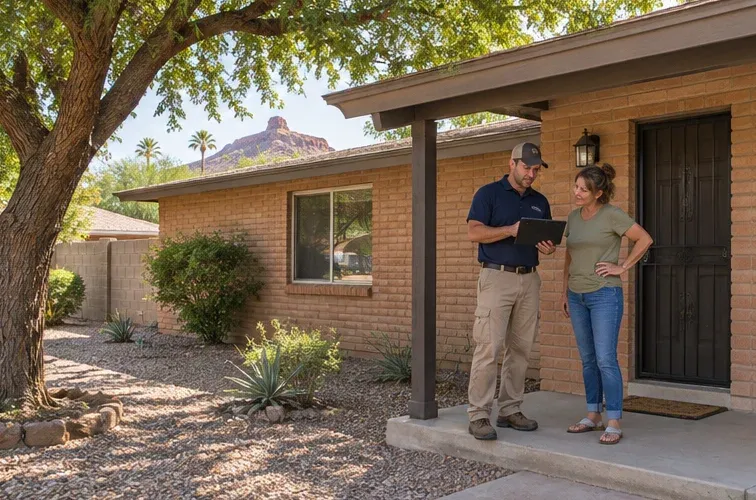
Man in a navy shirt holding a tablet talks with a woman on the walkway of a brick ranch house with a shade tree and a gravel yard

05 / 6 steps

Scoping a Gold Canyon project

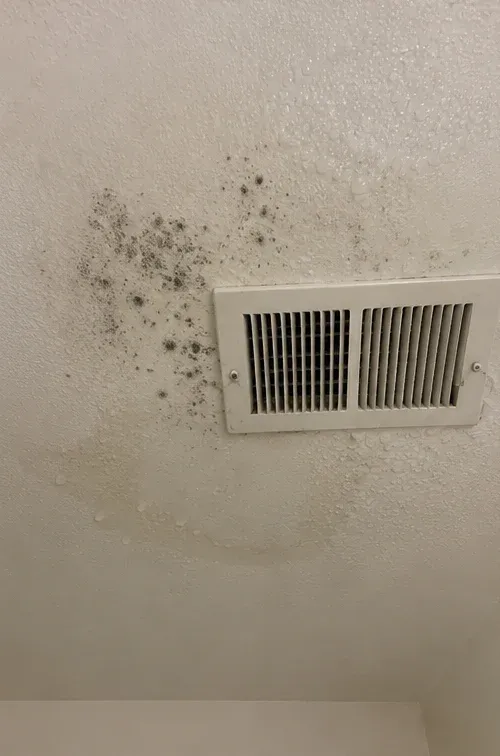
White wall with dark mold spots around a metal floor vent register
  1. Walk the exterior first

    Grade, drainage paths, retaining walls, roof edges, and the uphill side of the house.
  2. Inspect the interior

    Moisture readings at the stain, the wall base, and the ceiling below the roof valley.
  3. Fix the water path

    A roofer handles flashings and tile. A landscape or drainage contractor handles grade and swales. The mold scope waits for a dry source.
  4. Contain the work area and protect the rest of the house.
  5. Remove wet material and clean the remaining surfaces.
  6. Dry the framing and verify readings before repair.

06 / Costs

National cost ranges

These are national figures, not quotes for a Gold Canyon address.

ScopeNational range
Inspection$300 to $1,000
Typical remediation$1,500 to $9,000, average about $3,500
Walls and ceilings$1,000 to $12,000
Whole home$10,000 to $30,000

Small areas cost less. A wall that stayed wet behind stucco for a season can cost more than the visible stain suggests.

Local numbers

Gold Canyon by the numbers

  • Homes rented5.8%of its homes are rented
  • Built before 19802.1%of the housing predates 1980
  • In buildings of 5+ units0.0%of units in buildings with five or more
  • Residents13,107

ACS 2024 5-year estimates, as stated in the page text above

07 / 5 questions

Frequently asked questions

Still have a question?

Send the form. Someone from our team will call you back soon.

Get a call back

Q.01

Why does mold show up after monsoon storms in Gold Canyon?

The storms deliver intense rain in a short time, and sloping ground concentrates the runoff. Water can reach a wall, a patio edge, or a roof valley faster than the soil can absorb it. If the water stays in contact with building material, mold can follow.

Q.02

Is roof damage the main cause?

Roof details are one cause, but grade and drainage matter as much on a sloped lot. Water that pools against a wall or under a patio can wet the same framing a roof leak would.

Q.03

What should I check after a storm?

Look for standing water against the house, damp stucco, a patio that slopes toward the wall, roof tiles or flashings that moved, and new stains on ceilings or at wall bases. Take photos before anything dries.

Q.04

Does a small area need professional remediation?

EPA guidance says a moldy area of less than about 10 square feet can often be handled by the household when the moisture source is fixed. A wet wall cavity or a soaked ceiling assembly is larger than that.

Q.05

How much does remediation cost in Gold Canyon?

National ranges run from $1,500 to $9,000 for typical remediation, with an average near $3,500. Walls and ceilings can run $1,000 to $12,000 depending on how far the water traveled.

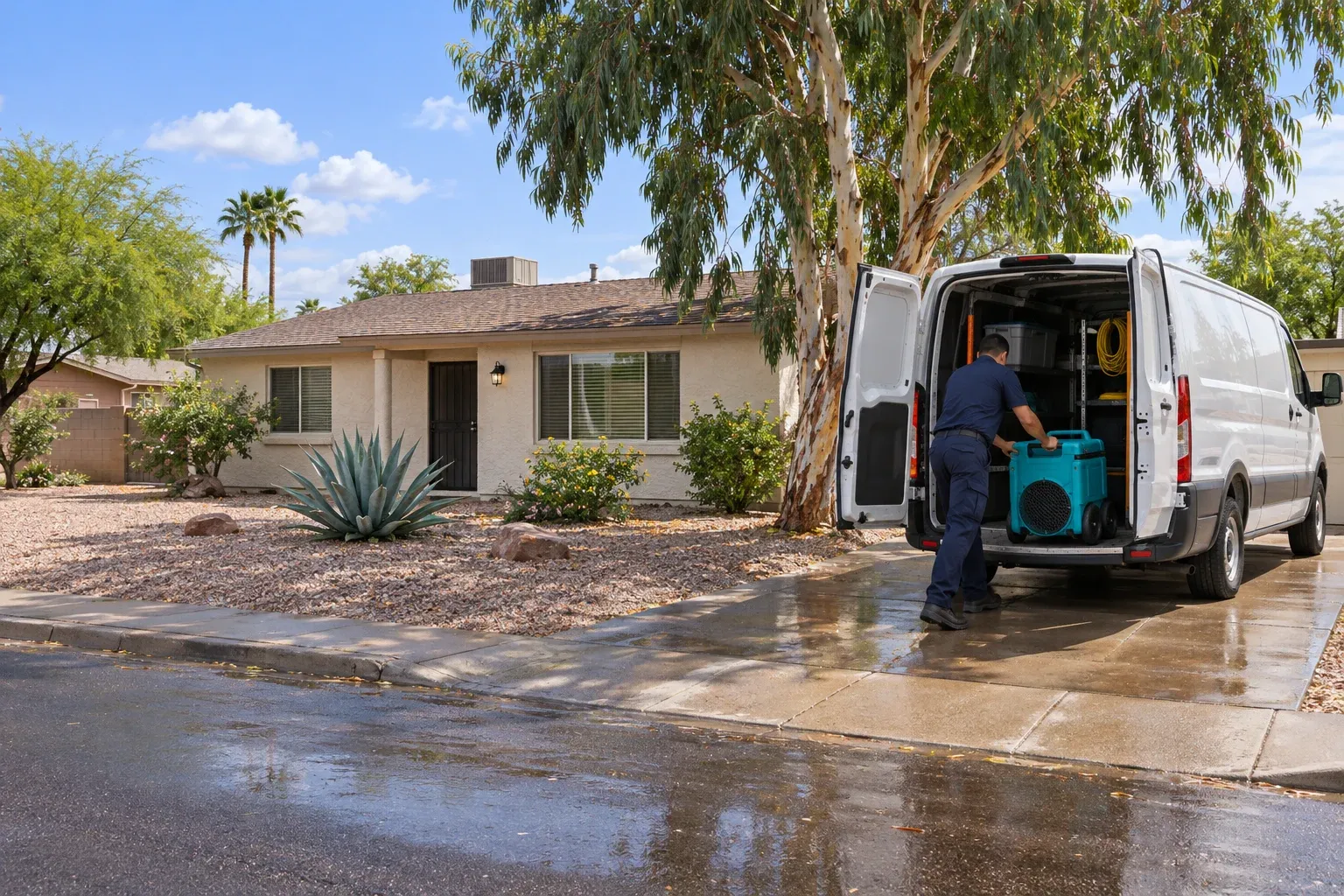
White cargo van with its rear doors open in a driveway, a man in navy work clothes wheeling a teal air machine out in front of a ranch house

Form open 24/7

Get a call back about mold in your home

Send the form. Someone from our team will call you back soon.

Mold in the house?Get a call back

Before you go: want a call back?

Send the request form and someone will call you back about the mold.

Get a call back

Get a call back

Send the form and someone from our team will call you back.