Q.01
Are there many older homes in Surprise?
No. Only 2.8 percent of the city's housing was built before 1980, according to ACS 2024 5-year figures, so most moisture problems trace to equipment rather than age.
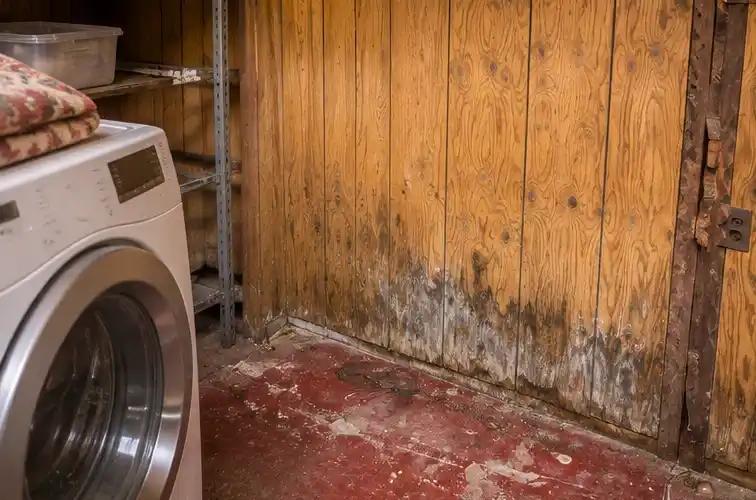
Service area · Surprise, AZ
You found mold or a stain in Surprise. Send the form day or night, and someone from our team will call you back soon. We serve Surprise and the towns around it.
Form open 24/7
Get a call back
Tempe · Maple-Ash · Mitchell Park · Escalante · University Park · Riverside + 29 more towns
Mold removal in Surprise, AZ deals with houses that were almost all built after 1980. Surprise has 154,948 residents, 20.9 percent of households rent, 2.8 percent of its housing was built before 1980, and 7.0 percent sits in buildings with five or more units (ACS 2024 5-year). The short version: old pipe is rarely the issue here. Many moisture problems start with AC condensate or with water lines under the slab.
Both sources are quiet. A condensate line drips inside a closet where nobody looks. A slab leak runs under flooring for weeks before a baseboard darkens or a carpet feels damp. By the time either shows, the material around it has usually been wet long enough to grow something. The useful next step is a moisture inspection that maps the wet area before any flooring or drywall is removed.
01 / Good to know
Median owner-occupied value sits at $435,100, and most of the housing is detached (ACS 2024 5-year). With a multifamily share of 7.0 percent, shared walls and shared plumbing chases are rare, so the neighbor-unit problem that dominates Glendale is a smaller part of the picture.
What replaces it is mechanical. Every house in Surprise has an air conditioner running for months, a water heater, supply lines, and a slab with plumbing inside it. Those parts wear on their own schedule, not on the schedule of the roof or the framing. A house built in a newer subdivision can have a failed condensate pan or a pinhole slab leak while the rest of the structure is in good shape.
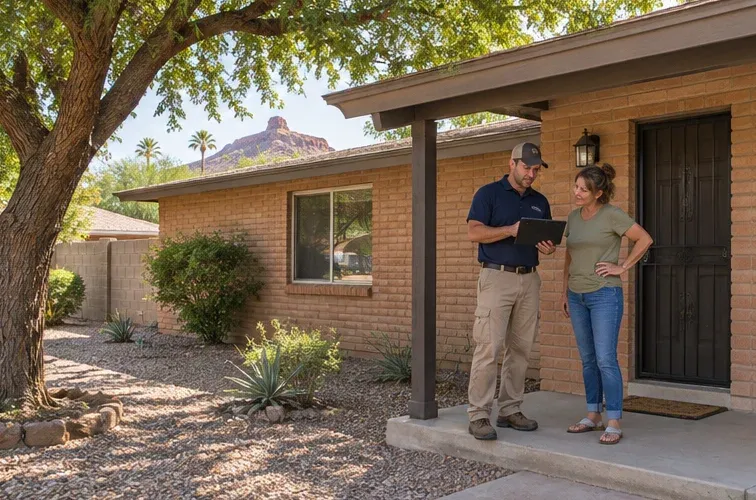
02 / Good to know
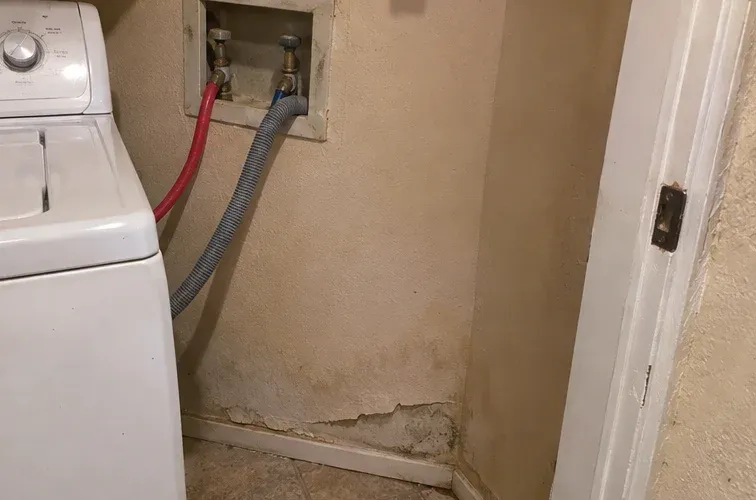
Cooling a house produces condensate, and in Surprise that can be a steady drip for months. The air handler typically sits in the attic or a garage closet with a drain pan underneath and a line that carries water outside. When the line clogs, the pan fills. When the pan rusts, it leaks. Either way, the water lands on the platform, runs down the closet wall, and finds the ceiling below.
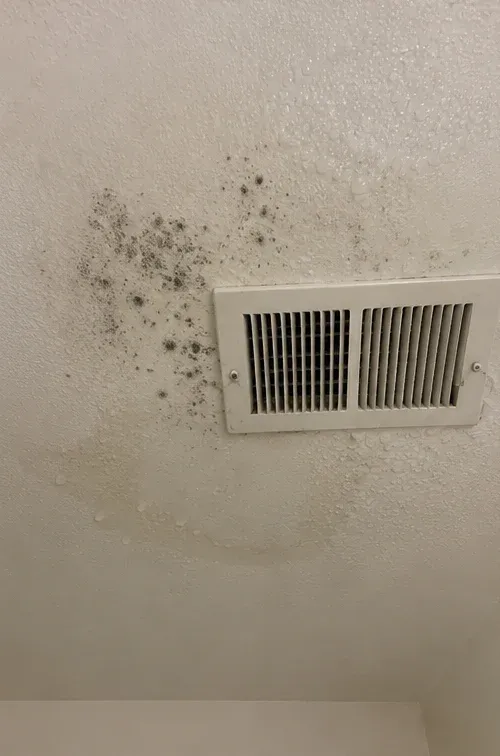
The signs are easy to miss until they are not: a musty smell at the return grille, bubbling paint at the base of the closet, dark streaks on the cabinet near the drain, or a stain on the ceiling under the attic unit. A float switch that shuts the system down is doing its job. EPA guidance keeps indoor humidity below 60 percent, ideally between 30 and 50, and a wet air handler closet can push the space past that.
03 / Leaks
A slab leak is a failure in a supply line running under the concrete. Water escapes, sits against the slab, and wicks upward into flooring, baseboards and the bottom plate of the walls. Tile grout darkens. Carpet feels cool and damp in one spot. A baseboard swells. The water bill climbs, and sometimes a hot line makes a warm patch on the floor.
The repair order matters. A plumber locates the leak, often with acoustic or pressure testing, and repairs or reroutes the line. Remediation comes after, because drying a room while the slab is still wet is a temporary fix. Growth that starts under flooring can spread into the wall cavity, which is why a moisture map covers more than the visible stain. The mold after water damage page explains how the drying sequence works.
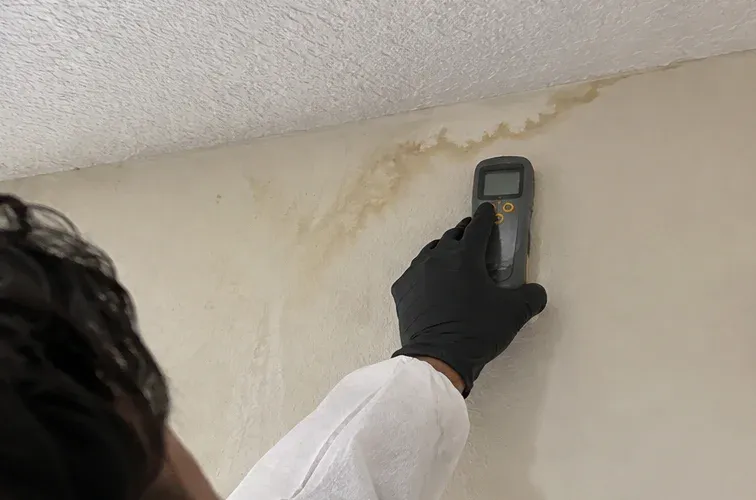
04 / 6 steps
05 / Costs
Two national cost guides supply the national ranges below. A single closet wall and a room with a slab leak are not the same job, even when the visible mold looks similar.
| Scope | National range |
|---|---|
| Inspection | $300 to $1,000 |
| Testing | $250 to $500 |
| Remediation | $1,500 to $9,000, average about $3,500 |
| Walls and ceilings | $1,000 to $12,000 |
Testing is usually unnecessary when growth is visible, and no federal health-based standard exists for mold or spores. What a test can do is confirm a hidden problem when a smell persists after a cleanup, and that is a narrower use. The mold testing page covers that case.
06 / Good to know
At 20.9 percent, the renter share is modest, but rental houses are common enough that tenants run into the same condensate and slab problems as owners. Put the report in writing, include the date and photos, and describe what you see and smell rather than diagnosing it.
A.R.S. 33-1324 requires the landlord to keep the premises fit and habitable, and the statute does not name mold. A notice that says the closet floor is wet and the ceiling below is stained is more useful than one that says the unit has mold. Keep copies of everything. This is general information, not legal advice.
Local numbers
ACS 2024 5-year estimates, as stated in the page text above
Guides for Surprise
Service area map
Surprise and the areas around Tempe
The map shows Surprise and our address in Tempe. The buttons under it open each area page.
All areas07 / 5 questions
Q.01
No. Only 2.8 percent of the city's housing was built before 1980, according to ACS 2024 5-year figures, so most moisture problems trace to equipment rather than age.
Q.02
A condensate leak shows up near the air handler and stops when the system is off. A slab leak keeps the floor or baseboard damp and often raises the water bill. A plumber confirms it.
Q.03
National ranges run $1,500 to $9,000 for remediation, averaging about $3,500, or $10 to $30 per square foot. Inspection adds $300 to $1,000 (national cost guides).
Q.04
Yes. Water wicking up through a slab wets the flooring from below, and the growth can spread into baseboards and the bottom of the wall.
Q.05
A plumber locates and repairs or reroutes the line. Remediation and drying follow the plumbing repair.
08 / Keep reading
Form open 24/7
Get a call back about mold in your home
Send the form. Someone from our team will call you back soon.