Q.01
Does Goodyear have much old housing?
No. Only 4.1 percent of the city's housing was built before 1980, according to ACS 2024 5-year figures, so most moisture problems come from roofs, AC systems and supply lines.
Service area · Goodyear, AZ
You found mold or a stain in Goodyear. Send the form day or night, and someone from our team will call you back soon. We serve Goodyear and the towns around it.
Form open 24/7
Get a call back
Tempe · Maple-Ash · Mitchell Park · Escalante · University Park · Riverside + 29 more towns
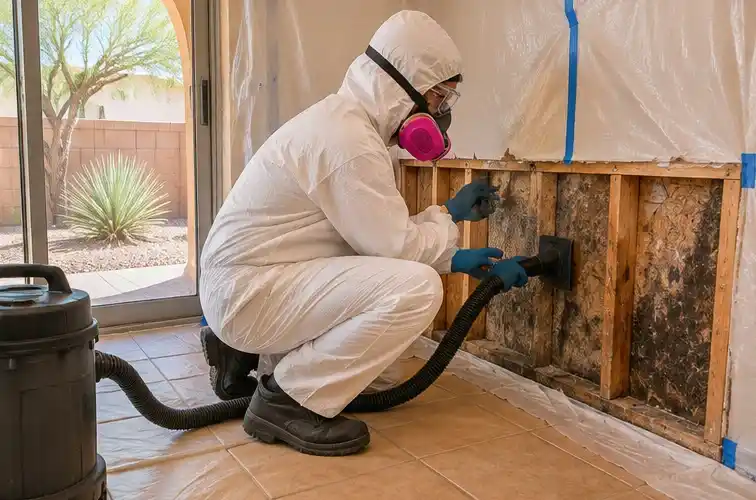
Mold removal in Goodyear, AZ often starts at the roof. Goodyear has 107,645 residents, 22.3 percent of households rent, and only 4.1 percent of its housing was built before 1980 (ACS 2024 5-year). With so little old pipe in the city, the failures that matter are roof details that let in monsoon rain, AC condensate, and supply lines buried behind newer walls.
A tile roof looks solid from the street and can still be wet underneath. The tile sheds most of the rain, the underlayment does the sealing, and a small break at a valley or a vent boot lets water reach the deck. The next step is to decide whether the stain belongs to the roof, the air handler or a supply line, because each one has a different repair ahead of it.
01 / Good to know
Median owner-occupied value reaches $471,300, and 11.0 percent of housing sits in buildings with five or more units (ACS 2024 5-year). Most of Goodyear is detached housing on subdivision lots, which removes the shared plumbing chases and stacked bathrooms that dominate older apartment cities.
What is left is a short list of mechanical and envelope failures. A roof detail. A condensate line. A braided supply line. A water heater pan. None of them need an old house to cause a problem, and all of them can wet the same wall for weeks before anyone notices.
02 / Monsoon
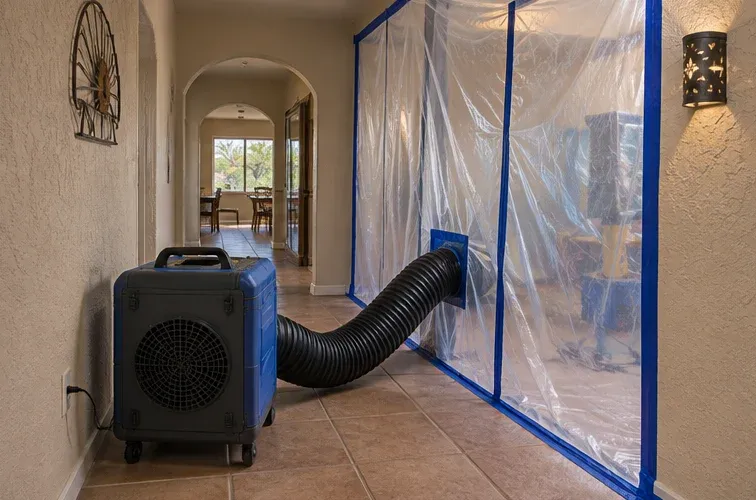
The monsoon season runs June 15 to September 30, and the storms arrive with wind. Rain that falls straight down is mostly handled. Rain that drives sideways finds the edges: a vent pipe boot that has cracked in the sun, a valley where two planes meet, the flashing at a wall, and the seam where a patio cover ties into the house.
Tile is a rain screen, not a waterproof layer. The underlayment beneath it is what keeps water out, and when that felt tears or ages through, the leak shows up as a stain on the ceiling weeks later. From the attic, the water runs along a rafter and wets the insulation, which holds it against the deck. That is why the attic mold page treats the roof inspection and the attic inspection as one job.
Stucco matters too. A hairline crack at a corner or above a window is enough to let wind-driven rain into the wall assembly, and the growth then appears on the interior drywall far from the crack.
03 / Good to know
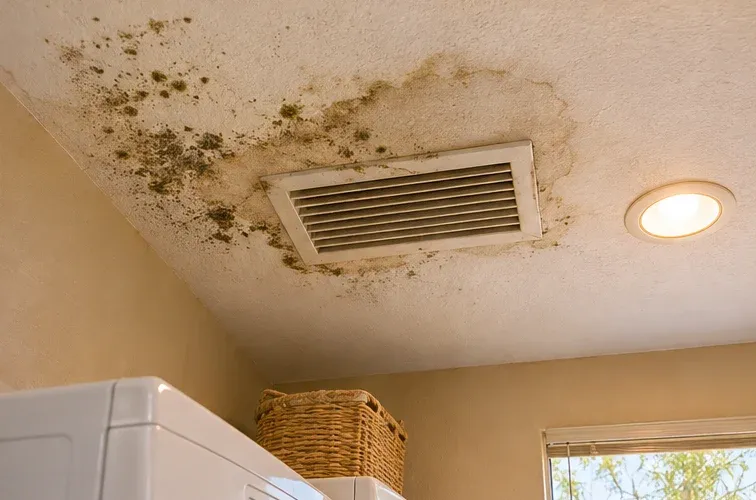
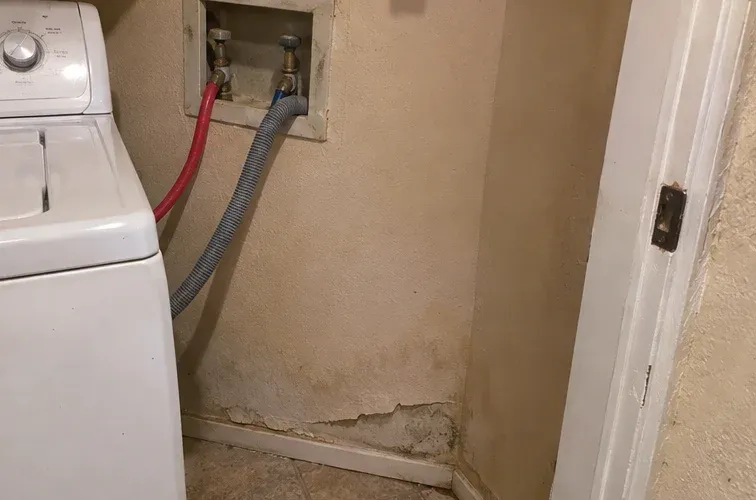
The second source is the air conditioner. A Goodyear house runs its air handler in the attic or a garage closet, with a drain pan and a condensate line. The line clogs with dust and growth, the pan overflows, and the closet floor stays wet. The drywall at the base of the closet wicks the water up, and the ceiling below the attic unit stains.
The warning signs are consistent: a musty smell when the fan starts, bubbling paint at the closet floor, dark streaks at the cabinet drain connection, and a stain on the ceiling under the unit. A float switch that shuts the system off is protection, not a failure. The EPA target for indoor humidity is 30 to 50 percent, with 60 as the ceiling, and a wet closet can pass it.
04 / 6 steps
05 / Costs
The ranges below are national, from two national cost guides. They are not local bids, and the gap between the low and high ends usually comes down to how much material has to be removed.
| Scope | National range |
|---|---|
| Inspection | $300 to $1,000 |
| Attic remediation | $1,500 to $9,000 |
| Full remediation | $1,500 to $9,000, average about $3,500 |
| Per square foot | $10 to $30 |
A roof leak that wet one section of deck and a leak that soaked the insulation across a whole attic are different jobs at different points in that range. The written scope should say which one applies. Testing is usually unnecessary when growth is visible, and the EPA notes that no federal limits have been set for mold or mold spores. Testing on its own runs $250 to $500 nationally, and the mold testing page covers when it adds anything. The mold removal cost page breaks the ranges down by room.
06 / Good to know
The renter share is 22.3 percent, so most Goodyear households own their homes, but rentals still run into the same problems. Tenants should report the problem in writing with photos and a date, and keep a copy.
A.R.S. 33-1324 requires the landlord to keep the premises fit and habitable. The statute does not name mold, so a notice should describe the water, the roof leak or the failed AC part. Ask for the source to be repaired and the wet material to be dried, not just painted. This is general information, not legal advice.
Local numbers
ACS 2024 5-year estimates, as stated in the page text above
Guides for Goodyear
Service area map
Goodyear and the areas around Tempe
The map shows Goodyear and our address in Tempe. The buttons under it open each area page.
All areas07 / 5 questions
Q.01
No. Only 4.1 percent of the city's housing was built before 1980, according to ACS 2024 5-year figures, so most moisture problems come from roofs, AC systems and supply lines.
Q.02
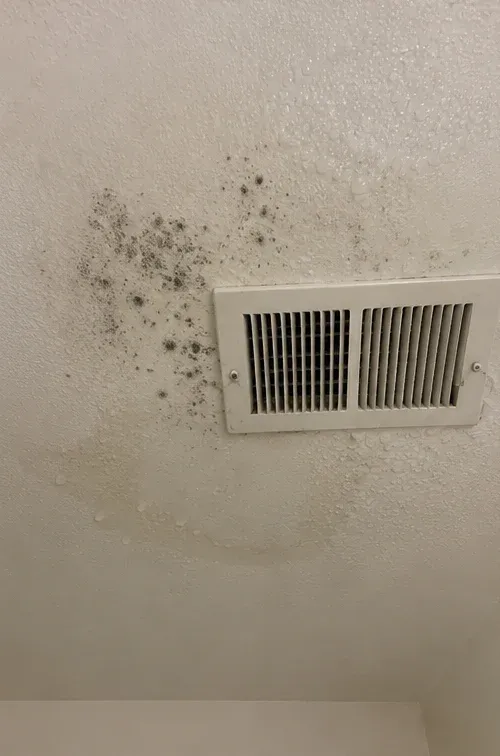
A stain that appears or grows after a monsoon storm, or one near a ceiling edge or vent, points at the roof. A moisture inspection confirms it from the attic side.
Q.03
Remediation runs $1,500 to $9,000 nationally, average about $3,500, or $10 to $30 per square foot. Add $300 to $1,000 (national cost guides) for the inspection.
Q.04
Yes. A clogged condensate line or a roof detail that leaks can wet new material as easily as old material.
Q.05
A roofing contractor. Remediation starts after the roof is closed, since cleaning under an active leak does not hold.
08 / Keep reading
Form open 24/7
Get a call back about mold in your home
Send the form. Someone from our team will call you back soon.