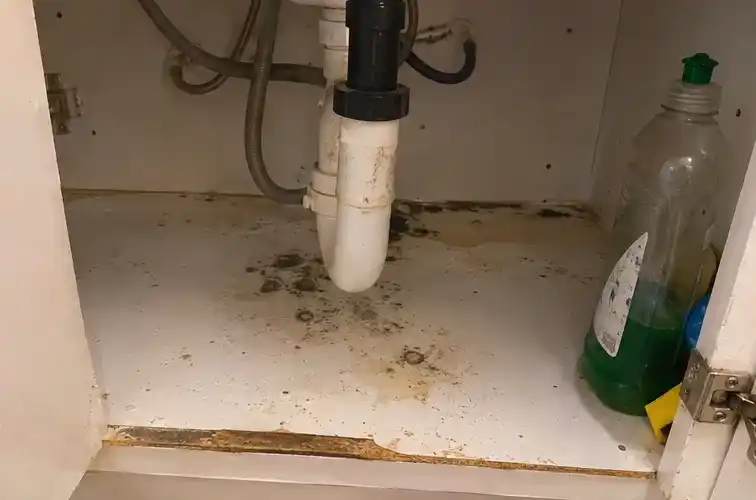
Under a sink, dark mold spots on the cabinet floor around a white drain pipe, a green dish soap bottle at the right

Service area · Paradise Valley, AZ

Mold Remediation Paradise Valley, AZ

You found mold or a stain in Paradise Valley. Send the form day or night, and someone from our team will call you back soon. We serve Paradise Valley and the towns around it.

Form open 24/7

Get a call back

Tempe · Maple-Ash · Mitchell Park · Escalante · University Park · Riverside + 29 more towns

Paradise Valley is known for large custom homes, and many of them are older than they look. Complex roofs and multiple air handlers hide water in places a quick walk through will miss.

Mold removal in Paradise Valley rarely involves a simple rectangular house. The town has 12,611 residents, and 41.8 percent of its housing was built before 1980, per ACS 2024 5-year estimates. That is a striking share for a place with a median owner-occupied value reported at the Census top-code of $2,000,001. Large custom homes from that era can have complex roof lines, deep attics, and multiple HVAC zones, and each of those features creates a place for water to hide.

Only 5.0 percent of homes are rented and just 1.0 percent of units sit in buildings with five or more, so almost every property is an owner-occupied detached house. The work is usually about protecting finishes and finding a leak that has been running behind stucco, above a ceiling, or inside a mechanical closet for a long time.

If a stain appears in a high ceiling or a room with no attic access, the inspection has to be planned rather than improvised. Access panels, roof walks, and moisture mapping matter more here than in a standard suburban house.
01 / Leaks

Older custom homes with complex roofs

A custom home often has several roof sections at different heights, joined by valleys, parapets, and transitions between tile, foam, and flat assemblies. Every transition is a potential entry point. So is every penetration for a vent, a skylight, or a piece of roof mounted equipment.

The age matters. A roof built in the 1970s or 1980s may have been recoated, patched, and modified several times. Each layer adds a seam. When monsoon rain arrives, water can travel along a valley, under a parapet cap, or behind a stucco fascia before it finds a way inside.

Age also affects the mechanical systems. A house built before 1980 may have had its original air handler replaced more than once, with new ducts tied into old chases and new drain lines run through whatever path was easiest. Those changes are rarely documented. An inspection that follows the drain line from the unit to its discharge point can find a slope problem or a concealed splice that a visual check of the cabinet would miss. The same is true of roof repairs, where a patch may cover a larger defect.

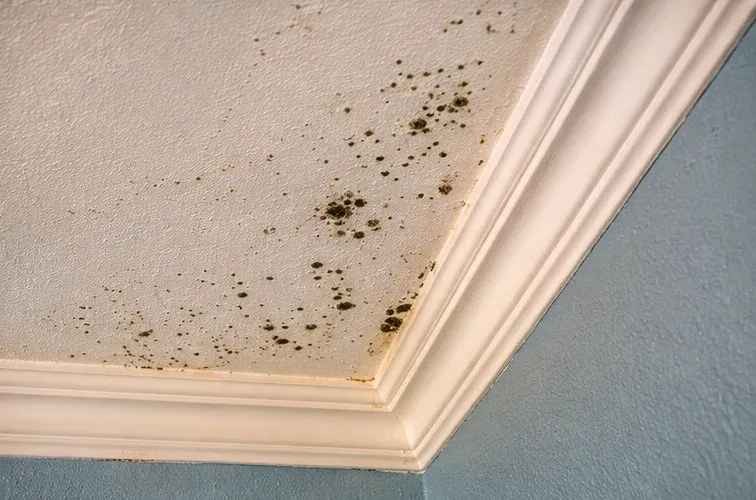
Dark mold speckles on a white ceiling corner above a blue wall and white crown molding

02 / Monsoon

Monsoon water on a large roof

Monsoon season runs June 15 to September 30. A large roof collects a large volume of water, and the runoff has to go somewhere. When a scupper, a downspout, or a roof drain is undersized or blocked, water backs up at the low point and works its way into the assembly.

Inside, the signs can be subtle: a faint ring on a high ceiling, paint that has lost adhesion, a musty smell in a hallway, or a soft spot near a roof valley. The monsoon roof leak guide explains how a small flashing failure becomes a ceiling stain weeks later.

03 / Good to know

HVAC zones and hidden air handlers

A large house may have several air handlers, some in attics, some in closets, and some above a ceiling with only a small access panel. Each unit has a condensate pan and a drain line. Each one can overflow without anyone noticing, especially in a room that is rarely used.

Look for:

  • A drain pan with standing water or a rust line.
  • A condensate line that runs uphill or has no visible slope.
  • A musty smell that appears when one zone runs.
  • A ceiling or wall stain below an air handler closet.
  • Ductwork that passes through an unconditioned attic and has wet insulation.

The AC mold removal page covers how a system is inspected, contained, and cleaned. Mechanical repair, refrigerant work, and electrical work belong to an HVAC contractor.

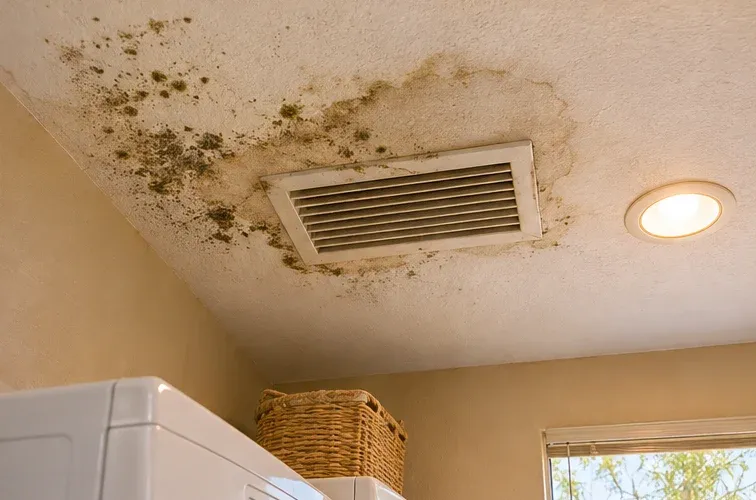
Dark mold speckling and brown staining on a laundry room ceiling around a white vent and a recessed light, a washer at the lower left

04 / 6 steps

Scoping work in a high-value home

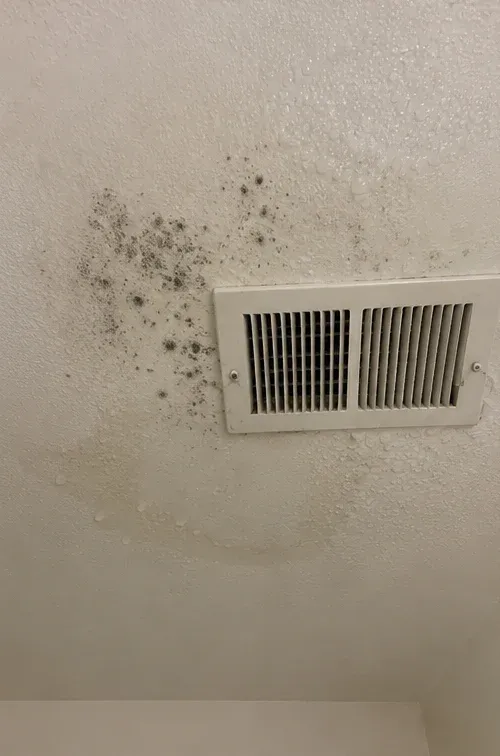
White wall with dark mold spots around a metal floor vent register
  1. Map the building first

    Roof plan, air handler locations, and the rooms below each one. The roof plan matters as much as the room list.
  2. Test the moisture, not just the stain

    Readings at the ceiling, the wall cavity, and the floor below.
  3. Fix the source

    Roofing, plumbing, or HVAC work comes before any cleaning.
  4. Protect the finishes

    Floor protection, sealed containment, and negative air pressure are standard on a home with expensive flooring, millwork, or art.
  5. Remove and clean

    Wet drywall, insulation, and porous material come out. Hard surfaces are cleaned and dried.
  6. Verify and document

    Moisture readings and photos support the reconstruction scope.

Reconstruction on a custom home can involve matching plaster, tile, or cabinetry. That work is separate from the mold scope and should be priced by the trades that handle it.

05 / Good to know

Budget ranges to compare

These are national figures, not quotes for a Paradise Valley address.

ScopeNational range
Inspection$300 to $1,000
Walls and ceilings$1,000 to $12,000
HVAC and duct system$3,000 to $10,000
Whole home$10,000 to $30,000

The mold scope does not include roof repair, HVAC mechanical work, or finish reconstruction.

06 / Good to know

Renting in Paradise Valley

Only about one home in twenty is rented here. A tenant in a house of this size may be dealing with a property manager and an owner who are both off site. Written notice with photos and dates is the practical starting point.

Ask for the moisture source to be inspected, not just the visible area cleaned. A.R.S. 33-1324 requires a landlord to keep the premises fit and habitable, and the statute does not name mold. The rental mold page covers how to document the request.

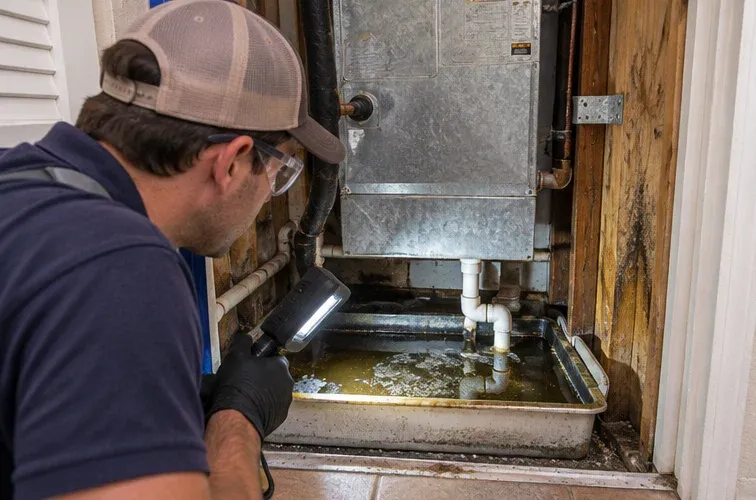
Man in a cap and safety glasses shining a flashlight into an air handler drain pan holding standing water, white drain pipes and a stained wall beside it

Local numbers

Paradise Valley by the numbers

  • Homes rented5.0%of homes are rented
  • Built before 198041.8%of its housing was built before 1980
  • In buildings of 5+ units1.0%of units sit in buildings with five or more
  • Residents12,611

ACS 2024 5-year estimates, as stated in the page text above

07 / 5 questions

Frequently asked questions

Still have a question?

Send the form. Someone from our team will call you back soon.

Get a call back

Q.01

Why would an expensive home have mold?

Cost and construction quality do not prevent water from entering. Complex roofs have more seams and transitions, multiple air handlers mean multiple condensate lines, and a large house can hide a leak for months. The size and complexity increase the number of places to check.

Q.02

How do I find a leak in a room with a high ceiling?

Start above it. The inspection looks at the roof assembly, any attic or plenum space, and the air handler that serves the room. Moisture readings and thermal imaging can narrow the area without opening the entire ceiling.

Q.03

Can remediation be done without moving out?

Often yes, if the work is contained to one area and the household can stay out of that zone. A large project with several affected rooms may require a different plan.

Q.04

Does the age of the house matter?

It can. Homes built before 1980 may have older roof assemblies, original plumbing, and HVAC systems that have been modified over time. Each change is a place where water can get in.

Q.05

How much does remediation cost in Paradise Valley?

National ranges put inspection at $300 to $1,000 (national cost guides), walls and ceilings at $1,000 to $12,000, and whole home work at $10,000 to $30,000. Custom finishes and reconstruction are separate costs.

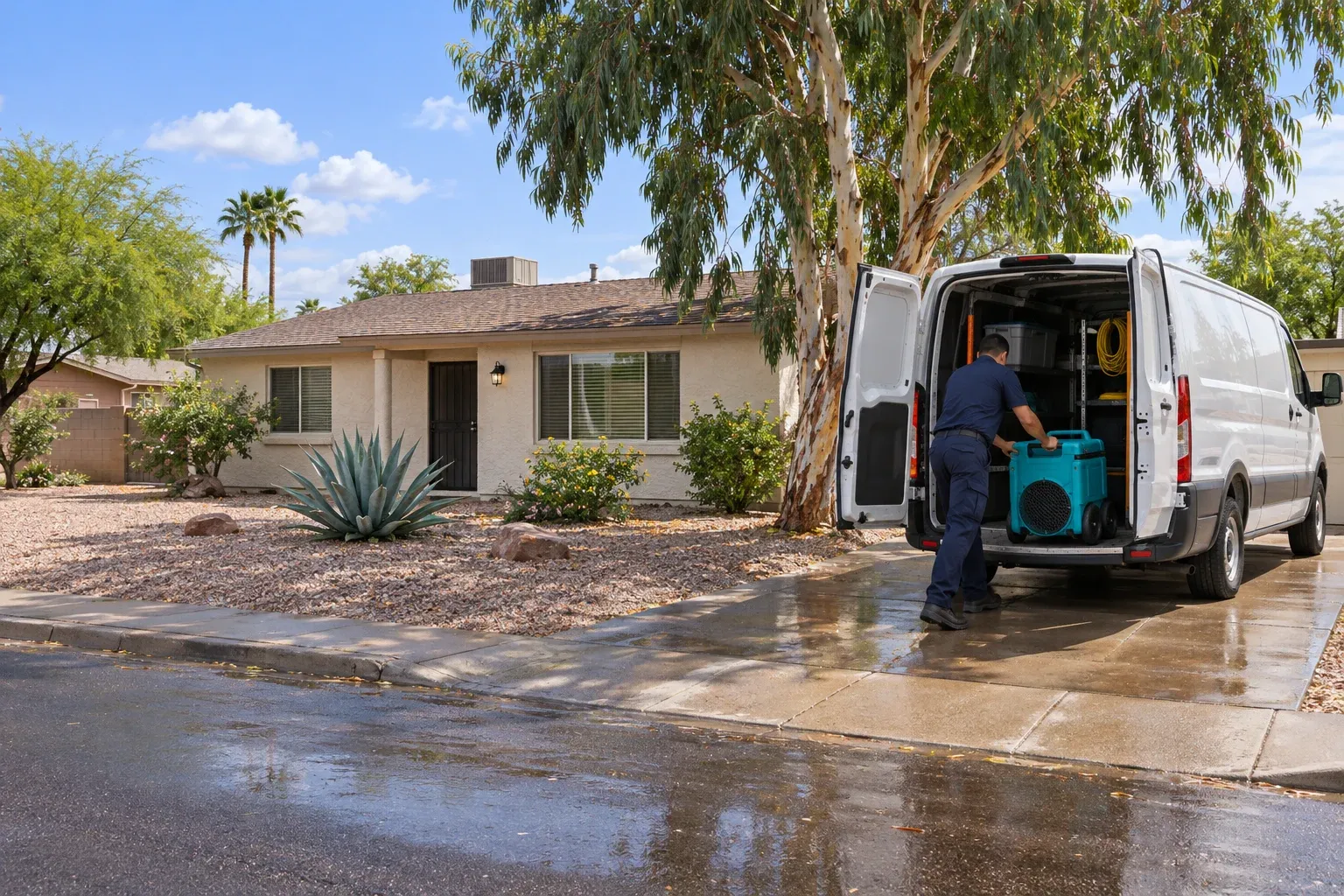
White cargo van with its rear doors open in a driveway, a man in navy work clothes wheeling a teal air machine out in front of a ranch house

Form open 24/7

Get a call back about mold in your home

Send the form. Someone from our team will call you back soon.

Mold in the house?Get a call back

Before you go: want a call back?

Send the request form and someone will call you back about the mold.

Get a call back

Get a call back

Send the form and someone from our team will call you back.