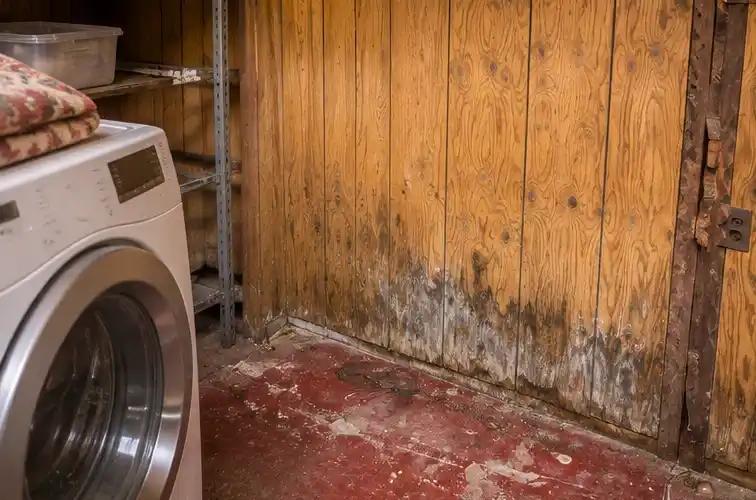
Water-stained wooden plank wall with dark mold marks beside a front-loading washer, red concrete floor at the bottom

Tempe neighborhood · Alegre

Mold Removal Alegre, Tempe

You found mold or a stain in Alegre. Send the form day or night, and someone from our team will call you back soon. We serve Tempe and the towns around it.

Form open 24/7

Get a call back

Tempe · Maple-Ash · Mitchell Park · Escalante · University Park · Riverside + 29 more towns

Alegre's ranch houses were built for dry heat, not for monsoon rain. Cooler pans, roof curbs and water heater closets are where the moisture starts.

Mold removal in Alegre usually comes down to two questions: where the water is coming from, and how long it has been there. Alegre is a west Tempe neighborhood of older ranch houses, and the ZIP code area that covers it, 85282, is 58.1 percent pre-1980 housing per ACS 2024 5-year figures. Ranches from that period were built low and long, with shallow roof pitches, mechanical closets off a hallway, and evaporative coolers on the roof or beside the house.

The typical case is a bedroom that smells musty after a monsoon storm, or a closet that smells damp in a city with almost no basements. Both point to the same next step: a moisture inspection that follows the water instead of guessing at the stain on the ceiling.
01 / Monsoon

What a west Tempe ranch does in the rain

A shallow roof pitch sheds water slowly, and the details around the edges do most of the work. Vent boots, flashing at a wall intersection, and the curb where a cooler or a skylight sits are the usual entry points. Wind-driven rain during the monsoon, June 15 to September 30, pushes water sideways against those details in a way a garden hose never reproduces.

Once water is inside, the ceiling assembly carries it. It runs along a joist, soaks the drywall from the back, and shows up as a stain a few feet from the actual gap. Insulation above the ceiling holds the moisture against the drywall for days. That is enough time for growth to start on the paper face, especially when the house is closed up and the air conditioner is running.

Long exterior walls with few breaks mean a small flashing failure can wet a wide section of wall cavity before anything shows indoors.

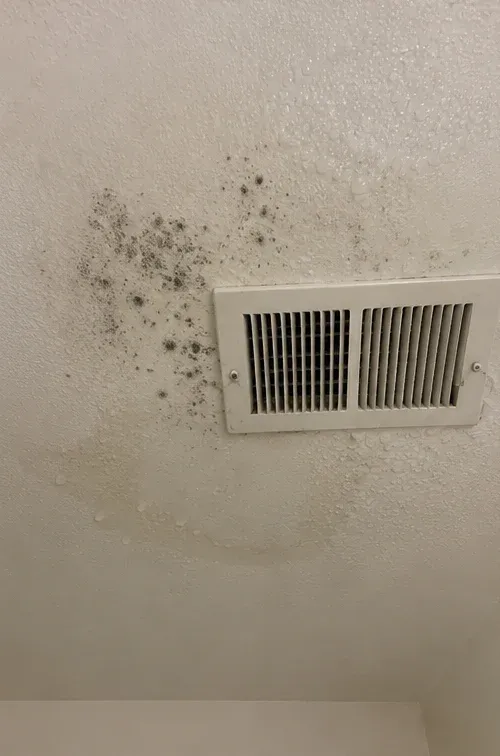
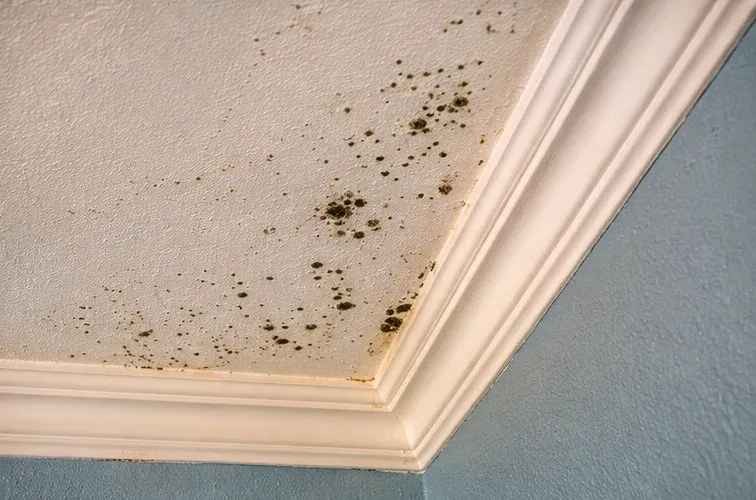
Dark mold speckles on a white ceiling corner above a blue wall and white crown molding

02 / Leaks

Swamp coolers, roof curbs and the water heater closet

An evaporative cooler is a water appliance on the roof. A supply line feeds it, a bleed line dumps excess water, and a pan holds the water that the pads draw up. When the pan rusts through, or the overflow fitting clogs, water runs onto the roof deck and into the attic. The curb that the cooler sits on is a penetration in the roof, and the seal around it ages like any other.

A cooler switched off for the season can still leak when it is tested in spring. A cooler that was replaced by central air often leaves a capped line and an abandoned curb behind. Both are worth checking before the first storm.

The water heater closet is the other quiet source. In these houses it is often a small closet off a hallway or a recess on an exterior wall, with a pan that may not drain anywhere. A failing temperature and pressure valve, a rusted tank fitting or a weeping supply line puts water into the framing of the closet. Drywall on the back of that closet wicks it up, and the smell shows up in the adjacent room.

  • Cooler pan rust, overflow clogs and pad residue blocking the drain.
  • Roof curb seals and the penetration where the cooler duct enters the attic.
  • Water heater pans with no drain, and valves that drip only when the tank heats.
  • Supply lines behind a washing machine or under a kitchen sink, where a slow drip runs down the cabinet.

03 / 5 steps

From inspection to final walkthrough

White wall with dark mold spots around a metal floor vent register
  1. Inspect and document

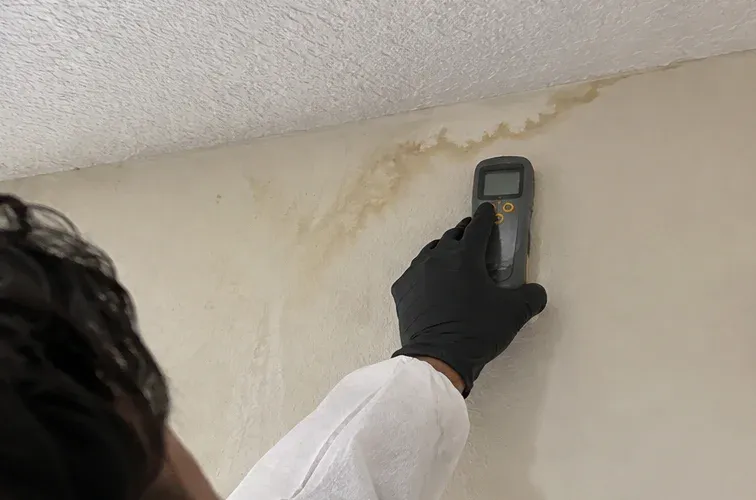
    Moisture readings at the ceiling, the closet and the floor, with photos of each wet area and the suspected entry point.
  2. Repair the building first

    Roofing, cooler removal or plumbing repair happens before any cleaning. An abandoned cooler curb is often removed and patched rather than resealed.
  3. Contain the work area

    Sheeting at doorways and negative air pressure keep the rest of the house out of the dust path.
  4. Remove, clean and dry

    Wet insulation and porous material come out. Structural wood is HEPA vacuumed and cleaned, then dried to a measured level.
  5. Check before closing

    The cavity is verified dry and clean before drywall, texture and paint go back.

04 / Costs

National price ranges

These figures are national, not Alegre quotes.

ScopeNational range
Inspection and cooler check$300 to $1,000
Remediation, per square foot$10 to $30
Attic remediation$1,500 to $9,000
Walls and ceilings$1,000 to $12,000

A single closet with growth on one wall is a small job. A ceiling wet across a room, with insulation removal and texture work, lands in the middle of that range. The attic mold page covers the roof leak side in more detail.

05 / Good to know

Renting an Alegre house

Just over half of the 85282 housing is rented, 53.0 percent per ACS 2024 5-year figures, so a renter is as likely as an owner to report the leak. A cooler that drips or a water heater pan that overflows is a building repair, not a tenant project.

Report it in writing with photos and the date you noticed it. Arizona's habitability statute, A.R.S. 33-1324, puts the duty to keep the premises fit and habitable on the landlord. It does not mention mold by name. This page is not legal advice. Keep a copy of every message, and ask for the repair date in writing.

If the cooler is yours to maintain under the lease, have it serviced before the season starts and keep the receipt.

Gloved hand holding a moisture meter against a wall with brown water stains below a textured ceiling

Local numbers

Alegre by the numbers

  • ZIP 85282 · Homes rented53.0%
  • ZIP 85282 · Built before 198058.1%pre-1980 housing

ACS 2024 5-year estimates, as stated in the page text above

06 / 5 questions

Frequently asked questions

Still have a question?

Send the form. Someone from our team will call you back soon.

Get a call back

Q.01

Does a swamp cooler cause mold in an Alegre house?

It can. A cooler adds water to the roof and the attic through its pan, supply line and curb. When that water escapes, the deck and nearby insulation stay wet. A cooler that is serviced and sealed each spring is less likely to be the source.

Q.02

What should a remediation quote in Alegre cover?

National ranges run $10 to $30 per square foot. A small bathroom or closet is around $500 to $1,500, walls and ceilings run $1,000 to $12,000, and an inspection is $300 to $1,000 (national cost guides). Access and the amount of removed material drive the final number.

Q.03

The stain is only on the ceiling. Why does the wall need to come apart?

Water travels along framing before it soaks through drywall. A stain in the middle of a ceiling can come from a gap several feet away. Moisture readings map the wet area, and sometimes the repair is smaller than the stain suggests.

Q.04

Can I run the cooler again after a leak?

Not until the pan, lines and curb are checked and the attic is dry. Running it again adds water to the same spot. A repair or a switch to central air is the decision to make first.

Q.05

Is a water heater closet leak worth fixing right away?

Yes. The closet is small, the drywall is close, and a slow drip can wet the framing for months. A pan that drains outdoors and a valve that holds are cheap compared with opening the wall later.

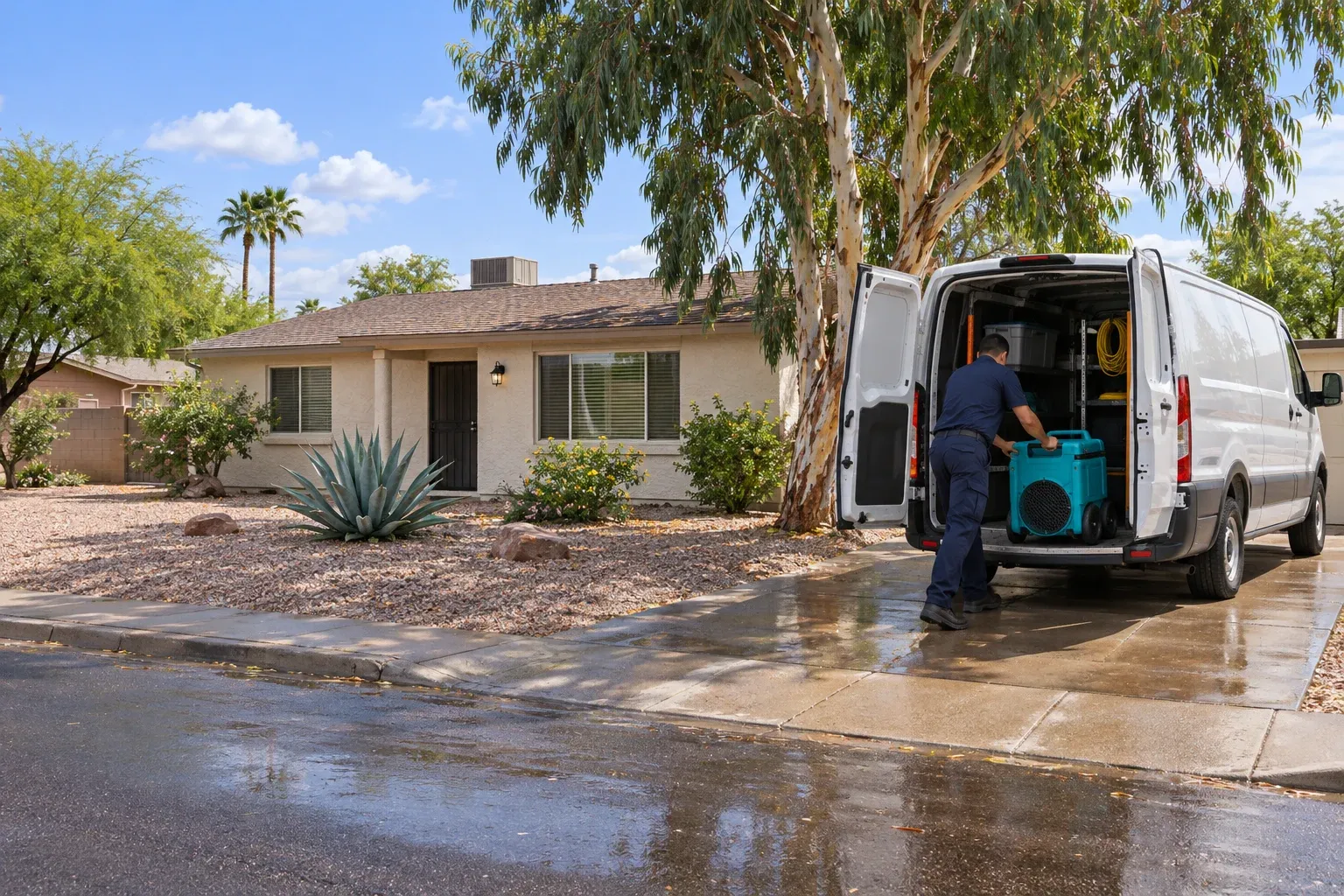
White cargo van with its rear doors open in a driveway, a man in navy work clothes wheeling a teal air machine out in front of a ranch house

Form open 24/7

Get a call back about mold in your home

Send the form. Someone from our team will call you back soon.

Mold in the house?Get a call back

Before you go: want a call back?

Send the request form and someone will call you back about the mold.

Get a call back

Get a call back

Send the form and someone from our team will call you back.