Q.01
Can a brand new Buckeye house have mold?
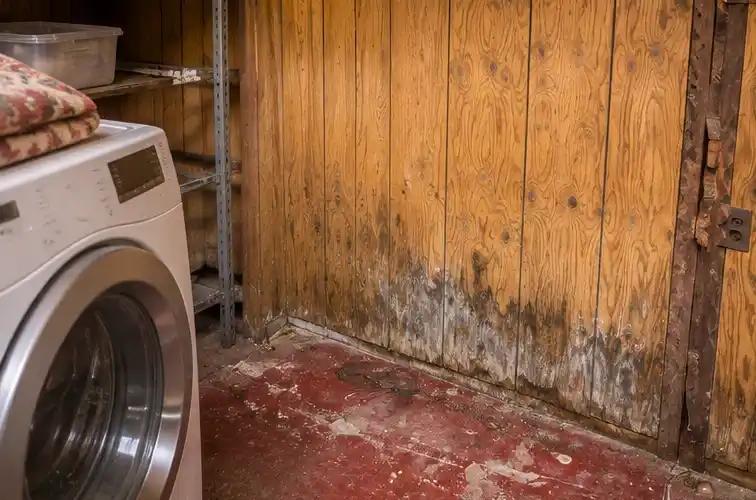
Yes. A clogged condensate line, a leaking supply line or a roof detail can wet new material. The house being new does not keep it dry.
Service area · Buckeye, AZ
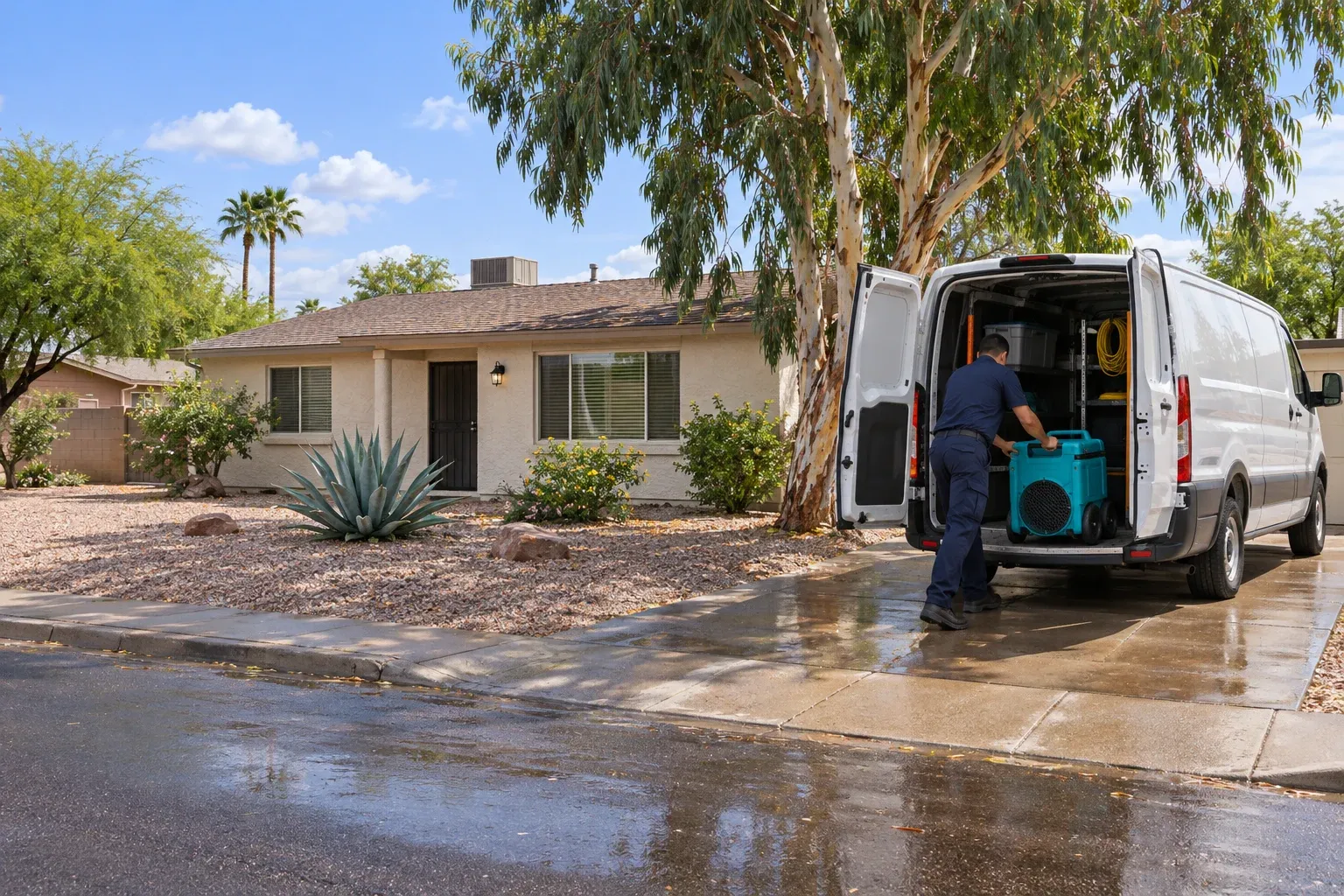
You found mold or a stain in Buckeye. Send the form day or night, and someone from our team will call you back soon. We serve Buckeye and the towns around it.
Form open 24/7
Get a call back
Tempe · Maple-Ash · Mitchell Park · Escalante · University Park · Riverside + 29 more towns
Mold removal in Buckeye, AZ is almost never about old plumbing. Buckeye has 104,923 residents, only 3.9 percent of its housing was built before 1980, and 2.2 percent sits in buildings with five or more units (ACS 2024 5-year). That narrows the moisture list to AC condensate, supply lines and roof details.
Almost every property here is a detached house on a subdivision lot, often only a few years old. That surprises people who assume a new house cannot grow mold. It can. The materials are new, but the water is the same water, and a condensate line that clogs in July does not care when the drywall went up.
01 / Good to know
The median owner-occupied value is $419,800, and 14.0 percent of households rent (ACS 2024 5-year). With a multifamily share of 2.2 percent, there are very few shared walls and almost no stacked plumbing. The moisture problems that do show up are contained to one house, which makes the scope simpler and the source easier to trace.
What a newer house has instead is equipment. An air conditioner that runs from spring into fall, a water heater in a closet or the garage, supply lines to every fixture, and a roof with the same details as any other. Age does not protect those parts. It only means the failures are not yet routine.
02 / Sources
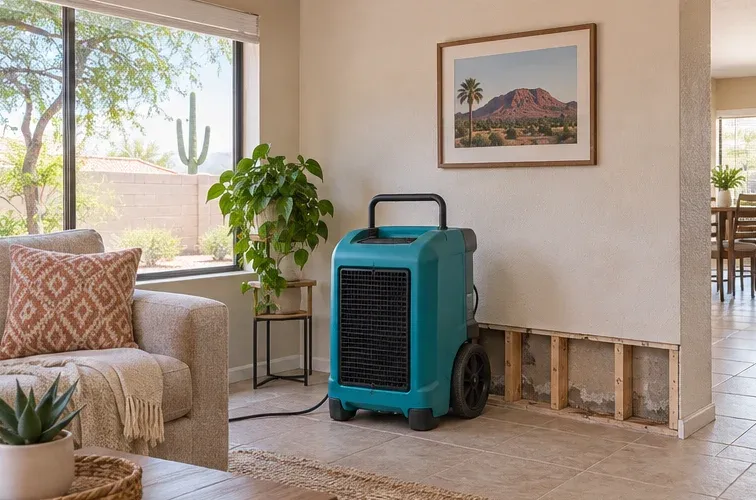
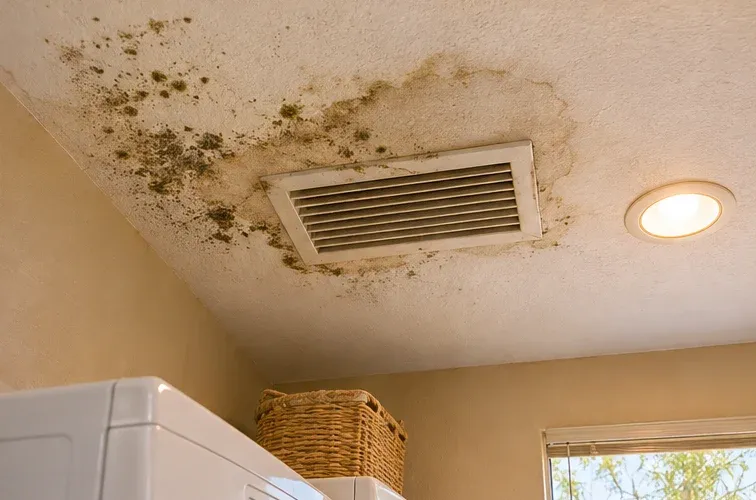
A Buckeye air handler pulls a large volume of water out of the air every day of the cooling season. That water drains through a small line, and the line is the weakest part of the system. Dust, insulation fibers and biological growth collect in the trap, the line slows, and the pan starts to fill.
The checklist worth running before any remediation:
Indoor humidity should stay under 60 percent, ideally between 30 and 50, and a wet air handler closet keeps the surrounding wall well above it. That is why the growth often spreads beyond the cabinet. Growth that reaches the cabinet and plenum is covered on the AC mold removal page.
03 / Leaks
Supply lines are another source. A braided line to a washing machine, a refrigerator line, or a valve under a sink can weep behind a cabinet for weeks. The cabinet backing swells and the first sign is a stain on the floor on the other side of the wall.
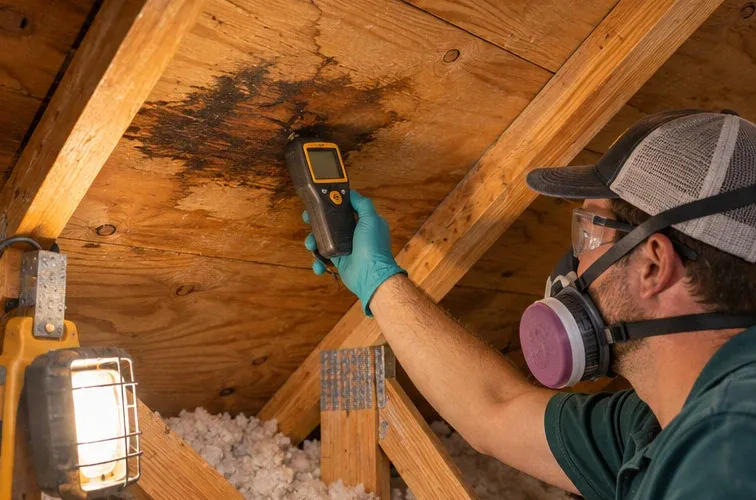
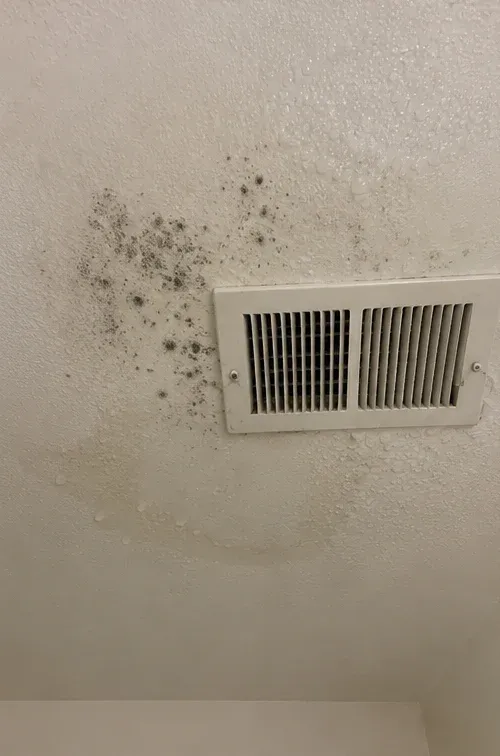
Water heaters sit in closets and garages, and a tank that rusts through or a temperature and pressure valve that drips wets the floor and the framing. Roof details are another. A vent boot, a valley, or the flashing where a patio cover meets the house can let in monsoon rain, which runs June 15 to September 30. The stain usually shows up on a ceiling far from the entry point.
04 / 6 steps
05 / Good to know
The numbers below are national ranges from two national cost guides, not local quotes. Newer housing does not automatically mean a cheaper job, since the same amount of drywall and insulation comes out either way.
| Scope | National range |
|---|---|
| Inspection | $300 to $1,000 |
| Testing | $250 to $500 |
| Remediation | $1,500 to $9,000, average about $3,500 |
| Per square foot | $10 to $30 |
Testing is usually unnecessary when the growth is visible, and no federal health-based standard exists for mold or spores.
06 / Good to know
At 14.0 percent, the renter share is modest, but rental houses exist and tenants still find the problems first. Report the issue in writing with photos and a date, and keep a copy of the message.
Under A.R.S. 33-1324, a landlord has to keep the premises fit and habitable. Mold is not named in the statute, so describe the wet closet, the leaking line or the stained ceiling instead of using the word alone. Ask for the source repair and the drying to be part of the same job. This is general information, not legal advice.
Local numbers
ACS 2024 5-year estimates, as stated in the page text above
Guides for Buckeye
Service area map
Buckeye and the areas around Tempe
The map shows Buckeye and our address in Tempe. The buttons under it open each area page.
All areas07 / 5 questions
Q.01
Yes. A clogged condensate line, a leaking supply line or a roof detail can wet new material. The house being new does not keep it dry.
Q.02
Plan for $1,500 to $9,000 in remediation costs nationally, average around $3,500, or $10 to $30 per square foot. Inspection is $300 to $1,000 (national cost guides).
Q.03
AC condensate is a common source. The drain line clogs, the pan overflows and the closet floor and drywall below stay wet through the cooling season.
Q.04
Usually not if you can see the growth. EPA guidance calls sampling unnecessary in that case, and no federal health-based standard exists for mold or spores.
Q.05
No. An HVAC contractor clears the line and repairs the pan. Remediation and drying of the wet material is a separate scope.
08 / Keep reading
Form open 24/7
Get a call back about mold in your home
Send the form. Someone from our team will call you back soon.