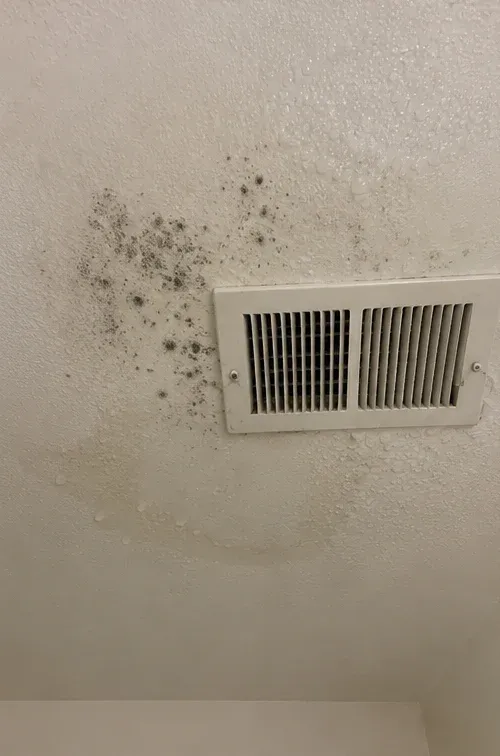
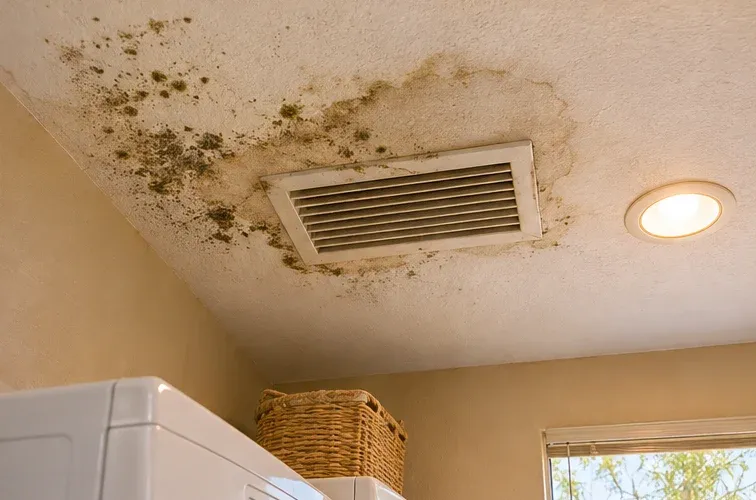
Mobile and manufactured roof seams. Water enters at the seam, runs along the ceiling cavity, and shows up at the far end of the room. The stain and the leak are often several feet apart, which is why a repair based on the stain alone fails.
Evaporative coolers. A swamp cooler sends air through wet pads, and the water has to get to the unit somehow. A rooftop line, a pump, or a pan that overflows can wet the roof deck and the attic insulation. At the end of the season, a cooler that is shut down with water still in the line is a leak waiting for the first cold night. The swamp cooler comparison explains how that moisture differs from AC condensate.
Bathroom and laundry exhaust. A fan that terminates in the attic, rather than through the roof, dumps moist air into the same space summer after summer.
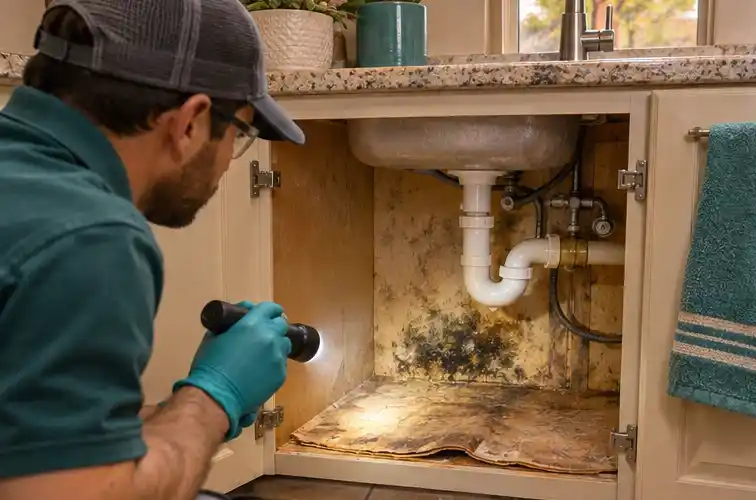
Older plumbing. A pinhole in a supply line or a failed fitting under a slab can wet a wall or a floor for months. The first sign is often a musty smell in a hallway, not a puddle.
Monsoon rain. The season runs June 15 to September 30. Wind-driven rain finds the weak detail, and flat or low-slope sections pond at the edges.