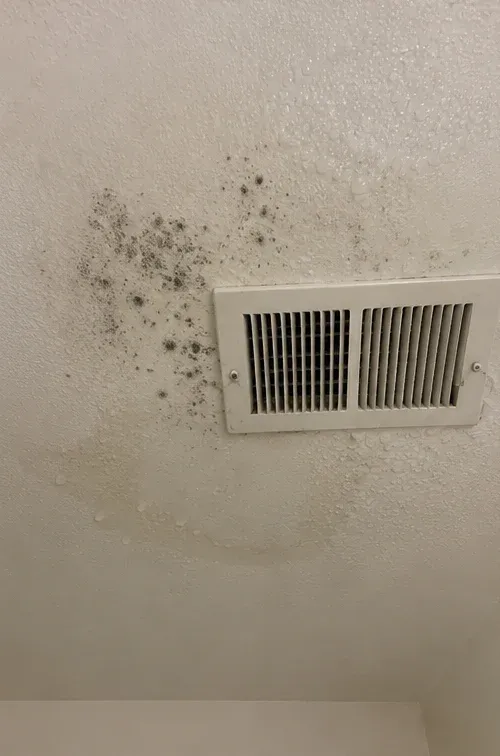
Ponding on a flat roof. A flat roof drains through a scupper or a roof drain, and both clog. Once water stands, it works at the seams and the base of the parapet. The ceiling below shows a stain near the wall, not in the middle of the room.
Parapet walls. The joint where the roof meets the parapet is a common failure point. Water gets behind the coping, runs down inside the wall, and wets the top plate and the insulation.
Swamp coolers. An evaporative cooler on a flat roof adds a water line, a pump and a pan to a surface that already drains poorly. A pan overflow or a disconnected line wets the roof deck directly.
Older plumbing. Small houses often have plumbing packed into a single wall between the kitchen and the bathroom. A supply line or drain leak in that wall wets both rooms and the flooring under them.
Shared walls. In the apartments and small multi-unit buildings, a leak in one unit can travel through a shared wall. Water follows the path of least resistance, which is usually the plumbing chase.
Monsoon rain. Between June 15 and September 30, storms arrive fast. On a tight lot, runoff from the roof and the neighbor's roof lands in a narrow space between walls, and the ground stays wet for days.