Woman in a teal polo holding a tablet beside an air sampling pump on a tripod in a condo living room with a city skyline and a hill in the windows

Service area · Chandler, AZ

Mold Removal Chandler, AZ

You found mold or a stain in Chandler. Send the form day or night, and someone from our team will call you back soon. We serve Chandler and the towns around it.

Form open 24/7

Get a call back

Tempe · Maple-Ash · Mitchell Park · Escalante · University Park · Riverside + 29 more towns

Chandler is a newer city, so its mold problems tend to come from equipment, not from hundred-year-old pipes. Condensate, shared walls and monsoon details carry the risk.

Mold removal in Chandler rarely starts with a 1940s plumbing failure, because Chandler does not have many 1940s houses. Only 9.8 percent of Chandler homes were built before 1980 (ACS 2024 5-year). What Chandler does have is a large number of condominiums, apartments and attached homes: 20.1 percent of units sit in buildings with 5 or more units (ACS 2024 5-year), above the 12.6 percent in Gilbert. Add a long cooling season, and the most common source is an AC system that has been dripping into a closet or a ceiling cavity for weeks.

Chandler has 280,136 residents, and 35.0 percent of occupied homes are rented (ACS 2024 5-year). The city's mold problems therefore split between owners repairing their own units and landlords or HOAs dealing with a leak that crosses from one unit into another. The first step in either case is to find where the water is coming from, not to paint over the stain.

01 / Good to know

Newer construction changes the moisture map

Chandler's housing stock is mostly post-1980, with the median owner-occupied value at $507,800 (ACS 2024 5-year). Newer construction has better windows and tighter envelopes than the 1960s stock in central Phoenix or Tempe. That tightness saves energy, but it also means moisture that gets inside has fewer ways out.

3 numbers set the pattern:

  • 9.8 percent of homes were built before 1980 (ACS 2024 5-year), so original plumbing is uncommon.
  • 20.1 percent of units are in buildings with 5 or more units (ACS 2024 5-year), so attached construction and shared systems matter.
  • 35.0 percent of occupied homes are rented (ACS 2024 5-year), so a landlord is often part of the decision.

In a house, the typical failure is mechanical: a condensate line, a water heater pan, a supply line to the refrigerator or the washing machine. In a condo building, the typical failure is shared: a leak from the unit above, a riser in the wall, or condensate from a rooftop unit.

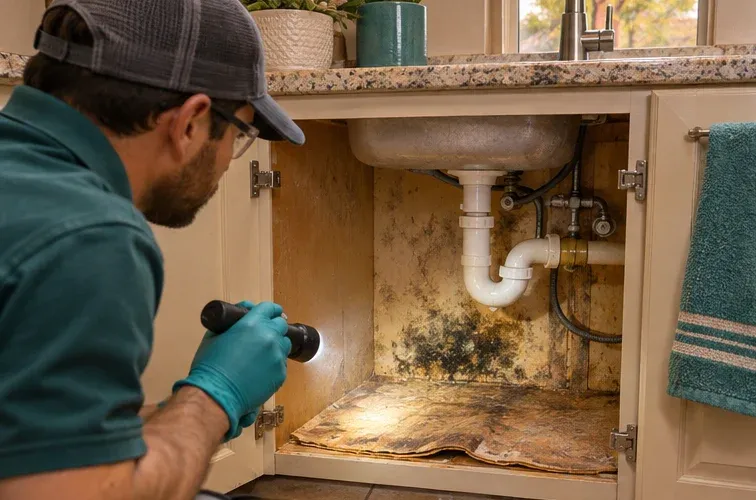
Man in a teal polo shining a flashlight at dark mold on the floor of an under-sink cabinet, a teal striped towel hanging at the right

02 / Good to know

AC condensate, laundry rooms and shared walls

AC condensate. An air handler pulls gallons of water out of the air every day during summer. The water leaves through a small drain line, and that line clogs with algae, dust and biofilm. When it clogs, the pan overflows into the closet, the hallway or the ceiling below. The AC mold page covers how the growth follows the water.

Upstairs laundry and water heaters. In newer two-story houses, the washer and the water heater often sit on the second floor or in a closet off a hallway. A supply hose failure sends water into the ceiling assembly, and the stain appears on the first floor.

Shared walls and stacked units. In a building with stacked units, water from a failed line on an upper floor can travel down a chase and appear in units that never had a leak. Nobody on the lower floors owns the pipe that caused it.

Monsoon roof details. Even a newer roof has penetrations: vents, skylights, solar mounts and the seams where two roof planes meet. Wind-driven rain finds them between June 15 and September 30.

03 / 5 steps

What the work involves

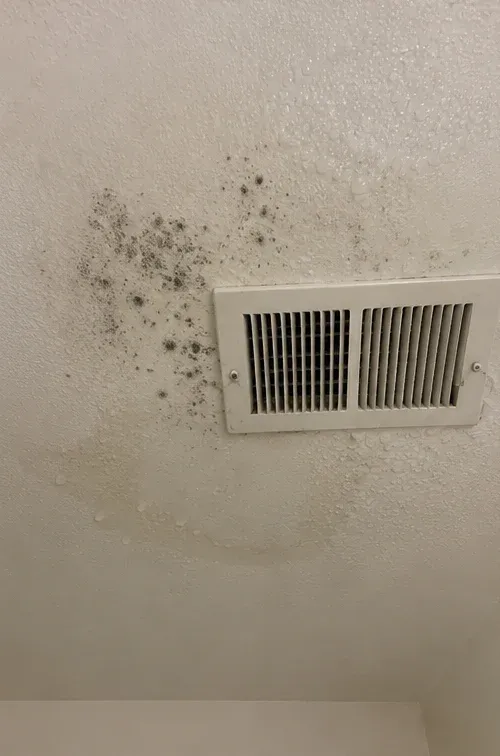
White wall with dark mold spots around a metal floor vent register
  1. Trace the water

    The condensate line, the pan, the supply lines and the roof details get checked in that order. In a condo, the unit above and the shared chase are part of the inspection.
  2. Define the wet zone

    Moisture readings separate wet drywall and insulation from material that only looks stained.
  3. Coordinate access

    In an attached building, the HOA and the neighboring owner may need to approve entry before containment goes up.
  4. Seal and take out

    The work area is sealed and put under negative pressure. Wet drywall, insulation and any porous material that cannot be dried are removed.
  5. Dry and confirm

    Equipment runs until readings match a dry standard, then the assembly is checked before texture and paint.

04 / Costs

What it costs in Chandler

The figures below are national ranges, not Chandler bids. Two units of the same size can differ by thousands of dollars depending on access and containment.

ScopeNational range
Inspection$300 to $1,000
Testing, when needed$250 to $500
Small bathroom$500 to $1,500
Typical remediation$1,500 to $9,000
HVAC and ductwork$3,000 to $10,000
Whole home$10,000 to $30,000

Remediation averages about $3,500 nationally, or $10 to $30 per square foot. A single air handler closet is a small job. A stacked-unit leak that wet two ceilings is not.

05 / Property types

Renting and HOA rules in Chandler

With 35.0 percent of homes rented, many Chandler mold problems start with a tenant notice. A.R.S. 33-1324 requires a landlord to keep the premises fit and habitable, and the statute does not use the word mold. Written notice and dated photos carry more weight than a phone call.

In a condo or an HOA community, the repair boundary is defined by the governing documents, not by the stain. The association may own the roof, the exterior walls and the common pipes, while the owner is responsible for everything inside the paint line. Ask for the relevant section in writing before work begins.

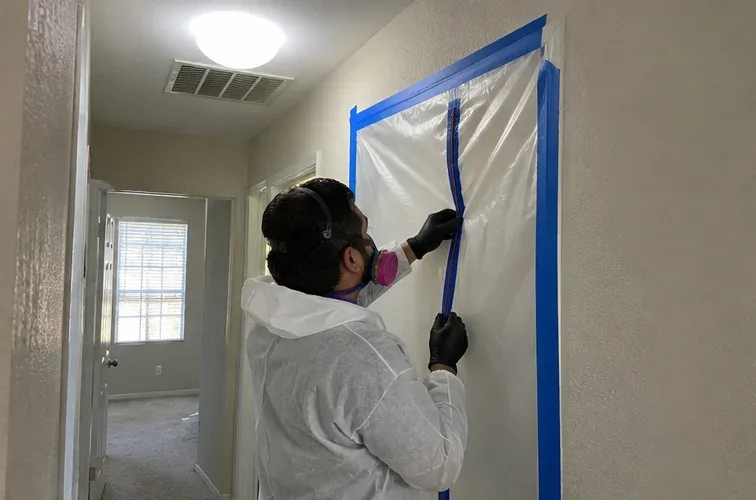
Worker in a white suit and respirator taping plastic sheeting over an apartment doorway with blue tape, a ceiling vent above

Local numbers

Chandler by the numbers

  • Homes rented35.0%of occupied homes are rented
  • Built before 19809.8%of Chandler homes were built before 1980
  • In buildings of 5+ units20.1%of units sit in buildings with 5 or more units
  • Residents280,136

ACS 2024 5-year estimates, as stated in the page text above

06 / 5 questions

Frequently asked questions

Still have a question?

Send the form. Someone from our team will call you back soon.

Get a call back

Q.01

Why does a newer Chandler home have mold?

Newer homes still make water. AC condensate, a failed supply hose and a slow drain leak are the usual sources. Tight construction keeps humidity inside, so a small leak that would have dried in an older house can stay wet.

Q.02

How much does AC mold removal cost in Chandler?

National HVAC remediation ranges run about $3,000 to $10,000, and mold removal inside air ducts alone runs $600 to $2,000. A single air handler closet with surface growth can be far less. The scope depends on how far the moisture spread.

Q.03

Who pays when a condo leak comes from the unit above?

It depends on the HOA documents and the insurance policies. The association usually owns common pipes and the roof, while owners cover their interiors. Get the boundary in writing before approving work.

Q.04

Is a musty smell enough reason to open a wall?

It is enough reason to investigate. A moisture meter can show whether the drywall or framing is wet without cutting. If readings are high, a small inspection opening is cheaper than replacing a full wall later.

Q.05

Does Chandler's monsoon season affect condos?

It can. The season runs June 15 to September 30, and wind-driven rain gets into roof penetrations, vents and balcony details. In a multi-story building, that water can travel down a wall cavity before it shows inside.

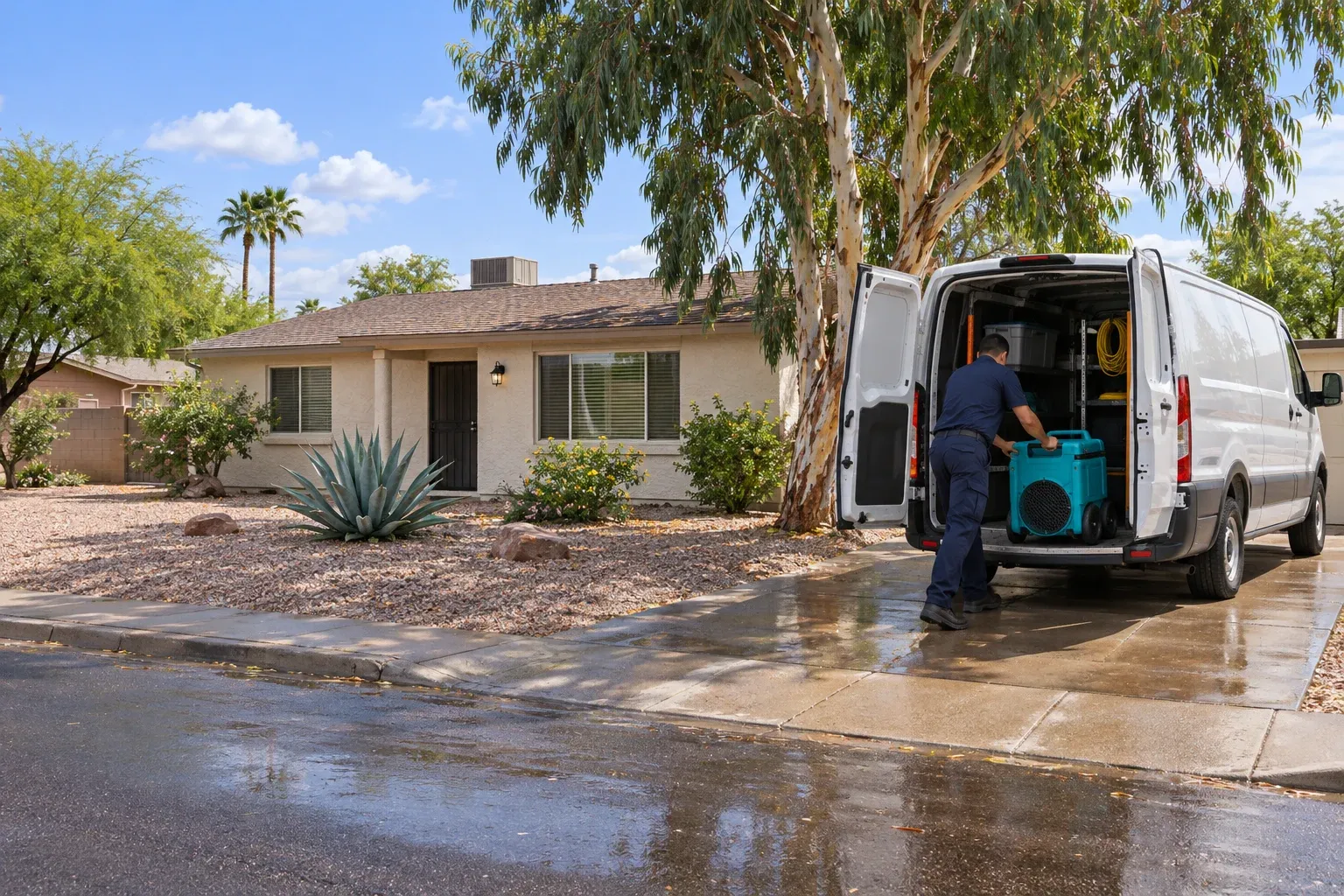
White cargo van with its rear doors open in a driveway, a man in navy work clothes wheeling a teal air machine out in front of a ranch house

Form open 24/7

Get a call back about mold in your home

Send the form. Someone from our team will call you back soon.

Mold in the house?Get a call back

Before you go: want a call back?

Send the request form and someone will call you back about the mold.

Get a call back

Get a call back

Send the form and someone from our team will call you back.