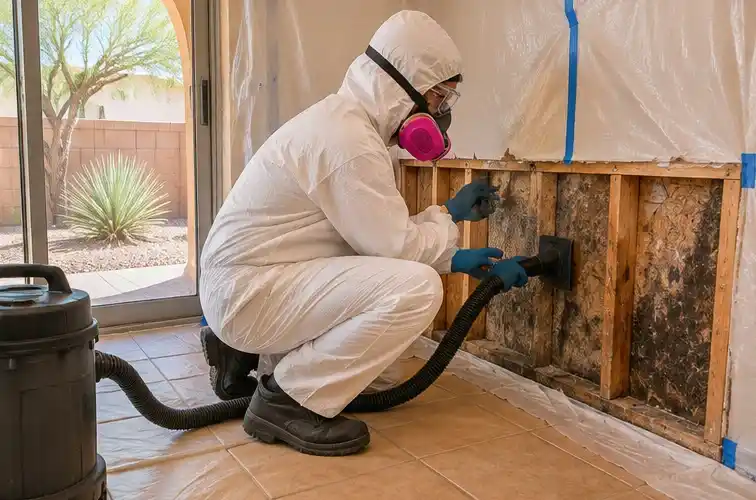
Worker in a white suit and pink respirator vacuuming dark mold from an opened wall cavity beside a sliding glass door, a dark HEPA vacuum at the left

Tempe neighborhood · Rural-Geneva

Mold Removal Rural-Geneva, Tempe

You found mold or a stain in Rural-Geneva. Send the form day or night, and someone from our team will call you back soon. We serve Tempe and the towns around it.

Form open 24/7

Get a call back

Tempe · Maple-Ash · Mitchell Park · Escalante · University Park · Riverside + 29 more towns

Rural-Geneva's slab-built houses hide water under the floor and behind closet walls. The inspection follows the plumbing before any cleaning starts.

Mold removal in Rural-Geneva starts with the plumbing more often than with the roof. This is central-south Tempe, and the ZIP code area that covers the neighborhood, 85282, has the highest pre-1980 share of the 4 main Tempe residential ZIP codes (85281 to 85284), with 58.1 percent of its homes built before 1980, according to ACS 2024 5-year figures. Houses from that era were often plumbed with cast iron drain lines and often built directly on slabs, and both details decide where moisture collects.

When a musty smell keeps returning to a hallway closet, or a paint patch at the base of a wall fails every few months, the next step is a moisture inspection rather than another coat of sealer. The inspection locates the water path first. Remediation holds only after that path is closed.

01 / Mold

How mold shows up in Rural-Geneva houses

Slab construction changes the way water behaves. A supply line leak under the slab does not drip into a basement, because there is no basement. Water spreads sideways through soil and concrete, then rises into the flooring assembly. The visible result is often a dark band along a baseboard, a soft spot in vinyl flooring, or carpet that smells damp in one corner of a room and nowhere else.

Cast iron drain lines fail more slowly. A line installed in the 1960s or 1970s rusts from the inside out, and the first sign is often a drain that empties slowly or a sewer smell in a bathroom that nobody can trace. By the time a stain appears on the floor, the soil under the slab may have been wet for months.

Closets deserve their own mention. A linen closet that backs onto a bathroom shares a wall with the shower valve and the drain. When that wall stays damp, the back of the closet is where growth shows up, behind stored towels and boxes that block airflow.
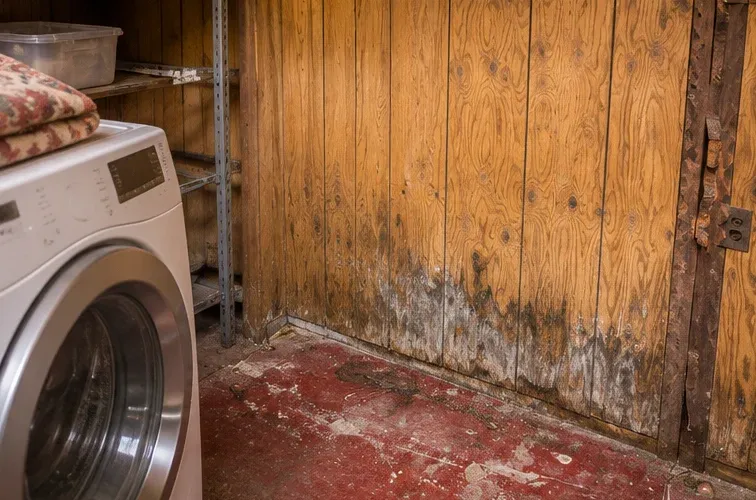
Water-stained wooden plank wall with dark mold marks beside a front-loading washer, red concrete floor at the bottom

02 / Good to know

4 moisture paths that repeat here

  • Slab leaks on the hot water side. A pinhole in a copper line under the concrete keeps the slab and the soil around it warm and damp. Warm water, a slab and a carpet pad make a reliable growth recipe. A plumber finds and repairs the line, and remediation follows the repair.
  • Cast iron drain lines. Rust-through at a joint or along a horizontal run wets the soil under the floor. The plumbing fix comes first, whether that is a repair, a liner or a replacement run.
  • Original bathroom fans. Many of these houses still have the fan that went in when the bathroom was new. It may spin and still move very little air, and some of them exhaust into the attic rather than through the roof. A fan that dumps moist air onto attic insulation wets the deck above the bathroom.
  • Monsoon roof leaks. The season runs June 15 to September 30. Wind-driven rain gets past vent boots, flashing and lifted shingles, and the water lands on ceiling drywall or attic insulation, often far from the entry point.

The water heater closet is worth a look in any house this age, and so is the wall behind a washing machine. Both are small spaces with a supply line and no drain, and both stay wet quietly.

03 / 5 steps

How a Rural-Geneva job runs

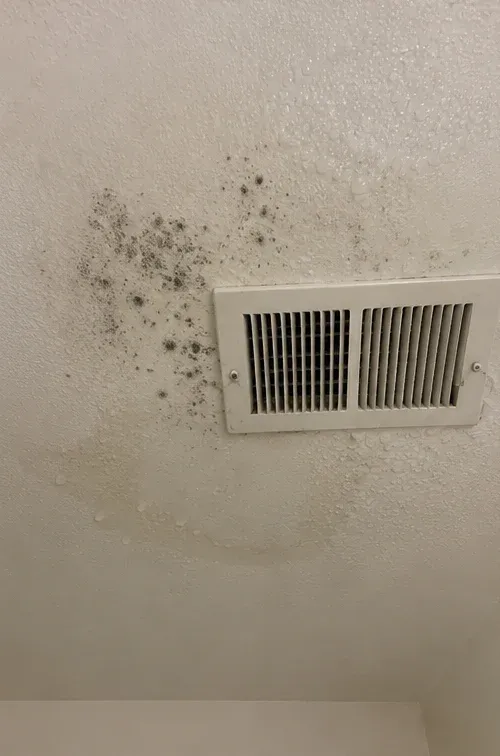
White wall with dark mold spots around a metal floor vent register
  1. Find the source

    A moisture inspection maps readings across floors, walls and the attic. The plumber or roofer who owns the repair is identified before cleaning starts.
  2. Stop the water

    Slab leaks, drain repairs and roof work happen first. Cleaning a wall that is still wicking water wastes the work.
  3. Set containment

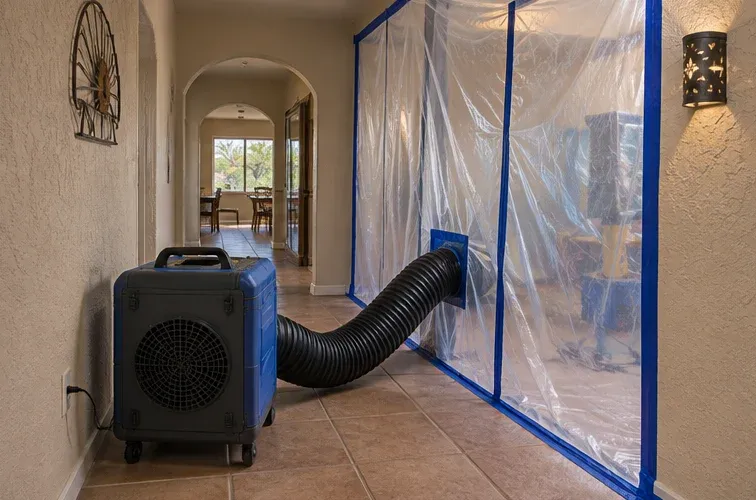
    Plastic sheeting and negative air pressure keep spores out of rooms that are not part of the job.
  4. Remove and clean

    Porous material that cannot be dried or cleaned comes out. Framing and sheathing are HEPA vacuumed, cleaned, then dried to a measured moisture level.
  5. Verify and rebuild

    The space is checked before new drywall, flooring or insulation goes back. Baseboards and paint come last.

04 / Costs

What the work costs

Published prices are national, not quotes for a Rural-Geneva address.

ScopeNational range
Inspection and moisture map$300 to $1,000
Remediation, per square foot$10 to $30
Small bathroom$500 to $1,500
Whole home$10,000 to $30,000

A bathroom with growth on one wall sits near the bottom of those ranges. A slab leak that wet several rooms, plus baseboard and carpet removal, moves toward the middle. The cost page breaks the line items down further.

05 / Good to know

If you rent in Rural-Geneva

About half of the housing in the 85282 area is rented, 53.0 percent per ACS 2024 5-year figures. A slow drain or a damp closet often gets reported by phone and then forgotten, which is a problem when the moisture has been there for months.

Put the request in writing with photos and dates, and keep a copy. Under A.R.S. 33-1324, a landlord must keep the premises fit and habitable. The statute does not name mold. This page is not legal advice.

Ask for the inspection finding in writing as well, including whether the source was plumbing, roof or ventilation. If a repair is scheduled, note the date and who is doing it. The rental mold page walks through the sequence.

Dark air scrubber with a black duct hose running into plastic sheeting taped in a hallway of a tile-floored house

Local numbers

Rural-Geneva by the numbers

  • ZIP 85282 · Homes rented53.0%
  • ZIP 85282 · Built before 198058.1%of its homes built before 1980

ACS 2024 5-year estimates, as stated in the page text above

06 / 5 questions

Frequently asked questions

Still have a question?

Send the form. Someone from our team will call you back soon.

Get a call back

Q.01

Does Rural-Geneva have more mold problems than newer parts of Tempe?

The housing is older, so there are more ways for water to get in. 58.1 percent of the 85282 housing stock was built before 1980. Age alone does not create growth, but cast iron drains, slab plumbing and original bath fans raise the odds that a leak runs unnoticed.

Q.02

What does mold removal cost in Rural-Geneva?

National ranges put remediation at $10 to $30 per square foot, with a small bathroom around $500 to $1,500 and a whole home at $10,000 to $30,000. An inspection runs $300 to $1,000 (national cost guides). Local quotes vary with access and how much material has to come out.

Q.03

Can a slab leak cause mold in a room with no visible water?

Yes. Water under a slab spreads sideways and wicks into flooring and drywall. A musty smell, a cupped baseboard or a cool damp patch on the floor can be the first sign, well before a stain shows.

Q.04

Should the plumbing repair happen before remediation?

Yes. Cleaning while the leak is active is temporary work. The plumbing or roofing repair comes first, then drying, removal and cleaning.

Q.05

Do bathroom fans really need to be checked?

In a house from this era, yes. A fan can spin and still move little air, and some exhaust into the attic instead of outdoors. Both problems add moisture to the building. A fan that runs during showers and for a while after helps, but only if it vents outside.

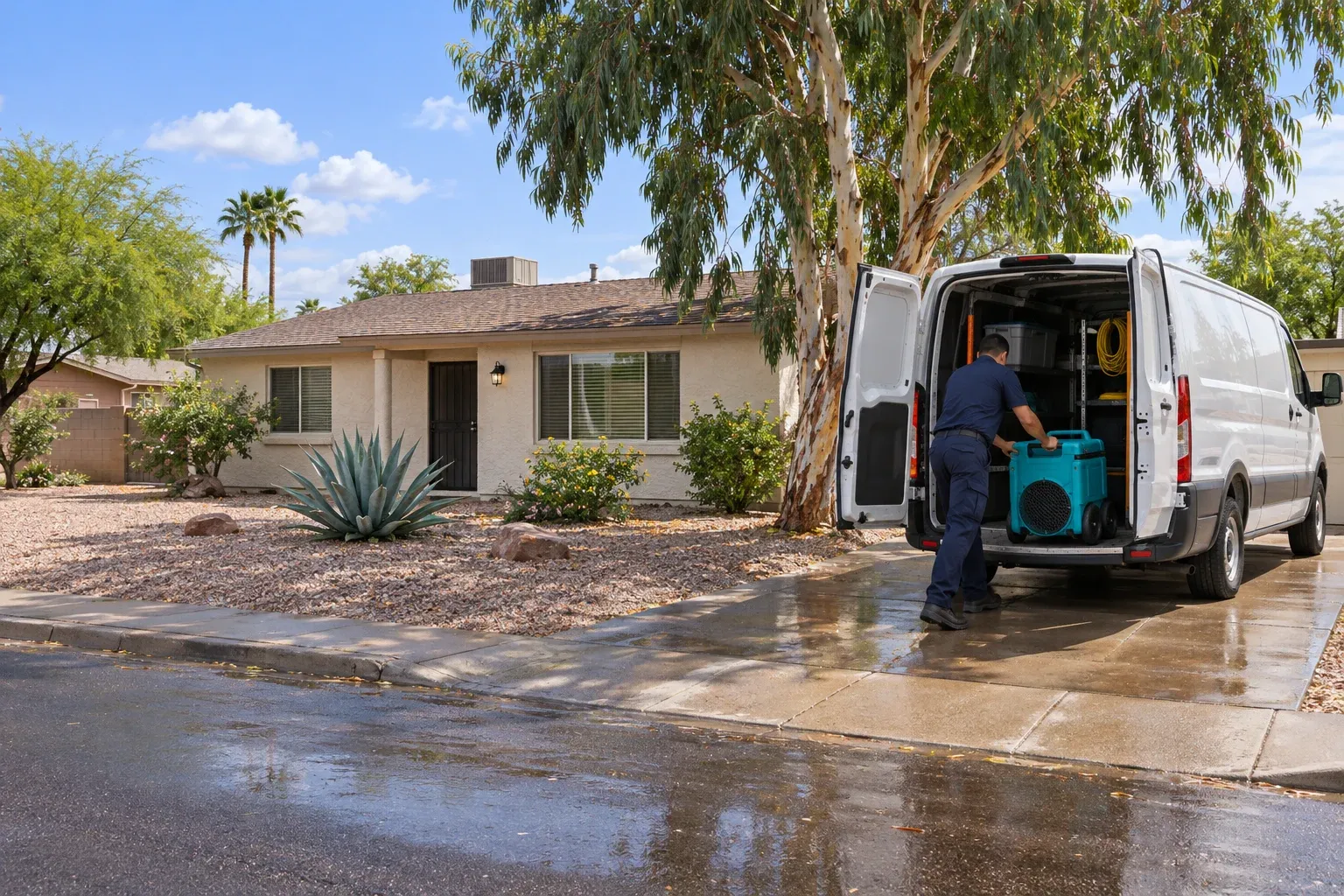
White cargo van with its rear doors open in a driveway, a man in navy work clothes wheeling a teal air machine out in front of a ranch house

Form open 24/7

Get a call back about mold in your home

Send the form. Someone from our team will call you back soon.

Mold in the house?Get a call back

Before you go: want a call back?

Send the request form and someone will call you back about the mold.

Get a call back

Get a call back

Send the form and someone from our team will call you back.