Woman in a teal polo holding a tablet beside an air sampling pump on a tripod in a condo living room with a city skyline and a hill in the windows

Service area · Fountain Hills, AZ

Mold Removal Fountain Hills, AZ

You found mold or a stain in Fountain Hills. Send the form day or night, and someone from our team will call you back soon. We serve Fountain Hills and the towns around it.

Form open 24/7

Get a call back

Tempe · Maple-Ash · Mitchell Park · Escalante · University Park · Riverside + 29 more towns

Fountain Hills is built around slopes, and water here does not stay where it lands. Monsoon runoff can reach a wall or a shared roof long after the rain stops.

Mold removal in Fountain Hills starts with the grade. The town has 23,789 residents, and many of its homes sit on or below a slope. When monsoon rain arrives, water moves downhill until something stops it, and that something is often a retaining wall, a patio, or the side of a house. The town also has 15.6 percent of its homes rented and 11.2 percent of units in buildings with five or more, so the housing mix includes attached homes and condos as well as detached houses.

Only 12.1 percent of the housing predates 1980, per ACS 2024 5-year estimates, and the median owner-occupied value is $622,900. The buildings are relatively new, but the terrain is not. Even a recent build can have a drainage path that was never quite right.

The first step is to watch where water goes during a storm, or to read the evidence it left behind: erosion lines, stained stucco, a damp patio edge, a ceiling stain under a roof valley.

01 / Good to know

When the slope decides where the water goes

On a hillside lot, water collects from a larger area than the lot itself. A storm that drops an inch of rain can send runoff across several properties before it reaches the street. If the path runs into a wall, a planter, or a patio slab, the water has to go somewhere. It usually goes down, into the soil and the foundation, or sideways, behind stucco and into framing.

Look for these after a storm:

  • Water standing against the house or under a patio overhang.
  • Soil erosion at the base of a retaining wall.
  • A damp band on stucco that stays dark for days.
  • A patio or walkway that slopes toward the house.
  • A roof downspout that empties at the foundation.

The fix is usually a drainage contractor or a landscaper. The mold scope starts after the water path is corrected.

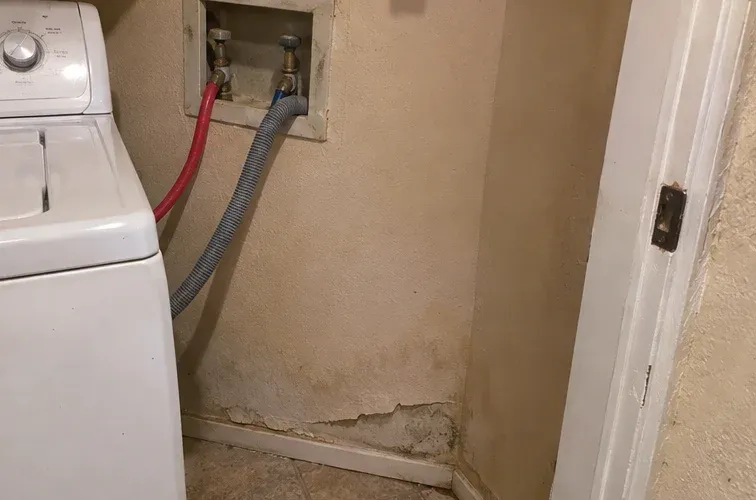
Laundry hookup with red and gray hoses behind a white washer, brown water stains and dark spots on the wall below

02 / Leaks

Roof runoff, walls and patios

A roof on a sloped lot sheds water fast. Downspouts and scuppers concentrate it at a few points, and those points are often close to the wall. When the discharge lands on a patio that slopes back toward the house, the same water returns to the foundation.

On a hillside, a patio is often the first place water shows. The slab may look sound while the soil beneath it stays saturated, and the dampness can wick into the wall base for weeks. A patio that slopes toward the house is a simple defect with a long reach.

Walls on the uphill side deserve extra attention. Stucco cracks, a failed window flashing, or a planter bed built above the interior floor can let water into the cavity. The stain may appear inside at the base of the wall or on the ceiling below, depending on how far the water travels.

The EPA recommends drying water damaged areas and materials within 24 to 48 hours. The 24 to 48 hour window runs from when the material got wet, not from when the stain appears.

03 / Good to know

Condos and attached homes

With 11.2 percent of units in buildings of five or more, Fountain Hills has a meaningful share of condos and attached homes. In those buildings, the roof and the exterior walls may be shared property. A leak above one unit can affect several, and the repair decision may run through an association rather than a single owner.

If water crosses a shared wall or comes through a shared roof, document the damage inside the unit first, then notify the association and the owner in writing. The HOA mold responsibility page explains how shared property usually divides.

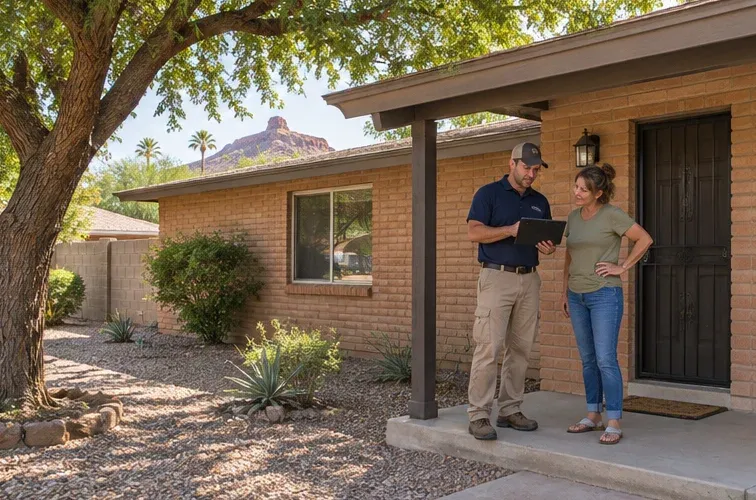
Man in a navy shirt holding a tablet talks with a woman on the walkway of a brick ranch house with a shade tree and a gravel yard

04 / 6 steps

How the work is scoped

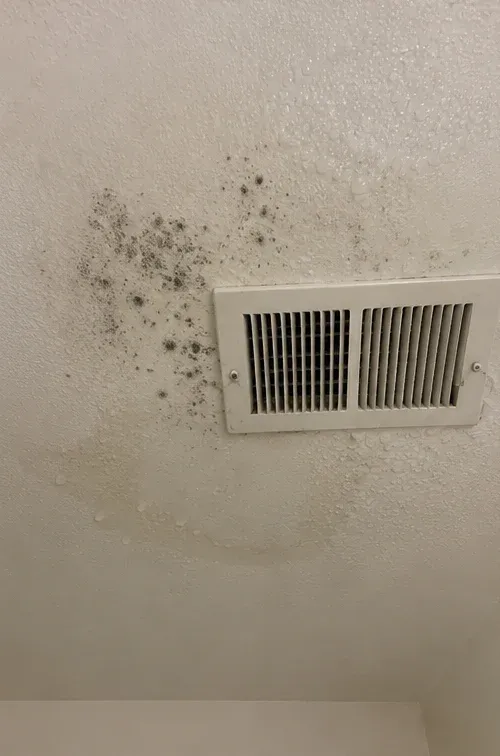
White wall with dark mold spots around a metal floor vent register
  1. Read the water path

    Inspect the slope above the house, the retaining walls, the patio edges, and the roof discharge points.
  2. Inspect the interior

    Moisture readings at the wall base, the ceiling below roof valleys, and any room that smells musty.
  3. Correct the drainage or the roof

    A drainage contractor, roofer, or plumber handles the source. The mold scope waits.
  4. Contain the area

    Negative air pressure and sealed barriers protect the rest of the home.
  5. Remove and clean

    Wet drywall, insulation, and porous finishes come out. The framing is cleaned and checked.
  6. Dry and verify

    Readings confirm the cavity is dry before reconstruction.

05 / Costs

What the work tends to cost

These are national figures, not quotes for a Fountain Hills address.

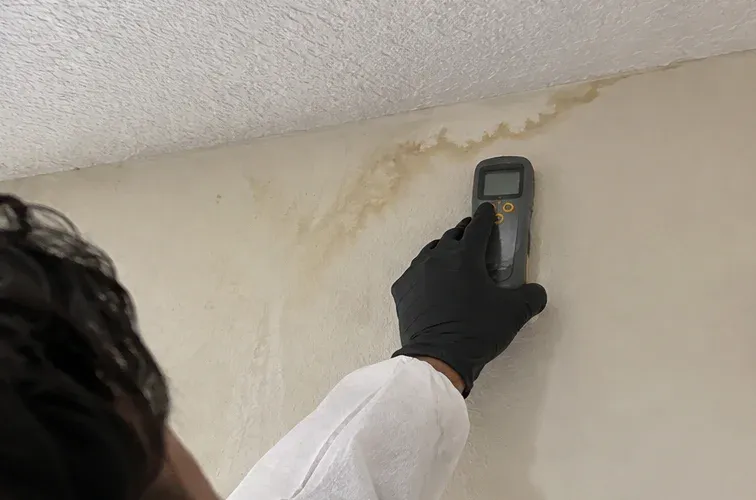
Gloved hand holding a moisture meter against a wall with brown water stains below a textured ceiling
  • 01

    Inspection

    $300 to $1,000.

  • 02

    Typical remediation

    $1,500 to $9,000, averaging about $3,500.

  • 03

    Remediation per square foot

    $10 to $30.

  • 04

    Small bathroom

    $500 to $1,500.

  • 05

    Kitchen

    $1,200 to $10,000.

06 / Good to know

Renting in Fountain Hills

About one in six homes is rented, a higher share than several other communities in this part of the Valley. A renter may be the first to see a stain after a storm, while the drainage repair and the roof belong to the owner or the association.

Report the issue in writing with photos and dates. Describe where the water appears, how long it stays, and what the weather was like before it showed. Ask for the source to be inspected and repaired. A.R.S. 33-1324 requires a landlord to keep the premises fit and habitable, and the statute does not name mold. The rental mold page covers the notice sequence.

Local numbers

Fountain Hills by the numbers

  • Homes rented15.6%of its homes rented
  • Built before 198012.1%of the housing predates 1980
  • In buildings of 5+ units11.2%of units in buildings with five or more
  • Residents23,789

ACS 2024 5-year estimates, as stated in the page text above

07 / 5 questions

Frequently asked questions

Still have a question?

Send the form. Someone from our team will call you back soon.

Get a call back

Q.01

Why does mold appear after monsoon storms in Fountain Hills?

The terrain concentrates runoff. Water that crosses a slope can pool against a wall, soak a patio edge, or work behind stucco, and it may stay wet for days after the storm. Mold can follow once the material stays damp.

Q.02

Is the roof always the source?

No. On a hillside lot, grade and drainage are just as likely. A damp wall base or a stain at the bottom of a wall points downslope, while a ceiling stain near a roof valley points up.

Q.03

What should I check on a hillside property?

The slope above the house, the retaining walls, the patio and walkway slopes, the roof discharge points, and the stucco on the uphill side. Photos from before and after a storm are useful.

Q.04

Who handles a leak in a condo?

It depends on what is shared. The association may control the roof and exterior envelope, while the owner controls the interior. Notify both in writing and keep copies of the responses.

Q.05

How much does remediation cost in Fountain Hills?

National ranges put inspection at $300 to $1,000 (national cost guides), typical remediation at $1,500 to $9,000, and per square foot work at $10 to $30. Drainage repair and roof work are separate costs.

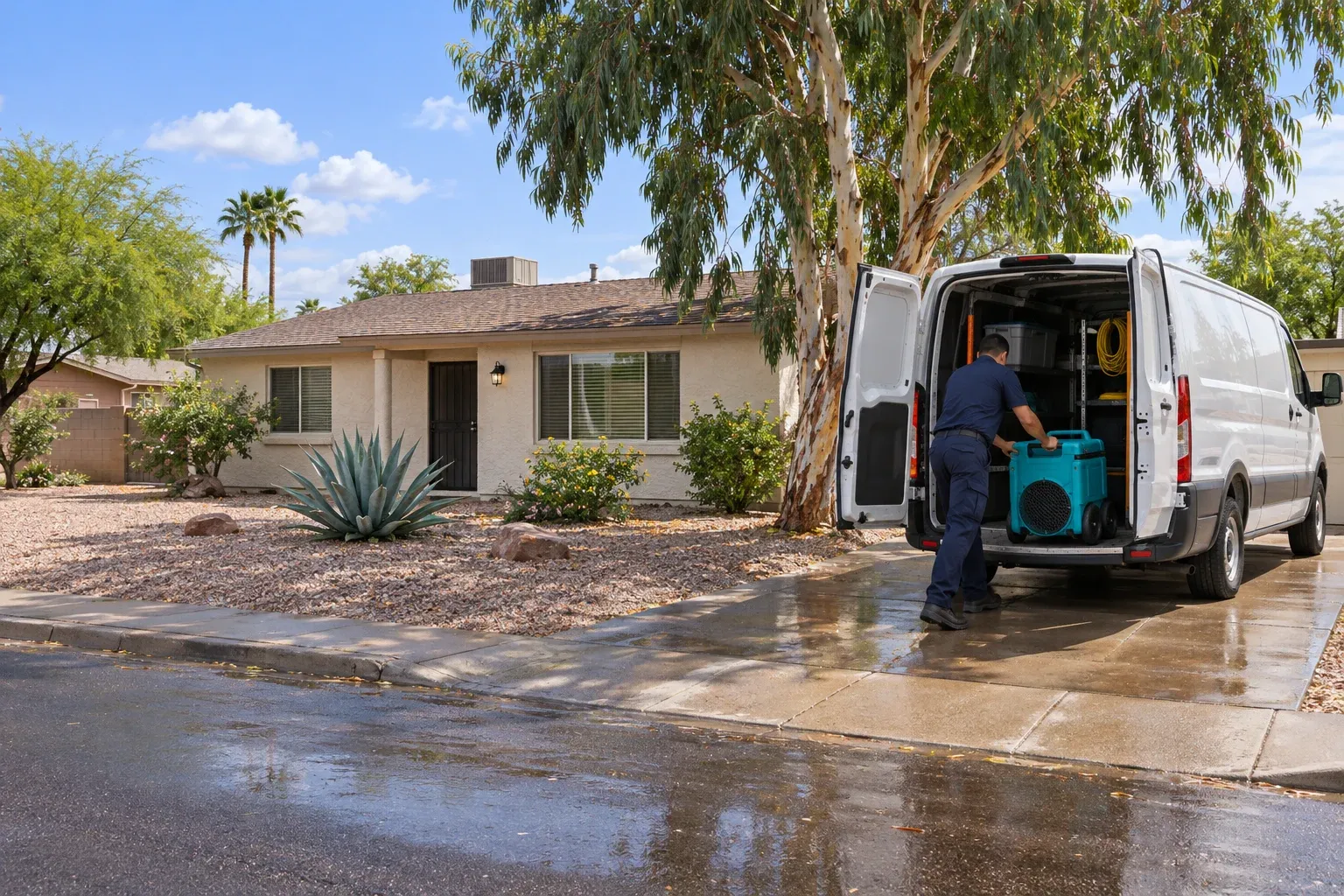
White cargo van with its rear doors open in a driveway, a man in navy work clothes wheeling a teal air machine out in front of a ranch house

Form open 24/7

Get a call back about mold in your home

Send the form. Someone from our team will call you back soon.

Mold in the house?Get a call back

Before you go: want a call back?

Send the request form and someone will call you back about the mold.

Get a call back

Get a call back

Send the form and someone from our team will call you back.