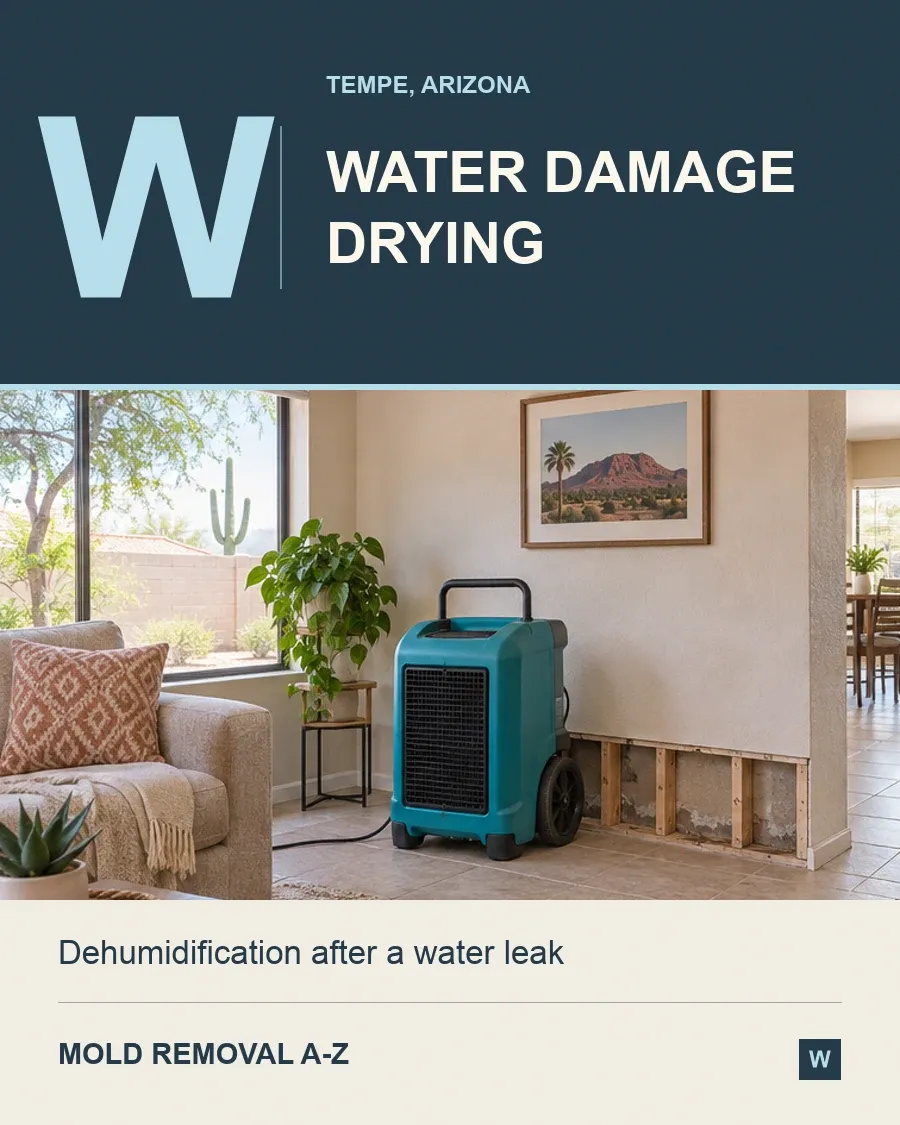
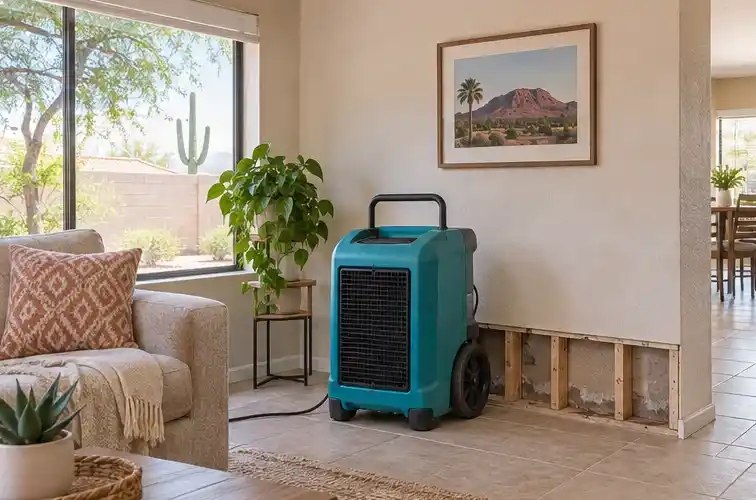
Teal dehumidifier running in a living room with the lower wall opened at the baseboard, a sofa with patterned pillows and a framed desert print

Service 06 of 08 · Tempe, AZ

Mold Removal After Water Damage Tempe, AZ

You had a leak, a burst pipe or a flood, and the clock is running. Send the form day or night, and someone from our team will call you back soon. Drying checks, removal and clearance follow.

Form open 24/7

Get a call back

Tempe · Maple-Ash · Mitchell Park · Escalante · University Park · Riverside + 29 more towns

01 / What you get

What you get after water damage

Water damage becomes mold damage on a schedule. The EPA's window is 24 to 48 hours, and the clock starts when the water arrives, not when someone notices the smell.

Mold after water damage in Tempe is a timing problem. The EPA's guidance is to dry water-damaged areas and items within 24 to 48 hours. After that, growth becomes more likely, especially in a closed house in July. Visible mold can take a while to show, and the colony can start before the stain does.

The source matters as much as the speed. A clean supply line that soaks a bathroom floor is a different job from a slab leak that has been wicking into a wall for a month. National remediation ranges run about $1,500 to $9,000, and the drying step is often priced separately from the mold work.
  • 01A plain answer on the 24 to 48 hour drying window
  • 02Moisture readings in drywall, baseboards and framing
  • 03Porous material that stayed wet checked first
  • 04Clearance once the structure is dry
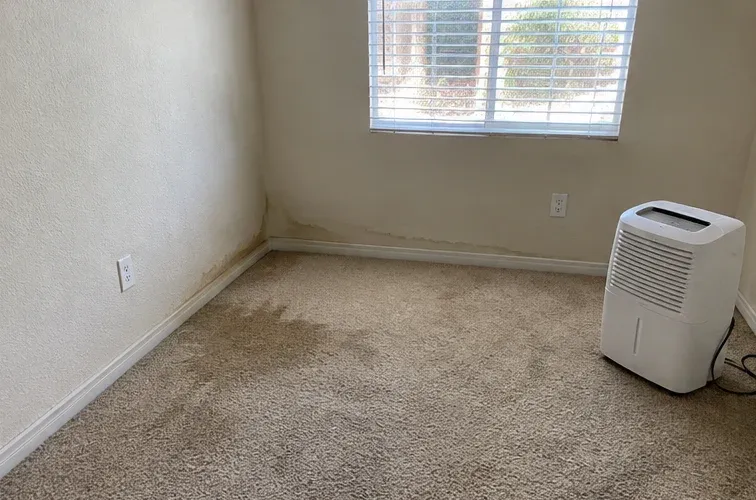
Empty room with beige carpet showing a darker damp patch along the baseboard, a white portable dehumidifier at the right and a window with blinds

02 / The signs

What water damage leaves behind

Water moves in three directions: down, sideways through porous material, and up through capillary action. That is why a leak under a kitchen sink shows up as a stain in the garage, and why a slab leak shows up as a cupped floor six feet from the pipe.

The materials decide the outcome:

  • 01

    Drywall and insulation

    Water wicks up the paper facing and into the cavity. If the drywall stays wet beyond 48 hours, the paper is food. Removal is usually the reliable answer.

  • 02

    Cabinet board and MDF

    These swell and stay wet. Once the base is soft, it does not come back.

  • 03

    Carpet and pad

    Pad holds water, and carpet backing can support growth. Pad usually goes; carpet sometimes can be dried and cleaned if the water was clean and the drying started fast.

  • 04

    Tile and concrete

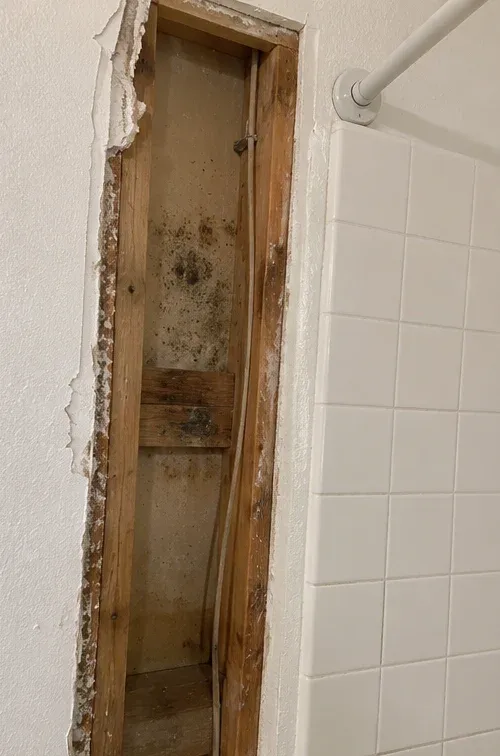
    Non-porous, but the thinset, grout and the wall cavity behind them are not. A shower leak can wet the framing behind intact tile.

  • 05

    Wood framing and subfloor

    Can be dried if caught early, but the moisture content needs to be measured, not guessed.

03 / How it works

What happens after you send the form

After you send the form, someone from our team calls you back, then drying checks, removal and clearance follow.

  1. Send the form, day or night

    Say where the mold is, how big it looks and what changed before it appeared.
  2. Someone from our team calls you back

    You go over what you see, who owns the building and what has to happen first.
  3. Drying checks, removal and clearance follow

    Readings show what is still wet, wet material is scoped and a check closes the job.

04 / Drying clock

How long has the water been there?

Set the hours. The dial shows which zone you are in.

Drying clock

024487296

Water started

30 hours ago

  1. Hour 0 to 24Extract standing water, move furniture, start air movement and dehumidification. Document everything with photos.
  2. Hour 24 to 48Measure moisture content in the drywall, baseboards and framing. If the readings are still high, drying equipment needs to stay or the material needs to come out.
  3. After 48 hoursAssume porous material that stayed wet is colonized until proven otherwise. A moisture meter and a visual check decide. In a Tempe summer, a closed house can push the timeline faster.

The EPA's guidance is to dry water-damaged areas and items within 24 to 48 hours. EPA, A Brief Guide to Mold, Moisture and Your Home (opens in a new tab)

Get a call back

05 / Costs

What it costs in Tempe

Mold remediation after water damage in Tempe usually runs $1,500 to $9,000 (one national cost guide) or $1,125 to $3,439 (another national cost guide), national ranges, not Tempe quotes.

ScopeNational rangeSource
Remediation after water damage$1,500 to $9,000One national cost guide, average range
Typical remediation, all causes$1,125 to $3,439, averaging $2,254Another national cost guide
Per square foot$10 to $30One national cost guide
Drying equipmentOften a separate daily rateEquipment list and number of days are usually line items
Clearance testingQuoted separatelyNational cost guides, inspection ranges

A 200 square foot room with wet drywall, removal of the lower 2 feet, drying and clearance: the arithmetic range is $2,000 to $6,000. If the cabinet, flooring or insulation is involved, the scope grows. If the water was caught in the first 24 hours and the material can be dried in place, the number can be much lower.

06 / Timeline

The 24 to 48 hour window

The EPA's guide is the standard reference: dry water-damaged areas and items within 24 to 48 hours, and keep indoor humidity below 60 percent, ideally 30 to 50 percent. The window is not a promise. It is the point after which growth becomes more likely.

What the window means in practice:

  • Hour 0 to 24. Extract standing water, move furniture, start air movement and dehumidification. Document everything with photos.
  • Hour 24 to 48. Measure moisture content in the drywall, baseboards and framing. If the readings are still high, drying equipment needs to stay or the material needs to come out.
  • After 48 hours. Assume porous material that stayed wet is colonized until proven otherwise. A moisture meter and a visual check decide. In a Tempe summer, a closed house can push the timeline faster.

The common failure is not the extraction. It is the assumption that "it looks dry". Drywall paper can feel dry on the surface while the cavity behind it stays wet.

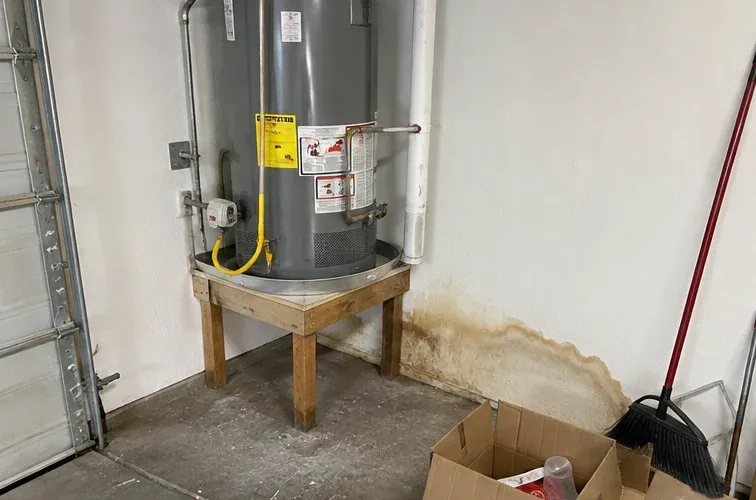
Water heater on a wooden stand in a garage, brown water staining climbing the wall behind it, a broom and a cardboard box on the concrete

07 / Good to know

Where the water comes from in Tempe

  • Monsoon roof leaks. June 15 to September 30. Wind-driven rain gets into flashing, vents and roof seams.
  • Slab leaks. Copper supply lines under the slab pinhole, and the water wicks up into the floor and walls. The first sign is often a warm spot or a spike in the water bill.
  • Burst or failed supply lines. Washing machine hoses, ice maker lines, toilet connectors and water heater fittings.
  • AC condensate. A clogged drain line overflows the pan and wets the platform, the closet floor and the ceiling below.
  • Swamp cooler failures. A pan or distribution line leaks into the roof or the wall.
  • Toilet and tub overflows. Especially in rentals and upstairs condos, where the water reaches the unit below.

Tempe's housing stock adds risk: 41 percent of units were built before 1980, and more than four in ten sit in buildings with five or more units (US Census ACS 2024 5-year estimates). Older plumbing, original subfloors and manufactured-home floor decks can hold water longer than newer materials.

08 / 8 steps

What to do before the drying starts

The first hour is mostly about stopping the water and keeping a record.

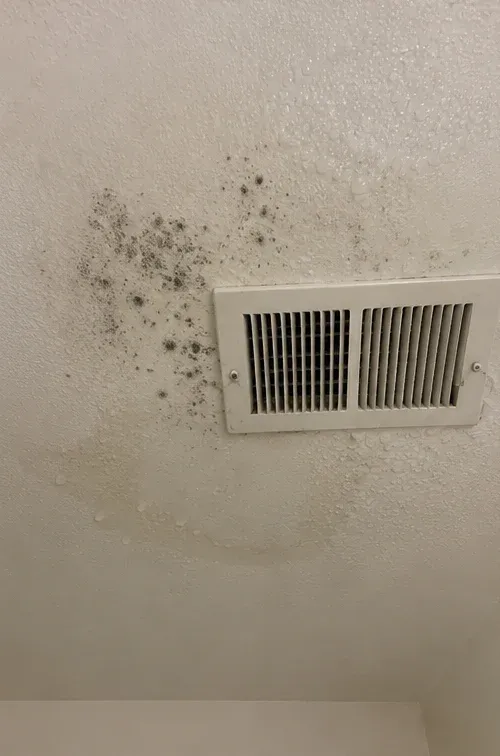
White wall with dark mold spots around a metal floor vent register
  1. Shut off the water at the fixture or the main

    A supply line that keeps running while everyone waits for an appointment turns a cabinet job into a floor job.
  2. Turn off power to any circuit serving a wet ceiling, wall or floor, if it is safe to do so and you can reach the panel without standing in water. Do not touch electrical equipment that is wet.
  3. Photograph and video every wet surface before anything moves

    Insurance claims and lease disputes are decided on the record.
  4. Remove standing water with a wet/dry vacuum or towels

    The less water in the material, the shorter the drying.
  5. Lift rugs and move furniture off wet carpet

    Legs trap moisture and stain the floor.
  6. Do not run the HVAC if the air handler, the duct or the return plenum is wet. Running the system can spread spores through the house.
  7. Open interior doors and start air movement in the affected rooms

    A fan and an open window help; they do not replace dehumidification.
  8. Call the insurer and open a claim number, even if the repair may be below the deductible. The record matters more than the payout.

If the water came from a toilet, a sewer line or an outdoor flood, treat the area as contaminated. Do not dry it with a household fan, and do not handle the material without gloves and eye protection.

09 / 6 steps

How the job runs

Opened shower wall cavity with wood framing and dark mold above a white tile surround
  1. Stop the water and document

    Shut off the supply, call a plumber if needed, and photograph everything before demolition. This is also the moment to call the insurer.
  2. Extract and dry

    Standing water out, air movers and dehumidifiers in. Measure moisture content in the structure, not just the surface.
  3. Decide what comes out

    Drywall, insulation, cabinet board and pad that stayed wet past the window are removal candidates. Non-porous material gets cleaned and dried.
  4. Contain the mold work

    If growth is present, containment and negative air keep spores out of the rest of the house.
  5. Clean and verify

    HEPA vacuum, surface cleaning, and clearance testing or a documented visual check before reconstruction.
  6. Repair and monitor

    New drywall, paint, flooring and trim. Then check the same spot after the next monsoon or the next AC season.

The best remediation is boring: the water gets extracted on day one, the structure gets measured, and the material that cannot be saved comes out before it becomes a colony.

10 / Good to know

Do it yourself or get a call back

A small, clean-water spill on a hard surface can be a homeowner job: extract, dry, measure, and keep the humidity down. The EPA's 10 square foot guidance applies to the mold cleanup, not to the water event.

Get a call back when the water is gray or black (toilet overflow, outdoor flooding, long-standing leak), when the area is larger than about 10 square feet, when the material is soft, or when the water has been sitting for more than 48 hours. Sewage and flood water carry their own contamination issues, and the cleanup is a different category of work.

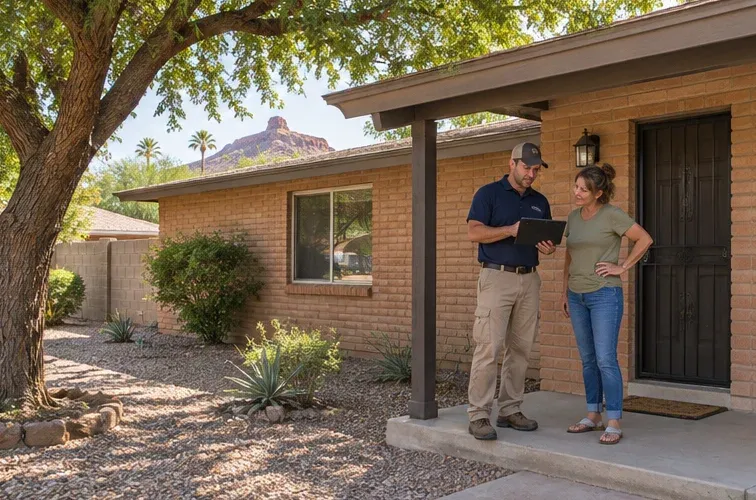
Man in a navy shirt holding a tablet talks with a woman on the walkway of a brick ranch house with a shade tree and a gravel yard

11 / Good to know

If you rent in Tempe

Report the water event immediately, in writing, with photos. The clock matters for the landlord too. If the water came from a failed appliance or a plumbing line, the lease and the cause decide who handles the repair.

Keep a record of every message and every day the unit stayed wet. If the landlord delays, the documentation is what protects the tenant later. The rental mold page covers the sequence.

12 / 5 questions

Frequently asked questions

Still have a question?

Send the form. Someone from our team will call you back soon.

Get a call back

Q.01

How long does it take for mold to grow after water damage?

The EPA's guidance is to dry water-damaged areas within 24 to 48 hours. The EPA says mold will usually not grow if wet materials are dried within that time, and a closed Tempe house in summer makes fast drying more important. Visible growth may take longer to appear.

Q.02

Can wet drywall be saved?

Sometimes, if the water was clean, the drying started on day one, and the moisture content comes down to a normal range. If the paper is soft, the drywall was wet for days, or the water was contaminated, removal is the reliable answer.

Q.03

Does insurance cover mold after a water leak?

It depends on the cause and the policy. A sudden supply line failure is treated differently from long-term seepage or a maintenance item. Document the source, open the claim before demolition, and ask the adjuster what they need.

Q.04

What is the difference between water damage restoration and mold remediation?

Restoration handles the water, drying and rebuilding. Remediation handles the mold: containment, removal of colonized material, cleaning and verification. A job can need both, and the sequence is water first, mold second.

Q.05

How do I know the house is dry?

Moisture readings in the drywall, framing and subfloor, compared with a dry reference area. A surface touch is not a measurement. Readings are normally recorded in writing.

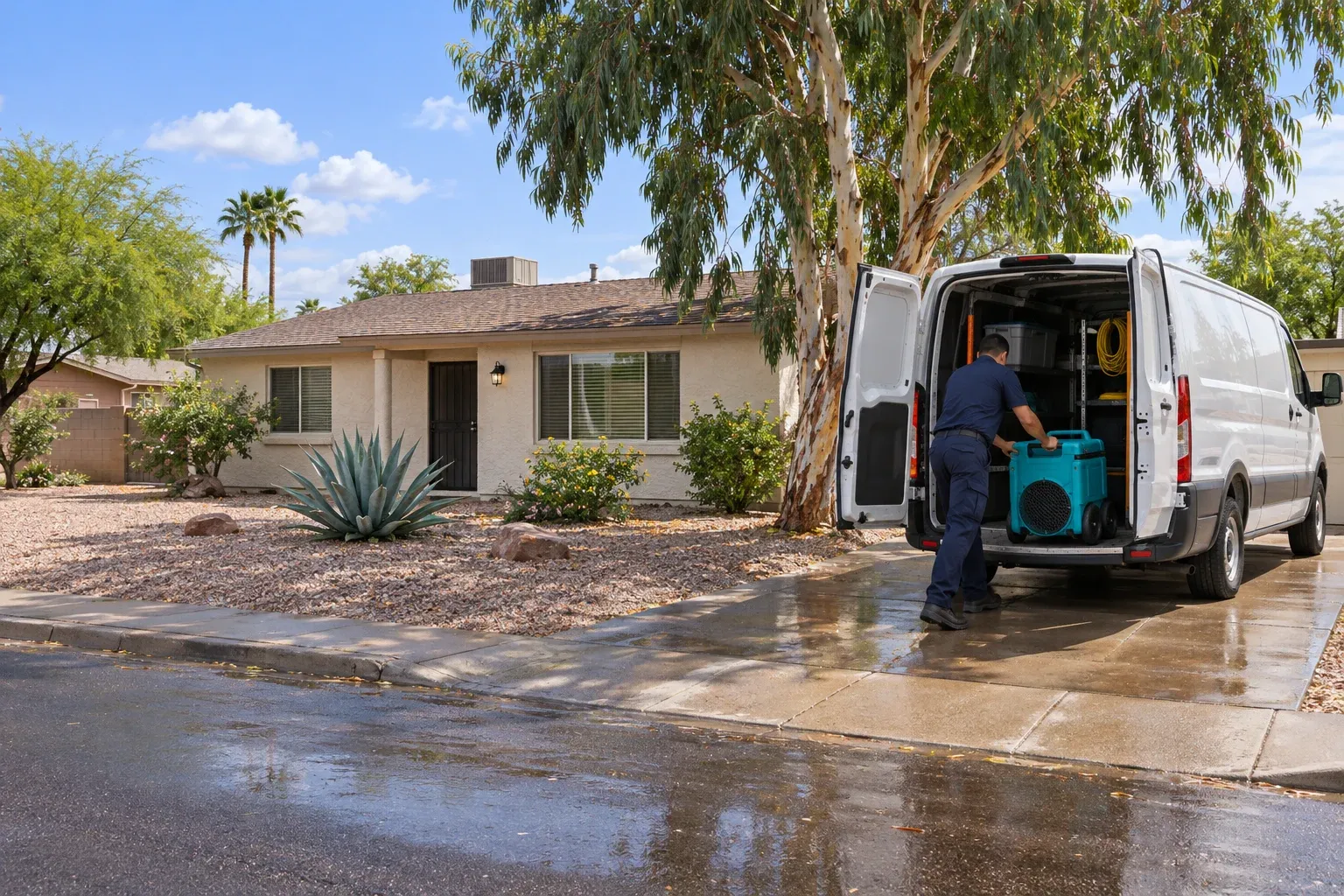
White cargo van with its rear doors open in a driveway, a man in navy work clothes wheeling a teal air machine out in front of a ranch house

Form open 24/7

Get a call back about mold in your home

Send the form. Someone from our team will call you back soon.

Mold in the house?Get a call back

Before you go: want a call back?

Send the request form and someone will call you back about the mold.

Get a call back

Get a call back

Send the form and someone from our team will call you back.