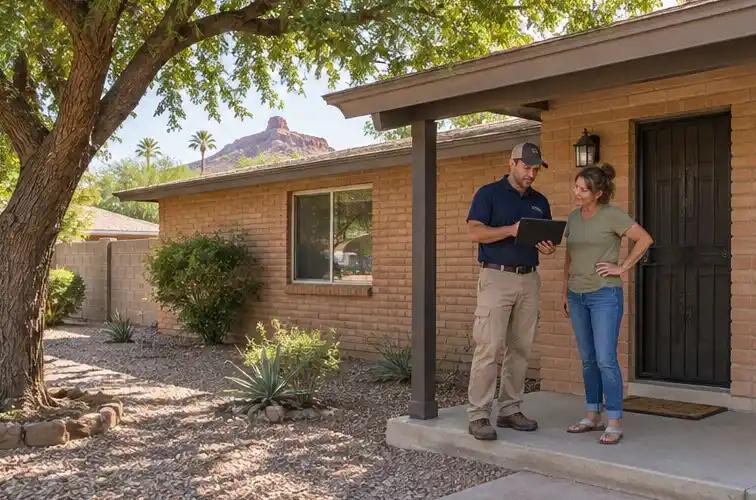
Man in a navy shirt holding a tablet talks with a woman on the walkway of a brick ranch house with a shade tree and a gravel yard

Service 07 of 08 · Tempe, AZ

Apartment Mold Removal Tempe, AZ

You rent, own or manage a unit with mold, and you need to know who does what. Send the form day or night, and someone from our team will call you back soon. A written scope, removal and clearance follow.

Form open 24/7

Get a call back

Tempe · Maple-Ash · Mitchell Park · Escalante · University Park · Riverside + 29 more towns

01 / What you get

What you get with rental and condo mold work

Almost six in ten occupied Tempe homes are rentals (US Census ACS 2024 5-year estimates). That makes the rental unit the center of the mold conversation here: who reports it, who fixes the water, who pays, and what happens when the unit next door is the source.

Rental and apartment mold removal in Tempe is less about the mold and more about the chain of responsibility. A tenant sees the growth. A landlord usually arranges the repair. A property manager controls the work order. An HOA may own the roof or the shared wall. Containment cannot go up until all of that is resolved, or the job stalls while the unit keeps getting wet.

The goal is the same for all four parties: identify the moisture source, document the conditions, get a written scope, and verify the work before the unit is rented again.
  • 01A written scope the tenant, landlord and manager can all read
  • 02Photos and dates for the paper trail
  • 03Shared walls and HOA roof questions named early
  • 04Clearance before the unit is rented again
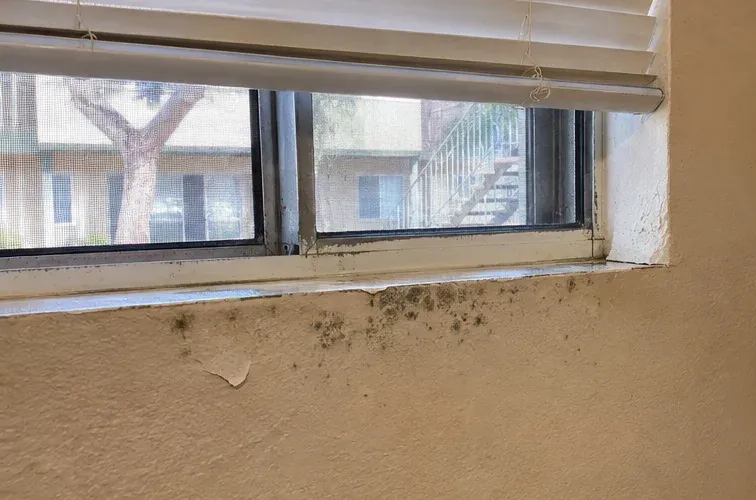
Metal-framed window with peeling paint and dark mold spots on the wall below it, apartment balconies seen through the glass

02 / The signs

Who this affects

  • 01

    Tenants

    You noticed it. You have the least control and the most exposure. The first steps are documentation and written notice, not a bucket of bleach.

  • 02

    Landlords and small owners

    A single unit is a small business. A delayed repair can mean a lost tenant and a bigger remediation.

  • 03

    Property managers

    You need a repeatable process, a vendor who documents, and a file that stands up when the owner or the tenant disputes the charges.

  • 04

    HOA boards and condo owners

    The governing documents decide who owns the roof, the common wall and the mechanical chase. Mold in a shared assembly is a board conversation with a paper trail.

03 / How it works

What happens after you send the form

After you send the form, someone from our team calls you back, then a written scope, removal and clearance follow.

  1. Send the form, day or night

    Say where the mold is, how big it looks and what changed before it appeared.
  2. Someone from our team calls you back

    You go over what you see, who owns the building and what has to happen first.
  3. A written scope, removal and clearance follow

    Everyone reads the same document, the work follows it and a check closes the job.

04 / Pick your case

Who does what in a rental

Pick I rent, I own or I manage. Each case has 3 first steps.

Which one are you?

I rent

You see it, the landlord controls the repair. Put it on paper first.

  1. 01

    Photograph it

    Take wide and close photos with something for scale, and note the date.

  2. 02

    Write to the landlord

    Send a dated message to the landlord or property manager that names the room and the moisture source. Keep a copy.

  3. 03

    Photograph it again after the repair

    If growth returns in the same spot, the before and after pair shows the source was not fixed.

General information, not legal advice. The lease and the cause of the water decide who pays.

05 / Costs

What it costs and who pays

National remediation ranges run about $1,500 to $9,000, with a typical job near $3,500 and small bathroom jobs starting around $500. The cost page has the full table by room and by square foot.

Who pays depends on the cause and the lease:

  • A failed supply line or a roof leak may point to the owner.
  • A tenant-caused overflow or a neglected bathroom may be treated differently under the lease.
  • An HOA special assessment or a shared-pipe repair may split the cost between the association and the owner.
  • Insurance may cover part of the work, depending on the cause and the policy.

Those questions turn on the specific lease. Good documentation lets the decision rest on facts.

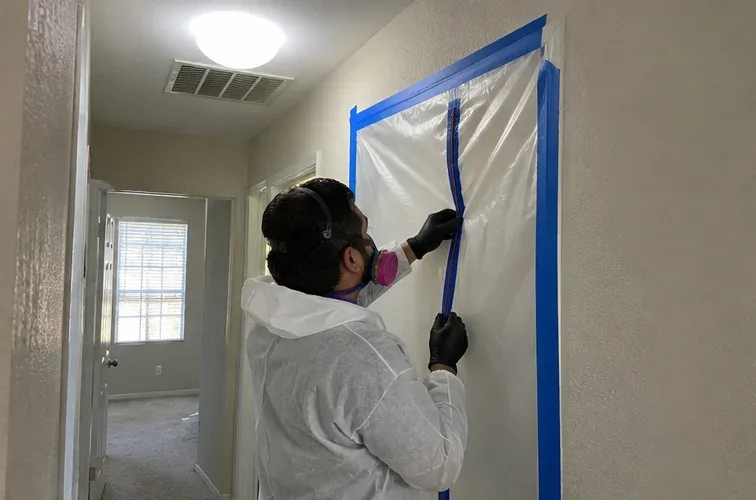
Worker in a white suit and respirator taping plastic sheeting over an apartment doorway with blue tape, a ceiling vent above

06 / 6 steps

The first 48 hours in a rental

The EPA's window for drying water-damaged areas is 24 to 48 hours. In a rental, the window has an extra complication: the person who notices the water may not be the person who authorizes the repair.

What to do in the first two days:

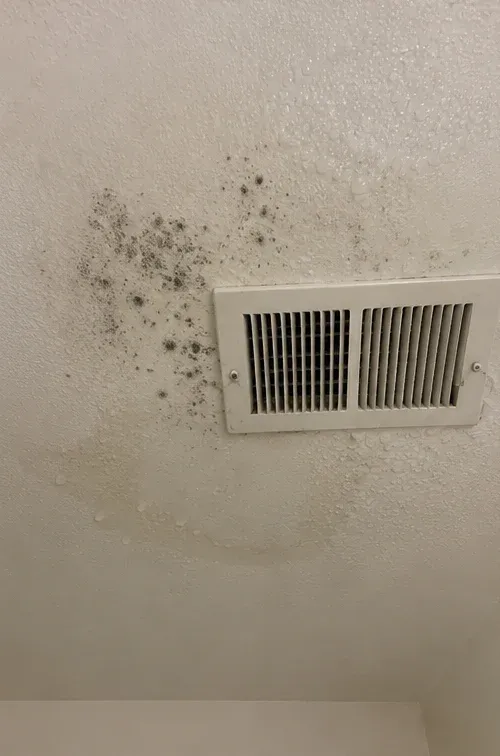
White wall with dark mold spots around a metal floor vent register
  1. Stop the water if you safely can

    Shut off the supply valve under the sink or the main if there is an active leak. Do not open a wall or move a gas appliance.
  2. Photograph and video everything

    Wide shot, close-up, something for scale, and the date. Include the ceiling, the floor and the source if visible.
  3. Notify in writing

    Email or a maintenance portal message, not a phone call. State the date, the room, what you see, and the moisture source if you know it.
  4. Do not cover it up

    Do not paint, caulk, or push furniture against it. Do not run a fan into a wall cavity.
  5. Keep the space dry and ventilated

    if it is safe to do so. Run the bathroom fan, wipe up standing water, and move porous items away from the wet area.
  6. Ask for the repair plan in writing

    Who is coming, when, and what they will inspect.

If the growth is already larger than a dinner plate, or the water has been there for days, ask for a mold inspection as part of the repair, not after it.

07 / Good to know

What tenants should document

A file that answers the obvious questions is worth more than a long complaint. Collect:

  • Date the problem started, and what changed before it (a storm, a repair, a new appliance, a neighbor's leak).
  • Photos of the growth with a ruler, coin or hand for scale.
  • Photos of the moisture source: the stain, the drip, the wet cabinet, the bubbling paint.
  • The written notice you sent, and the response.
  • Any maintenance visits, with dates and what was done.
  • Receipts for anything you bought (a fan, a dehumidifier, cleaning supplies) if you are asking for reimbursement.
  • A log of symptoms if anyone in the unit is affected, without self-diagnosing.

Do not throw away the photos if the landlord repairs and repaints. The history matters if the growth returns or if the lease ends in a dispute.

08 / Property types

What landlords and managers should check between tenants

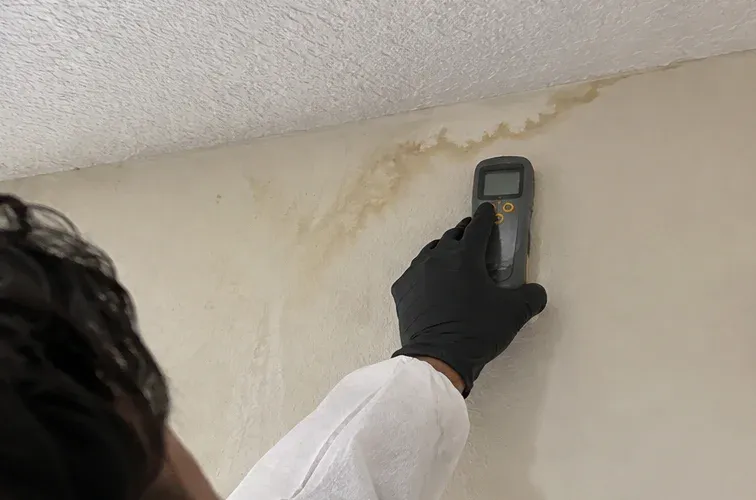
Turnover is the easiest time to check a rental for mold. The unit is empty, the furniture is out, and the cabinets and closets are visible. A 30-minute walkthrough with a moisture meter can catch many of the problems that turn into complaints.

The checklist:

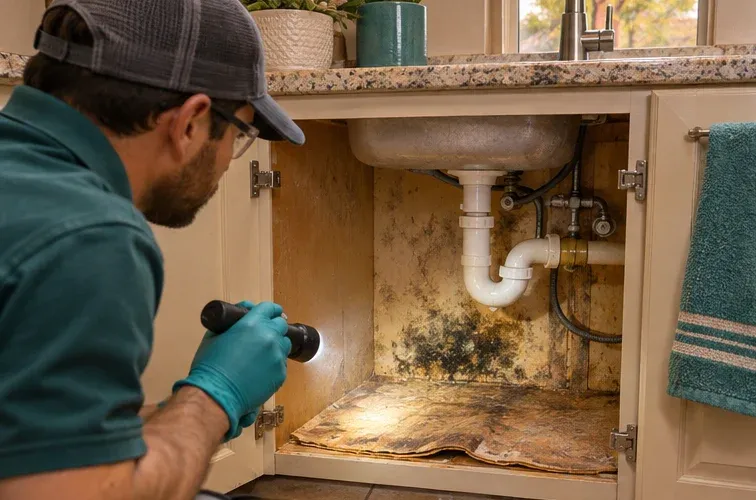
  • Under every sink: supply lines, shutoff valves, the cabinet base and the wall behind it.
  • Behind and beside the toilet: the flange, the supply line, the base of the wall.
  • The water heater closet: the pan, the T&P valve, the fittings, the floor.
  • The AC air handler and drain pan: standing water, rust lines, a clogged condensate line.
  • The bathroom ceiling and fan: staining, peeling paint, a fan that vents into the attic.
  • The ceiling below the roof line: brown rings, bubbling paint, a sag.
  • Window frames and stucco cracks after monsoon.
  • The refrigerator ice maker line and the dishwasher supply line.
  • Carpet edges and baseboards in rooms that share a wall with a bathroom.

A moisture meter and a flashlight will find more than a visual walkthrough alone. Record the readings with the date and the unit number.

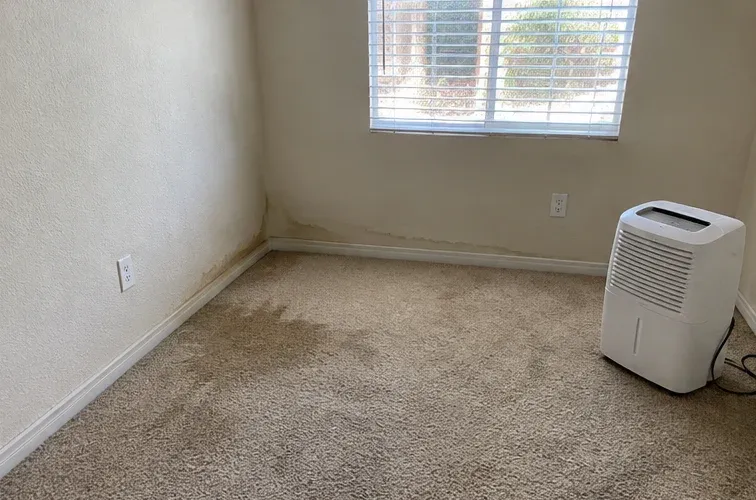
Empty room with beige carpet showing a darker damp patch along the baseboard, a white portable dehumidifier at the right and a window with blinds

09 / 5 steps

Shared walls, condos and HOA responsibility

Tempe has a large share of condos, townhomes and apartments, and shared assemblies change the question. Water travels sideways through a shared wall, down a chase, or along a common pipe. The unit that shows the growth may not be the unit with the leak.

The practical sequence:

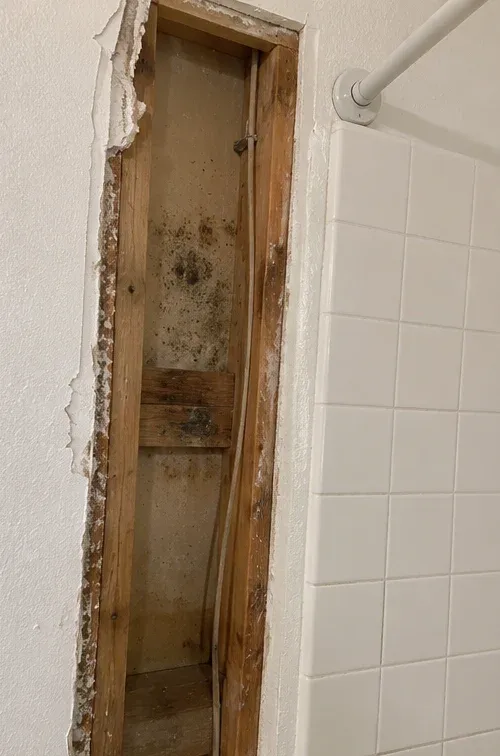
Opened shower wall cavity with wood framing and dark mold above a white tile surround
  1. Find the source unit

    A moisture inspection of the affected unit and the adjacent spaces. The source may be above, beside or below.
  2. Read the governing documents

    The HOA's CC&Rs and the owner's lease decide who maintains the roof, the common pipes and the interior.
  3. Notify the board and the neighbor

    In writing, with photos and dates.
  4. Get a scope that names the boundary

    Who removes what, who repairs what, and where the work stops.
  5. Verify before closing the wall

    Clearance or a documented visual check before drywall and paint go back.

The HOA mold responsibility guide covers the process. The neighbor unit guide walks through the source-unit conversation.

10 / Good to know

Arizona rules in plain words

Two rules come up in almost every rental mold conversation.

A.R.S. 33-1324. Arizona's fit and habitable statute requires a landlord to keep the premises fit and habitable. The word mold does not appear in that section. That means the statute is about the condition of the property, not about a specific mold threshold. A tenant or landlord with a dispute should talk to an attorney or a tenant advocacy organization.

The contractor license rule. The Arizona contractor license page covers it.

Gloved hand holding a moisture meter against a wall with brown water stains below a textured ceiling

11 / Property types

How remediation runs in an occupied rental

Many rental jobs are done with the tenant in place, especially when the affected area is a bathroom, a closet or one room. The work is contained, the tenant keeps access to the rest of the unit, and the schedule is agreed in writing.

What the tenant should expect:

  • A written scope and a start date before containment goes up.
  • Plastic and negative air around the work area, with the rest of the unit protected.
  • A daily cleanup and a plan for dust and noise.
  • Clear communication about water or power shutoffs.
  • A verification step before the wall is closed or the unit is re-let.

What the landlord should expect:

  • Photos and moisture readings before and after.
  • A scope that separates the moisture repair from the mold work.
  • A clearance or verification document for the file.
  • A short note on what caused it, so the same failure does not repeat in the next unit.

If the unit is uninhabitable for a period, that is a lease and habitability question. Document the dates and keep the communication in writing.

12 / Good to know

Move-in and move-out inspections

The cheapest mold problem is the one you find before you sign or before you hand back the keys.

Move-in. Photograph every room, open the cabinet under every sink, look at the bathroom ceiling and fan, check the water heater closet, and note any musty smell. Ask when the AC drain line was last cleared. If there is visible growth, ask for it to be remediated before the lease starts.

Move-out. Clean the visible surfaces, but do not cover staining with paint or caulk. Photograph the condition on the day you leave. If the growth was reported during the tenancy and never repaired, keep the notice and the photos.

The student rental guide covers the ASU-area version of this checklist.

Man in a teal polo shining a flashlight at dark mold on the floor of an under-sink cabinet, a teal striped towel hanging at the right

13 / 7 questions

Frequently asked questions

Still have a question?

Send the form. Someone from our team will call you back soon.

Get a call back

Q.01

Is the landlord responsible for mold in a Tempe rental?

It depends on the cause and the lease. Arizona's fit and habitable statute, A.R.S. 33-1324, requires the landlord to keep the premises fit and habitable, but it does not name mold. Document the conditions, report the moisture source in writing, and get advice for a specific dispute.

Q.02

Can a tenant clean mold in a rental?

A small surface patch, yes, if it is on a non-porous material and the moisture source is being addressed. If the growth is larger than about 10 square feet, keeps returning, or is in the drywall or cabinet, it is a repair item and should be documented and reported.

Q.03

Who pays for mold remediation in a rental?

The cause and the lease decide. A failed supply line or a roof leak may point to the owner. A tenant-caused overflow may point elsewhere. Insurance may cover part of it. Get the scope and the cause in writing before work starts.

Q.04

Can the landlord evict a tenant for reporting mold?

Retaliation is a legal question, not a mold question. Document every notice and response in writing and talk to a tenant advocacy organization or an attorney.

Q.05

What should a landlord do between tenants?

Inspect under every sink, the water heater closet, the AC drain pan, the bathroom ceiling and fan, and the ceiling below the roof line. Use a moisture meter, record the readings, and fix the source before the next lease starts.

Q.06

How long does remediation take in an occupied unit?

A bathroom or closet job can be one to three days. A room with drywall removal and drying can run three to five days plus clearance lab time. The schedule should be agreed in writing before containment goes up.

Q.07

Do I need to move out during remediation?

For a contained bathroom or closet job, usually not. For a whole-unit job with extensive demolition, the answer may be different. The access and occupancy plan belongs in the written scope.

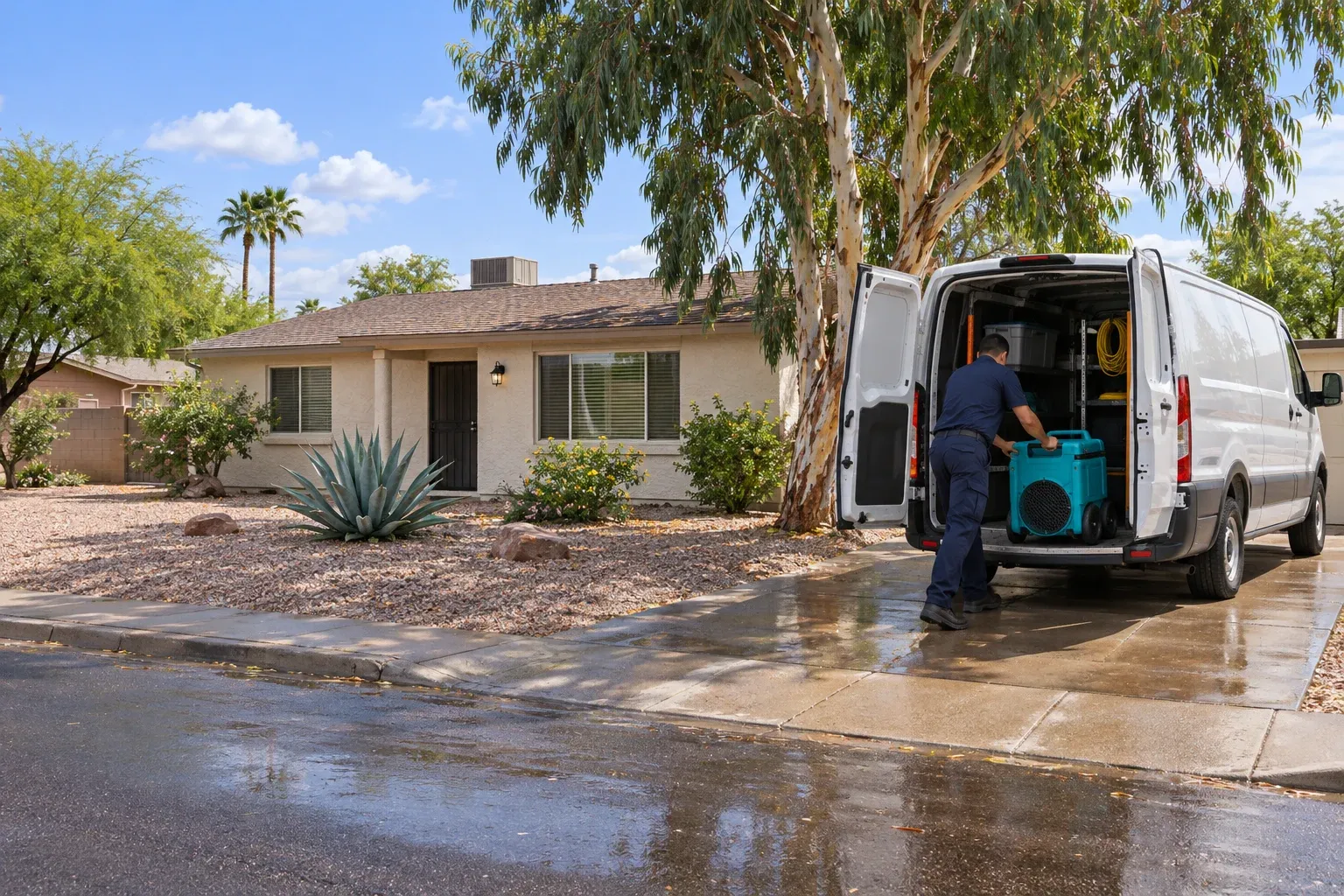
White cargo van with its rear doors open in a driveway, a man in navy work clothes wheeling a teal air machine out in front of a ranch house

Form open 24/7

Get a call back about mold in your home

Send the form. Someone from our team will call you back soon.

Mold in the house?Get a call back

Before you go: want a call back?

Send the request form and someone will call you back about the mold.

Get a call back

Get a call back

Send the form and someone from our team will call you back.