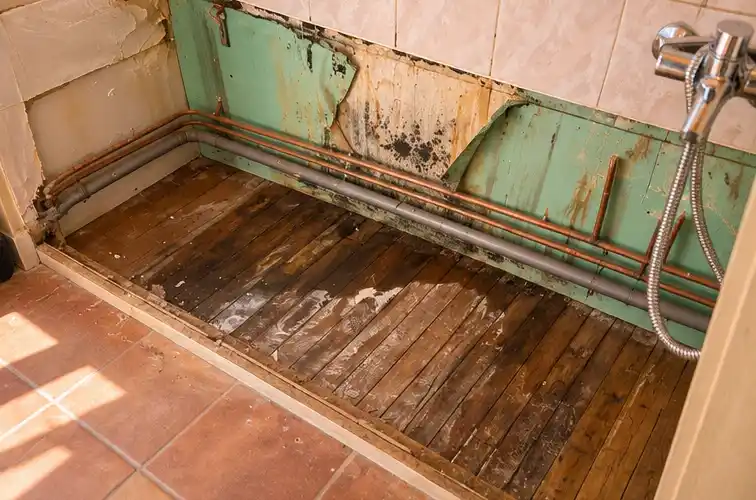
Opened shower wall showing dark mold and rust stains on the wood backing, a green wall panel and shower arm at the right, tile floor below

Tempe guide · 6 min read

Mold Remediation vs Removal

Mold removal and remediation are not always the same scope.

Removal is the physical act of taking moldy material out. Remediation is the whole job around it: finding the water, containing the area, removing growth, drying and confirming the result.

The two words are often used interchangeably on ads and quotes. They should not be. Removal describes one step: taking moldy material out of the building. Remediation describes the project that contains that step, plus the moisture investigation, the containment, the cleaning, the drying and the confirmation that the space is clean.

That difference shows up most in prices. A quote for removal and a quote for remediation can differ by thousands of dollars and both be priced fairly, because they cover different amounts of work.

Two words

Removal and remediation, side by side

Switch between the two words to see what each one covers.

Removal or remediation

What each word means

In short

Removal is a task. Remediation is a process with a beginning, a middle and an end that can be inspected.

Removal and remediation compared
TermRemovalRemediation
What it meansPhysical takeout of moldy materialThe full project around the removal
What it usually includesCutting out drywall, insulation, baseboard, cabinet base, then bagging itAssessment, water source, containment, removal, cleaning, drying, clearance, paperwork

01 / Good to know

The short definition

TermWhat it meansWhat it usually includes
RemovalPhysical takeout of moldy materialCutting out drywall, insulation, baseboard, cabinet base, then bagging it
RemediationThe full project around the removalAssessment, water source, containment, removal, cleaning, drying, clearance, paperwork

Removal is a task. Remediation is a process with a beginning, a middle and an end that can be inspected.

02 / Local risk

Why the words get mixed up

Arizona does not issue a separate mold remediation license, so there is no state definition that forces the words to mean one thing.

In practice, companies use "removal" for the visible service and "remediation" for the process, and some reverse the two. The reliable guide is the scope of work, not the noun on the front.

03 / 8 steps

What remediation includes that a removal line item does not

A remediation scope accounts for all of the following. A quote that covers only a few of them is usually a removal price.

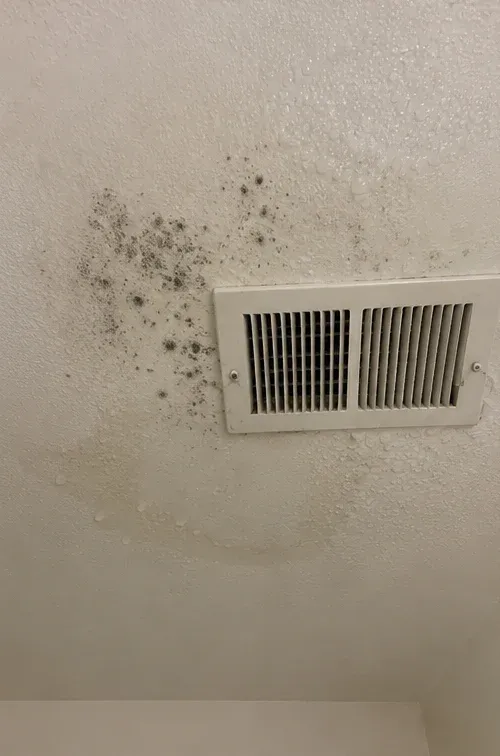
White wall with dark mold spots around a metal floor vent register
  1. The water source

    What is leaking, where it is, and who fixes it. Remediation on a live leak is temporary work.
  2. Containment

    Plastic sheeting, a zipper door and negative air so spores do not travel into the rest of the house.
  3. Contents protection

    Furniture moved or covered, and a plan for items that cannot be cleaned.
  4. Removal

    Porous material cut back past the visible growth, not just scrubbed at the surface.
  5. Cleaning

    HEPA vacuuming and damp wiping of structural surfaces, including the cavity.
  6. Drying

    The cavity and the framing brought back to a dry reading, checked with a meter.
  7. Clearance

    A visual inspection, and where the scope calls for it, air sampling before reconstruction.
  8. Disposal and documentation

    Waste bagged and removed, with photos and a written summary.

The EPA's guidance gives the reason for the sequence: mold needs moisture, so the moisture has to be controlled before the growth can be managed. A removal that ignores the water source satisfies the invoice and not the problem.

04 / Good to know

How the difference shows up in a quote

A one-line quote with a total and no scope is a removal price. It may be perfectly fair for a small patch with a known, fixed source. It is not a remediation scope: the two cover different amounts of work.

A remediation quote usually reads longer. It names the affected materials and the square footage, states whether containment is included, says who provides clearance, and lists exclusions such as drywall replacement, paint and contents handling.

Three things separate the two: whether the price covers finding and fixing the water or only removing what is visible, whether it covers drying and a moisture check before the wall is closed, and whether it covers clearance and who performs it. A price that covers none of the three is for removal alone, which is a smaller scope.
05 / Paperwork

When removal alone is the right scope

Removal without the full process can be reasonable when the problem is small, the surface is hard, and the water is already fixed. The EPA's rough line is a moldy area under about 10 square feet, which is usually a homeowner job.

A realistic example: a bathroom ceiling patch smaller than a dinner plate, caused by a fan that stopped working, with the fan replaced and the ceiling dry. Cutting out the patch, bagging it and cleaning the joists is a small bathroom mold job. Full containment and clearance are more than a job this size needs.

The same logic applies to a windowsill that grew a line of speckling after a monsoon leak, once the window is resealed and the sill is dry. Clean the hard surface, remove soft trim, and watch it for a month.

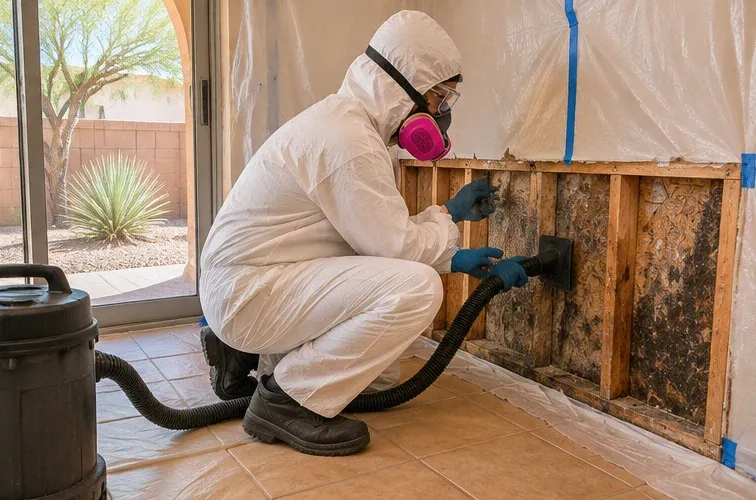
Worker in a white suit and pink respirator vacuuming dark mold from an opened wall cavity beside a sliding glass door, a dark HEPA vacuum at the left

06 / Paperwork

When remediation is the right scope

The full process earns its cost when any of these are true:

  • The affected area is larger than about 10 square feet.
  • The growth is inside a wall cavity, an attic assembly or ductwork.
  • More than one room is involved, or the growth keeps returning.
  • The water source has not been found.
  • The property is a rental and the file may be used in a dispute.
  • The house is being sold and a buyer or lender wants documentation.
  • Anyone in the home has a reason to want the air checked after the work.

In those cases, a removal-only price is not a smaller version of the same job. It is a different, incomplete job that leaves the drying and the verification out.

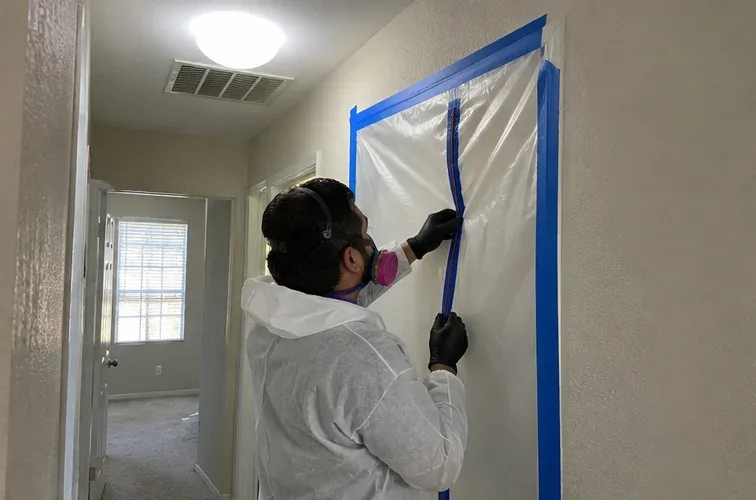
Worker in a white suit and respirator taping plastic sheeting over an apartment doorway with blue tape, a ceiling vent above

07 / Costs

What each approach costs

These are national ranges, not Tempe quotes.

ItemNational rangeSource
Full remediation, typical$1,500 to $9,000, average about $3,500One national cost guide
Per square foot$10 to $30One national cost guide
Small bathroom$500 to $1,500One national cost guide
Attic$1,500 to $9,000One national cost guide
HVAC system$3,000 to $10,000National cost guides
Inspection$300 to $1,000One national cost guide

A removal-only cash price often lands below the low end of those ranges because it leaves out containment, drying and clearance. It is a smaller scope, so it sits alongside other removal-only prices, not alongside a full remediation.

The mold removal cost page breaks the same numbers down by room, the clearance testing guide explains what clearance testing covers, and the remediation timeline shows where each step sits in the schedule.

09 / 5 questions

Frequently asked questions

Still have a question?

Send the form. Someone from our team will call you back soon.

Get a call back

Q.01

Is mold removal the same as mold remediation?

No. Removal is the physical takeout of moldy material. Remediation is the full project: assessment, water source, containment, removal, cleaning, drying and clearance. Many quotes use the words loosely, so the scope of work describes the job better than the title does.

Q.02

Which one is more expensive?

Remediation, because it includes more steps. A removal-only job can cost less for a small patch. A full remediation in the national ranges runs $1,500 to $9,000, with an average near $3,500 according to one national cost guide.

Q.03

Can I ask for removal only?

You can ask, and for a small area with a fixed water source it may be the right scope. Removal only leaves out containment, drying verification and clearance. On a larger area or a cavity, removal alone usually leaves the problem in place.

Q.04

Does remediation include repairing the drywall?

Usually not. Remediation ends at clean, dry structural surfaces. Hanging, taping, texturing and painting are reconstruction, and they are commonly listed as exclusions.

Q.05

Do I need a permit for mold remediation in Tempe?

A permit depends on the building work, not the mold. Structural changes, electrical work and some mechanical work need permits, and a contractor license is generally required when labor and materials exceed $1,000. The Arizona contractor license page covers the threshold.

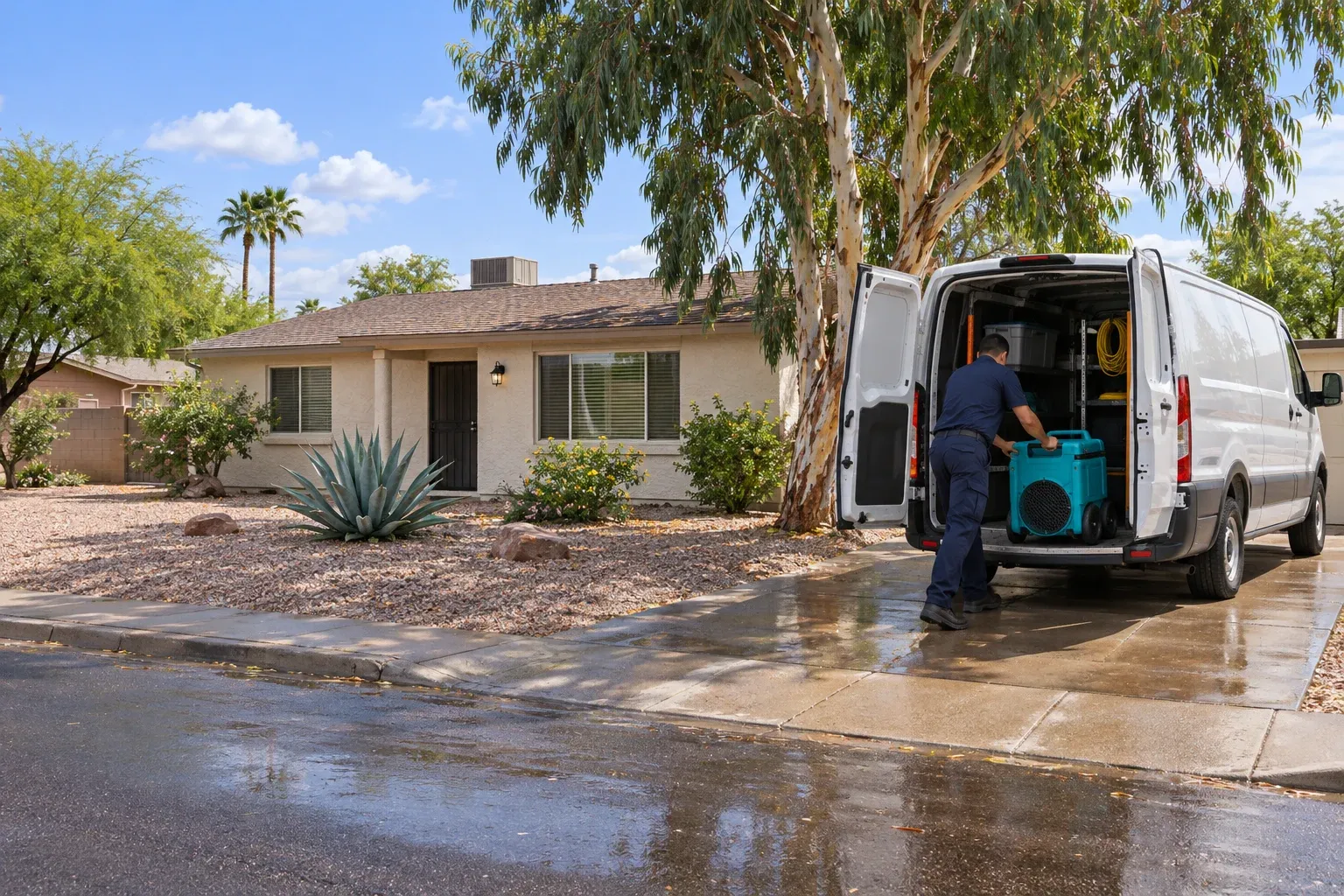
White cargo van with its rear doors open in a driveway, a man in navy work clothes wheeling a teal air machine out in front of a ranch house

Form open 24/7

Get a call back about mold in your home

Send the form. Someone from our team will call you back soon.

Mold in the house?Get a call back

Before you go: want a call back?

Send the request form and someone will call you back about the mold.

Get a call back

Get a call back

Send the form and someone from our team will call you back.