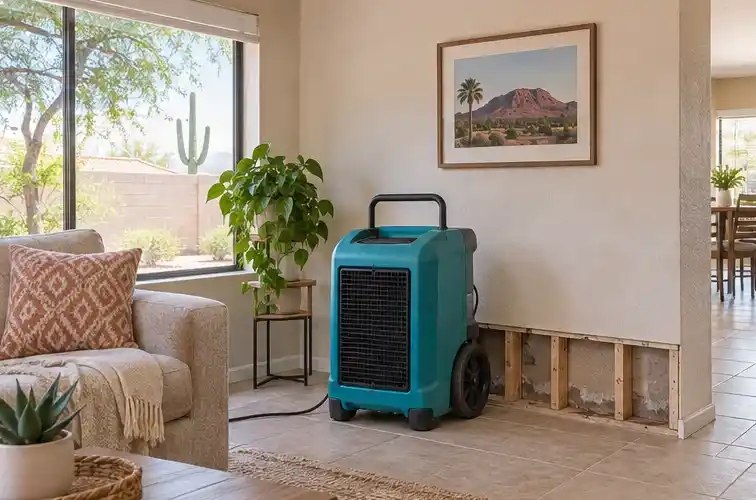
Teal dehumidifier running in a living room with the lower wall opened at the baseboard, a sofa with patterned pillows and a framed desert print

Service area · Queen Creek, AZ

Mold Removal Queen Creek, AZ

You found mold or a stain in Queen Creek. Send the form day or night, and someone from our team will call you back soon. We serve Queen Creek and the towns around it.

Form open 24/7

Get a call back

Tempe · Maple-Ash · Mitchell Park · Escalante · University Park · Riverside + 29 more towns

Queen Creek is a young housing market, but new houses still get wet. AC condensate and slab leaks are the quiet sources behind many local mold calls.

Mold removal in Queen Creek starts with a question that surprises some homeowners: where is the water coming from? Only 3.1 percent of the city's housing was built before 1980, per ACS 2024 5-year estimates, so the worn galvanized pipes and aged roof flashings that drive mold work in older Tempe neighborhoods are rare here. The housing is newer and almost all detached. That shifts the likely sources to the AC system, the slab, and roof penetrations, and it changes how a remediation scope is built.

If a ceiling stain or a musty back bedroom brought you here, resist the urge to paint over it or spray the surface. Find the moisture first. In a Queen Creek house, that usually means an air handler closet, a condensate line, or a slab leak under flooring. Cleaning mold without stopping the water is a temporary fix with a predictable ending.
01 / Good to know

New construction does not mean dry construction

Queen Creek has 71,867 residents, and 9.8 percent of occupied homes are rented. Just 2.9 percent of housing units sit in buildings with five or more units, so the market is dominated by single-family houses. The median owner-occupied value is $635,400.

A larger house means more roof, more ductwork, and sometimes a second air handler. It can also mean water travels farther before it shows. A leak at one end of an attic can surface as a stain in a hallway on the other side of the house.

Newer materials are not the issue. The issue is that a large, tightly built house with a small, continuous water source gives mold what it needs: a dark cavity, paper facing or cellulose, and a temperature that stays mild all year.

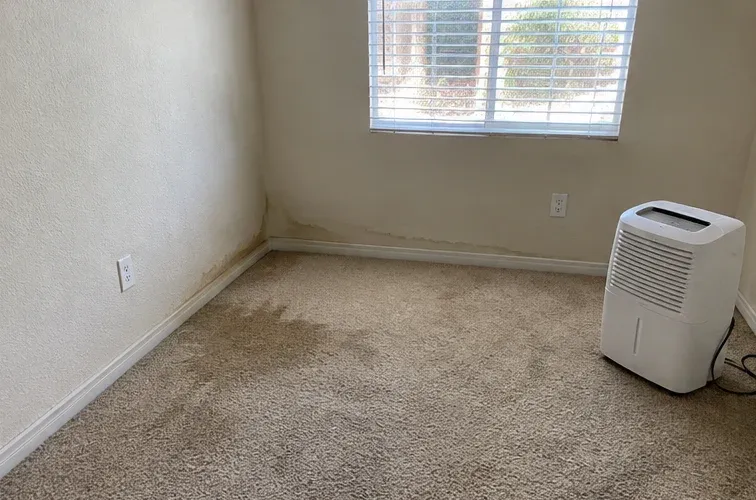
Empty room with beige carpet showing a darker damp patch along the baseboard, a white portable dehumidifier at the right and a window with blinds

02 / Sources

Two quiet sources: AC condensate and slab leaks

The air handler and its drain line. A Queen Creek AC runs for most of the year. The coil pulls water from the air all day, and that water leaves through a narrow condensate line. Dust, algae, and insects clog the line, the pan overflows, and the cabinet, platform, and nearby drywall stay wet. When the unit sits in a closet or a secondary attic, nobody sees the overflow until the ceiling below discolors. The AC mold removal page covers how the system is inspected and cleaned.

A slab leak. Supply lines under the slab can develop a pinhole leak that never reaches the surface as standing water. Instead, moisture wicks upward into carpet padding, tile underlayment, or the bottom plate of a wall. A water bill that jumps without a change in use is a reason to look. So is a warm spot on the floor or the sound of running water when every fixture is off. The water damage guide explains how that moisture moves.

03 / Monsoon

Roof details and monsoon rain

Tile roofs, valleys, and penetrations for vents and dishes are standard here. Monsoon season runs June 15 to September 30, and one strong storm can push water past a failed flashing or a cracked tile. The leak often enters the attic, wets the decking and insulation, and stops there until the next rain. Attic growth can follow a season of small leaks that never dripped through the ceiling.

Roof penetrations deserve a second look after a storm. A vent boot can crack, a satellite dish bracket can pull loose, and a valley flashing can lift at the edge. None of these produce a dramatic leak. They produce a slow drip that runs along a rafter and wets the deck in a spot you cannot see from the hallway.

Low-slope sections over patios and entries deserve the same attention. Water ponds at the low point, the membrane ages, and the seam fails first.

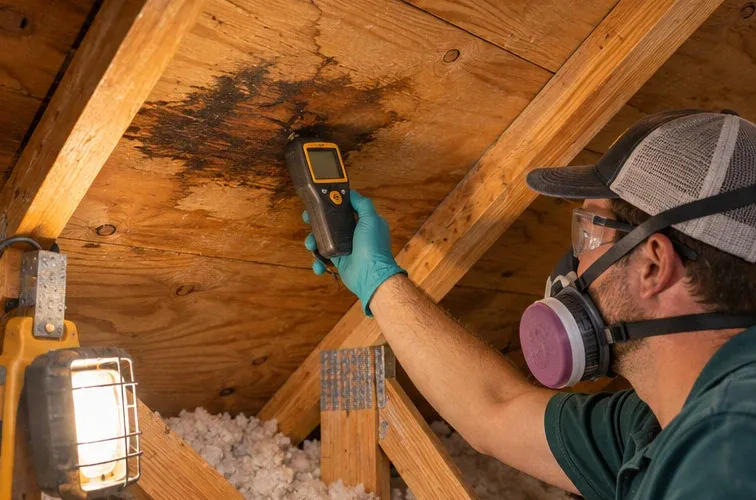
Worker in a respirator and cap holding a moisture meter against dark staining on attic roof sheathing, blown insulation below and a work light at the left

04 / 5 steps

How the work runs, step by step

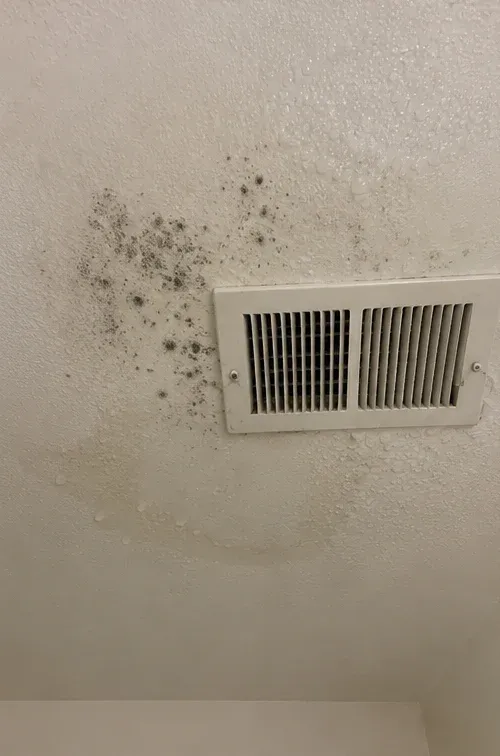
White wall with dark mold spots around a metal floor vent register
  1. Inspect the moisture source and the affected area

    Moisture readings, photos, and a written scope.
  2. Stop the water

    An HVAC contractor clears the drain line or repairs the unit. A plumber handles the slab leak. Remediation starts after the source is controlled.
  3. Contain the area with plastic and negative air pressure so spores do not spread through the house.
  4. Remove porous materials that cannot be dried or cleaned, and clean the remaining surfaces.
  5. Dry the structure and verify moisture readings before drywall, paint, or flooring goes back.

Reconstruction is usually a separate scope with a separate price.

05 / Costs

What it costs in Queen Creek

The figures below are national ranges, not quotes for a specific address.

ScopeNational range
Inspection$300 to $1,000
Testing, when it is needed$250 to $500
Typical remediation$1,500 to $9,000
Remediation per square foot$10 to $30

EPA guidance says a moldy area of less than about 10 square feet can often be handled by the household. A wet wall cavity, a contaminated air handler, or growth across an attic deck is not a small area.

06 / Good to know

Renting a Queen Creek house

Most rentals here are single-family houses rather than apartments, and tenants often deal with an owner or manager who is not on site. Put the report in writing, include photos and dates, and describe what you see rather than what you think caused it.

Ask for the repair in writing and keep a copy of everything. A.R.S. 33-1324 requires a landlord to keep the premises fit and habitable. The statute does not use the word mold, so the practical case rests on moisture and the damage it is causing. The rental mold page walks through the notice sequence.

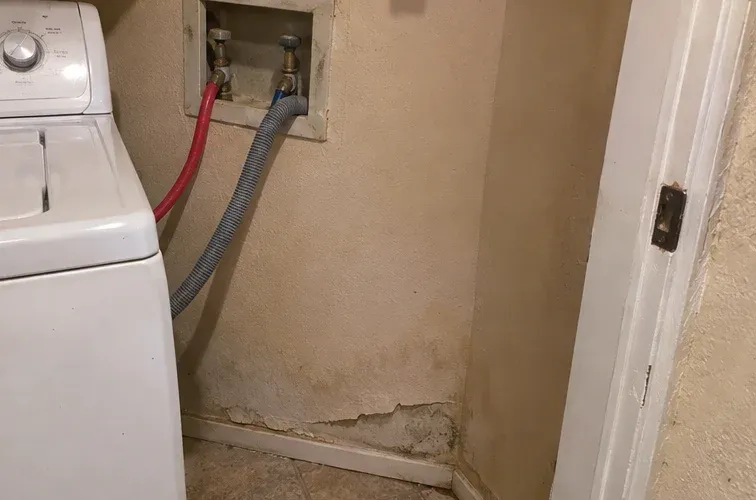
Laundry hookup with red and gray hoses behind a white washer, brown water stains and dark spots on the wall below

Local numbers

Queen Creek by the numbers

  • Homes rented9.8%of occupied homes are rented
  • Built before 19803.1%of the city's housing was built before 1980
  • In buildings of 5+ units2.9%of housing units sit in buildings with five or more units
  • Residents71,867

ACS 2024 5-year estimates, as stated in the page text above

07 / 5 questions

Frequently asked questions

Still have a question?

Send the form. Someone from our team will call you back soon.

Get a call back

Q.01

Does a newer Queen Creek home need mold testing?

Often not when the growth is visible. The EPA says sampling is usually unnecessary when mold is visible, and there is no federal health-based standard for mold or spores. Testing helps when a hidden leak may have affected a cavity and you need documentation.

Q.02

Where does mold usually hide in Queen Creek houses?

The air handler closet, the drain pan, the ceiling below a secondary unit, the base of a wall over a slab leak, and attic decking under a roof penetration. Each is a place where a slow leak stays wet out of sight.

Q.03

How long does the work take?

The schedule depends on the size of the contained area and how wet the structure is. A slab leak that wet several rooms adds drying and reconstruction time.

Q.04

Can I stay home during remediation?

It depends on the size of the containment and who lives in the house.

Q.05

What should I do first?

Stop the water. Call the HVAC contractor or plumber for the source, then arrange an inspection of the wet materials. Cleaning before the leak is fixed usually means doing the job twice.

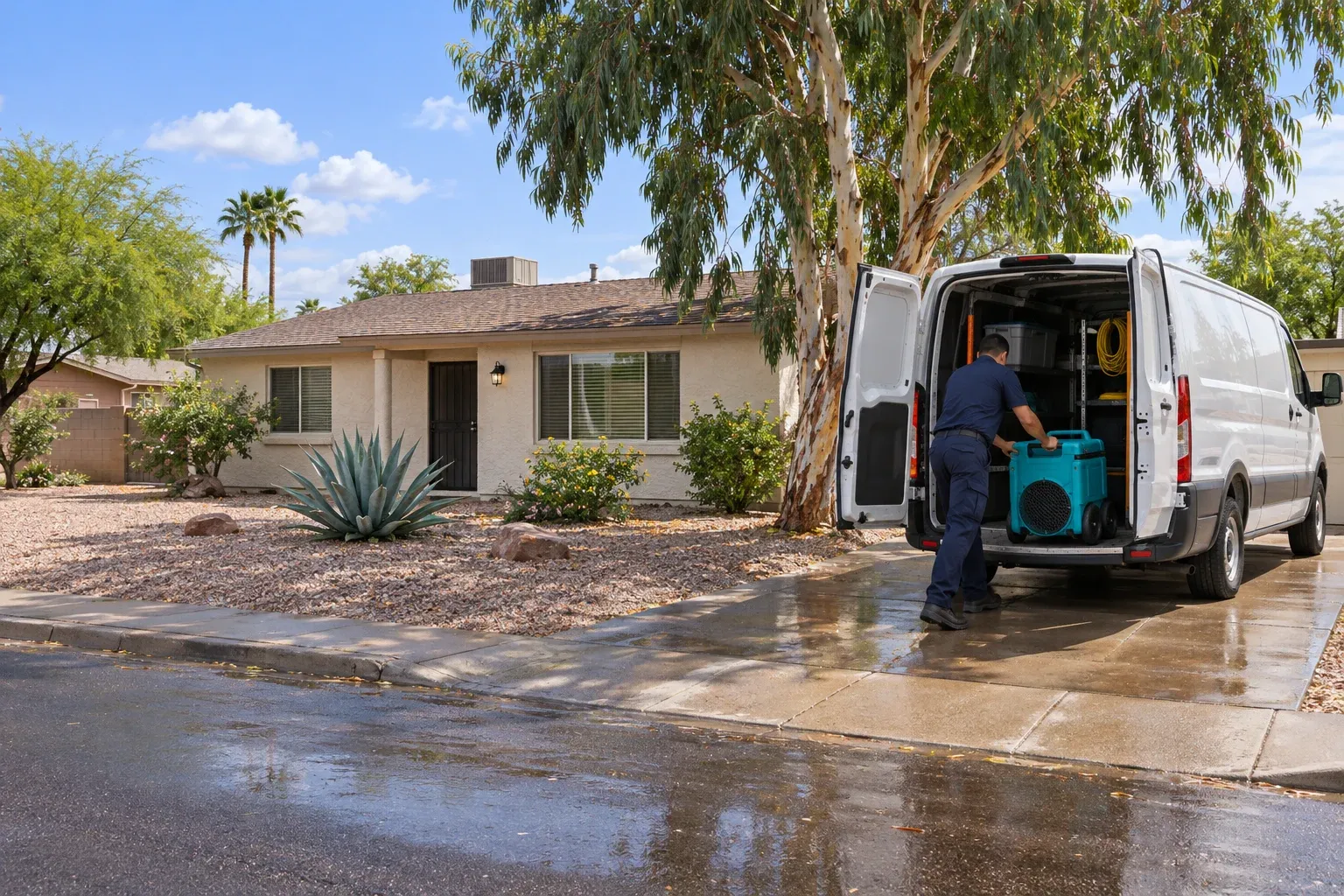
White cargo van with its rear doors open in a driveway, a man in navy work clothes wheeling a teal air machine out in front of a ranch house

Form open 24/7

Get a call back about mold in your home

Send the form. Someone from our team will call you back soon.

Mold in the house?Get a call back

Before you go: want a call back?

Send the request form and someone will call you back about the mold.

Get a call back

Get a call back

Send the form and someone from our team will call you back.