Woman in a teal polo holding a tablet beside an air sampling pump on a tripod in a condo living room with a city skyline and a hill in the windows

Tempe neighborhood · Warner Ranch

Mold Removal Warner Ranch, Tempe

You found mold or a stain in Warner Ranch. Send the form day or night, and someone from our team will call you back soon. We serve Tempe and the towns around it.

Form open 24/7

Get a call back

Tempe · Maple-Ash · Mitchell Park · Escalante · University Park · Riverside + 29 more towns

Warner Ranch is south Tempe's newer housing, where mold usually starts with a clogged condensate line or a roof transition, not a rusted drain.

Warner Ranch is the exception in Tempe's housing data, and the mold work reflects it. The ZIP code area that covers the neighborhood, 85284, is only 8.4 percent pre-1980 and 18.2 percent rented, per ACS 2024 5-year figures. Most houses here went up after 1980, which often means copper or PEX supply lines, plastic drain lines and air handlers sized for a sealed house rather than a window unit.

Mold removal in this part of south Tempe is less about rusted cast iron and more about small failures in a tight building: a condensate line that clogs, a roof transition that was never detailed well, or a supply line behind a refrigerator. The damage is often contained to one wall or one closet, and the repair sequence is often set by a homeowner policy and an association's rules as much as by the moisture itself.

01 / Good to know

What the newer housing changes

A house built after 1980 is tighter than a 1960s ranch. Windows seal, doors seal, and the air handler pulls return air from a closed loop. That efficiency has a tradeoff: when water gets into a wall cavity, the cavity does not dry quickly on its own, because there is little air movement through it.

The plumbing is also different. Copper and PEX supply lines fail at fittings rather than through the pipe wall, and the leak is often a slow weep that shows up as a stain on a baseboard or a lifted seam in vinyl. Plastic drain lines rarely rust, but a poorly glued joint can seep for years inside a wall.

The 85284 housing stock is also more likely to be owner occupied, 18.2 percent rented. That changes who makes the call and who approves the repair, but not the physics of a wet wall.

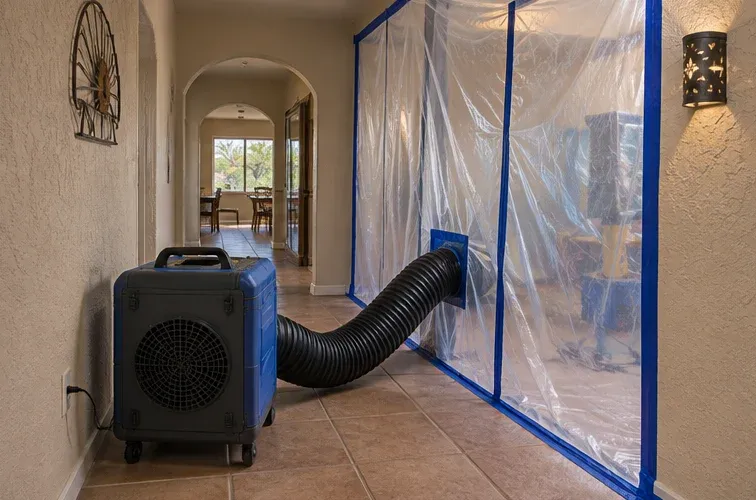
Dark air scrubber with a black duct hose running into plastic sheeting taped in a hallway of a tile-floored house

02 / Leaks

AC condensate and the roof transitions

In a newer house, the air handler may sit in a closet, a garage or a platform above a hallway. The condensate path is the weak point:

  • The primary drain line. A clog sends water to the pan. If the pan drains to the outside, you may never see it indoors.
  • The secondary pan and switch. A float switch should shut the unit off before the pan overflows. A failed switch turns a clog into a ceiling stain.
  • The drain line termination. A line that dumps next to the foundation instead of away from it keeps the soil and the slab edge wet.
  • A sweating suction line or plenum. Insulation that has come loose lets cold metal condense in a hot garage or attic.

Roof transitions matter as much as the equipment. A second story, a patio cover, a flat section over an entry, or a change from tile to shingle creates a joint where water can sit. On a newer house these details are usually hidden behind stucco or trim, so the first sign is a stain on the ceiling below, not a missing shingle.

03 / Property types

HOA rules before the first cut

Some Warner Ranch properties sit under an association, and exterior work usually has a process. Before work starts, ask the board or the manager for the current rules on:

  • A project submittal or approval letter, and how long it takes.
  • Permitted work hours and days.
  • Where a trailer or dumpster can sit, and for how long.
  • Whether the association needs a copy of the scope.

Getting the submittal in early can avoid a stop-work order in the middle of a containment build. The HOA mold responsibility guide covers the split between owner maintenance and association maintenance in more detail.

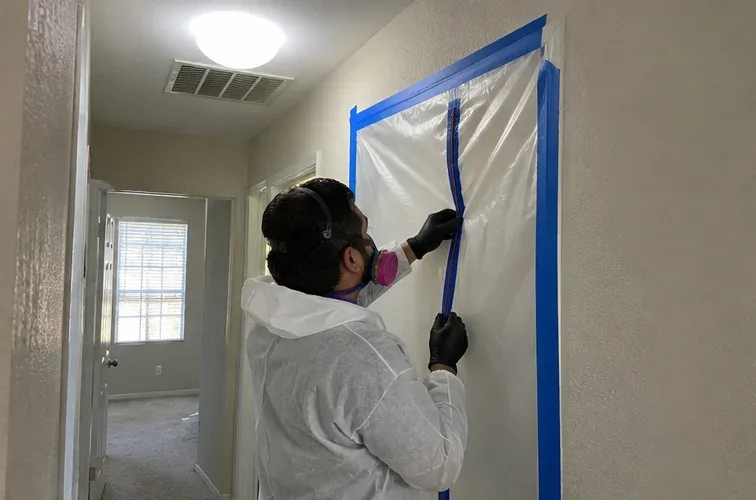
Worker in a white suit and respirator taping plastic sheeting over an apartment doorway with blue tape, a ceiling vent above

04 / 5 steps

How the job runs in a Warner Ranch house

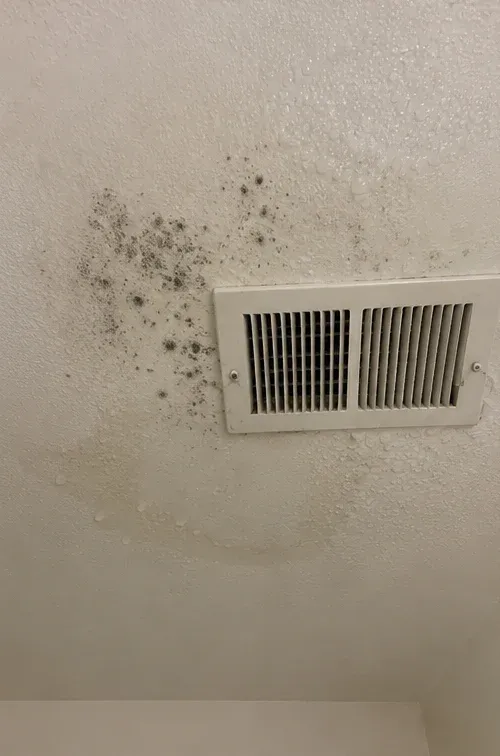
White wall with dark mold spots around a metal floor vent register
  1. Locate the moisture

    The inspection checks the air handler, the pan, the drain termination, the ceiling below and the roof transition.
  2. Fix the mechanical or roofing cause

    A drain line, a float switch, a pan or a flashing repair is scheduled first.
  3. Get association approval if it applies

    Exterior work and dumpster placement usually need it.
  4. Contain and remove

    The wet drywall, insulation and any saturated baseboard come out, and the cavity is cleaned and dried.
  5. Verify and close out

    Moisture readings confirm the assembly is dry before texture, paint and trim go back.

05 / Costs

National cost ranges

The figures below are national, not quotes for a Warner Ranch address.

ScopeNational range
Inspection$300 to $1,000
Remediation, per square foot$10 to $30
HVAC system remediation$3,000 to $10,000
Attic remediation$1,500 to $9,000

A single closet with a failed pan and surface growth is a modest job. A two story transition that wet a ceiling and a wall cavity is larger. The mold removal cost page explains how square footage and material removal change the total.

Local numbers

Warner Ranch by the numbers

  • ZIP 85284 · Homes rented18.2%rented
  • ZIP 85284 · Built before 19808.4%pre-1980

ACS 2024 5-year estimates, as stated in the page text above

06 / 5 questions

Frequently asked questions

Still have a question?

Send the form. Someone from our team will call you back soon.

Get a call back

Q.01

Is mold less common in Warner Ranch than in older Tempe neighborhoods?

Not necessarily. Newer houses have fewer aging pipes, but they are tighter and dry more slowly when water gets in. A clogged condensate line in a sealed closet can wet a wall for weeks without anyone noticing.

Q.02

How does AC condensate turn into mold?

The pan overflows when the drain clogs, or the line sweats and drips. Water reaches drywall, insulation or the ceiling below, and the closed house keeps the humidity high. Growth follows within days if the material stays wet.

Q.03

What is a typical remediation bill in Warner Ranch?

National ranges run $10 to $30 per square foot, with HVAC remediation at $3,000 to $10,000 and an inspection at $300 to $1,000 (national cost guides). HOA submittals and access can add time, not usually square footage.

Q.04

Does the HOA need to approve interior mold work?

Interior work often does not need approval, but exterior access, dumpster placement and any roof repair may. Ask the manager before work starts, and keep the approval with the project file.

Q.05

Can a roof transition leak be fixed without replacing the roof?

Often yes. A transition at a patio cover or a wall intersection can be reopened, flashed and sealed. The roofer decides after seeing the detail. Remediation starts once the roof is closed.

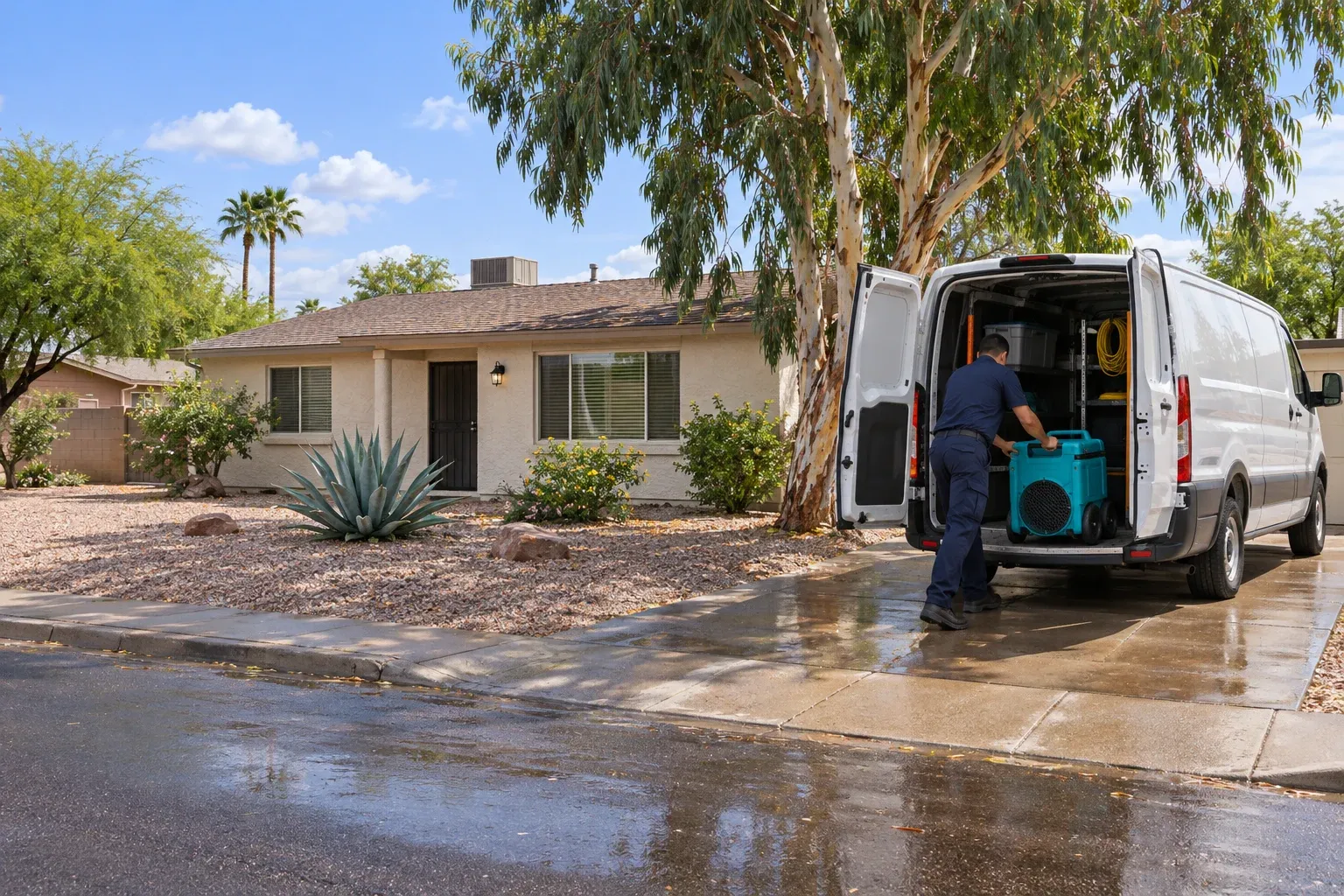
White cargo van with its rear doors open in a driveway, a man in navy work clothes wheeling a teal air machine out in front of a ranch house

Form open 24/7

Get a call back about mold in your home

Send the form. Someone from our team will call you back soon.

Mold in the house?Get a call back

Before you go: want a call back?

Send the request form and someone will call you back about the mold.

Get a call back

Get a call back

Send the form and someone from our team will call you back.