A bathroom or kitchen scope depends on what is wet.
Surface growth on tile, grout and caulk. This is cleaning work. The caulk may need to be cut out and replaced, because mold grows into the bead and no amount of scrubbing removes what is behind it.
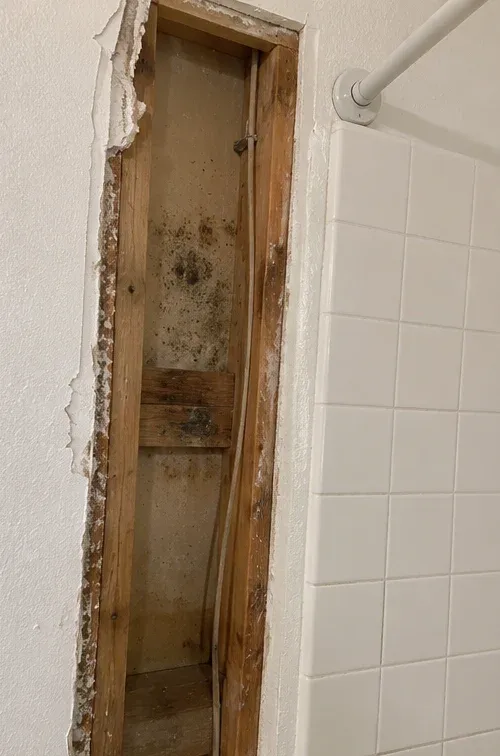
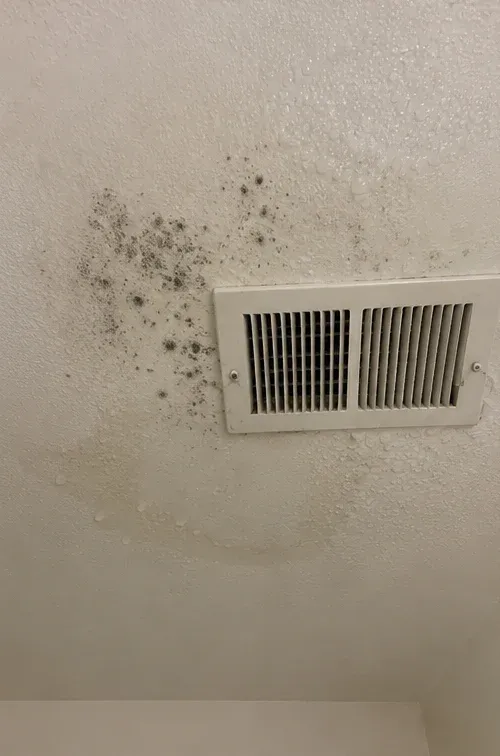
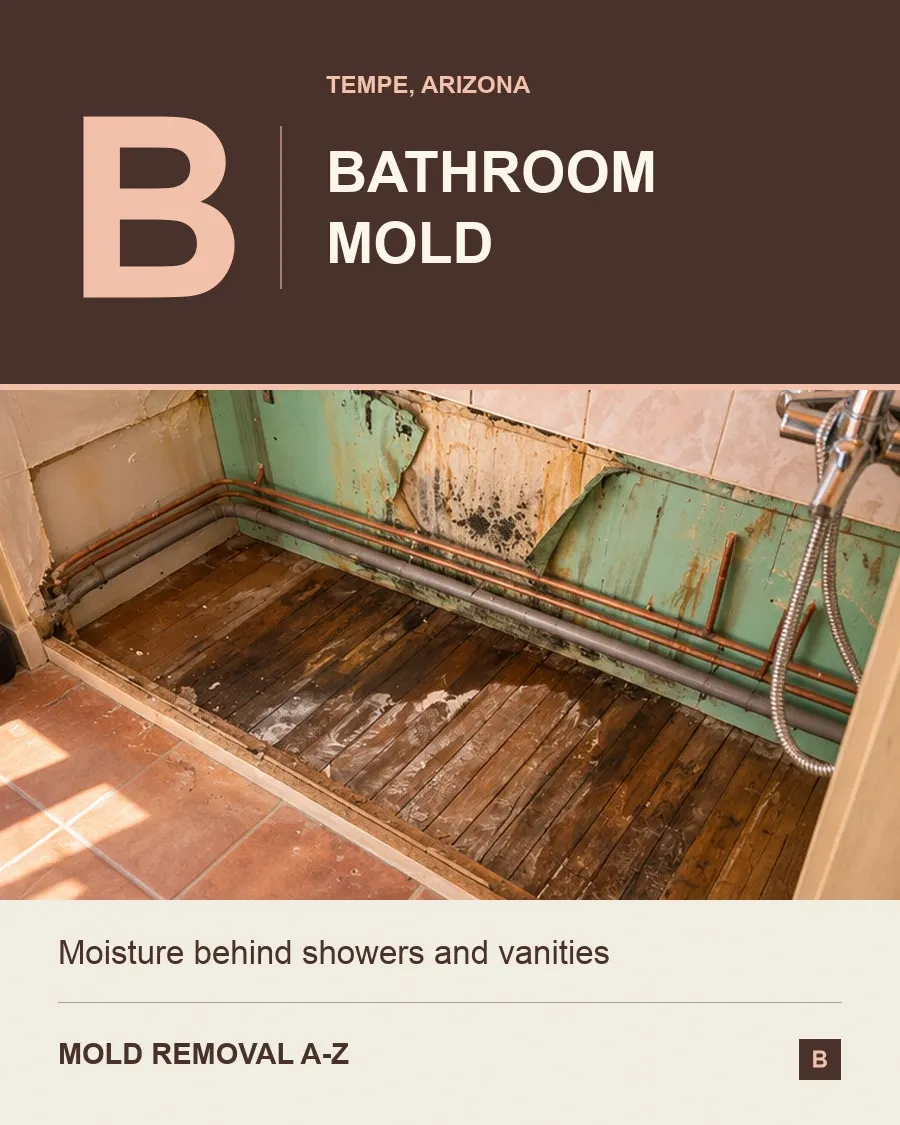
Drywall and ceiling growth. If the paper is soft or the paint is bubbling, the drywall is colonized and the affected section comes out. The cavity behind it gets inspected for the water source.
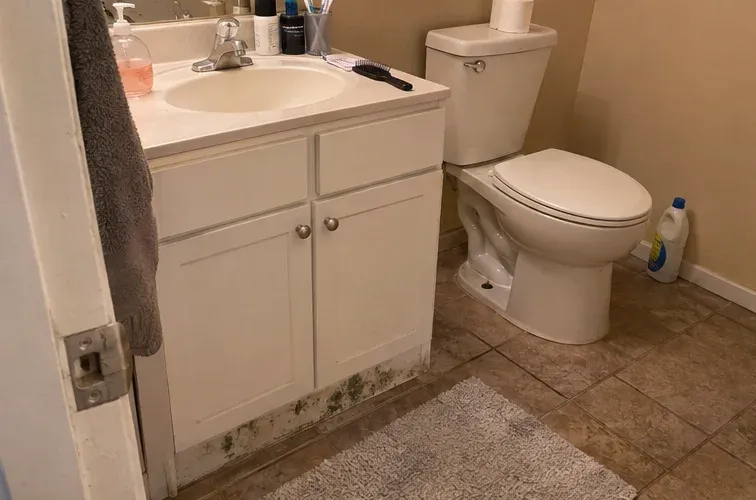
Cabinet bases and vanities. Particle board and MDF swell when they get wet. Once the base is soft, cleaning is not enough; the cabinet base or the whole vanity comes out.
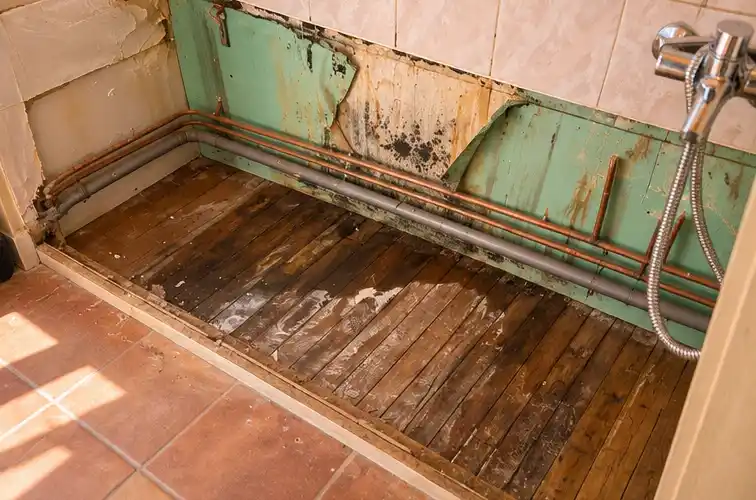
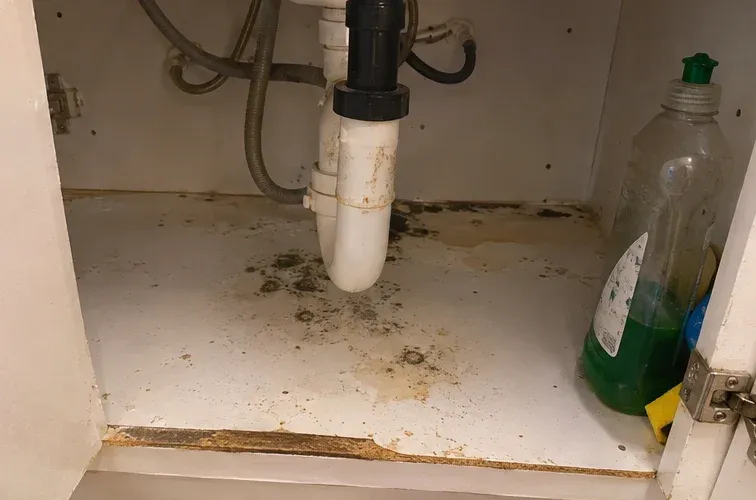
Under-sink walls and floors. A slow supply line or drain leak wets the wall cavity and the floor. The cabinet is often the first place the smell shows up.
Exhaust fans and ducts. A fan that moves little air, or one that vents into the attic instead of outside, keeps the room humid. The fan and its duct are part of the scope.
Water heater closets. A dripping T&P valve, a failed pan or a corroded fitting keeps the closet floor wet. The closet is small, dark and often carpeted, which makes it a reliable growth spot.