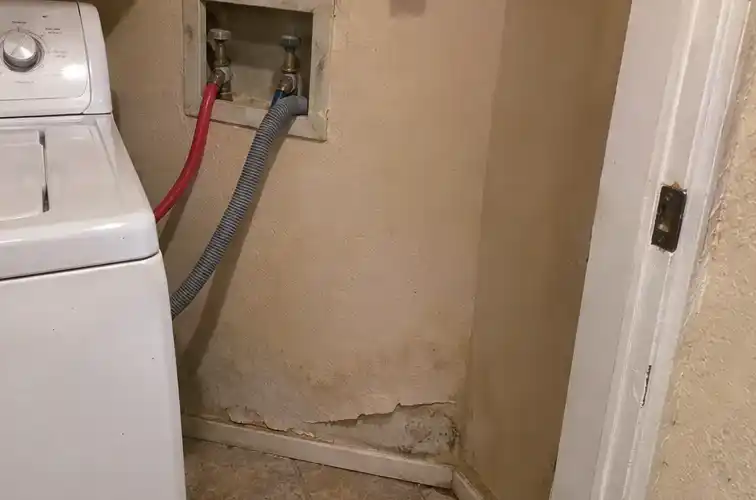
Laundry hookup with red and gray hoses behind a white washer, brown water stains and dark spots on the wall below

Tempe guide · 6 min read

Tempe Mold Questions

The same handful of mold questions keep coming up in Tempe.

These are the answers, without the scare talk.

The mold questions that repeat in Tempe are practical. A tenant wants to know whether the musty smell is the AC or the wall. A homeowner wants to know why the bathroom ceiling grows back every August. Someone has two quotes for the same patch, one a few hundred dollars and one several thousand. Few are about genus names. They are about who pays, who fixes and whether it is serious.

01 / Good to know

The question people forget to ask

Most of these questions arrive at the same place: where is the water? A quote or cleaning plan that does not answer that is incomplete.

The second is what the assembly is made of. Drywall and insulation come out. Tile, concrete and framing can be cleaned and dried. Material decides the scope more than color.

03 / 4 questions

Renting questions

Still have a question?

Send the form. Someone from our team will call you back soon.

Get a call back

Q.01

The apartment smells musty but the manager says it is the AC. What now?

Ask for the AC to be inspected, and put the request in writing. A musty smell when the fan runs can come from a wet drain pan, a damp air handler closet or a return chase through a hot attic. It can also come from a wall. A moisture reading at the air handler and wall tells them apart. The rental mold guide walks through the written notice.
Q.02

Can I break my lease over mold?

That is a lease question, not a mold question. Arizona's fit and habitable statute, A.R.S. 33-1324, requires the landlord to keep the premises fit and habitable, and the word mold does not appear in it. A tenant can document the conditions and give written notice, and a tenant rights group or an attorney can answer the lease question.

Q.03

The unit next door flooded. Can mold show up in mine?

Yes, especially with shared walls or a common mechanical chase. Water moves sideways through the assembly and along the slab, and it can wet the baseboard in your unit with no visible source. In Tempe, 41.8 percent of units sit in buildings with five or more units. Look for a stain at the baseboard, a soft carpet edge or a smell near the shared wall.

Q.04

Who pays for the test in a rental?

It depends on the lease and the cause. What you control is the paper trail: dated photos, written notice and the manager's response. If you pay for an inspection, send the report to the landlord with a note naming the moisture source. The free mold testing guide covers what a free visit includes.

04 / 4 questions

Cooling and climate questions

Still have a question?

Send the form. Someone from our team will call you back soon.

Get a call back

Q.01

Is it the swamp cooler or the AC?

Run one at a time and see when the smell appears. A cooler that smells musty at startup usually has wet pads, a rusted pan or damp housing. An AC that smells musty when the fan runs usually has a wet drain pan, a clogged condensate line or a damp air handler closet. The comparison page goes through both.

Q.02

Why does it come back every monsoon?

Because the water comes back every monsoon. A roof detail, a window flashing or a stucco crack that leaked in July is still there in August. Cleaning between storms removes the visible growth and leaves the leak. The monsoon roof leak guide covers the roof side.

Q.03

Does the dry heat kill mold?

No. Dry air can stop growth and dry material, which is why dry months give growth fewer chances. It does not remove growth already inside drywall, and it does not fix a leak. A patch that dried out in May is still a patch, and it grows again when the monsoon arrives.

Q.04

The bathroom fan goes into the attic. Is that normal?

It was normal in older construction and it is still a moisture problem. Warm, moist air from a shower hits cooler sheathing and condenses, and growth starts on the deck above the bathroom. In Tempe, 41.2 percent of occupied units were built before 1980, so it is common. The fix is a duct through the roof or gable, then cleaning the sheathing.

05 / 3 questions

Testing questions

Still have a question?

Send the form. Someone from our team will call you back soon.

Get a call back

Q.01

Is a hardware store kit worth it?

For a quick check, yes. For a decision, no. A dish shows that spores exist, which they almost always do. It does not locate the water, measure the extent or compare a cleaned room with outside air. To decide whether to call someone, a kit is cheap. To decide what to remove, it is the wrong tool.

Q.02

Do I need a test to find out if it is black mold?

Color is not identification. Several genera look dark, and a lab sample is the only way to know what is growing. More importantly, the genus rarely changes the scope. Visible growth on porous material comes out whether it is dark or light. The EPA says sampling is usually unnecessary when growth is visible.

Q.03

Should the same company test and remove?

For a small job with visible growth, it is common and often fine. For a larger scope, a dispute or a clearance check, the clearance check is documented as its own step. The clearance testing guide explains how to set it up.

06 / 2 questions

Cost questions

Still have a question?

Send the form. Someone from our team will call you back soon.

Get a call back

Q.01

Why is one quote a few hundred dollars and another several thousand?

Because they are probably not the same job. The low quote may cover a visible patch with no containment, drying or clearance. The high quote may add containment, negative air, cavity removal, drying equipment and clearance. Totals compare only when the exclusions match. The quote checklist lists the rows to normalize.

National ranges give a frame: remediation runs $1,500 to $9,000 with an average near $3,500, and small bathrooms run $500 to $1,500. Those are national figures, not Tempe quotes.

Q.02

Does insurance pay for mold removal?

Sometimes, usually when the growth follows a covered water event such as a burst supply line. Policies vary, and coverage is an insurance question. Either way: photograph everything, stop the water, keep receipts and call the insurer early. An adjuster may ask for a moisture report with readings.

07 / 2 questions

Selling and landlord questions

Still have a question?

Send the form. Someone from our team will call you back soon.

Get a call back

Q.01

Do I have to disclose mold when selling?

Disclosure rules are a legal question for an agent or an attorney. The practical side is simpler: a buyer will ask whether the work was done and whether it was checked. A scope, photos and a clearance report answer that better than paint.

Q.02

Can I just paint over it before photos?

Paint over a damp patch fails twice. The growth continues behind the film, and the paint peels later, which looks worse than the stain. If the area is dry and the growth was cleaned off a hard surface, paint is fine. If the growth is in the drywall, the material comes out. The what not to put on mold guide covers the rest.

08 / 5 questions

Frequently asked questions

Still have a question?

Send the form. Someone from our team will call you back soon.

Get a call back

Q.01

Is mold common in Tempe apartments?

It is common wherever water sits, and apartments have several places for it: shared walls, air handler closets, condensate lines and bathroom fans. In Tempe, 57.7 percent of occupied homes are rented.

Q.02

How fast does mold grow after a leak?

Growth can start within a day or two, which is why the EPA says to dry water-damaged areas and items within 24 to 48 hours. Material dried inside that window has a much better chance of being saved. Material wet past it usually comes out.

Q.03

Can I stay in the unit while remediation runs?

That depends on the scope. The containment, access and occupancy plan belongs in the written scope, and for a large job, relocation is a decision to make with the landlord.

Q.04

Do I need a mold inspection to sell a house?

Whether one is required, and what must be disclosed, is a legal question for an agent or an attorney. A buyer, lender or insurer may ask for past work documentation. A scope, photos and a clearance report answer that.

Q.05

What is the first thing to do when I see mold?

Find and stop the water, then decide whether the material is porous. Clean hard surfaces with detergent and water and dry them. Remove wet porous material. Above about 10 square feet, or when the source is unclear, get a moisture inspection.

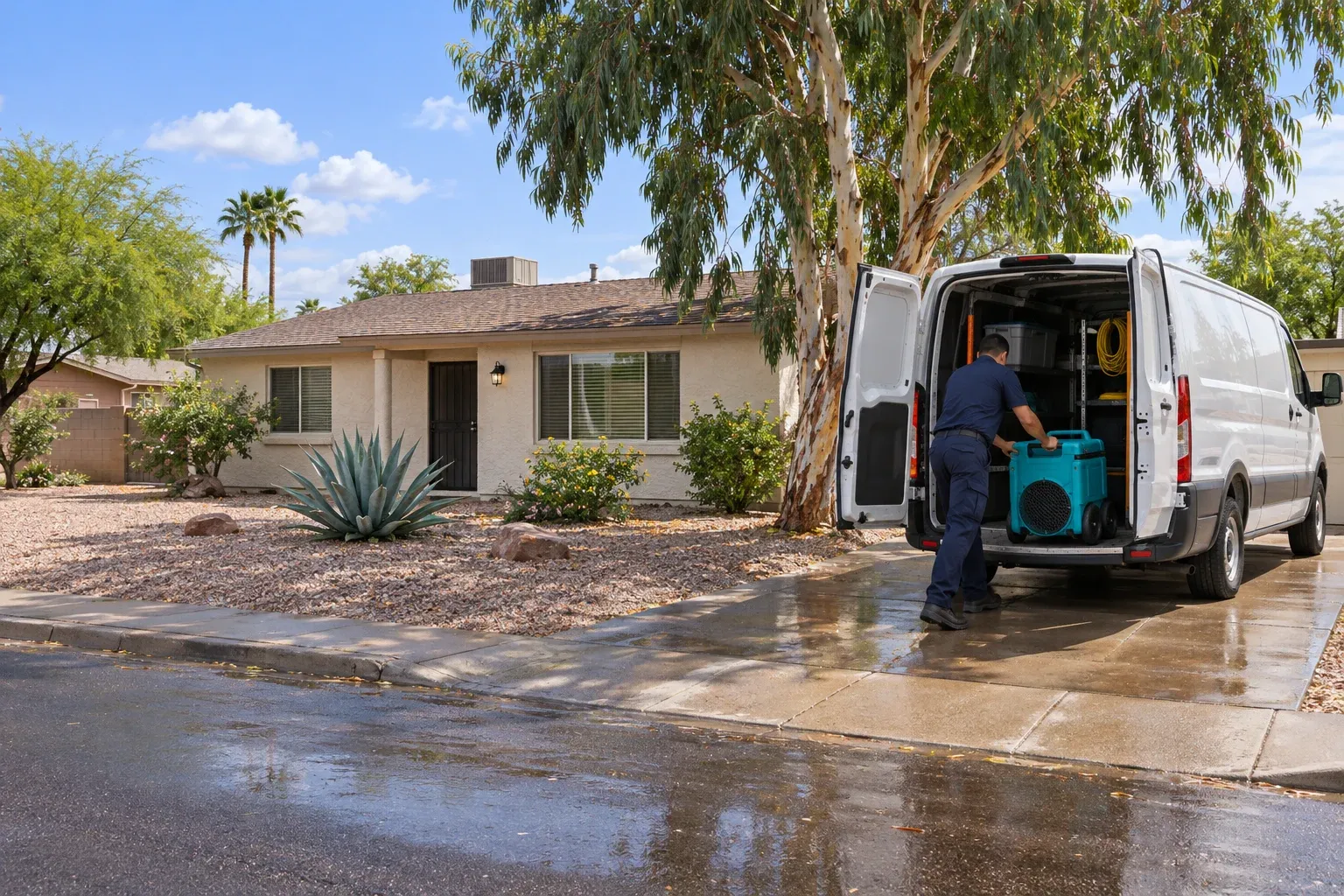
White cargo van with its rear doors open in a driveway, a man in navy work clothes wheeling a teal air machine out in front of a ranch house

Form open 24/7

Get a call back about mold in your home

Send the form. Someone from our team will call you back soon.

Mold in the house?Get a call back

Before you go: want a call back?

Send the request form and someone will call you back about the mold.

Get a call back

Get a call back

Send the form and someone from our team will call you back.