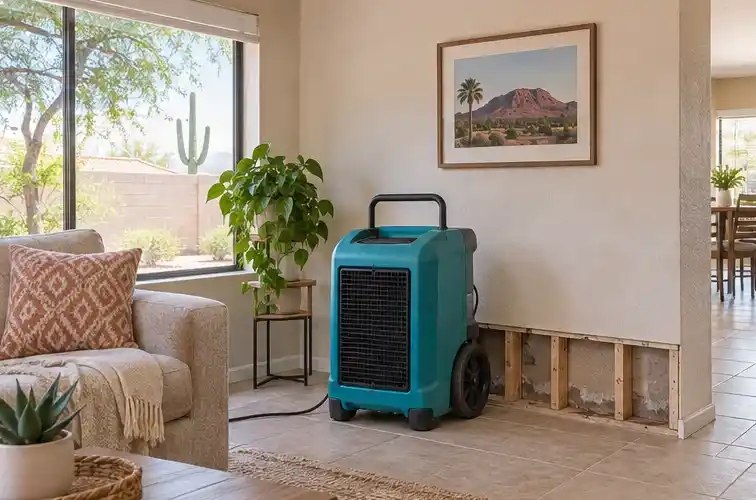
Teal dehumidifier running in a living room with the lower wall opened at the baseboard, a sofa with patterned pillows and a framed desert print

Tempe neighborhood · Escalante

Mold Removal Escalante, Tempe

You found mold or a stain in Escalante. Send the form day or night, and someone from our team will call you back soon. We serve Tempe and the towns around it.

Form open 24/7

Get a call back

Tempe · Maple-Ash · Mitchell Park · Escalante · University Park · Riverside + 29 more towns

Escalante is older house country south of campus, where a monsoon leak and an attic air handler can keep the same ceiling wet for years.

Mold removal in Escalante usually begins with a ceiling. The neighborhood sits south of the Arizona State University campus in Tempe, and its problems come from older houses rented, re-roofed and added onto over decades. In the 85281 ZIP code area that covers the neighborhood, 76.3 percent of occupied units are rented, 33.4 percent of the housing was built before 1980, and 57.6 percent of units are in buildings of 5 or more units, per ACS 2024 5-year figures.

The older house stock is where the work concentrates. A roof patched twice, an air handler on a plywood platform in the attic, and a bathroom fan that vents nowhere are a reliable combination for a stain that returns every August. Before any cleaning, find which of the three is feeding the moisture and get a written scope that separates repair from removal.
01 / Property types

Houses that predate the rental market

A large share of the housing around Escalante went up before 1980, when insulation was thinner and roof pitches were lower. Additions came later: a bedroom, a second bath, an enclosed patio. Each one created a new roof tie-in and a new place for water to sit.

Rental turnover hides the result. A tenant who sees a stain may report it at move-out, months after the leak started, and the next tenant may paint over it. By the time a meter goes on the ceiling, the drywall paper is often soft and the insulation above has been damp through a summer.

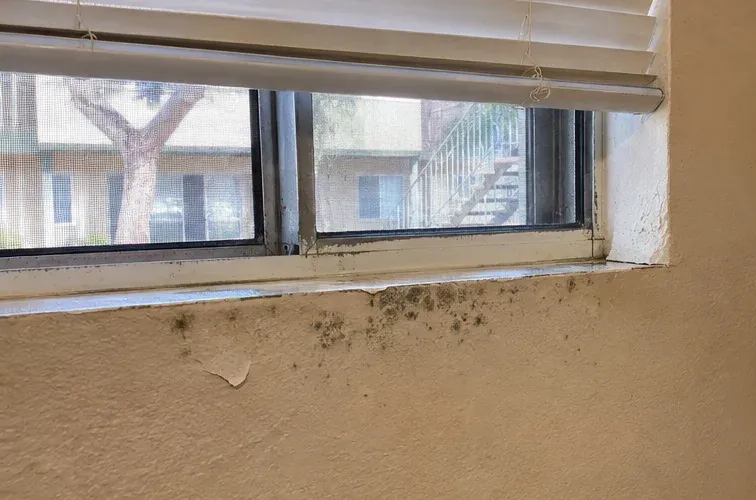
Metal-framed window with peeling paint and dark mold spots on the wall below it, apartment balconies seen through the glass

02 / Monsoon

Monsoon water on an old roof

The monsoon runs from June 15 to September 30, according to the National Weather Service in Phoenix, and it delivers rain fast enough to find every weak point on an older roof. Flashing around a vent, the low side of a patio addition, and the seam where two roof planes meet are the usual entries. Water travels along a rafter before it drops, so a ceiling stain can sit several feet from the opening.

That is why a roof repair and a ceiling repair are two jobs. A roofer closes the opening. The mold work deals with material that stayed wet: drywall, insulation, the top plate of a wall, the facing on the attic side.

A ceiling stain that grows after each storm is a roof problem first. Painting over it moves the evidence, not the water.

03 / Leaks

The air handler in the attic

An attic air handler sits in the hottest space in a house, and its condensate management is the part that fails quietly. The drain line clogs with dust and algae, the pan rusts through, or the unit shifts on its platform and the pan no longer catches the water. The platform and the surrounding insulation stay wet while the house cools normally, so nothing looks wrong until a ceiling below starts to sag or smell.

Ductwork makes it worse. Loose joints and torn insulation let cold air into a hot attic, which condenses on the duct itself and drips onto the same platform. When the system runs hard in July, the attic can be wet where no one has looked since the last filter change.

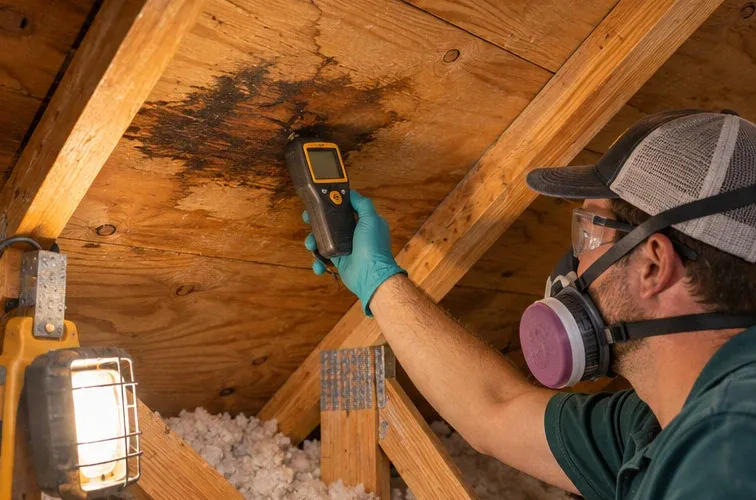
Worker in a respirator and cap holding a moisture meter against dark staining on attic roof sheathing, blown insulation below and a work light at the left

04 / Good to know

What to check before you send the form

  • A ceiling stain that returns after rain, especially at an addition or a porch tie-in.
  • Rust or standing water in the air handler pan, or a drain line that drips at the attic hatch.
  • A bathroom fan with no exterior vent, or one whose duct ends above the insulation.
  • Soft baseboards or a musty closet on an interior wall.
  • Insulation that is matted, dark or compressed around a platform or a roof leak.

Photograph each with a date. Those photos do more for a scope, a lease dispute or an insurance file than memory.

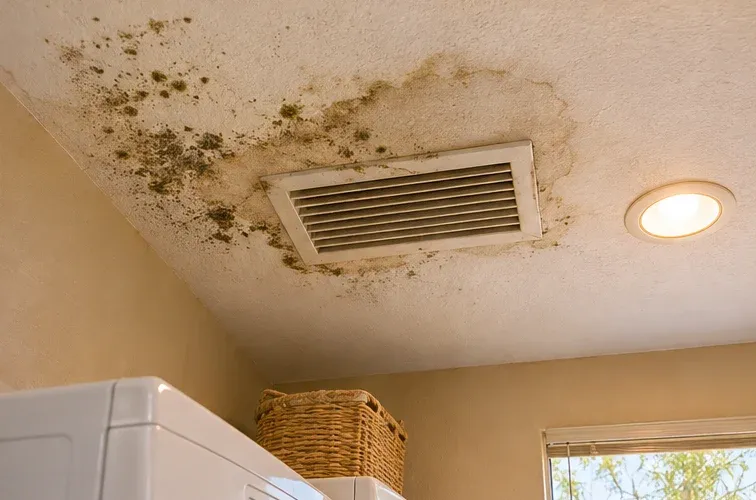
Dark mold speckling and brown staining on a laundry room ceiling around a white vent and a recessed light, a washer at the lower left

05 / 5 steps

The sequence a job follows

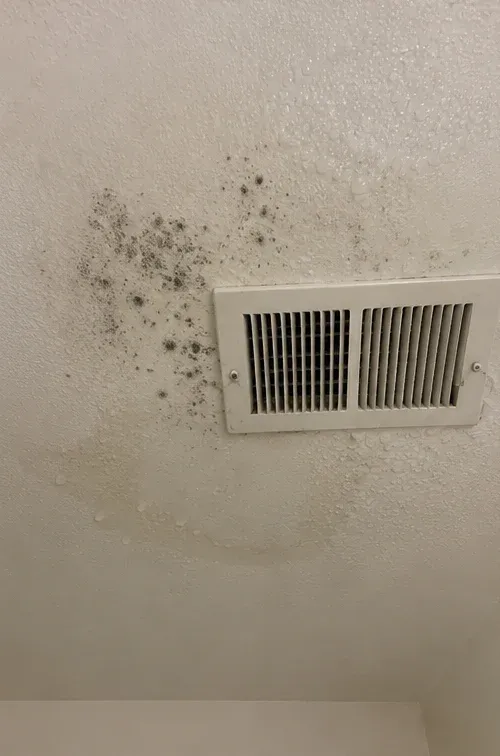
White wall with dark mold spots around a metal floor vent register
  1. Inspect the attic and the room below

    Readings on the sheathing, platform, ceiling and wall cavity, plus a look at the roof from outside where access allows.
  2. Correct the water path

    Roof repair, drain line, pan replacement or fan duct. Some belongs to a roofer or an HVAC company and happens before removal.
  3. Set containment

    Plastic and negative air around the work area, with the return protected so attic dust does not cycle into the house.
  4. Remove and clean

    Cut out wet drywall, insulation and swollen trim. Clean the framing and sheathing that stays.
  5. Dry to a reading and rebuild

    New insulation, drywall and paint go back after the framing measures dry. The next storm tests it.

06 / Good to know

What the ranges look like

Prices below are national ranges, not quotes for a house in Escalante.

ScopeNational range
Attic remediation$1,500 to $9,000
Walls and ceilings$1,000 to $12,000
HVAC and air handler work$3,000 to $10,000
Inspection$300 to $1,000

An attic job that covers a platform and a section of sheathing sits at the low end of the attic range. A ceiling, a wall cavity and a new pan push the total higher, and the HVAC side is often a separate invoice.

07 / Good to know

When the house is rented out

A tenant should report the water, not the color of the growth. Describe the stain, the storm it followed, the fan that does not vent and the smell in the closet, and send it in writing. A.R.S. 33-1324 requires a landlord to keep the premises fit and habitable, but the statute does not name mold, so a description of an active leak is the stronger request. The rental mold guide covers the notices.

An owner should treat the end of a tenancy as the cheapest inspection available. The house is empty, the attic hatch is accessible, and the meter can reach every closet.

Local numbers

Escalante by the numbers

  • ZIP 85281 · Homes rented76.3%of occupied units are rented
  • ZIP 85281 · Built before 198033.4%of the housing was built before 1980
  • ZIP 85281 · In buildings of 5+ units57.6%of units are in buildings of 5 or more units

ACS 2024 5-year estimates, as stated in the page text above

08 / 4 questions

Questions that come up after the storm

Still have a question?

Send the form. Someone from our team will call you back soon.

Get a call back

Q.01

How much does mold removal cost in Escalante?

National ranges are about $1,500 to $9,000 for an attic and $1,000 to $12,000 for walls and ceilings. An inspection is typically $300 to $1,000 (national cost guides). Roof and air handler repairs are separate trades and separate lines.

Q.02

The ceiling only stains after a storm. Can the mold wait until fall?

Waiting through the monsoon means more wet cycles, and each one spreads damp further into insulation and framing. The roof repair is the urgent item. Removal can follow once the opening is closed.

Q.03

Is an attic air handler to blame for a ceiling stain below it?

It can be. A clogged drain line or a rusted pan wets the platform and the insulation around it, and the water shows on the ceiling below. Look for rust, standing water or a drain line that ends in the attic.

Q.04

Should the attic insulation be replaced after a roof leak?

Insulation that stayed wet, matted or dark usually comes out, because it does not dry well in place and holds moisture against the framing. A meter reading decides it better than appearance.

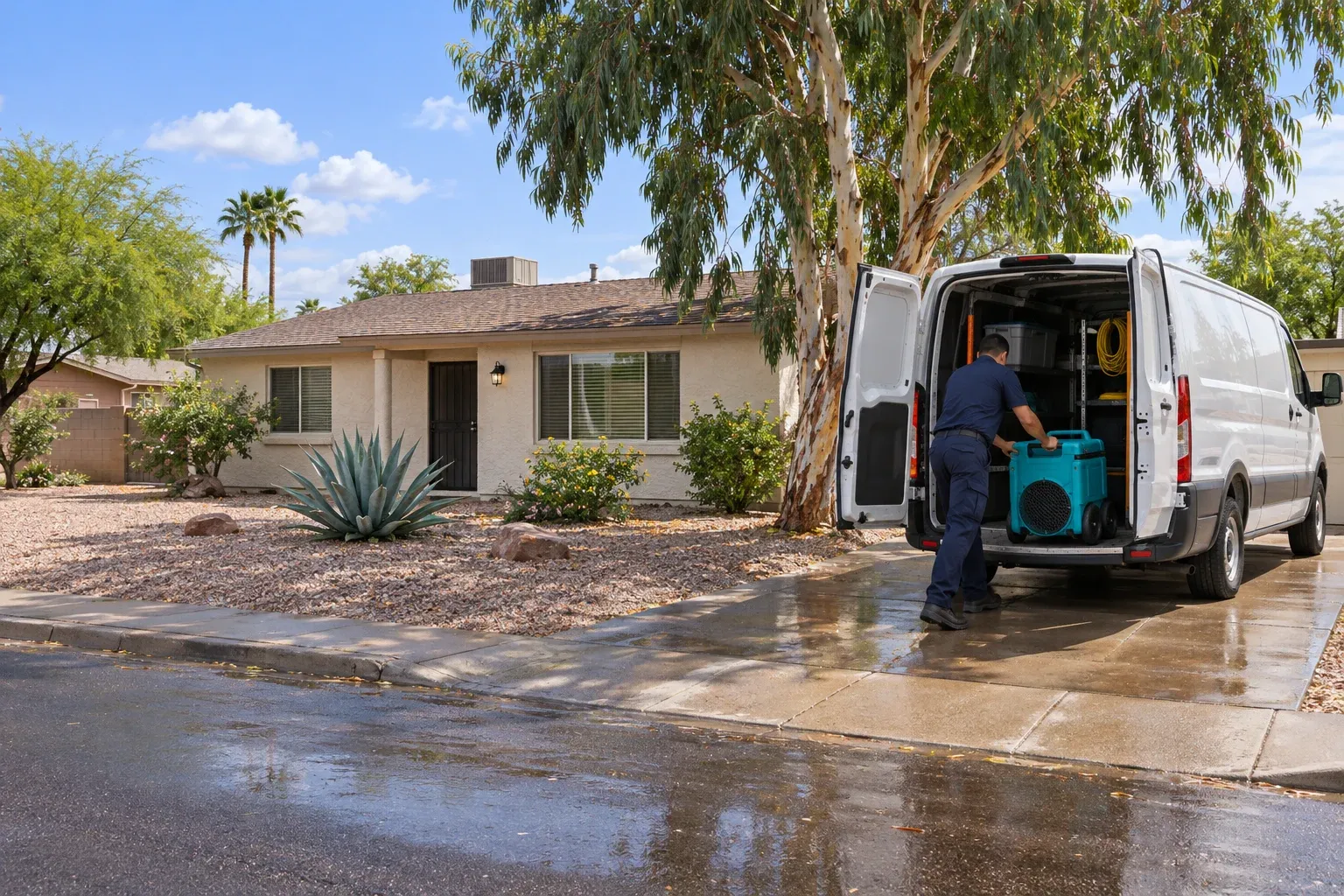
White cargo van with its rear doors open in a driveway, a man in navy work clothes wheeling a teal air machine out in front of a ranch house

Form open 24/7

Get a call back about mold in your home

Send the form. Someone from our team will call you back soon.

Mold in the house?Get a call back

Before you go: want a call back?

Send the request form and someone will call you back about the mold.

Get a call back

Get a call back

Send the form and someone from our team will call you back.