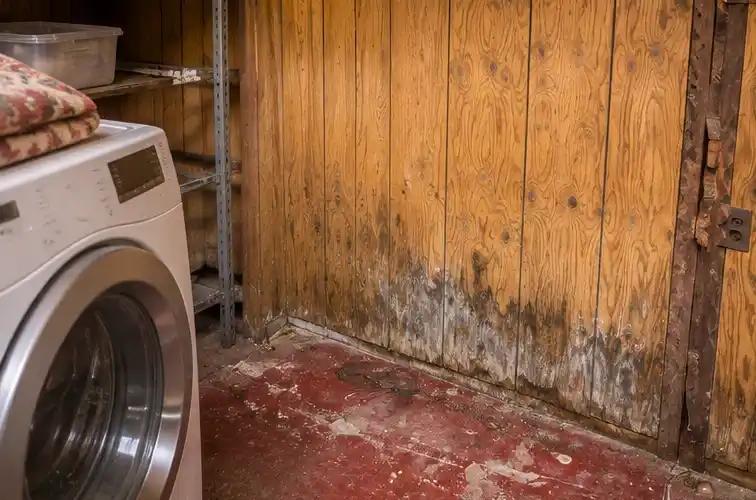
Water-stained wooden plank wall with dark mold marks beside a front-loading washer, red concrete floor at the bottom

Service area · Apache Junction, AZ

Mold Removal Apache Junction, AZ

You found mold or a stain in Apache Junction. Send the form day or night, and someone from our team will call you back soon. We serve Apache Junction and the towns around it.

Form open 24/7

Get a call back

Tempe · Maple-Ash · Mitchell Park · Escalante · University Park · Riverside + 29 more towns

Apache Junction has more mobile and manufactured homes than most Valley cities. That changes where mold starts and how the work is scoped.

Mold removal in Apache Junction has to begin with the building type. The city has 41,058 residents, and 45.8 percent of its housing units are mobile or manufactured homes. Overall, 20.3 percent of the housing stock predates 1980. A mold inspection here is as much about roof seams, skirting, and under floor access as it is about drywall.

If you live in a manufactured home and notice a musty smell, the source may be under the floor rather than behind a wall. Water collects inside the skirting, wets the belly insulation, and stays there. In a site-built house, the same smell might come from an attic. Here, the space below the home and the roof surface are the first places to look.

The next step is an inspection that can get under the home and onto the roof. A wipe of the visible patch will not reveal whether the floor deck is wet.
01 / Paperwork

Two housing types, two scopes

Apache Junction is split between manufactured housing and older site-built houses. The median owner-occupied value is $211,500, and 20.9 percent of homes are rented. Just 6.8 percent of units sit in buildings with five or more.

The two housing types fail in different ways. A site-built house has an attic, a wall cavity, and a slab or raised foundation. A manufactured home often has a low pitched roof with seams, a shallow or absent attic, a floor deck above a crawl space, and skirting around the perimeter. Water enters at the roof, at the windows, or from the plumbing under the floor, and it stays in the insulation because there is nowhere for it to drain.

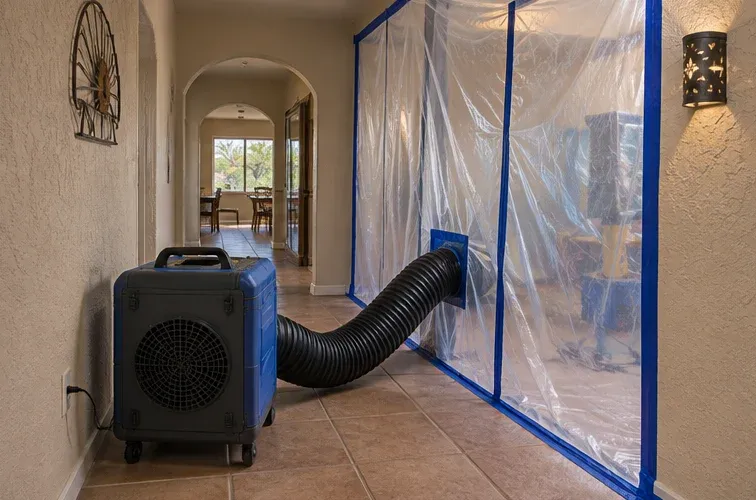
Dark air scrubber with a black duct hose running into plastic sheeting taped in a hallway of a tile-floored house

02 / Leaks

Roof seams and low pitched roofs

A manufactured home often has a roof that relies on seams, sealant, and coatings rather than a steep pitch and overlapping shingles. That design works until the sealant ages. Then monsoon rain, June 15 to September 30, finds the seam. The stain often appears at a ceiling panel joint several feet from the actual opening.

Look for these on the roof:

  • Lifted or cracked sealant along the seams.
  • Rusted screws or fasteners with a dark trail below them.
  • Ponding water at a low point or around a vent.
  • A roof coating that has worn thin or blistered.
  • Gaps where an addition, carport, or awning meets the original roof.

A roof repair belongs to a roofing contractor. The mold scope begins after the roof is closed.

03 / Good to know

Skirting, belly board and the crawl space

Skirting is not decorative. It shields the underside of the home from wind, animals, and driven rain, and it holds the insulation that keeps the floor warm in winter. When a skirting panel is missing or bent, water and debris collect inside the perimeter. The belly board, the layer under the floor framing, can stay wet for months without any sign inside the house.

Common paths:

  • A supply or drain line leak under the floor.
  • A water heater relief line or pan drain that empties inside the skirting.
  • Rain that runs under a missing panel and soaks the belly insulation.
  • A clothes dryer or bathroom fan that vents into the crawl space instead of outdoors.

A moisture reading under the floor is worth more than a visual check from the access hatch. If the belly insulation is wet and compressed, it usually has to come out.

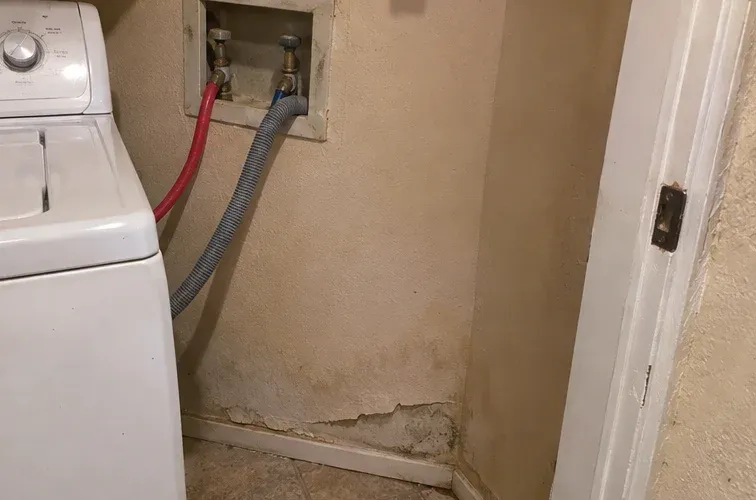
Laundry hookup with red and gray hoses behind a white washer, brown water stains and dark spots on the wall below

04 / Good to know

Swamp coolers add moisture on purpose

Evaporative coolers are common in older and affordable housing because they cost less to run than refrigerated air. They also add humidity to the living space by design. A dirty pad, a clogged water distribution line, or a pan that never fully drains keeps the cooler and the ductwork damp. In a closed manufactured home, that moisture has little place to go.

The cooler should be serviced before summer, the pad replaced, and the pan checked for standing water. Downstream ducts and the ceiling opening around the cooler deserve a look. The swamp cooler and AC comparison explains how the two systems differ.

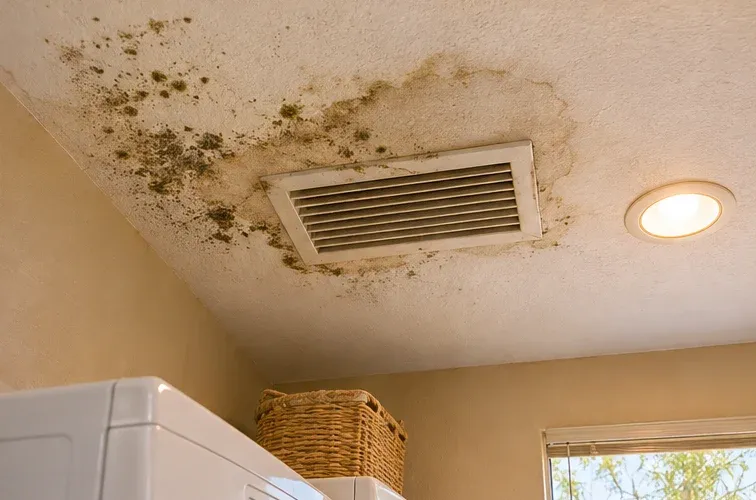
Dark mold speckling and brown staining on a laundry room ceiling around a white vent and a recessed light, a washer at the lower left

05 / 5 steps

How the work changes in a mobile home

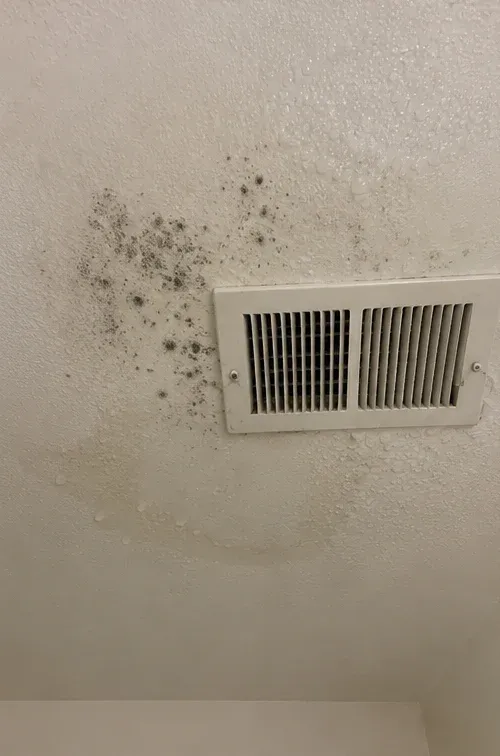
White wall with dark mold spots around a metal floor vent register
  1. Inspect both envelopes

    Roof surface, ceiling panels, walls, floor deck, and the crawl space. Access matters more here than in a site-built house.
  2. Fix the water

    Roof seams, plumbing, cooler lines, and window flashing are repaired before containment goes up.
  3. Contain with care

    Negative air pressure and plastic barriers keep spores out of the living area. A manufactured home has less volume, so the containment plan has to account for that.
  4. Remove wet porous material

    Ceiling panels, belly insulation, and saturated flooring are common removals. The floor deck is checked for rot as well as mold.
  5. Dry and verify

    Air movers and dehumidifiers run until readings show the framing and deck are dry.

06 / Costs

What it costs in Apache Junction

National ranges, not quotes for a specific home:

ScopeNational range
Inspection$300 to $1,000
Small bathroom$500 to $1,500
Walls and ceilings$1,000 to $12,000
Remediation per square foot$10 to $30

07 / Good to know

Renting in Apache Junction

About one in five homes is rented. A tenant in a manufactured home may be dealing with a landlord who owns the unit, a manager who handles the property, or both. The lease should say who is responsible for the roof, the skirting, the cooler, and the plumbing.

Report moisture in writing with photos and dates. Ask for the source to be repaired, not just the visible growth cleaned. A.R.S. 33-1324 requires a landlord to keep the premises fit and habitable, and the statute does not mention mold. The rental mold page covers the notice sequence.

Local numbers

Apache Junction by the numbers

  • Homes rented20.9%of homes are rented
  • Built before 198020.3%of the housing stock predates 1980
  • In buildings of 5+ units6.8%of units sit in buildings with five or more
  • Residents41,058

ACS 2024 5-year estimates, as stated in the page text above

08 / 5 questions

Frequently asked questions

Still have a question?

Send the form. Someone from our team will call you back soon.

Get a call back

Q.01

Why is mold different in a mobile home?

The construction is different. Roof seams, belly insulation, skirting, and a shallow crawl space create moisture paths that a site-built house does not have. Water under the floor can wet the deck and insulation without ever showing on a wall.

Q.02

Can mold grow under a manufactured home?

Yes. A plumbing leak, a missing skirting panel, or a cooler line that drains inside the perimeter can keep the belly board and floor framing damp. The growth may be visible only from the crawl space.

Q.03

Should the skirting stay sealed tight?

It needs to block wind and animals while allowing the underside to ventilate and drain. The space under the home should be dried before panels go back.

Q.04

Does a swamp cooler cause mold?

It can add enough humidity to keep surfaces damp, especially when the pad or pan is neglected. Regular service and airflow through the home reduce the risk. The cooler itself can also grow mold on the pad and housing.

Q.05

How much does remediation cost in Apache Junction?

National ranges put inspection at $300 to $1,000 (national cost guides), a small bathroom at $500 to $1,500, and walls and ceilings at $1,000 to $12,000. The scope depends on how much flooring, insulation, and ceiling panel has to be removed.

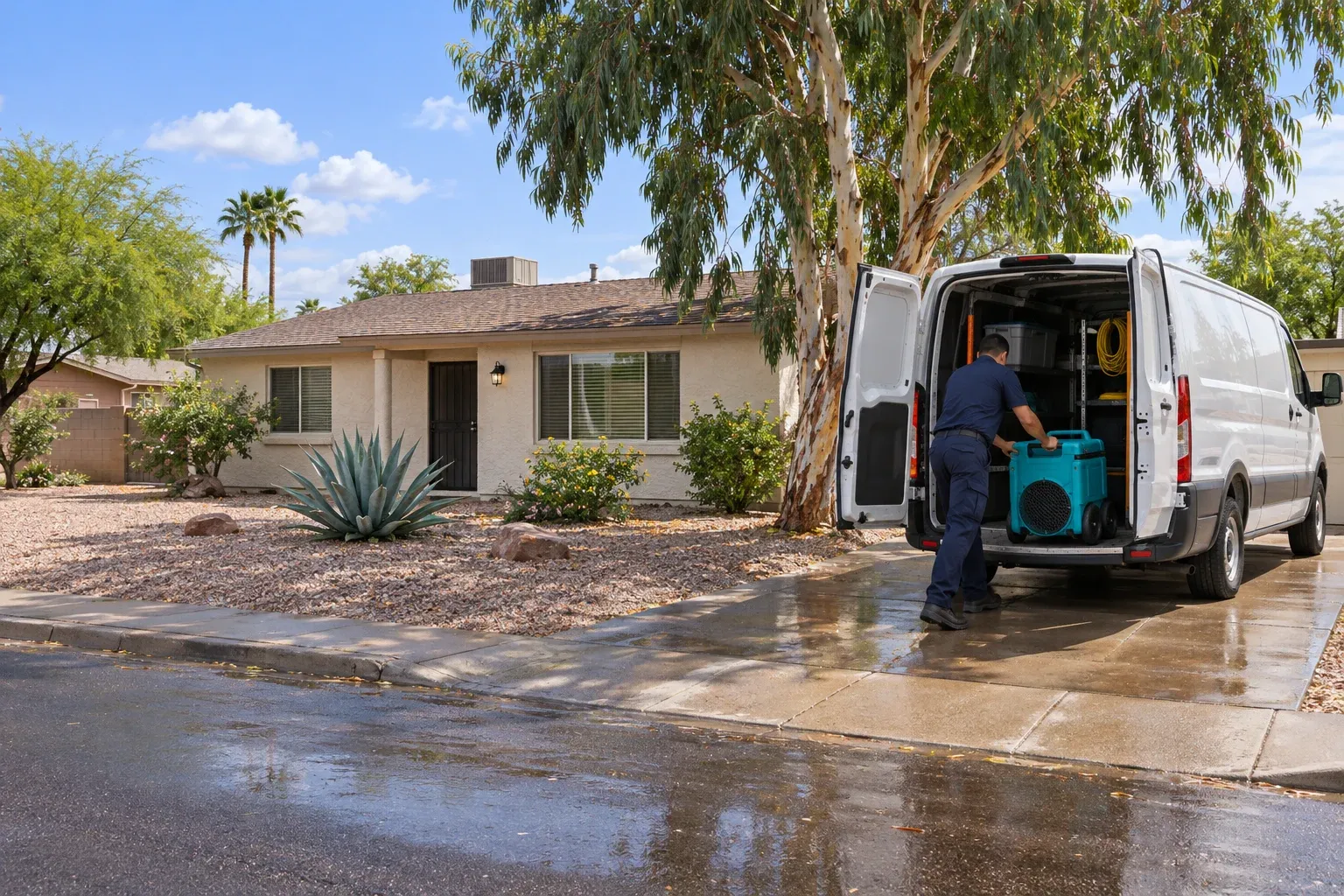
White cargo van with its rear doors open in a driveway, a man in navy work clothes wheeling a teal air machine out in front of a ranch house

Form open 24/7

Get a call back about mold in your home

Send the form. Someone from our team will call you back soon.

Mold in the house?Get a call back

Before you go: want a call back?

Send the request form and someone will call you back about the mold.

Get a call back

Get a call back

Send the form and someone from our team will call you back.