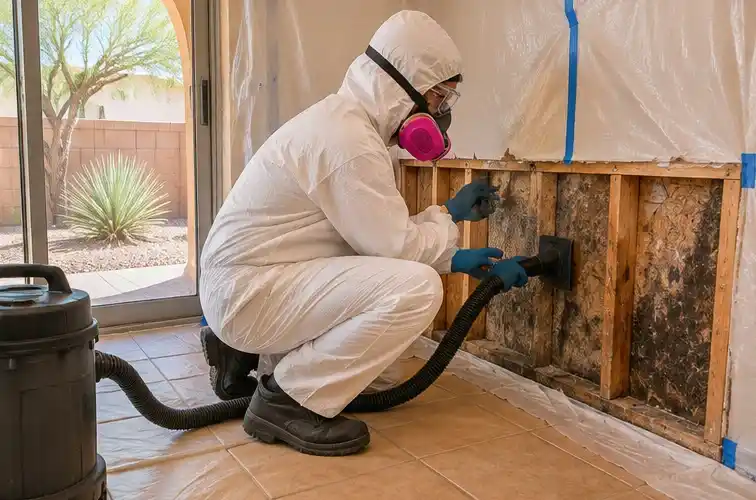
Worker in a white suit and pink respirator vacuuming dark mold from an opened wall cavity beside a sliding glass door, a dark HEPA vacuum at the left

Tempe guide · 6 min read

Mold in Rental Tempe, AZ

Mold in a Tempe rental is a notice problem before it is a cleaning problem.

The tenant sees the growth, the landlord controls the repair, and the lease decides who pays for what. The first useful step is not a spray bottle. It is a dated written notice that names the room, the moisture source if you can see it, and what you want done.

Tempe is a rental city by the numbers. ACS 2024 5-year data puts the rented share at 57.7 percent of 78,279 occupied homes, and 41.2 percent of the housing stock was built before 1980. Older plumbing, older roofs and older air handlers are the usual starting points for the moisture that feeds growth. Nearly six in ten occupied homes here are rentals, so the tenant and landlord conversation repeats in every part of the city.

01 / Safety

Start with the moisture, not the bleach

Mold needs water. In a Tempe rental the water usually comes from one of five places: a supply line under a sink, the AC condensate drain, a bathroom that never dries out, a roof or window leak after monsoon, or a water heater closet. Find which one is wet before you clean anything. Cleaning without fixing the source means the growth returns on the same schedule.

A few patterns are worth knowing because they point at the source rather than the symptom.

  • Growth on a bathroom ceiling that comes back every month is usually an exhaust fan problem. The fan may be undersized, noisy enough that nobody runs it, or ducted into the attic instead of outdoors.
  • Growth along the base of a wall that backs onto a bathroom often means a supply line or drain leak inside the wall cavity.
  • Growth in a closet that holds the air handler is often condensate, not a spill.
  • A brown ring on the ceiling below the roof line is a roof or flashing leak that has already dried once.
  • Growth on the lower inch of drywall in a closet can be a slab leak wicking up.

Walk the unit with a flashlight and look for water first. Under every sink, behind the toilet, the AC drain pan, the water heater pan, the ceiling below the roof, and the base of every wall that backs onto a bathroom. Photograph anything wet, stained or bubbling. That photo set becomes the evidence in the notice.
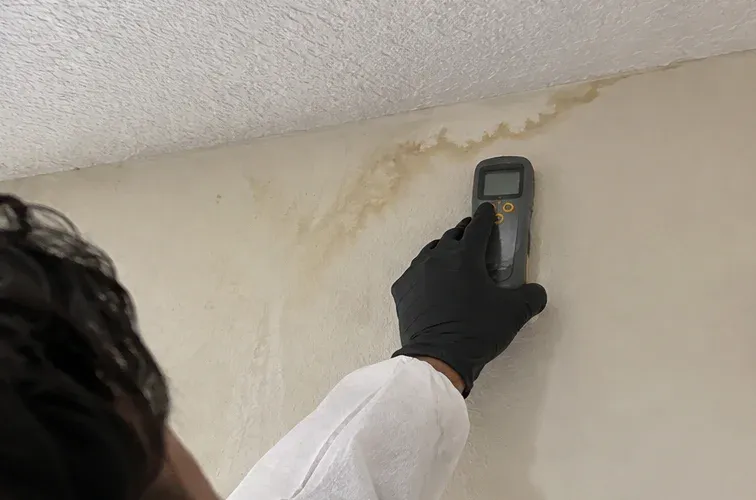
Gloved hand holding a moisture meter against a wall with brown water stains below a textured ceiling

02 / 5 steps

Put the notice in writing

A phone call is not a record. Send the report by email or through the maintenance portal, and keep a copy. A useful notice includes 5 things:

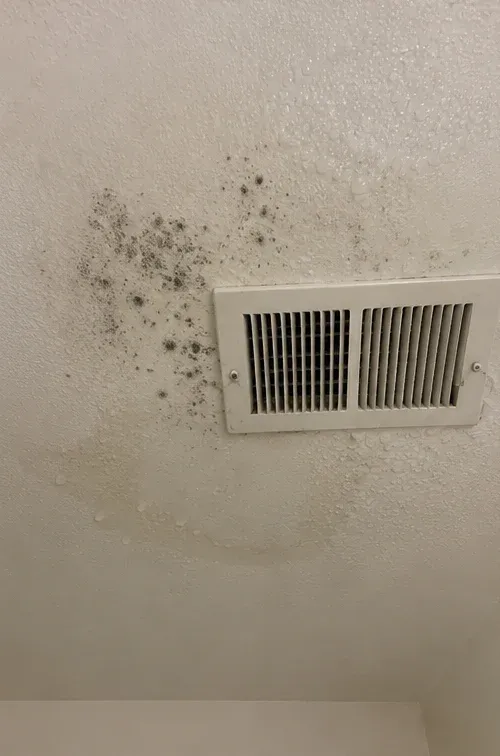
White wall with dark mold spots around a metal floor vent register
  1. The date you first saw the growth, and what changed before it, such as a storm, a repair or a new appliance.
  2. The room and the exact location, such as the ceiling above the shower or the cabinet under the kitchen sink.
  3. What you see

    color, size, texture, and whether the area feels damp.
  4. The moisture source if it is visible, such as a drip, a stain or a puddle.
  5. What you are asking for

    an inspection, a repair, or both, with a date.

Keep the tone factual. A short message with photos is easier to act on than a long complaint. If the portal does not confirm receipt, send the same message by email and save the sent item.

Arizona's fit and habitable statute, A.R.S. 33-1324, requires a landlord to keep the premises fit and habitable. The statute does not name mold, and it sets no mold threshold. That matters in both directions. A tenant cannot point to a number in the statute, and a landlord cannot treat a surface wipe as the end of the issue while the moisture is still active. The owner side of the same process is on the landlord mold checklist.

03 / Good to know

Build a record that survives the repair

Landlords repaint. That is normal, and it is not automatically concealment. It does mean your photos need to exist before the paint goes on.

Keep a folder with:

  • wide and close photos of each affected area, with a coin, ruler or hand for scale
  • a short video that pans from the moisture source to the growth
  • the written notice and every reply
  • the dates of every visit, and the name of the person who came
  • receipts for fans, dehumidifiers or cleaning supplies you bought
  • a note of any musty smell and when it is strongest

Take one more set of photos after the repair. If growth returns in the same spot, the before and after pair is the clearest way to show that the source was not fixed.

04 / Good to know

When the patch is bigger than a sponge

EPA guidance treats a moldy area under about 10 square feet as a job a homeowner or tenant can usually handle. Above that size, or when the growth is inside drywall, cabinet board, carpet or insulation, the material usually has to come out. Cleaning the face of a wall that is wet inside does not dry the cavity.

Three signs the job is past a surface clean:

  • The growth returns within weeks of cleaning.
  • The drywall is soft, crumbly or stained through.
  • The area smells musty even when it looks clean.

At that point, ask for a mold inspection as part of the repair rather than after it. Sampling is usually unnecessary when growth is visible, and EPA says no federal limits have been set for mold or mold spores. What an inspection can do is map the moisture and define the extent of the removal, which is what a scope and a price depend on. The mold testing page explains what a report should contain.

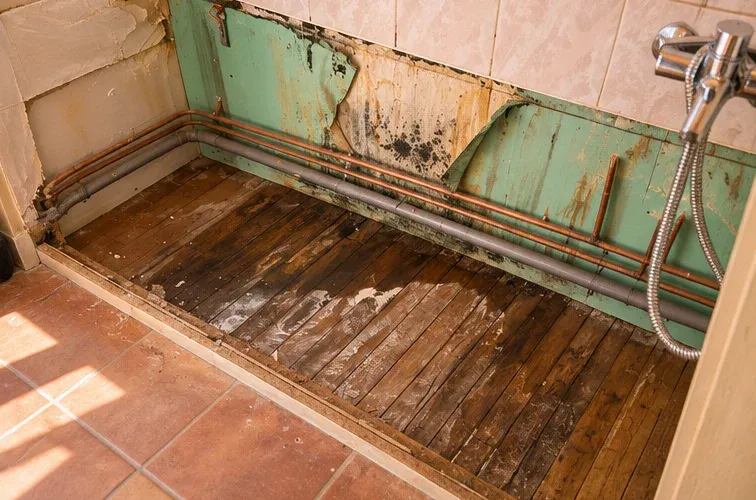
Opened shower wall showing dark mold and rust stains on the wood backing, a green wall panel and shower arm at the right, tile floor below

05 / Costs

Who pays, and how to keep it factual

Who pays follows the cause and the lease, not the size of the stain. The table below is a starting point for the conversation, not a ruling on any specific lease.

CauseUsual starting point
Failed supply line or drain inside a wallOwner repair item in most leases
Roof or window leakOwner repair item, and often an HOA item in a condo
AC condensate overflowOwner repair item, since the air handler serves the unit
Overflow or standing water left by the tenantLease terms and the facts decide
Shared pipe or common wall in a condoGoverning documents decide

Get the cause in writing before work starts. A scope that says "drywall removal, 40 square feet, source repaired by a plumber" is easier to settle than an invoice with no cause on it.

A tenant with a dispute, a repair that is not being made, or a deposit withheld over mold should talk to a tenant advocacy organization or an attorney. The rental mold page covers the same process from the landlord and property manager side.

07 / 6 questions

Frequently asked questions

Still have a question?

Send the form. Someone from our team will call you back soon.

Get a call back

Q.01

Is the landlord responsible for mold in a Tempe rental?

It depends on the cause and the lease. Arizona's fit and habitable statute requires a landlord to keep the premises fit and habitable, but it does not name mold. Report the moisture in writing, photograph the conditions, and get advice for a specific dispute.

Q.02

Can a tenant clean mold without asking the landlord?

A small patch on a non-porous surface, yes, if the moisture source is being addressed. If the area is larger than about 10 square feet, keeps returning, or sits in drywall or cabinet board, treat it as a repair item and report it in writing.

Q.03

Does A.R.S. 33-1324 mention mold?

No. The statute requires fit and habitable premises but does not name mold, and it sets no mold threshold. Keep the conversation about the moisture and the condition of the unit, and ask an attorney or tenant advocacy organization about a specific lease.

Q.04

How long should a repair take?

It depends on the lease and the repair. Put the request in writing with a date, ask for a repair schedule in writing, and keep every reply. If the repair stalls, a tenant advocacy organization or an attorney can explain the options.

Q.05

Should a tenant pay for a mold inspection?

Sometimes a tenant wants an independent answer before escalating. National inspection ranges run about $300 to $1,000 (national cost guides). Reports vary in whether they include moisture readings and photos.

Q.06

What if the growth is on a wall shared with another unit?

Then the source may be in the other unit. Report it in writing to the landlord and, in a condo or HOA property, to the board. The neighbor unit guide walks through the source conversation without giving legal advice.

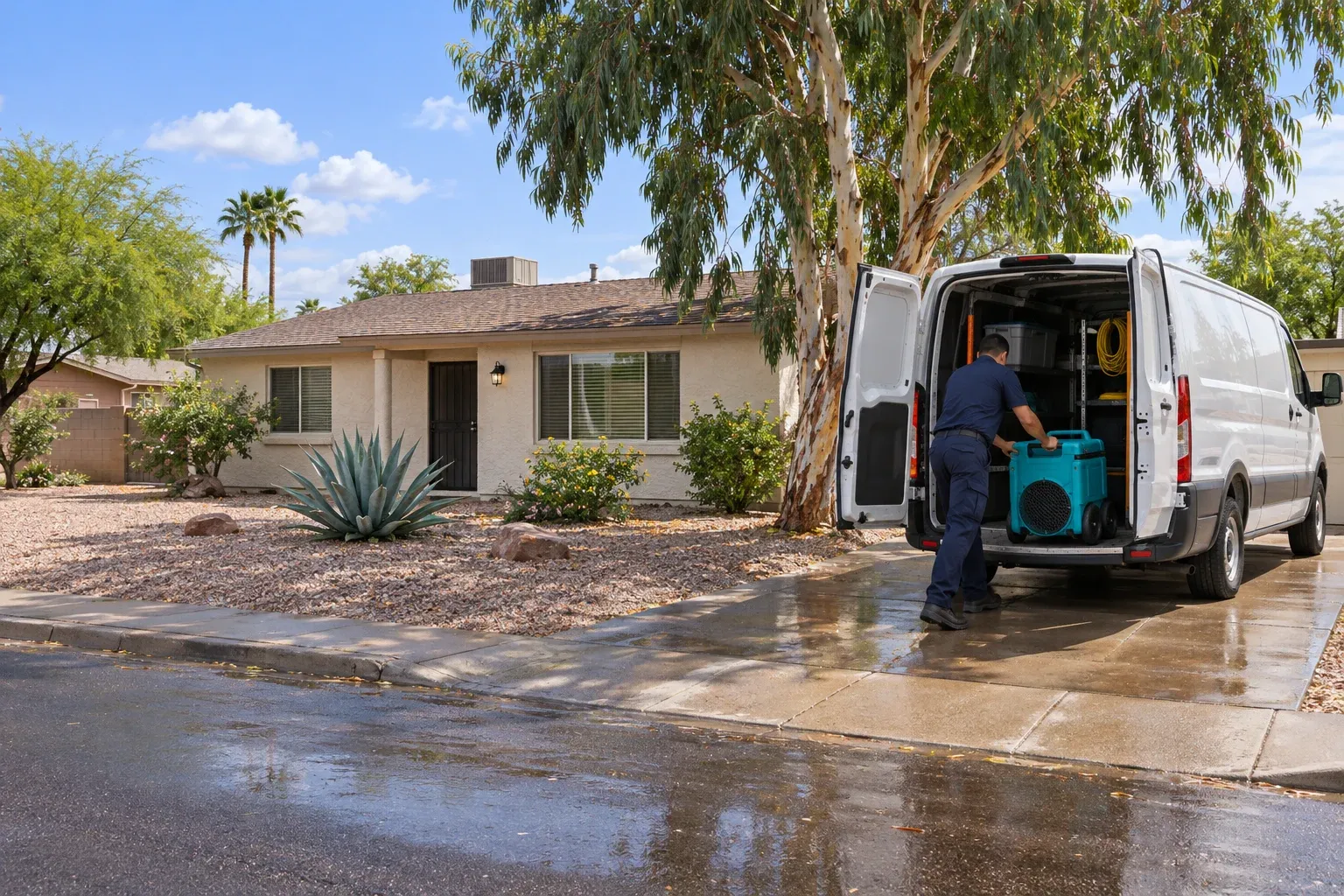
White cargo van with its rear doors open in a driveway, a man in navy work clothes wheeling a teal air machine out in front of a ranch house

Form open 24/7

Get a call back about mold in your home

Send the form. Someone from our team will call you back soon.

Mold in the house?Get a call back

Before you go: want a call back?

Send the request form and someone will call you back about the mold.

Get a call back

Get a call back

Send the form and someone from our team will call you back.