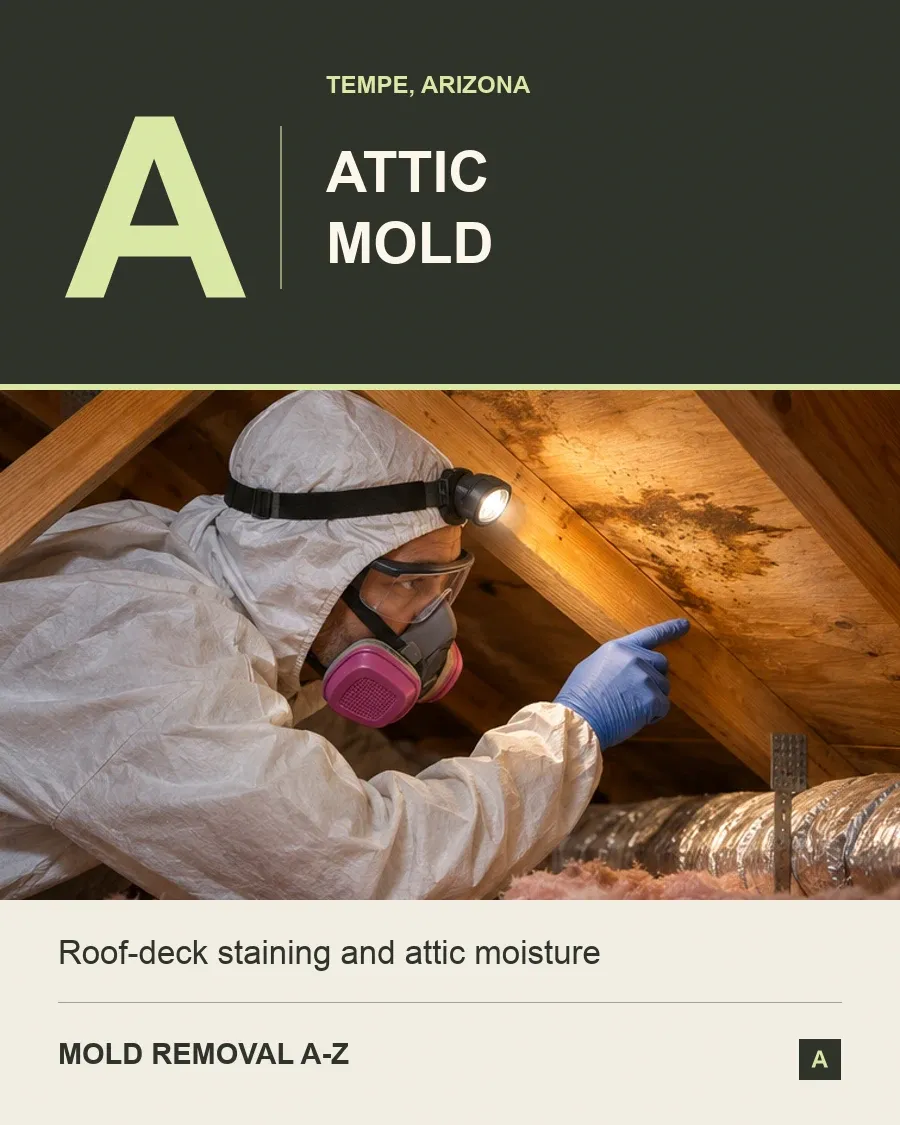
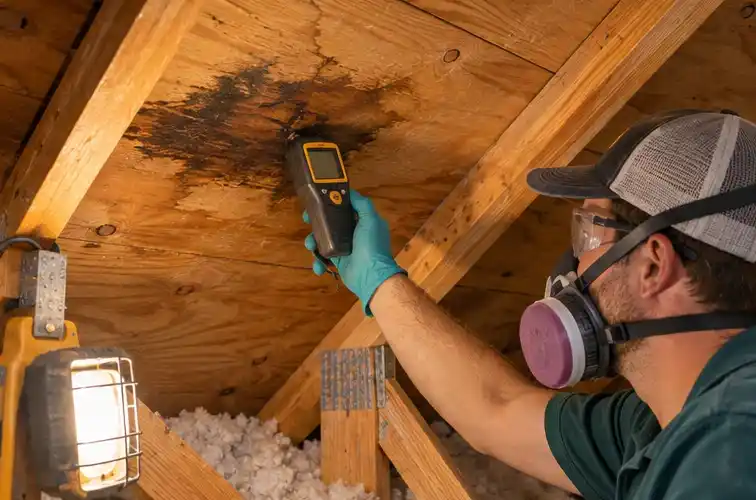
Worker in a respirator and cap holding a moisture meter against dark staining on attic roof sheathing, blown insulation below and a work light at the left

Service 03 of 08 · Tempe, AZ

Attic Mold Removal Tempe, AZ

You see a ceiling stain, or the hallway smells musty when the AC runs. Send the form day or night, and someone from our team will call you back soon. A roof and attic check, removal and clearance follow.

Form open 24/7

Get a call back

Tempe · Maple-Ash · Mitchell Park · Escalante · University Park · Riverside + 29 more towns

01 / What you get

What you get with attic mold removal

The attic is the room nobody uses and the one that tells the truth about the roof. A monsoon leak, a flat roof detail or a dripping air handler can wet the sheathing for weeks before a ceiling stain shows up downstairs.

Attic mold removal in Tempe usually begins with a roof question. Wind-driven monsoon rain finds a lifted shingle, a failed boot around a vent pipe, a gap at the flashing, or a low-slope section that ponds. The water runs along the sheathing, wets the insulation below, and the attic stays hot and humid enough for growth to spread across the roof deck. By the time a brown ring appears on a bedroom ceiling, the colony may already cover several feet of sheathing.

National attic remediation ranges run about $1,500 to $9,000. A smaller attic with surface growth and no insulation removal can land near the low end. A full deck with contaminated insulation, an air handler platform and containment tends toward the middle or upper end.

  • 01The roof leak or condensate line found first
  • 02Damp insulation and stained sheathing mapped
  • 03Removal scoped to the roof deck, not guessed
  • 04Clearance before the repair starts
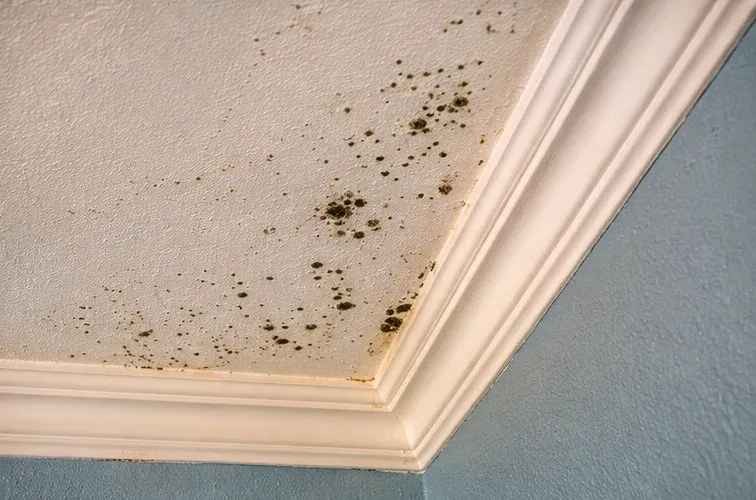
Dark mold speckles on a white ceiling corner above a blue wall and white crown molding

02 / The signs

Signs you have attic mold

Attic growth is often found by accident: a home inspector, an AC technician, or someone chasing a ceiling stain. The signals that justify a look:

  • 01

    A brown or yellow ring on a ceiling, especially near an exterior wall or a vent.

  • 02

    A musty smell in a hallway or bedroom that gets stronger when the AC runs.

  • 03

    Dark speckling or black streaks on the roof sheathing, visible from the access hatch.

  • 04

    Insulation that is compressed, discolored or damp to the touch.

  • 05

    Water stains on the air handler platform or the furnace flue.

  • 06

    Roof work in the last few years, especially after a monsoon season.

  • 07

    Condensation on ductwork or the air handler cabinet in summer.

Not every dark attic is mold. Shadowing, older lumber and dirt can look similar. A moisture meter and a close look at the pattern separate the two.

03 / How it works

What happens after you send the form

After you send the form, someone from our team calls you back, then a roof check, removal and clearance follow.

  1. Send the form, day or night

    Say where the mold is, how big it looks and what changed before it appeared.
  2. Someone from our team calls you back

    You go over what you see, who owns the building and what has to happen first.
  3. Roof check, removal and clearance follow

    The leak is named, the affected material comes out and a check closes the job.

04 / Costs

What attic mold removal costs in Tempe

Attic mold removal in Tempe usually runs $1,500 to $9,000 (one national cost guide) or $1,000 to $4,000 (another national cost guide), national ranges, not Tempe quotes.

ScopeNational rangeSource
Attic remediation$1,500 to $9,000One national cost guide, location table
Attic remediation$1,000 to $4,000Another national cost guide, location table
Per square foot$10 to $30One national cost guide
Insulation removal and replacementQuoted as a line itemPriced by square footage and R-value
Clearance testingQuoted separatelyNational cost guides, inspection ranges

At $10 to $30 per square foot, a 300 square foot attic deck works out to $3,000 to $9,000. Surface growth with no insulation removal sits in the lower half of that range. If the insulation is contaminated and the air handler platform needs containment, expect the upper half. The two published location tables differ because they describe different scopes, which is exactly why a written scope matters more than a headline range.

05 / Mold

What attic mold removal covers

The work is not just spraying the rafters. A proper attic scope has five parts:

  • Roof and moisture inspection. Find the entry point, not just the stain. That means looking at the roof surface if it is safe to access, the flashing, the vent boots, the valleys and the low-slope sections.
  • Insulation assessment. Blown-in insulation that has been wet or colonized usually comes out. It cannot be cleaned reliably, and leaving it in place keeps the moisture and the food source.
  • Containment. The attic access and the work area get sealed, with negative air pressure where the layout allows. This keeps spores out of the living space.
  • Removal and cleaning. Colonized sheathing and framing are HEPA vacuumed and cleaned. Material that is too far gone is removed and replaced.
  • Drying and verification. The deck is dried to a measured moisture content, and the space is verified before new insulation goes back.

If the roof leak is still active, the roof repair comes first. Remediation under an active leak is temporary work.

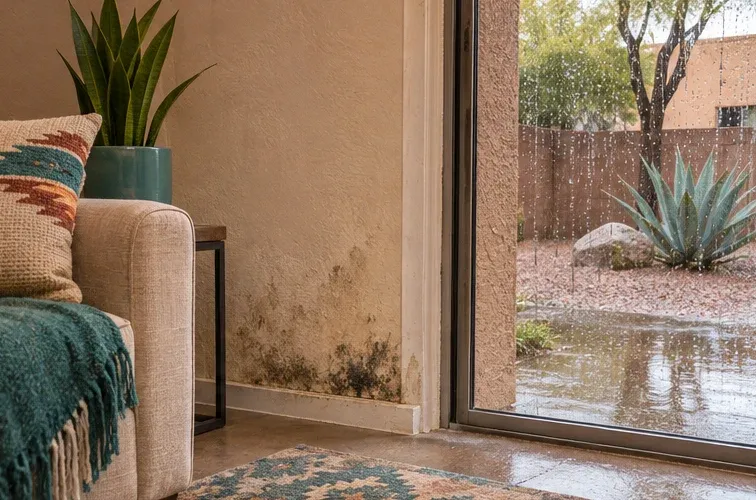
Dark mold spots along the bottom of a beige wall beside a sliding glass door, wet pavement outside and a sofa with a throw at the left

06 / Local risk

Why attics in Tempe grow mold

Three local conditions do most of the work.

Monsoon rain. The season runs June 15 to September 30. Wind-driven rain gets under shingles and into flashing in ways a garden hose test does not reproduce. A small entry point can wet the same section of deck every storm.

Low-slope and flat roof sections. Older Tempe homes and additions can have low-slope roofs that drain slowly and pond at the edges. Ponding can wet the deck.

Air handlers in the attic. Some Tempe houses put the AC air handler and ductwork in the attic. A clogged condensate line, a rusted drain pan or a sweating plenum adds moisture to a space that is already hot. The result is growth on the platform and the nearby deck, not just on the roof line.

Add the housing stock: 41 percent of Tempe units were built before 1980, and more than four in ten sit in buildings with five or more units (US Census ACS 2024 5-year estimates). Older attics can have less ventilation and more original wood. Mobile home roof seams and skirting create their own entry points.

07 / 6 steps

How the job runs

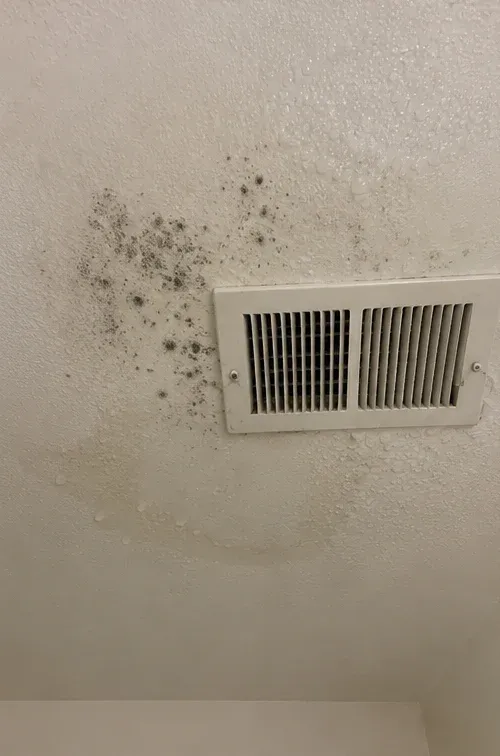
White wall with dark mold spots around a metal floor vent register
  1. Inspect the roof and the attic

    Identify the entry point, the extent of the growth, and whether the insulation is affected.
  2. Repair the roof first

    A roofer or roofing contractor handles the shingles, flashing and boots. Remediation starts after the building is dry.
  3. Set containment

    Seal the attic access, protect the living space, and set negative air pressure where possible.
  4. Remove and clean

    Take out contaminated insulation, HEPA vacuum the sheathing and framing, and clean the surfaces that can be cleaned.
  5. Dry and verify

    Measure moisture content, dry the structure, and verify before new insulation or decking goes back.
  6. Reinsulate and close

    New insulation, new access seal, and a note on what to check after the next monsoon.

Attic work is slower than a bathroom job because of access, heat and the amount of material that has to come out through a small opening. A full attic often takes more than one day.

08 / Good to know

Do it yourself or get a call back

Attic work is a poor fit for DIY, even for a small area. The reasons are practical: attic heat, limited access, the risk of spreading spores into the living space, and the difficulty of drying a deck without proper equipment. The EPA's 10 square foot figure is a general guide for homeowners, and a roof deck covered in blown insulation is a harder case.

If the growth is a small patch on a bathroom ceiling, the DIY guidance may apply. If it is on the roof sheathing, get an inspection.

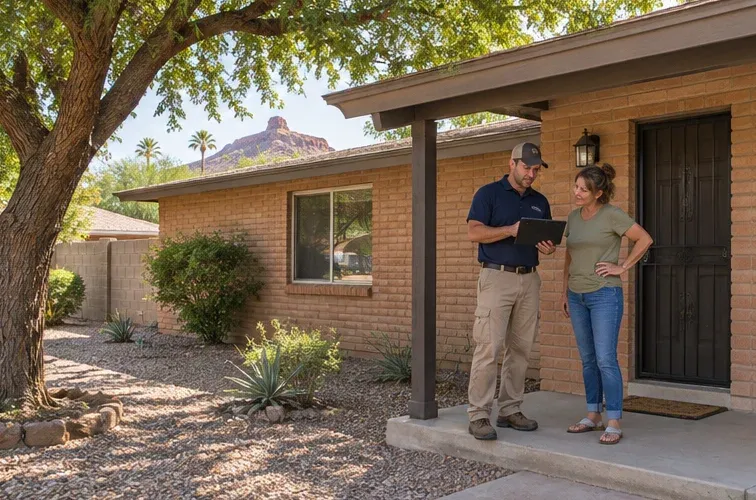
Man in a navy shirt holding a tablet talks with a woman on the walkway of a brick ranch house with a shade tree and a gravel yard

09 / Good to know

If you rent in Tempe

Attic mold in a rental can be a building issue rather than a tenant issue. Report it in writing, include photos of any ceiling stain, and ask the landlord or property manager to inspect the roof and the attic. Keep a copy of the request. If the growth is in your unit and the source is the roof, the lease and the cause decide who handles the repair.

The rental mold page covers the sequence, and the monsoon roof leak guide explains how the water travels.

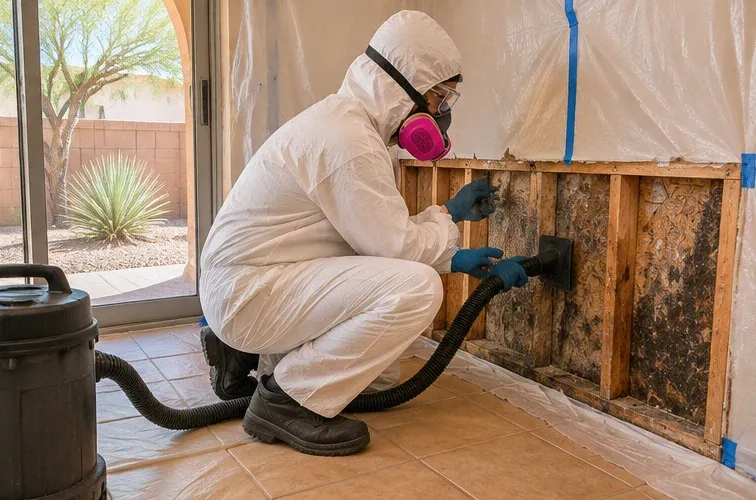
Worker in a white suit and pink respirator vacuuming dark mold from an opened wall cavity beside a sliding glass door, a dark HEPA vacuum at the left

10 / Good to know

Reading the pattern on the sheathing

The shape of the staining tells you what caused it, and the cause sets the scope.

A ring or a brown tide line around a vent, a chimney or a plumbing boot points to a roof leak. The stain usually follows the framing and concentrates on the underside of the sheathing near the penetration. Fix the flashing first.

A broad, even darkening across the north slope or the underside of the deck near the ridge points to ventilation. Warm moist air from the house condenses on cool sheathing in winter and on cool nights. Baffles, ridge vents and eave vents are the fix. Spraying the wood is not.

A patch directly above or around the air handler platform points to the unit. A clogged drain pan, a sweating plenum or a disconnected condensate line wets the same square of decking every summer.

Framing members can be cleaned when the growth is on the surface. Sheathing that is soft, delaminating or stained through the thickness is a removal item. Insulation that has been wet is usually a removal item.

Photos of the pattern before removal are the evidence that the source was identified, and they matter if the same spot comes back.
11 / 5 questions

Frequently asked questions

Still have a question?

Send the form. Someone from our team will call you back soon.

Get a call back

Q.01

How much does attic mold removal cost in Tempe?

National ranges run about $1,500 to $9,000 for attic remediation, or $10 to $30 per square foot. Insulation removal, air handler containment and access move the number. A written scope with square footage and line items shows what a price covers.

Q.02

Can I just spray the attic and leave the insulation?

Usually not. Wet or colonized insulation generally has to come out. Spraying the surface while leaving wet insulation in place keeps the moisture and the food source, and the growth can return.

Q.03

Does attic mold mean the roof is leaking?

Not always, but it is the first thing to check. Condensation on ducts and a dripping air handler can also wet the deck. A moisture inspection separates a roof entry from an HVAC source.

Q.04

How long does attic remediation take?

A small attic with surface growth can be two to three days. A full deck with insulation removal, drying and clearance can run a week or more, depending on access and weather.

Q.05

Will insurance cover attic mold?

It depends on the cause. A sudden roof opening from a storm is treated differently from a long-term leak or a maintenance item. Document the entry point and call the insurer before demolition.

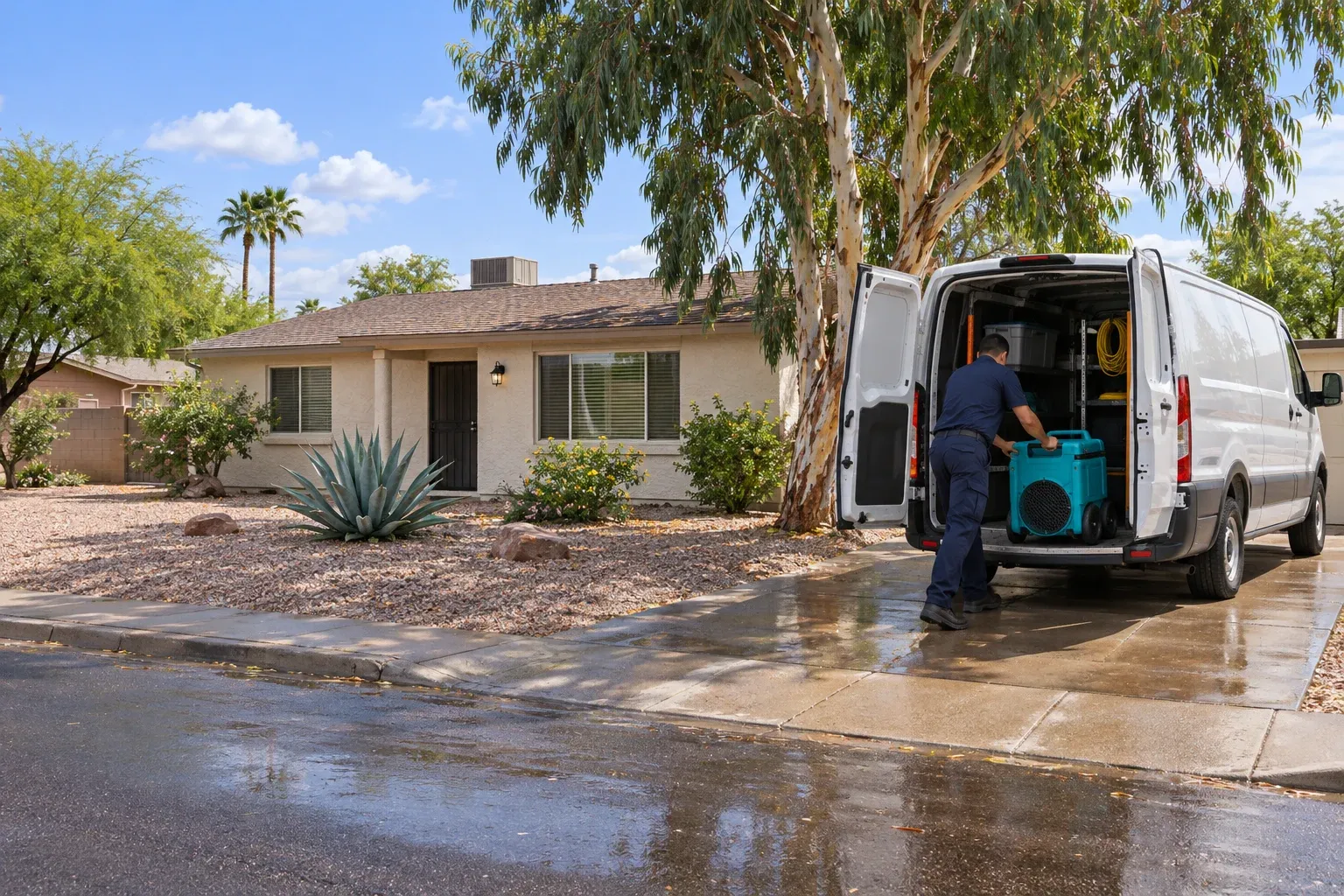
White cargo van with its rear doors open in a driveway, a man in navy work clothes wheeling a teal air machine out in front of a ranch house

Form open 24/7

Get a call back about mold in your home

Send the form. Someone from our team will call you back soon.

Mold in the house?Get a call back

Before you go: want a call back?

Send the request form and someone will call you back about the mold.

Get a call back

Get a call back

Send the form and someone from our team will call you back.