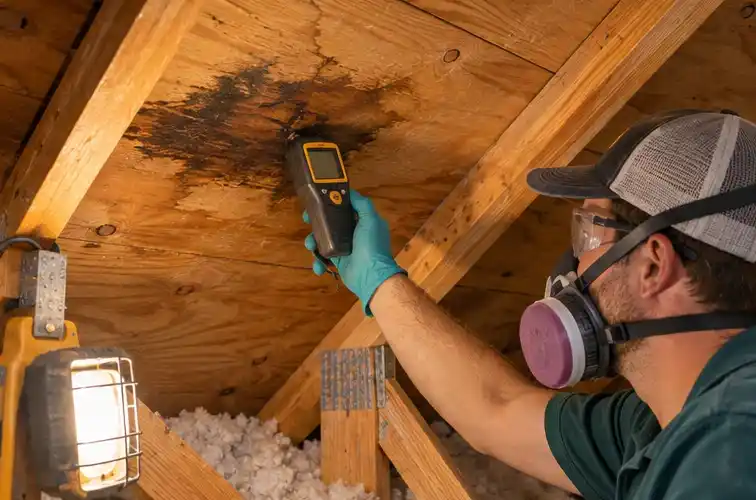

Worker in a respirator and cap holding a moisture meter against dark staining on attic roof sheathing, blown insulation below and a work light at the left

Tempe guide · 6 min read

AC Drain Line Mold

A clogged AC drain line can soak a Tempe ceiling before the stain shows.

Somewhere in the closet, a small pipe is carrying water out of the air conditioner. When it slows down, the pan fills, the closet floor gets wet, and the growth starts behind the drywall. AC drain line mold in Tempe rarely announces itself, and the smell usually arrives before the stain. The pipe is the condensate line, and it is the part of the system nobody looks at.

Tempe runs the AC for months, and ACS 2024 5-year data puts 41.8 percent of homes in buildings with 5 or more units. In a stacked building, one clogged line on an upper floor can wet the ceiling of the unit below, and the tenant downstairs reports the growth.

01 / How it works

How the condensate system works

A typical split system has five parts that matter for water:

  • The drain pan under the indoor coil, which catches condensate as it drips.
  • The primary drain line, a small pipe that carries water to a drain, a sink, or the exterior.
  • The trap, a curve that holds water and stops air from being pulled through the line.
  • The secondary pan or switch, a backup that catches water when the primary line fails, or a float switch that shuts the unit off.
  • The drain pan under the air handler, which is often the first place a slow leak shows.

A line does not need to be fully blocked to cause damage. A partial clog raises the water level in the pan, and the pan overflows at the lowest edge, which is often against drywall or a wood base.

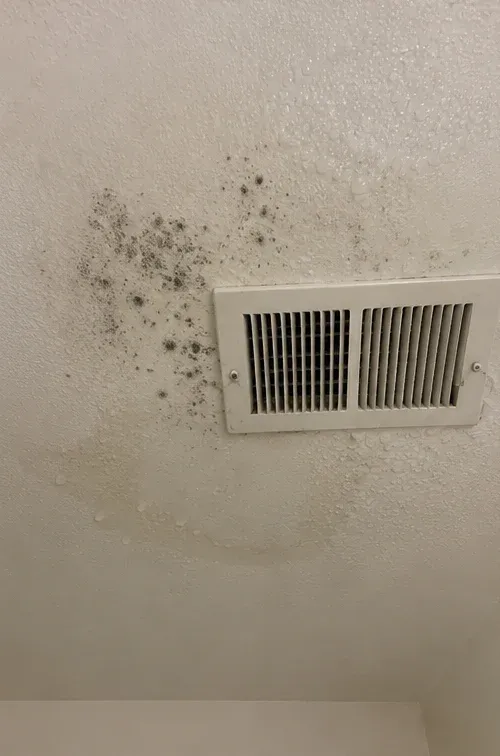
White wall with dark mold spots around a metal floor vent register

02 / 4 steps

The four failure points

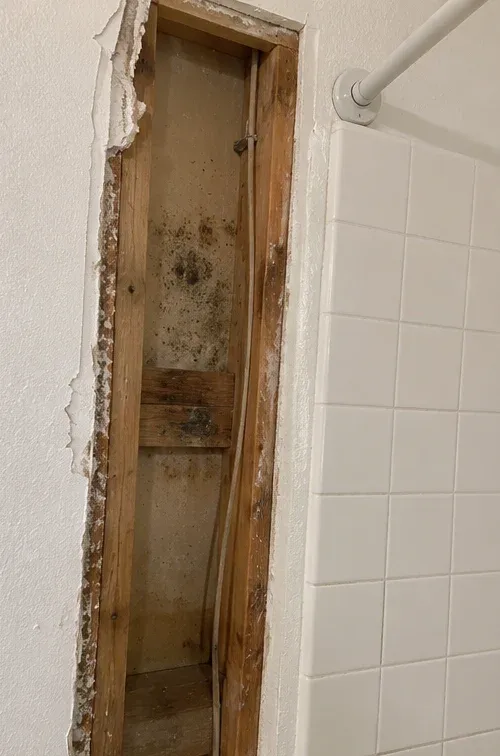
Opened shower wall cavity with wood framing and dark mold above a white tile surround
  1. A clogged primary line

    Dust, biofilm and insects build up in the line, especially in the first weeks of the cooling season.
  2. A missing or dry trap

    Without water in the trap, the unit can pull air and the line can gurgle or fail to drain.
  3. A pan that does not slope

    A pan installed flat, or one that has sagged, holds water in a corner.
  4. A failed float switch

    A switch that sticks will not shut the unit off, so the pan overflows instead.

03 / Warning signs

Signs, from early to late

What you noticeWhat it usually meansUrgency
Musty smell near the return or the closetDamp pan or wet insulationCheck the pan this week
Water in the secondary panPrimary line is cloggedClear the line before the next run
Rust or mineral lines in the panLong term slow leakInspect the pan and the closet
Damp drywall at the closet basePan overflowDry and inspect within 24 to 48 hours
Ceiling stain below the air handlerOverflow reached the ceilingStop the unit, dry, and open the ceiling
Growth on the closet wall or doorOngoing moistureRemove and fix the drain

The order matters. A smell is a warning. A stain is a result. Between the two there is often a window of days when clearing the line can prevent a ceiling repair.

04 / Mold

When the growth is already there

If the closet has visible growth, the drain has probably been overflowing for a while. The removal scope should include the drywall or cabinet board that stayed wet, not just the surface. Cleaning the face of the wall leaves the growth inside the cavity, and the next overflow feeds it again.

A moldy area under about 10 square feet is usually a homeowner job, per EPA guidance. A closet with growth on two walls, wet insulation and a stained ceiling is past that size, and the material usually has to come out.

Drying comes first. The pan and the line get fixed, the closet gets air movement and a dehumidifier, and the removal starts after the moisture reading drops. The water damage page covers that window.

05 / Good to know

Condos and shared mechanical closets

In a condo or apartment, the air handler may sit in a closet that serves one unit but shares a wall or a floor with another. An overflow on the third floor can show up as a stain on the second floor ceiling, and the second floor owner has no access to the pan.

The fix is a written report to the manager or board, a request for an inspection of the unit above, and a copy of the finding. The neighbor unit guide walks through that conversation.

Man in a navy shirt holding a tablet talks with a woman on the walkway of a brick ranch house with a shade tree and a gravel yard

07 / 1 questions

What to do first

Still have a question?

Send the form. Someone from our team will call you back soon.

Get a call back
  1. Turn the system off at the thermostat if water is visible near the unit. A running system keeps making water.
  2. Photograph the pan, the closet floor and any stain. Include the date.
  3. Remove what is sitting in the water. Boxes, towels, shoes and anything porous.
  4. Do not pour bleach into the line unless the system manufacturer says to. A harsh product can damage the pan or the line and does not remove the growth in the closet.
  5. Put a fan on the wet area if the floor is hard and the water is clean.
  6. Treat the drain and the growth as 2 different jobs. An HVAC contractor handles the drain, and remediation handles the growth.

If the ceiling is wet, do not poke a hole to drain it without a bucket and a plan.

Q.01

A 10 minute routine that helps prevent overflow

Once a month during cooling season:

  • Look at the pan under the air handler with a flashlight.
  • Look at the outdoor drain outlet and confirm water is coming out when the system runs.
  • Check the secondary pan for standing water.
  • Replace the filter. A clogged filter ices the coil, and the ice melts into the pan faster than the line can carry it.

Once a year, before June:

  • Pour a cup of water into the pan and watch how fast it drains.
  • Ask the HVAC company to clear the line and check the trap during the seasonal service.
  • Look at the closet drywall for stains that were not there last year.

A float switch is worth having if the system does not already have one. It shuts the unit off before the pan overflows, which turns a ceiling repair into a service call.

08 / 1 questions

Closet growth vs duct growth

Still have a question?

Send the form. Someone from our team will call you back soon.

Get a call back

Not every AC mold problem is in the ducts. The two are different jobs.

Closet growth sits on the drywall, the baseboard, the door or the insulation around the air handler. It comes from water outside the unit, usually a pan overflow or a condensate leak. The fix is the drain plus removal of the wet material.

Duct growth sits inside the ductwork or on the insulation liner. It comes from moisture in the airstream, a dirty coil or a duct that runs through a hot attic and condenses. The fix may include coil cleaning, duct cleaning and sealing.

Mold removal from air ducts runs about $600 to $2,000 (another national cost guide), vents run $100 to $500 (one national cost guide), and HVAC remediation runs about $3,000 to $10,000 (national cost guides). Closet drywall work is usually priced by area, not by the HVAC table.

Q.01

What it costs

The cost page has the full table. The AC mold page covers the equipment side in more detail.

09 / 6 questions

Frequently asked questions

Still have a question?

Send the form. Someone from our team will call you back soon.

Get a call back

Q.01

Can mold grow in an AC drain line?

Yes. The line stays damp and carries dust, which is enough for growth to form a film inside the pipe. That film narrows the line and slows the drain, which leads to the overflow that damages the closet.

Q.02

How often should the drain line be cleared in Tempe?

Before the cooling season and again mid-summer are common times to check it. A system that runs from April to October moves a lot of water, and a line that is clear in May can clog by July.

Q.03

What does an AC overflow smell like?

A musty, damp smell near the return or the mechanical closet. It is often stronger when the system starts, because the fan pushes air across the wet pan and the insulation.

Q.04

Is the growth in the closet dangerous?

Visible growth means the material stayed wet, and the practical response is to fix the drain, dry the area and remove what cannot be dried.

Q.05

Can a tenant clean it?

A small surface patch on a non-porous material, if the drain is fixed. Growth on drywall, insulation or cabinet board is a repair item and should be reported in writing to the landlord or manager.

Q.06

Does the AC cause mold in the ducts?

It can, when the coil is dirty, the duct insulation is wet or the ducts run through a hot attic. Duct growth is a separate scope from closet growth and is priced differently.

White cargo van with its rear doors open in a driveway, a man in navy work clothes wheeling a teal air machine out in front of a ranch house

Form open 24/7

Get a call back about mold in your home

Send the form. Someone from our team will call you back soon.

Mold in the house?Get a call back

Before you go: want a call back?

Send the request form and someone will call you back about the mold.

Get a call back

Get a call back

Send the form and someone from our team will call you back.