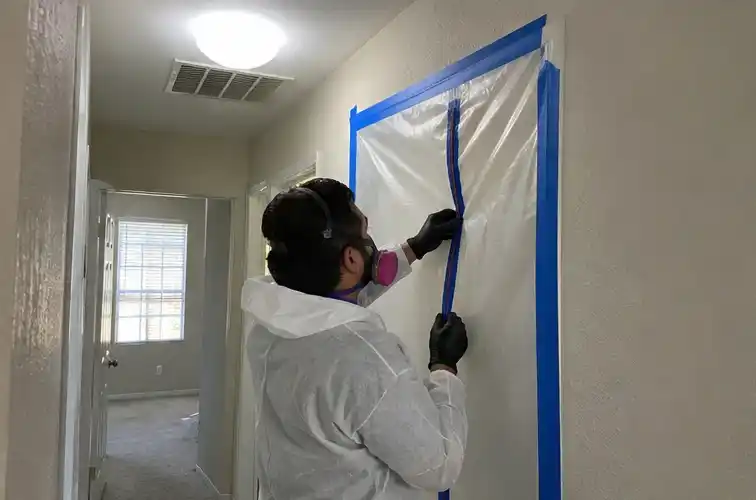
Worker in a white suit and respirator taping plastic sheeting over an apartment doorway with blue tape, a ceiling vent above

Tempe guide · 6 min read

Swamp Cooler Mold

Swamp coolers add moisture indoors while AC removes it.

An evaporative cooler puts water into the air inside the house. An air conditioner takes water out. That difference decides which system is more likely to feed mold.

A swamp cooler is usually the higher-risk system, and the reason is simple: it adds moisture to indoor air on purpose. A refrigerated air conditioner removes moisture as it cools. That does not make AC risk-free. It moves the risk out of the air and into the condensate line, the drain pan and the air handler closet, where a slow leak can wet drywall for months without anyone seeing it.

Both systems can grow mold. The question is where the water ends up, how long it stays, and which parts you can inspect yourself before calling anyone.

Side by side

Swamp cooler or AC: where the moisture comes from

Hover a row to see both sides of it.

Swamp cooler or AC

Swamp cooler

Moisture effect

Adds water vapor indoors

Most likely mold spot

Pads, pan, housing, attic deck at the duct

First sign

Musty smell at startup, clammy air

Worst season

Monsoon, June 15 to September 30

Part to check first

Pads and water lines

Refrigerated AC

Moisture effect

Removes water vapor

Most likely mold spot

Drain pan, air handler closet, ceiling below the unit

First sign

Water stain, drip, musty smell when the fan runs

Worst season

Peak summer, when run time is longest

Part to check first

Condensate line and pan

A cooler fails wet and visible, an AC fails wet and hidden.

01 / Good to know

How a swamp cooler puts water in the house

An evaporative cooler pulls outside air through wet pads, adds water vapor, and blows the cooled air inside. The process only works when air can leave the house, which is why cooler homes run with windows cracked open. When the house is closed up, or when the outside air is already humid, the cooler raises indoor humidity instead of cooling effectively.

The EPA target for indoor humidity is below 60 percent, ideally between 30 and 50 percent. A cooler running on a humid monsoon afternoon pushes the indoor number in the wrong direction.

The parts that fail:

  • Pads. Pads left in over winter stay damp, and a pad that never fully dries supports growth on its surface and in the housing behind it.
  • Water distribution lines. The spider lines and the float valve can run continuously if the float sticks, flooding the pan and the roof curb.
  • The pan. Steel pans rust from the inside out. A pinhole in the pan drips onto the roof deck and into the attic.
  • The roof curb and duct. An unsealed curb is a hole in the roof. A crossover duct that leaks dumps moist air into the attic, where it condenses on sheathing.
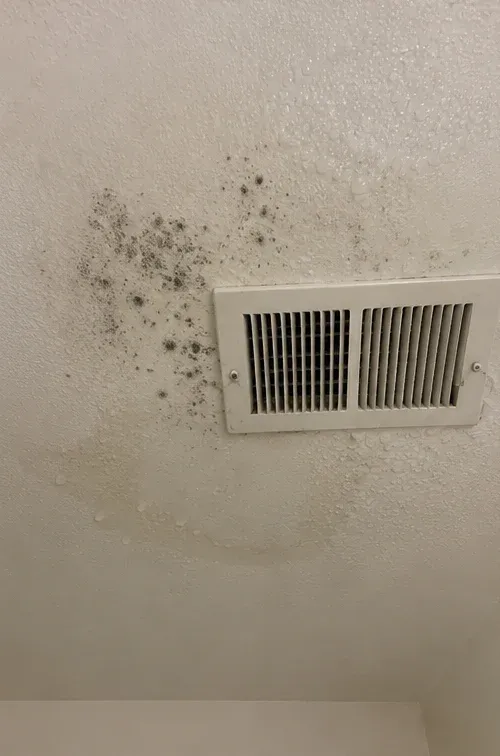
White wall with dark mold spots around a metal floor vent register

02 / Good to know

How an AC removes water and where it goes wrong

An air conditioner pulls moisture out of the air at the evaporator coil. The water drips into a pan, runs to a drain line, and leaves the building. When that path is clear, the system keeps a house dry. When it is blocked, the water goes into the ceiling or the closet floor.

The common failures:

  • A clogged condensate line. Algae and dust build up in the line, the pan overflows, and the ceiling below the air handler stains.
  • A cracked or rusted drain pan. Slow drips that never trip anything, wetting the platform and the framing under it.
  • A frozen coil. Low airflow from a dirty filter or a failing blower lets the coil ice over. When it melts, the pan sees more water than it was designed to handle.
  • A leaking return chase. Return ducts that run through a hot attic can sweat and drip, especially where the insulation is thin.

03 / Good to know

Side by side

QuestionSwamp coolerRefrigerated AC
Moisture effectAdds water vapor indoorsRemoves water vapor
Most likely mold spotPads, pan, housing, attic deck at the ductDrain pan, air handler closet, ceiling below the unit
First signMusty smell at startup, clammy airWater stain, drip, musty smell when the fan runs
Worst seasonMonsoon, June 15 to September 30Peak summer, when run time is longest
Part to check firstPads and water linesCondensate line and pan

The pattern is consistent: a cooler fails wet and visible, an AC fails wet and hidden.

04 / Local risk

Why monsoon season is the hard test

Monsoon season runs from June 15 to September 30, according to the National Weather Service in Phoenix. That is the stretch when evaporative cooling can work worst and when the moisture load on both systems can be highest.

For a cooler, the monsoon means humid outside air passing through wet pads. Cooling output drops, the unit runs longer, and indoor humidity climbs. For an AC, the monsoon means more condensate, more run time, and a higher chance that a partially blocked drain line overflows.

The first hot week is its own test. A cooler that sat unused for months gets switched on with last year's pads still in place. That is when the musty smell shows up, usually from the pads and pan.
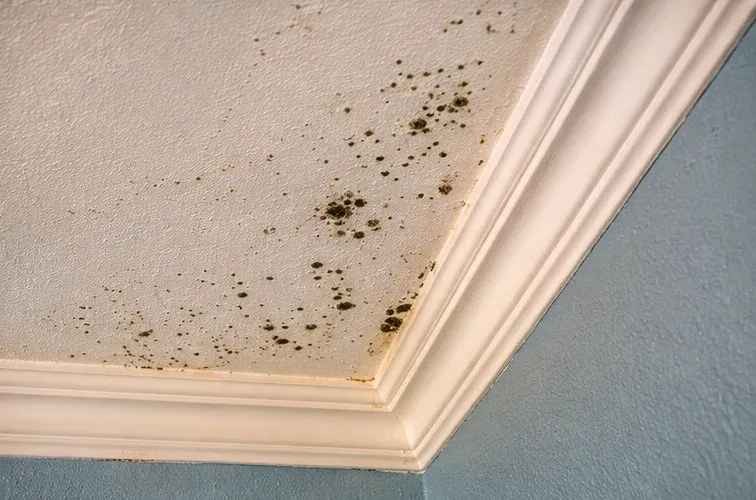
Dark mold speckles on a white ceiling corner above a blue wall and white crown molding

05 / Local risk

Which system is more likely to cause mold here

For a single-family house in Tempe that still runs a cooler, the cooler tends to be the likelier source. It adds moisture by design, its pads and pan stay wet for months, and its ductwork often passes through an attic nobody inspects.

Housing age supports that. In Tempe, 41.2 percent of occupied units were built before 1980, the era when evaporative cooling was standard. The 85282 ZIP code area is 58.1 percent pre-1980. Many of those houses have a cooler, a former cooler, or a cooler plus a later AC added to the same duct system.

Houses that have both systems deserve a closer look. A crossover duct or a shared plenum can let cooler air enter the AC ductwork, and an abandoned cooler curb can leak directly into the attic. The older home guide covers those leftovers in detail.

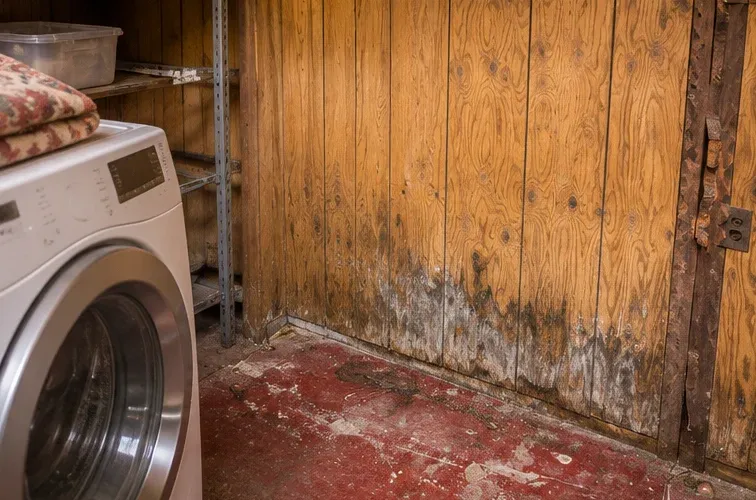
Water-stained wooden plank wall with dark mold marks beside a front-loading washer, red concrete floor at the bottom

06 / 5 steps

What to check on your own system

For a cooler, before the season starts:

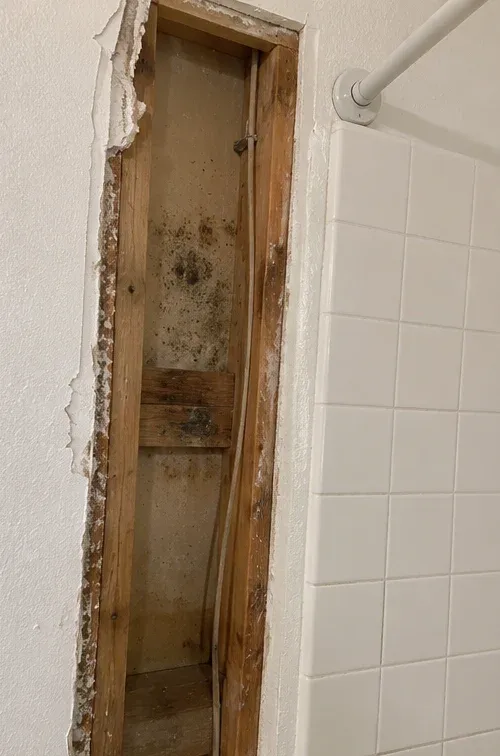
Opened shower wall cavity with wood framing and dark mold above a white tile surround
  1. Pull the pads and look at the housing behind them.
  2. Check the pan for rust and standing water.
  3. Watch the float valve fill and shut off.
  4. Look at the roof curb from inside the attic if you can reach it.
  5. Run the unit for an hour and note any smell.

For an AC, once a month in summer:

  1. Pour a cup of water down the condensate drain and confirm it flows.
  2. Look in the drain pan for standing water or rust lines.
  3. Change the filter.
  4. Check the ceiling and floor around the air handler for stains.
  5. Listen for a fan that runs with no cooling, which can mean a frozen coil.

07 / Mold

When growth is already there

If growth is visible on the cooler housing, the attic deck or the ceiling under the air handler, the order of work matters. Stop the water and stop running the system first. Then remove the affected material and clean the surfaces. Running a fan through a contaminated cooler or air handler can spread spores through the house.

A moldy area under about 10 square feet is usually a homeowner job, per the EPA. Above that, or when growth is inside ductwork or an attic assembly, the work needs containment and a scope. The AC mold removal page covers the air handler side, and mold testing explains when a sample answers a question.

09 / 5 questions

Frequently asked questions

Still have a question?

Send the form. Someone from our team will call you back soon.

Get a call back

Q.01

Can a swamp cooler cause mold in the house even if the pads look clean?

Yes. The pan, the housing and the duct connection can hold moisture behind the pads, and a leaking crossover duct can wet attic sheathing far from the unit. Clean pads only mean the most visible part is clean.

Q.02

Is AC mold worse than swamp cooler mold?

Neither is worse by type. AC mold is often hidden in a ceiling or closet assembly, so it can run longer before discovery. Cooler mold can spread through the air because the system distributes humid air through the rooms.

Q.03

Should I run the cooler during monsoon season?

It works poorly in humid air and adds moisture indoors. Many households switch to AC or a portable unit during the monsoon.

Q.04

How do I know if the musty smell is the cooler or the AC?

Run one system at a time. If the smell appears when the cooler starts, the pads, pan or housing are the likely source. If it appears when the AC fan runs, look at the air handler, the drain pan and the return chase.

Q.05

Can mold grow in the ductwork itself?

Duct board and flex duct with insulation can hold moisture, especially where a cooler duct passes through a hot attic. Duct cleaning alone does not fix it if the duct stays wet. The moisture source has to be corrected first.

White cargo van with its rear doors open in a driveway, a man in navy work clothes wheeling a teal air machine out in front of a ranch house

Form open 24/7

Get a call back about mold in your home

Send the form. Someone from our team will call you back soon.

Mold in the house?Get a call back

Before you go: want a call back?

Send the request form and someone will call you back about the mold.

Get a call back

Get a call back

Send the form and someone from our team will call you back.