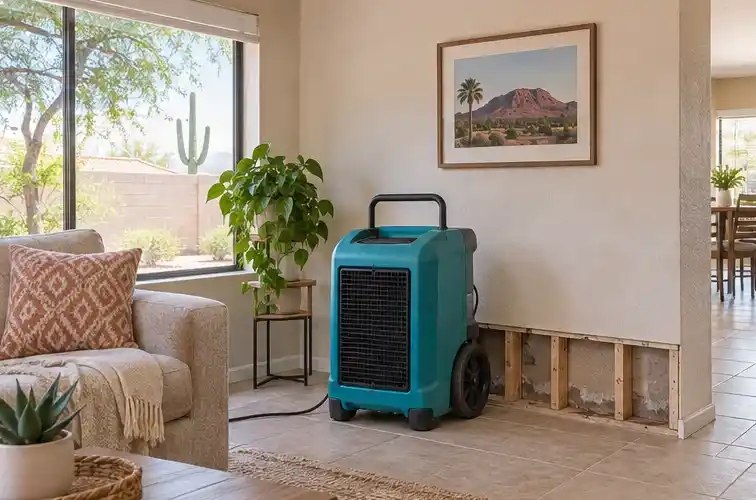
Teal dehumidifier running in a living room with the lower wall opened at the baseboard, a sofa with patterned pillows and a framed desert print

Tempe guide · 6 min read

Mold in Water Heater Closet

A water heater closet traps heat, so a small leak turns into growth quickly.

A closed closet, a slow drip and no airflow can keep a wall wet for months. Water heater closet mold in Tempe is a small-space problem, and the smell in the hallway is often the first sign anyone notices. The drywall behind the tank stays damp, the base plate swells, and the floor may look dry the whole time.

In Tempe, 41.2 percent of homes were built before 1980 (ACS 2024 5-year), and older homes often have the water heater in a hall closet or a garage corner with paper-faced drywall and a wood base. A tank that has sat in the same spot for many years has had time to leave a mark, even if the current leak is small.

01 / Leaks

What the closet does to a small leak

Three features turn a minor drip into a mold job.

No airflow. A closed closet with a water heater in it stays warm and humid. Water on the floor does not evaporate at the rate it would in an open room.

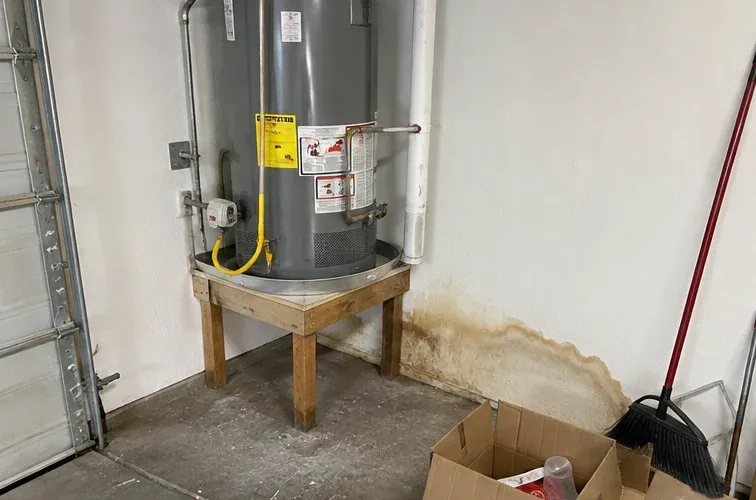
Paper-faced drywall. The paper on standard drywall feeds growth and holds water longer than the gypsum core. A damp patch at the base of the closet wall can be wet 18 inches up the back side while the front looks fine.

A wood or particle board base. A base plate or a shelf that stays wet swells, darkens and holds moisture against the drywall. Particle board is worse than plywood because it loses strength as it absorbs water.

Add a tank that sweats in a cold snap or a valve that weeps under pressure, and the closet becomes a wet box that no one opens.

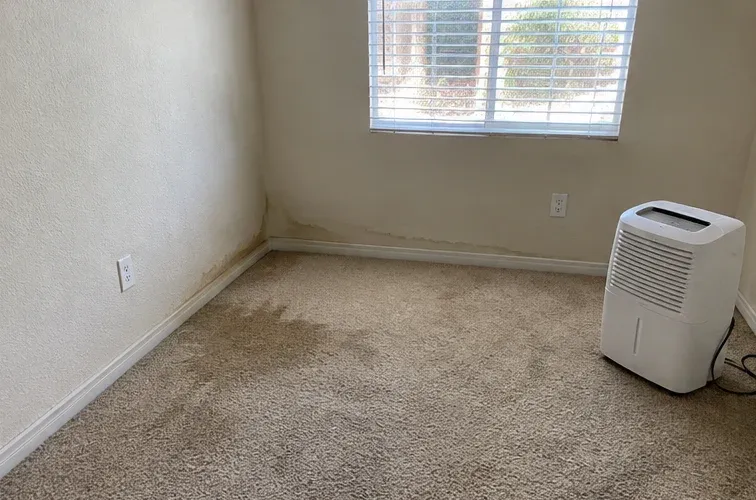
Empty room with beige carpet showing a darker damp patch along the baseboard, a white portable dehumidifier at the right and a window with blinds

02 / 5 steps

The five leak points

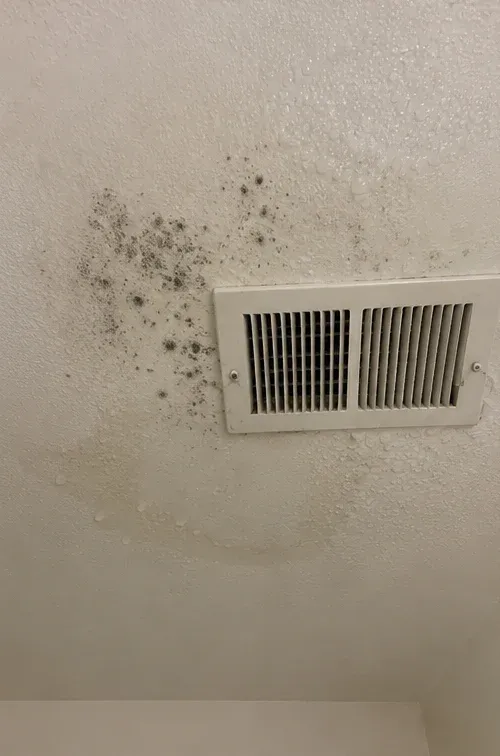
White wall with dark mold spots around a metal floor vent register
  1. The temperature and pressure valve

    A valve that weeps at the discharge pipe leaves a trail down the tank and into the pan. The discharge pipe should run to an approved drain point, and it sometimes runs to the pan instead.
  2. The drain valve at the bottom

    A hose connection that was never fully closed, or a valve that has scale in it, drips slowly at floor level.
  3. The inlet and outlet fittings on top

    A dielectric union or a flex connector that has corroded seeps at the thread or the crimp.
  4. The tank itself

    A rusted tank bottom weeps through the shell. Once the tank leaks, the heater is being replaced, not repaired.
  5. The pan and its drain

    A pan with a clogged drain, or no drain at all, holds water against the closet floor until it wicks into the wall.

A gas water heater adds a flue and a combustion air opening, which change the clearance requirements and make the closet harder to ventilate. A plumber should handle anything that touches the flue or the gas line.

03 / 6 steps

What removal involves in a closet

A water heater closet is one of the smaller remediation jobs, which is good news. The work usually looks like this:

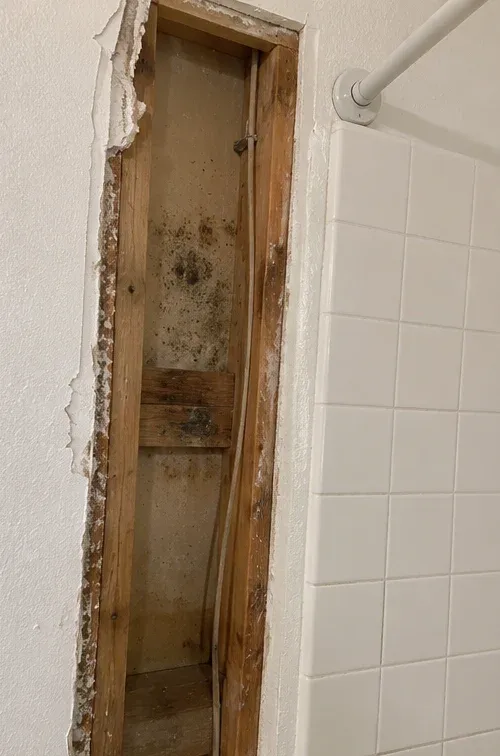
Opened shower wall cavity with wood framing and dark mold above a white tile surround
  1. Fix the water source

    Plumber for the valve, the fitting or the tank.
  2. Shut off power or gas to the heater

    before any work around it, and let the plumber handle the reconnect.
  3. Contain the closet

    with plastic and, where the scope calls for it, negative air.
  4. Remove the wet drywall and base

    Usually the lower 12 to 24 inches, and any shelf or base that is swollen.
  5. Dry and verify

    A small space dries fast with air movement, but the wall cavity behind the tank needs a reading before it is closed.
  6. Rebuild, then paint

    Use a primer rated for the repaired area.

The tank itself may need to come out to reach the wall behind it. That is a plumber's job, and it should be in the scope as a separate line.

04 / Costs

What it costs

National ranges: a small bathroom sized job runs about $500 to $1,500 (one national cost guide) or $500 to $1,000 (another national cost guide). Walls and ceilings run about $1,000 to $12,000 (one national cost guide). An inspection runs about $300 to $1,000 (national cost guides). The cost page has the full table.

A closet job can land near the low end because the area is small. The variable is access. A closet with the tank in front of the wet wall costs more than one with room to work.

05 / Leaks

Renters and the water heater closet

A tenant should report a damp closet floor, a musty smell or water in the pan in writing, with photos. The water heater belongs to the owner in most leases, and the repair is usually an owner item.

A landlord should check the closet at every turnover. The landlord checklist puts it on the list, and the rental mold guide covers the notice trail when a tenant reports it mid-lease.

Water heater on a wooden stand in a garage, brown water staining climbing the wall behind it, a broom and a cardboard box on the concrete

06 / Local risk

Why the closet is worth a second look at sale

A buyer's inspector may open the water heater closet. A stained base, a musty smell or a pan with rust lines shows up in the report, and the buyer will ask about it. A seller who has the plumber's finding and a photo set answers the question in a sentence.

If the closet has visible growth, treat it like any other small area: fix the source, dry, remove what cannot be dried, verify, then rebuild. Painting over it before a sale is the version that comes back.

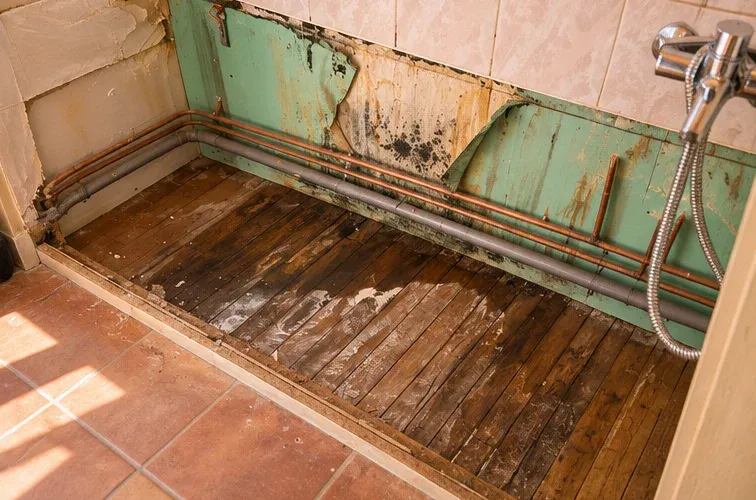
Opened shower wall showing dark mold and rust stains on the wood backing, a green wall panel and shower arm at the right, tile floor below

08 / 1 questions

A five minute check, once a month

Still have a question?

Send the form. Someone from our team will call you back soon.

Get a call back
  • Open the closet door and smell the air. A musty smell is the earliest sign.
  • Shine a flashlight at the base of the tank and the pan. Look for water, rust lines and mineral trails.
  • Look at the wall behind and beside the tank for staining, bubbling paint or a dark line at the base.
  • Check the discharge pipe at the temperature and pressure valve for a recent drip.
  • Look at the floor around the pan for a damp ring on the concrete or tile.
  • Photograph the pan and the wall if anything looks new.

The photo habit matters. A stain that was there last year is different from a stain that appeared after a cold snap, and the date helps the plumber decide what to fix.

Q.01

When it is the pan, the valve or the tank

What you seeLikely sourceFirst move
Water in the pan, tank dryClogged pan drain or a weeping valveClear the drain, check the valve
Rust streaks down the tank shellFitting or tank corrosionPlumber, and plan for replacement
Damp drywall at the base onlyPan overflow or a slow floor leakDry the wall, find the water
Growth on the closet wall, pan dryPast leak or condensationMeter the wall, check the source
Musty smell, nothing visibleMoisture inside the wall or under the baseMeter and open the base if needed

A dry pan with a stained wall is a common finding. It means the closet flooded at some point, the water drained or evaporated, and the wall never dried. The current source may be gone, and the growth is still there.
09 / 6 questions

Frequently asked questions

Still have a question?

Send the form. Someone from our team will call you back soon.

Get a call back

Q.01

Why does mold grow in a water heater closet?

The closet is enclosed, warm and often has no drain. A slow leak from a valve, a fitting or the pan keeps the drywall and the base wet, and the lack of airflow means it does not dry between drips.

Q.02

Can a water heater leak without visible water?

Yes. A weeping valve or a pinhole in the tank can evaporate as fast as it drips, leaving a stain and a smell but no puddle. The drywall behind the tank is usually wetter than the floor.

Q.03

Is the water heater closet a landlord or tenant repair?

The water heater is usually an owner item, and so is the closet structure. A tenant should report the condition in writing and keep photos. A specific lease decides the rest.

Q.04

How much does closet remediation cost?

National ranges for a small area run about $500 to $1,500, with the tank removal and plumbing as separate lines. The cost page has the full table by room and by square footage.

Q.05

Can the closet be used while the work is done?

The closet is usually closed off during removal and drying. The water heater may need to be shut off for part of the job, and the plumber should say how long, and the scope should name it.

Q.06

How can a homeowner tell the wall is dry before it is closed?

A moisture reading on the framing and the drywall, compared to a dry reference area, is the usual check. Photos of the reading with the date belong in the file.

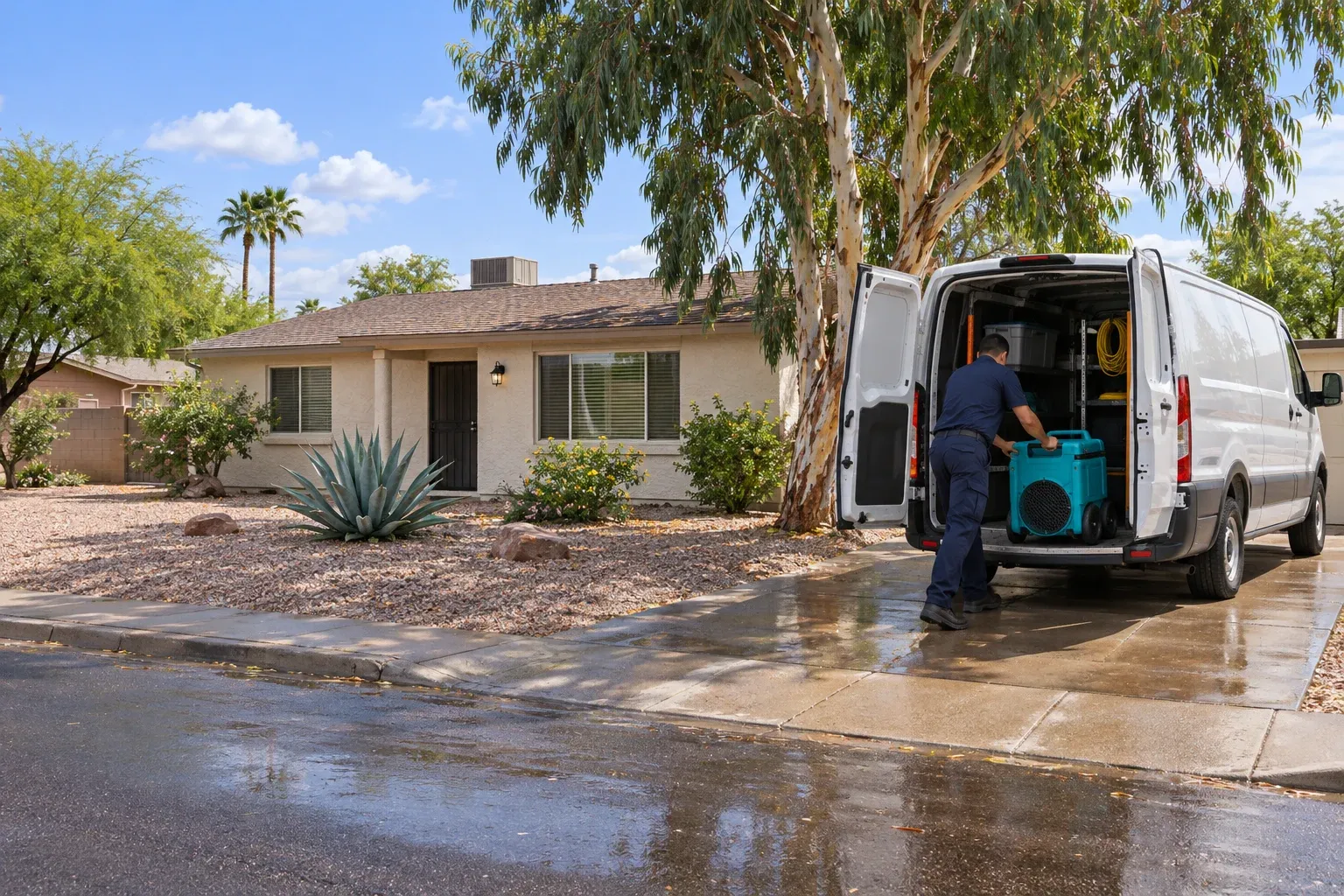
White cargo van with its rear doors open in a driveway, a man in navy work clothes wheeling a teal air machine out in front of a ranch house

Form open 24/7

Get a call back about mold in your home

Send the form. Someone from our team will call you back soon.

Mold in the house?Get a call back

Before you go: want a call back?

Send the request form and someone will call you back about the mold.

Get a call back

Get a call back

Send the form and someone from our team will call you back.