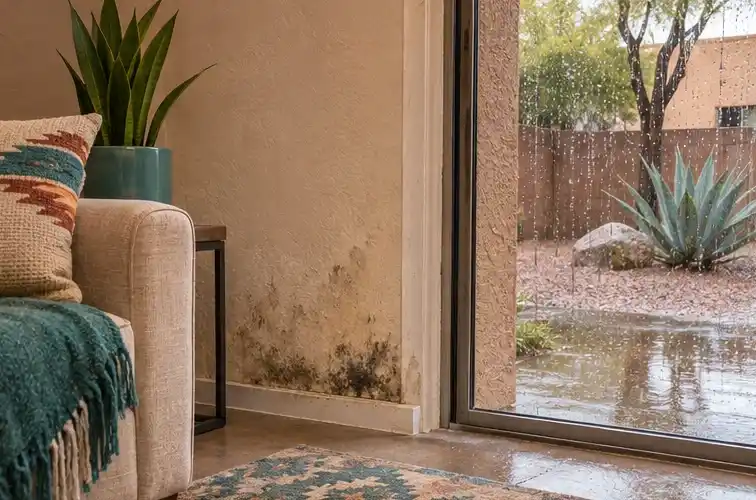
Dark mold spots along the bottom of a beige wall beside a sliding glass door, wet pavement outside and a sofa with a throw at the left

Tempe guide · 6 min read

Mold After Roof Leak

A monsoon roof leak shows up late as a ceiling stain.

Monsoon rain finds the one flashing that was never right. The first week after the storm decides whether the repair is a ceiling patch or a room.

The storm is over in an hour. What it leaves behind can take a week to appear: a ring on a ceiling, a damp patch at the top of a wall, a musty attic. A monsoon roof leak in Tempe works that way, because the water has to soak through insulation and drywall before the room shows it. By the time the ring is visible, the cavity above it has been wet long enough for mold to start.

The response is a sequence, not a single call. Stop the water, document the damage, dry what can be dried, and remove what cannot. EPA guidance says to dry water-damaged areas and items within 24 to 48 hours to prevent mold growth, and a monsoon leak in an attic can stay above that window for days before anyone notices.

01 / 6 steps

The first 24 hours after a storm

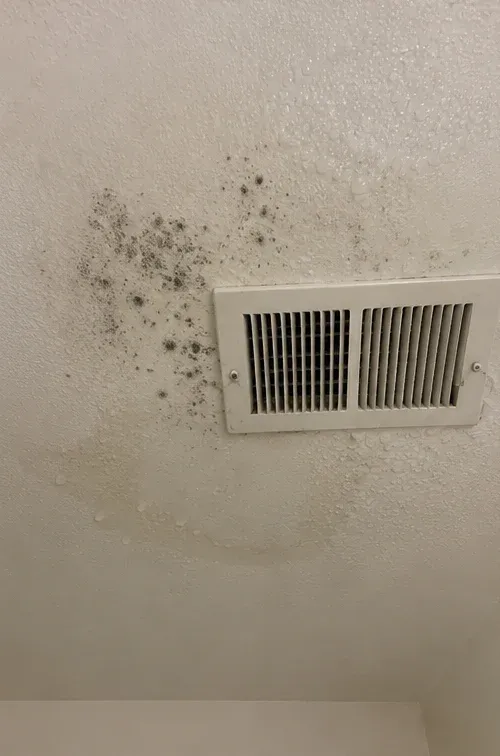
White wall with dark mold spots around a metal floor vent register
  1. Look for water, not stains

    Walk the house with a flashlight. Check the ceiling below the roof line, the top of every exterior wall, window sills, and the floor of the garage.
  2. Catch what is dripping

    A bucket and a towel limit the damage. Move furniture and electronics out of the way.
  3. Photograph everything before you clean

    The ceiling, the floor, the window and the attic if you can get to it. A photo with a date is the first line of the insurance file.
  4. Call the roofer first

    Temporary patch, then a permanent repair.
  5. Start drying

    Fans and a dehumidifier in the affected room. Open interior doors. Do not seal a wet room.
  6. Do not paint or patch the ceiling

    Covering a wet stain hides the extent and traps the moisture.

If water is running near a light fixture or a ceiling fan, turn the circuit off at the panel before you go into the room. Water and electricity are a bad combination regardless of the season.

02 / Monsoon

Where monsoon water gets in

A roof is a system, and most leaks start at the places where two materials meet.

  • Flashing at walls and chimneys. The metal that turns water away from a vertical surface is the most common failure point.
  • Roof penetrations. Vents, exhaust fans, swamp cooler curbs and solar mounts all cut a hole in the roof.
  • Underlayment at valleys. Water concentrates where two roof planes meet, and a worn underlayment fails first there.
  • Tile and shingle edges. A cracked tile or a lifted shingle lets water past the surface and into the felt.
  • Stucco cracks above the roof line. A hairline crack in the stucco can wick water into the wall for hours after the rain stops.
  • Window frames and patio door thresholds. Wind drives rain sideways, and a failed sealant lets it into the wall.

Tempe has 41.2 percent of its housing stock built before 1980, per ACS 2024 5-year data. Older roofs have often been repaired in layers, and a patch on top of a patch is where the next leak starts.

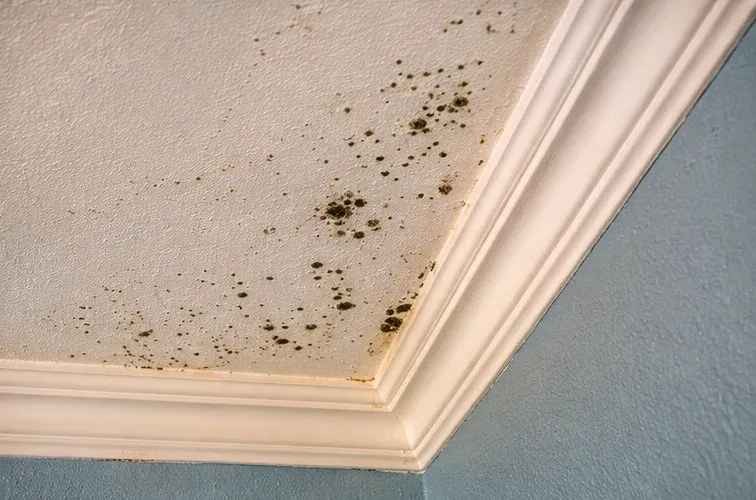
Dark mold speckles on a white ceiling corner above a blue wall and white crown molding

03 / Local risk

Why the stain appears late

A ceiling stain is the last step in a chain. Water enters at the roof, runs along a rafter or the underside of the sheathing, soaks into the insulation, and then reaches the drywall. The drywall holds it until the paper and the gypsum are saturated, and only then does the stain show on the room side.

The delay has two consequences. The first is that a clean ceiling after a storm does not mean the roof held. The second is that the growth may already be in the attic, on the sheathing and the framing, before the ceiling tells you anything.

An attic check after a monsoon is worth the ladder. Look for dark streaks on the sheathing, damp insulation, rust on the nails and any daylight at a penetration.

04 / Warning signs

What the attic tells you

What you seeWhat it suggestsNext move
Dark streaks on sheathingLong term or repeated moistureRoof repair, then assess the deck
Damp or matted insulationWater is coming through nowFind the entry point before drying
Rust on nails and truss platesPast leaks, possibly repairedCheck the repair and the flashing
White or dark growth on framingGrowth on the woodRemove and clean, then dry
Daylight at a penetrationOpen gapSeal and flash properly

Insulation that has been wet loses its value and usually cannot be dried in place. In most attic jobs it is removed, the deck is dried and treated, and new insulation goes in after the roof is sound.

05 / Good to know

What can be dried and what cannot

MaterialCan it dry in placeUsual decision
Drywall, paintedSometimes, if caught earlyCut out if soft, stained through or wet over 48 hours
Insulation, batt or blownRarelyRemove and replace
Wood framingYes, with air movementDry and verify with a meter
Carpet and padPad rarelyReplace the pad, assess the carpet
Cabinet boardRarelyRemove the affected panel
Concrete and tileYesDry, then check the adhesive

The general rule is that porous materials that stay wet past the 24 to 48 hour window are removal candidates. The rule is not a license to keep drywall that looks fine. A moisture meter on the back of the drywall tells you more than the paint on the front.

06 / Costs

What it costs

Use national ranges as a planning figure, not a Tempe quote. Attic remediation runs about $1,500 to $9,000 (one national cost guide) or $1,000 to $4,000 (another national cost guide). Walls and ceilings run about $1,000 to $12,000 (one national cost guide). A whole home job runs $10,000 to $30,000. Inspections run about $300 to $1,000 (national cost guides). The cost page has the full table.

The wild card is the roof repair itself, which is a separate trade and a separate line. A seller or owner who gets a remediation bid without a roof bid is looking at half the job.

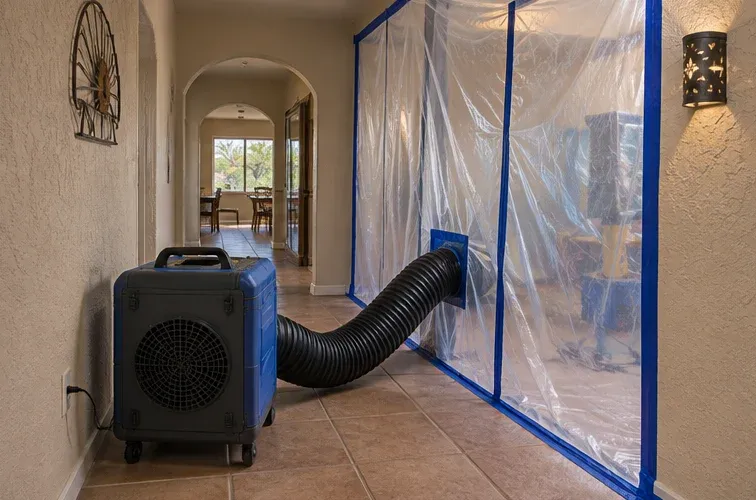
Dark air scrubber with a black duct hose running into plastic sheeting taped in a hallway of a tile-floored house

08 / 1 questions

The order that saves money

Still have a question?

Send the form. Someone from our team will call you back soon.

Get a call back
  1. Roof repair or temporary patch.
  2. Water extraction and drying.
  3. Removal of material that cannot be dried.
  4. Cleaning and verification.
  5. Rebuild, paint and insulation.
  6. A final moisture check after the first rain.

Doing step 3 before step 1 is the classic mistake. The new drywall gets wet in the next storm, and the second removal costs more than the first.

Q.01

After the first storm of the season

The first storm is the test. If a ceiling stain, a window leak or a damp attic appears, deal with it before the next one, even if the forecast looks dry. Monsoon storms often come in series, and a roof that leaked once in July can leak again in August.

The attic mold page covers the removal side in more detail. The water damage page covers the drying window and what to do when the water arrived hours before anyone noticed.

09 / 6 questions

Frequently asked questions

Still have a question?

Send the form. Someone from our team will call you back soon.

Get a call back

Q.01

How soon after a monsoon leak does mold grow?

EPA guidance uses 24 to 48 hours for drying water-damaged areas. Growth depends on the material, the temperature and the airflow, but the working assumption is that a wet cavity is a candidate after two days.

Q.02

The ceiling looks dry after the storm. Is a check still worth it?

Yes. Water travels along framing and through insulation before it reaches the drywall. Check the attic, the top of the exterior walls and the window sills, and use a moisture meter where you suspect water.

Q.03

Can a water stain be painted over?

Paint hides the stain and traps moisture. Fix the roof, dry the cavity, confirm with a meter, then prime and paint. Painting first usually means the stain returns and the repair gets bigger.

Q.04

Who fixes the roof, the roofer or the mold company?

The roofer fixes the roof. A remediation company handles the interior removal, drying and cleaning. The roof repair comes first, or the interior work gets wet again.

Q.05

Does insurance cover a monsoon leak?

That depends on the policy and the cause. Sudden storm damage is often treated differently from a long term maintenance issue. Photograph everything, keep the receipts and ask the carrier before work starts.

Q.06

How long does an attic job take?

A contained attic with a defined leak area often runs a few days plus drying and verification. A larger area with insulation removal and deck treatment takes longer. The scope should name the days.

White cargo van with its rear doors open in a driveway, a man in navy work clothes wheeling a teal air machine out in front of a ranch house

Form open 24/7

Get a call back about mold in your home

Send the form. Someone from our team will call you back soon.

Mold in the house?Get a call back

Before you go: want a call back?

Send the request form and someone will call you back about the mold.

Get a call back

Get a call back

Send the form and someone from our team will call you back.