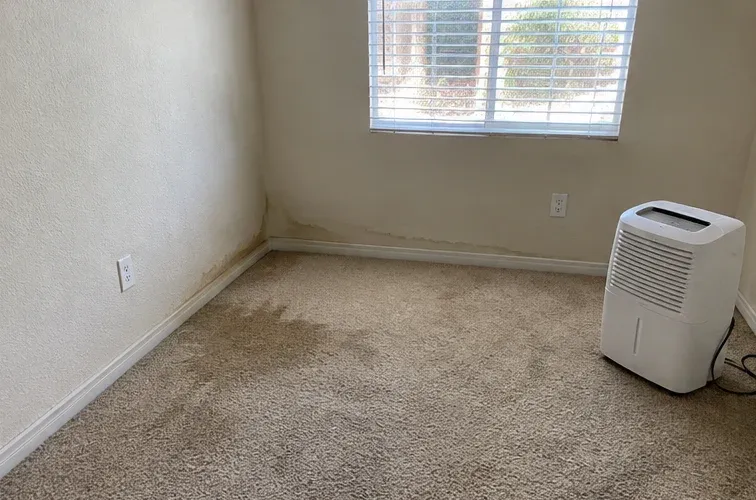
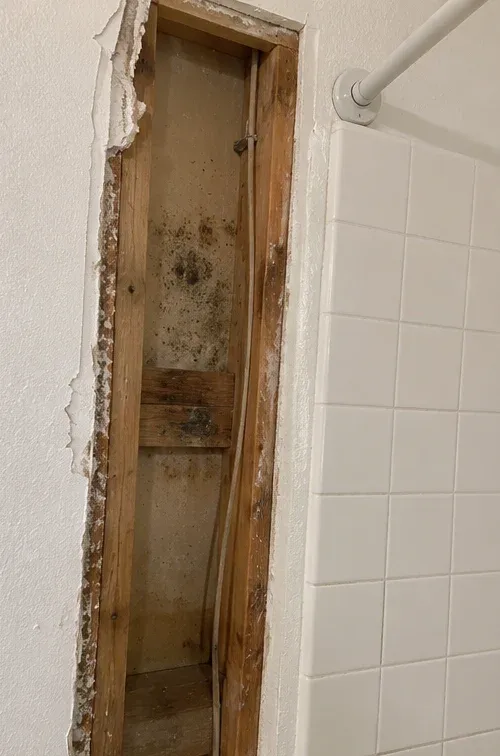
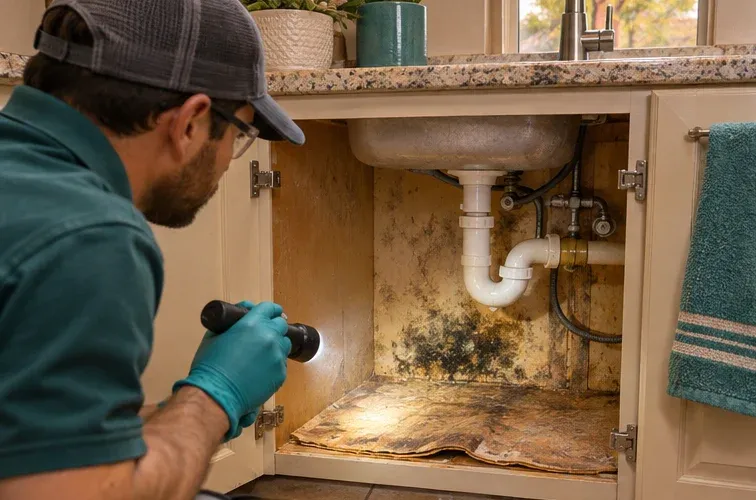
Drain and supply lines. Galvanized drains narrow with scale, copper supply lines develop pinholes, and original shutoff valves weep at the packing nut. A pinhole inside a wall can run for weeks. By the time a baseboard stains, the drywall behind it has been wet long enough to grow mold on the back face.
The bathroom fan that vents into the attic. Pre-1980 construction often stopped the exhaust duct at the attic floor instead of running it through the roof. Warm, moist air from a shower hits cooler roof sheathing and condenses. Growth starts on the underside of the deck, above the bathroom, where a homeowner never looks. The attic mold page covers that pattern, which is invisible from inside the bathroom.
Roof underlayment and flashing. Original underlayment is often past its service life. Monsoon season runs from June 15 to September 30, and wind-driven rain finds nail pops, lifted flashing laps and cracked stucco at the roof transition.
The slab edge and the grade. Planters against the wall, irrigation lines that seep, and stucco that wicks water upward feed the bottom plate of the wall. The drywall looks fine at eye level and is soft at the floor.