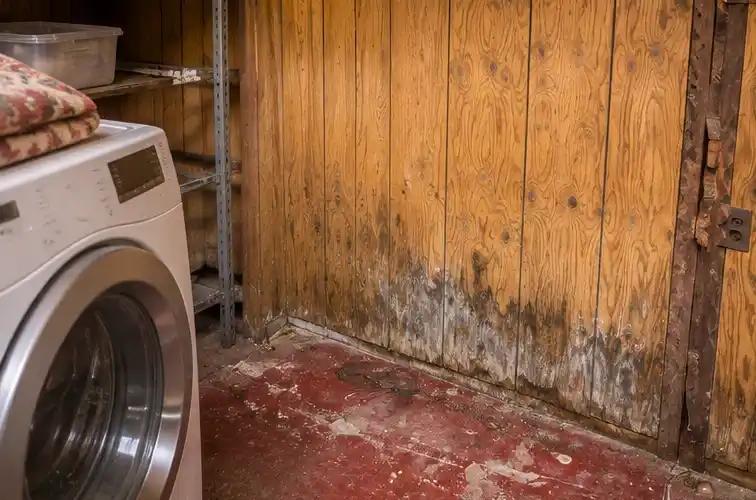
Water-stained wooden plank wall with dark mold marks beside a front-loading washer, red concrete floor at the bottom

Tempe guide · 6 min read

Slab Leak Mold

A slab leak can feed mold for months before the floor shows it.

The water under a Tempe slab has nowhere to go. It enters the soil, spreads along the fill, and rises through the concrete into the carpet, the tack strip and the baseboard, so the first sign of a slab leak is often a smell at the edge of a room rather than a puddle. That is also why slab leak mold is easy to miss for months.

Tempe has the housing for it. ACS 2024 5-year data puts 41.2 percent of homes at pre-1980 construction, and older homes can have aging supply lines under the slab and original flooring above it. A pinhole in a line that runs under a bedroom can keep a band of carpet damp for months without surfacing.

01 / Local risk

Why a slab leak shows up as mold first

A leak above a floor has somewhere to go. It drips, it pools, and someone sees it. A leak under a slab has no such path. The water enters the soil and the fill under the concrete, spreads along the path of least resistance, and rises through the slab where the concrete is cracked or the vapor barrier is incomplete.

The first visible result is usually at the perimeter of the room:

  • a dark or damp band at the base of a wall, on the side away from the bathroom
  • a musty smell in the carpet at the doorway or along an exterior wall
  • a tack strip that crumbles when the carpet is pulled back
  • paint or wallpaper that bubbles at the bottom of the wall
  • a baseboard that is soft or stained on the back side only

The pattern is different from a roof leak, which shows on the ceiling, and from a supply line in a wall, which shows in a cabinet or along a single stud bay.

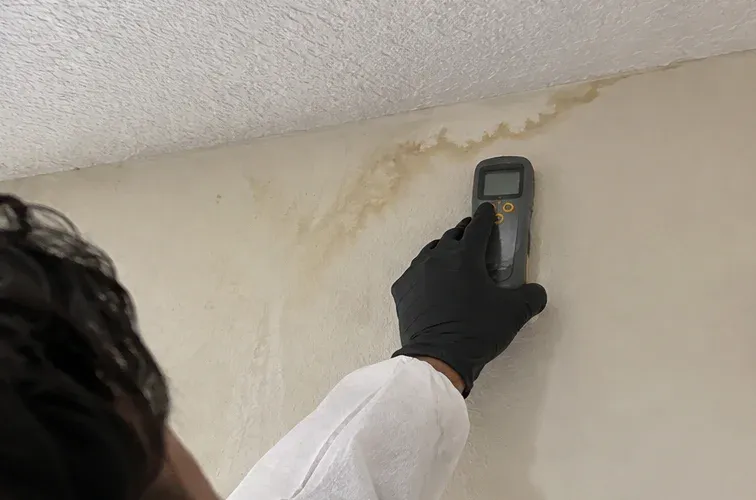
Gloved hand holding a moisture meter against a wall with brown water stains below a textured ceiling

02 / 6 steps

The signs, in the order they usually appear

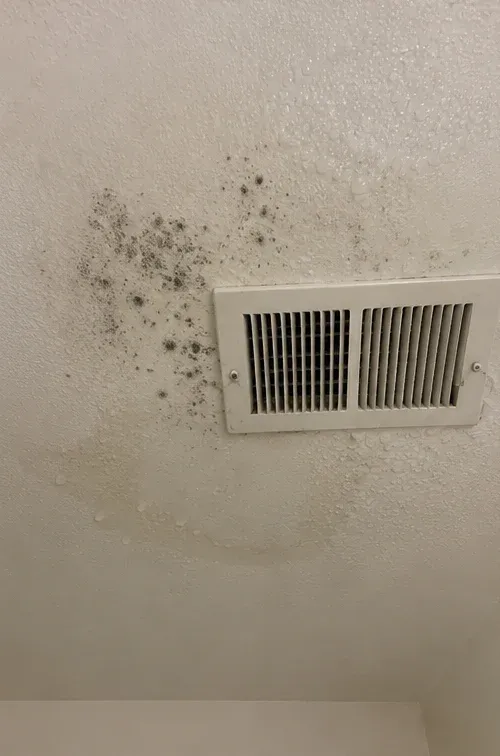
White wall with dark mold spots around a metal floor vent register
  1. A water bill that climbs without a change in use

    The water meter is an inexpensive leak detector.
  2. The sound of running water when nothing is on

    A faint hiss near a floor drain or a wall is worth chasing.
  3. A warm spot on the floor

    A hot water line leak heats the slab and the flooring above it. Bare feet notice before a meter does.
  4. A musty smell in one room

    Often strongest at the carpet edge or in a closet with a concrete floor.
  5. Staining or cupping at the baseboard

    The wall is wicking water from the slab.
  6. Visible growth at the carpet edge or under a piece of furniture

    This is late in the sequence.

03 / Good to know

Confirming it before anyone cuts concrete

A slab leak is a plumbing diagnosis first.

  • Read the meter with everything off. Note the reading, wait an hour without using water, and read again. A moving dial points at a leak on the supply side.
  • Isolate the water heater. A hot water leak shows a warm spot and a meter that moves on the hot side. A plumber can confirm which line is losing water.
  • Have a plumber locate the line. Acoustic listening and thermal imaging are standard tools, and the result should be a marked spot, not a guess.
  • Map the moisture inside. A moisture meter along the baseboards and the carpet edge shows how far the water has spread. That map decides how much flooring and drywall comes out.

Do not authorize demolition on the strength of a smell alone. Do not authorize a repair on the strength of a stain alone. Two findings, one plumbing and one moisture, make a firmer basis.

04 / Costs

What it costs

National ranges, not Tempe quotes: walls and ceilings run about $1,000 to $12,000 (one national cost guide), a whole home job runs $10,000 to $30,000, and an inspection runs about $300 to $1,000 (national cost guides). The plumbing repair is a separate line and a separate trade. The cost page has the full table.

The plumbing cost can exceed the remediation cost. A reroute through the attic may be cheaper than breaking and restoring a finished floor, and the decision belongs to the plumber and the owner.

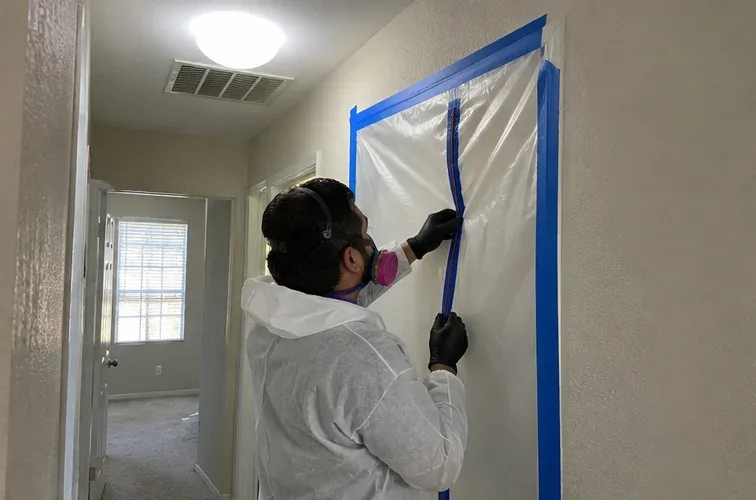
Worker in a white suit and respirator taping plastic sheeting over an apartment doorway with blue tape, a ceiling vent above

05 / Leaks

Renters and slab leaks

A tenant may see the smell or the damp carpet before the owner knows there is a leak. Report it in writing with photos and the date, and include the water bill if the tenant pays it. A climbing bill with no change in use is useful evidence.

The owner needs to hear "damp carpet along the west wall of the second bedroom, musty smell, baseboard soft" rather than "the floor smells". The first version is more likely to get a plumber. The second may get a bottle of cleaner.

Arizona's fit and habitable statute, A.R.S. 33-1324, requires a landlord to keep the premises fit and habitable but does not name mold. A slab leak is a repair and habitability question first. The rental mold guide covers the notice trail.

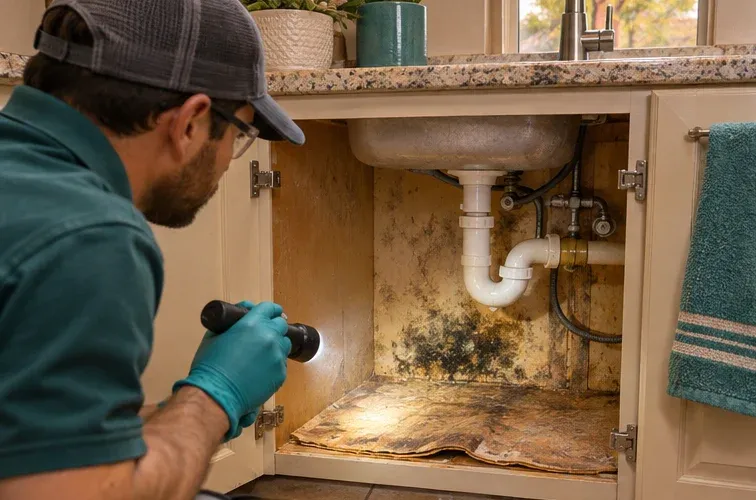
Man in a teal polo shining a flashlight at dark mold on the floor of an under-sink cabinet, a teal striped towel hanging at the right

06 / Service area

Slab leaks in a condo or townhome

A ground floor unit in a shared building can have a slab leak that affects the unit above through the shared floor, or a leak from an upper unit that lands on the slab below. The plumbing may be the association's or the owner's, and the declaration decides.

Get the plumbing finding in writing and send it to the manager or board with the moisture map. The neighbor unit guide covers the access and cost conversation.

08 / 1 questions

How the repair and the removal fit together

Still have a question?

Send the form. Someone from our team will call you back soon.

Get a call back
  1. Shut off the water if the leak is active. The homeowner or the plumber can close the main.
  2. Repair or reroute the line. A plumber may repair the section, reroute the line through the attic or the walls, or abandon it and run a new line.
  3. Dry the slab and the room. Air movers and a dehumidifier, with the EPA 24 to 48 hour window in mind.
  4. Remove the wet material. Carpet, pad, tack strip, baseboard and any drywall that wicked water.
  5. Clean and verify. Then rebuild.

The order saves money. Removing flooring before the plumbing repair means the new floor gets wet again. Repairing the line and closing the floor without drying means the growth continues under the new carpet.

Q.01

What gets removed and what stays

MaterialUsual decisionWhy
Carpet and padRemove and replacePad holds water and rarely dries in place
Tack stripRemove and replaceWood at the slab edge stays wet
Baseboard and shoe moldRemove, assess the drywall behindThe back side is often the wet side
Drywall, lower 12 to 24 inchesCut if wet or stainedWicking climbs the paper
Cabinet toe kick and panelAssess, often removeParticle board swells and stays wet
Tile and thinsetOften staysConcrete and tile dry, but the grout may need attention
SlabStaysDry and verify before covering

The drywall cut height follows the moisture reading. A meter that reads dry at 12 inches but wet at 18 means the cut goes higher.
09 / 6 questions

Frequently asked questions

Still have a question?

Send the form. Someone from our team will call you back soon.

Get a call back

Q.01

Can a slab leak cause mold in a house?

Yes. Water under the slab wicks up through the concrete and wets the carpet, tack strip, baseboard and drywall. The growth follows the water, which is why it appears at the edge of a room rather than in the middle.

Q.02

How can a slab leak be identified in Tempe?

A climbing water bill, the sound of running water with nothing on, a warm spot on the floor and a musty smell in one room are the common signs. A plumber confirms it with listening or thermal tools before any concrete is opened.

Q.03

Will a slab leak fix itself?

Rarely. A pinhole in a supply line seldom seals on its own, and the water keeps moving into the soil and the slab. The repair is a plumbing job, and the drying and removal follow it.

Q.04

Does the household have to move out during the work?

For a single room with a contained work area, often not. For a job that opens several rooms or removes flooring across a hallway, the plan may change, and the occupancy plan belongs in the written scope.

Q.05

Does insurance cover a slab leak?

It depends on the policy and on how the damage happened. The plumbing repair and the water damage are often treated as separate items. Photograph everything, keep the plumber's finding and ask the carrier.

Q.06

How long does the drying take?

A slab and a wall cavity usually need several days of air movement and dehumidification, and the verification reading decides when the rebuild starts. The EPA window of 24 to 48 hours is the target for getting water-damaged material dry, and a slab can take longer.

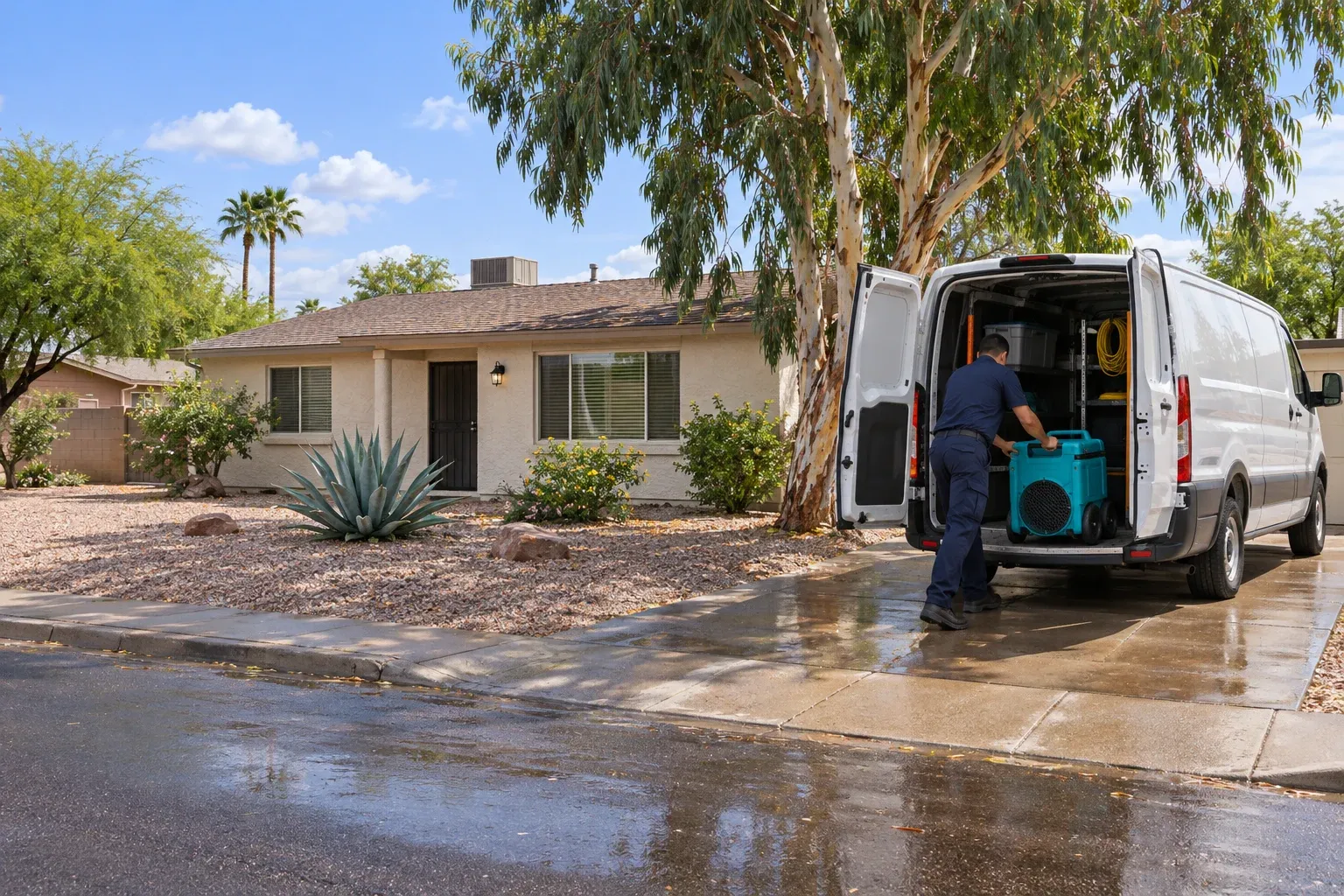
White cargo van with its rear doors open in a driveway, a man in navy work clothes wheeling a teal air machine out in front of a ranch house

Form open 24/7

Get a call back about mold in your home

Send the form. Someone from our team will call you back soon.

Mold in the house?Get a call back

Before you go: want a call back?

Send the request form and someone will call you back about the mold.

Get a call back

Get a call back

Send the form and someone from our team will call you back.