Q.01
How much does mold testing cost in Tempe?
National ranges put an inspection at $300 to $1,000. Testing alone is often $250 to $500. Local pricing depends on size, access and sample count.
Tempe guide · 6 min read
Mold testing in Tempe costs $250 to $500, and visible growth often needs no test.
A test is worth the money when it answers a question you cannot answer by looking. In Tempe, that usually means hidden moisture, a rental dispute or a clearance check.
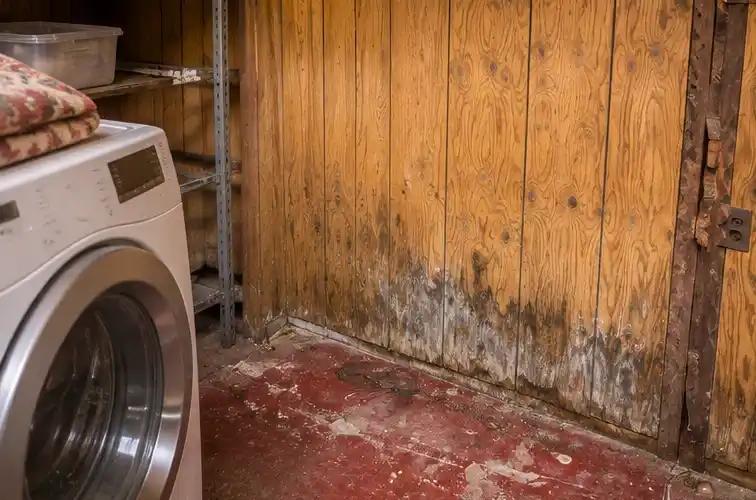
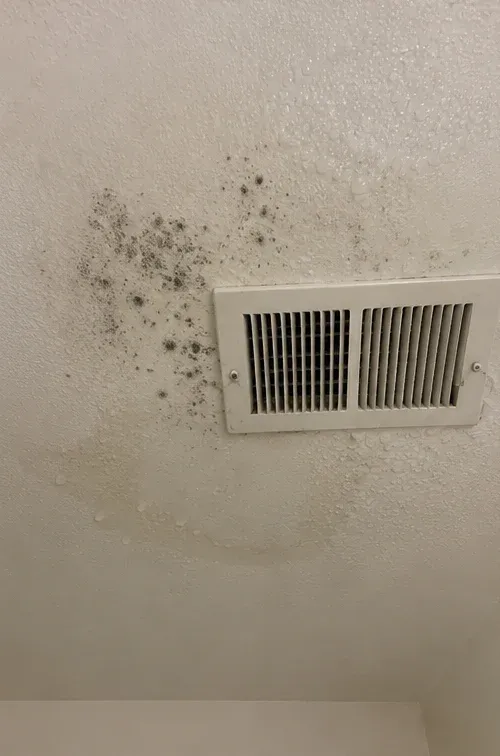
Mold testing in Tempe is worth it in three situations: when there is a musty smell and nothing visible, when a water event was never fully dried, and when you need a written record for a landlord, a buyer or a clearance after remediation. It is usually not worth it when growth is already visible across more than a small patch. At that point a lab result does not change what has to be removed, and the money belongs in the removal scope.
The EPA says the same thing in fewer words: sampling is usually unnecessary when visible mold is present, and no federal limits have been set for mold or mold spores. A test tells you what is in the air or on a surface. It cannot tell you whether a building is healthy, and it cannot find the water for you.
01 / Mold
A laboratory test measures a sample, not a house. The two common types answer different questions.
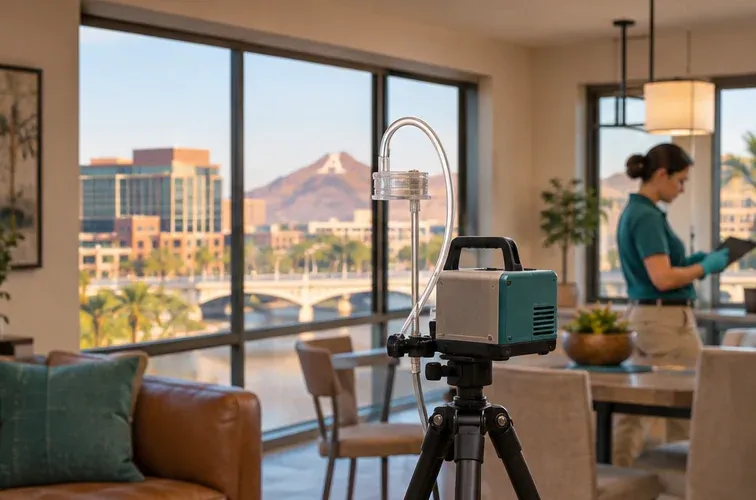
An air sample pulls a known volume of air through a trap and counts the spores in it. The result is compared with an outdoor control taken at the same time. It shows whether indoor counts are elevated and which genera are present. It does not show where the growth is.
A surface sample is a tape lift or a swab of a visible patch or a suspect surface. It identifies what is growing on that spot. It does not tell you how far the growth extends behind the material.
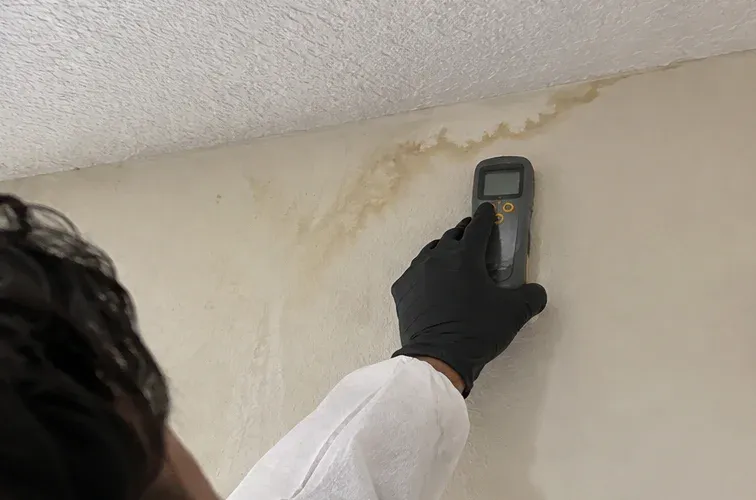
A moisture reading is not a mold test, but it is the measurement that most often solves the case. A meter on drywall, a thermal camera on a wall and a look inside the attic locate the water feeding the growth. A good inspection spends more time with a meter than with a sample pump.
02 / Good to know
The agency's guide to mold and moisture makes three points that decide most testing questions.
That third point is the strongest argument for testing. A clearance sample after remediation has a clear purpose: it compares the cleaned space with the outside air. A sample taken before any work, with no plan for what the result will change, is a receipt for a lab fee.
The EPA's guidance is direct: in most cases, if visible mold growth is present, sampling is unnecessary, and no federal limits have been set for mold or mold spores.
03 / Good to know
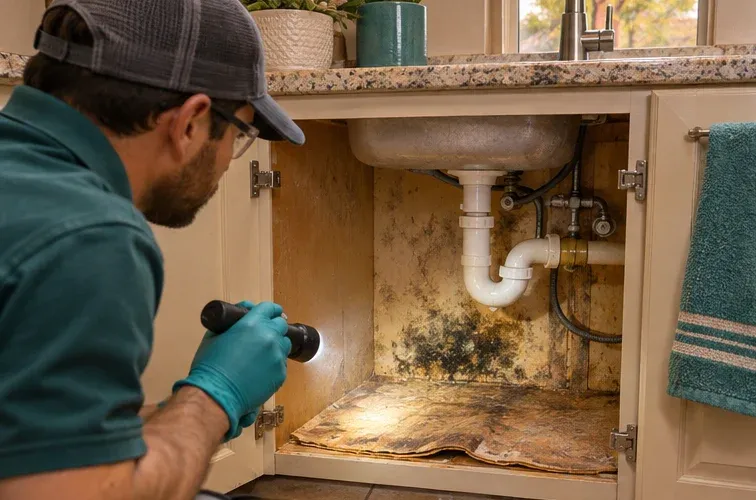
A musty smell with nothing visible. Smell is a real signal and a poor map. An inspection with moisture readings plus two air samples can find growth inside a wall, above a ceiling tile or in an attic that has no access panel.
A water event that was never fully dried. A roof leak, a slab leak, a supply line or an overflowing toilet that was mopped up but not dried within the EPA's 24 to 48 hour window is a candidate for hidden growth inside the assembly.
A rental or a home purchase. A baseline before signing gives you a comparison point later. In Tempe, 57.7 percent of occupied homes are rented, so move-in documentation matters.
A dispute. A written report with sample locations and lab results is harder to argue with than a photograph. The rental mold guide covers the notice sequence.
Clearance after remediation. This is the best use of a test. The work is done, the materials are dry, and the question is whether the space is clean before reconstruction.
04 / Safety
05 / Good to know
| Situation | Better spend | Why |
|---|---|---|
| Visible patch larger than 10 square feet | Removal scope | Sampling will not change the work |
| Musty smell, nothing visible | Inspection plus 2 samples | Finds hidden growth and the water |
| Water event, drying incomplete | Moisture survey and drying | The assembly is the question |
| Work just finished | Clearance test | Confirms the cleaning |
| Buying or renting | Inspection with photos | Creates a baseline record |
06 / 7 steps
A report worth paying for has these parts.
A report that lists genus names without a moisture source is a lab printout, not an inspection.
07 / Local risk
The housing pattern explains a lot. In Tempe, 41.2 percent of homes were built before 1980, and 41.8 percent sit in buildings with 5 or more units (ACS 2024 5-year). Older houses often have bathroom fans that end in the attic, and shared buildings have chases and common walls that move moisture sideways.
That produces the classic testing case: a stain in one unit, a source two units away, and a smell that comes and goes. An air sample in the affected room plus a moisture inspection of the adjacent spaces answers more than a swab of the stain.
Monsoon season adds another window. From June 15 to September 30, wind-driven rain gets into roof details and window flashing, and growth can sit inside a wall for weeks before it shows. The attic mold page covers the roof deck side.
08 / Costs
Inspection, lab and report fees can be listed as separate lines. A few well-placed samples can be more useful than 8 random ones.
National inspection pricing runs about $300 to $1,000 (national cost guides). Testing alone is often $250 to $500, and the two are often charged together. Those are national ranges, not Tempe quotes, and the mold testing page breaks down what each part covers.
10 / 5 questions
Q.01
National ranges put an inspection at $300 to $1,000. Testing alone is often $250 to $500. Local pricing depends on size, access and sample count.
Q.02
No. EPA says no federal limits have been set for mold or mold spores, so no test can declare a building healthy or not. A test can confirm what is growing and whether an area was cleaned. Health questions belong with a doctor, not a lab report.
Q.03
Usually not. If the patch is small, the surface is hard and the water source is fixed, clean it and watch it. Test if it returns, spreads, or if the smell persists after cleaning.
Q.04
Better than nothing for a quick check, worse than an inspection for a decision. A single dish shows that spores are present, which they almost always are. It does not locate the source or compare a cleaned space with outside air.
Q.05
That depends on the lease and the cause. Document the conditions, request an inspection in writing, and keep the response. The rental guide walks through the sequence.
Form open 24/7
Get a call back about mold in your home
Send the form. Someone from our team will call you back soon.