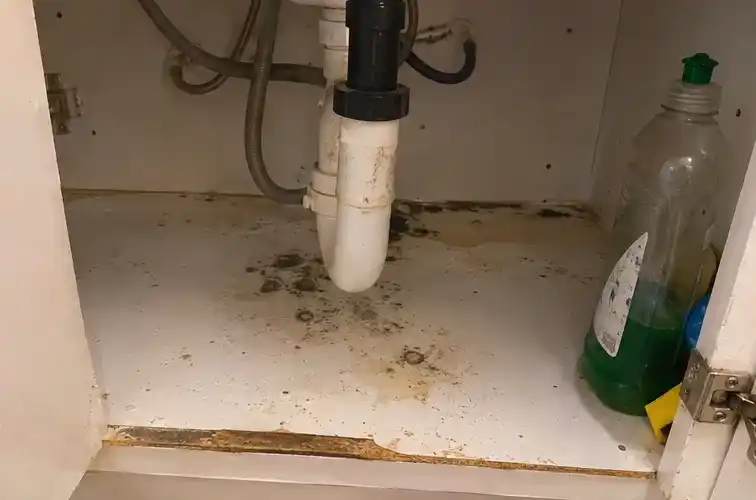
Under a sink, dark mold spots on the cabinet floor around a white drain pipe, a green dish soap bottle at the right

Tempe guide · 6 min read

How Long Before Water Damage Causes Mold?

The EPA drying window is 24 to 48 hours after a leak.

Water dried within 24 to 48 hours gives a building a better chance of avoiding mold. After that window, porous material usually has to come out.

The 48 hour rule in Tempe is not a mold rule. It is a drying rule. The EPA advises drying water-damaged areas and items within 24 to 48 hours, and that window is the difference between material that can be saved and material that has to be cut out. Water that reaches drywall, insulation or a carpet pad and stays there past the window gives growth the conditions it needs, whether or not anything is visible yet.

The clock starts when the water arrives, not when someone notices. A monsoon leak that ran overnight, a supply line that wept for a week behind a cabinet, and a cooler pan that overflowed on Saturday all start their countdown at the first wet minute. What you do in the next two days decides most of the outcome.

Drying clock

Where are you on the 48 hour clock?

Set the hours since the water started. The dial shows the zone.

Drying clock

024487296

Water started

30 hours ago

  1. Hour 0 to 24Extract standing water, move furniture, start air movement and dehumidification. Document everything with photos.
  2. Hour 24 to 48Measure moisture content in the drywall, baseboards and framing. If the readings are still high, drying equipment needs to stay or the material needs to come out.
  3. After 48 hoursAssume porous material that stayed wet is colonized until proven otherwise. A moisture meter and a visual check decide. In a Tempe summer, a closed house can push the timeline faster.

The EPA's guidance is to dry water-damaged areas and items within 24 to 48 hours. EPA, A Brief Guide to Mold, Moisture and Your Home (opens in a new tab)

Get a call back

01 / Good to know

Hour 0 to 2: stop the water

Stop the source before you touch a towel. If a supply line is spraying, close the fixture valve or the main. If the water is coming from a roof leak, put a bucket under the drip and move what is underneath. If the source is a neighbor's unit or a shared wall, call the landlord or the HOA, because the shutoff may not be in your unit.

Then document. Photograph the water, the source and the damage with the date visible. In a rental, that file matters more than the cleanup, because the repair authorization runs through someone else. The rental mold guide covers the written notice.

Do not run a shop vacuum over standing water unless it is rated for wet pickup, open a wall cavity to "let it breathe," or move a gas appliance.
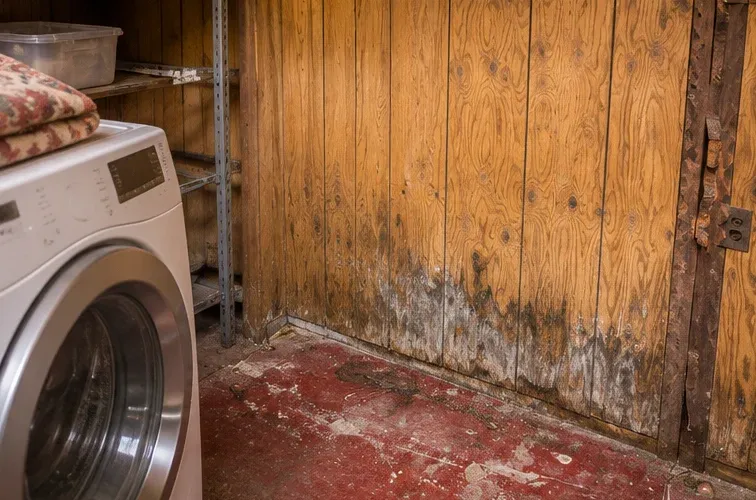
Water-stained wooden plank wall with dark mold marks beside a front-loading washer, red concrete floor at the bottom

02 / Good to know

Hour 2 to 24: get the water out and the air moving

Standing water comes up first, with towels, a wet vacuum or a mop. Then the air.

  • Fans pointed across wet surfaces, not into cavities.
  • A dehumidifier in the closed room. During monsoon season, outdoor air can be humid enough that open windows slow drying instead of helping.
  • The AC running normally. It removes moisture from the air, and in a closed house it does much of the dehumidifying.
  • Wet rugs, cushions and cardboard out of the room. Cardboard holds water against a floor and is not worth saving.
  • Cabinet doors open under a wet sink, with a fan on the cabinet base.

Lift furniture off wet carpet and put foil or plastic under wooden legs. Water under a sofa for two days leaves a mark.

03 / Timeline

Hour 24 to 48: verify with a meter instead of a hand

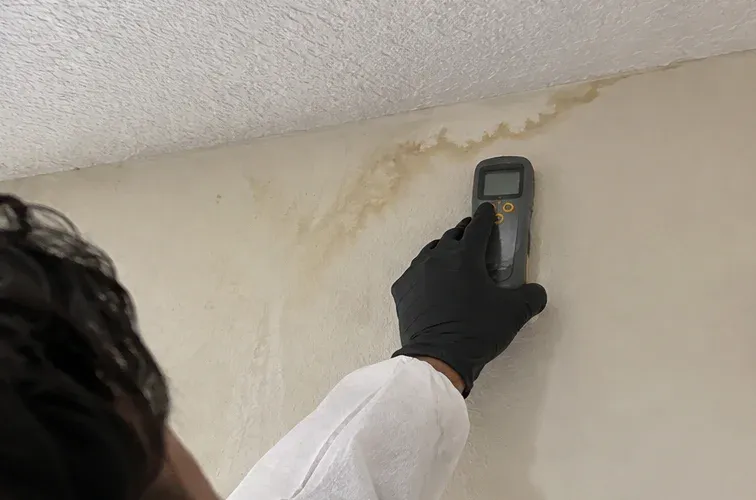
By the second day, the surface may feel dry while the assembly is still wet. A hand is a poor instrument. A moisture meter answers it.

Take readings at the baseboard, the drywall below the stain, the cabinet base under the sink and the ceiling around the leak. Compare each reading with a dry reference area in the same room. If the suspect area reads higher, it is still wet, and the drying continues.

This is also the point to check the places nobody looks: the attic deck above a bathroom, the floor under the water heater, the toe kick under the kitchen cabinets, the carpet tack strip along the wall. Water collects at the lowest point and at the seams.

Gloved hand holding a moisture meter against a wall with brown water stains below a textured ceiling

04 / Timeline

After 48 hours: the decision changes

Past the window, porous material that has been wet is usually a removal rather than a drying job. The material may still look fine. Drywall paper and insulation do not show much from the outside, and gypsum turns soft before it stains.

Signs the window was missed:

  • A musty smell in the room, especially when the AC runs.
  • A baseboard that gives when pressed.
  • Paint that bubbles or blisters along a seam.
  • A dark ring on the ceiling that grows after each storm.
  • A cabinet base that has swelled or separated.

At that point, painting or sealing over the area is the wrong move. The what not to put on mold guide explains why, and the mold after water damage page covers the removal sequence.

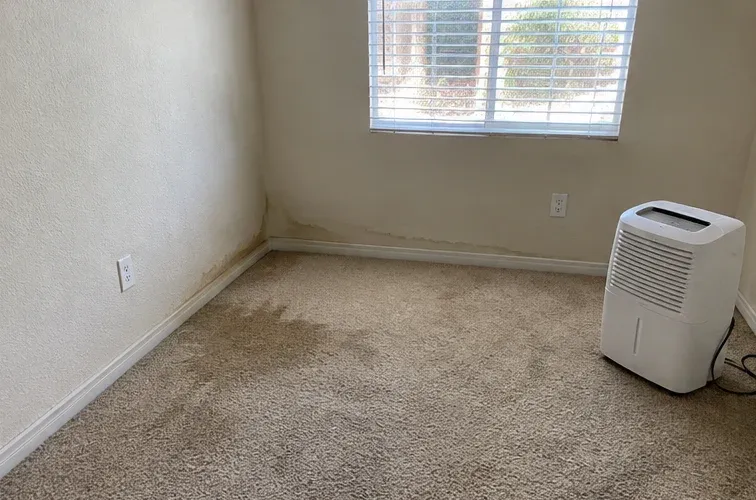
Empty room with beige carpet showing a darker damp patch along the baseboard, a white portable dehumidifier at the right and a window with blinds

05 / Good to know

What survives and what does not

MaterialDried within 24 to 48 hoursWet longer
DrywallSometimes, if caught early and dried throughUsually cut out
InsulationRarely worth savingReplace
Carpet padUsually replacedReplace, along with carpet
CarpetCan be dried with air movementOften replaced
Wood framingDries and can be cleanedMay need removal if soft
Cabinet boardSwells at the seamsReplace
Concrete, tile, glassDriesClean and dry

The pattern is porosity. Hard surfaces give water back. Porous materials hold it, and pressed board swells and stays swollen.

06 / Local risk

Why Arizona heat does not solve this

Tempe is dry most of the year, and that helps a wet patio. It does not help a wall cavity. Drywall in a closed room dries from the surface inward, and the paper face can look and feel dry while the gypsum core and insulation behind it stay damp.

Two local factors work against the dry air. Monsoon season, June 15 to September 30, raises outdoor humidity, so ventilation brings moisture in rather than taking it out. And an evaporative cooler adds moisture to the indoor air by design, which is the last thing a wet room needs. During a water event in a cooler house, the cooler should stay off until the room is dry.

07 / Good to know

What "dry" actually means

Dry is a reading, not an opinion. A meter that shows the suspect area at the same level as a known dry area in the same room is the standard. A thermal camera can show where the wet patch is, but it does not replace the meter.

Write the readings down with the date and the location. If a landlord asks whether the unit was dried, the readings are the answer.

08 / Services

When to call for help instead of drying it yourself

Some water events are bigger than a fan and a dehumidifier:

  • Water under a slab, which usually means a slab leak and a continuous source.
  • A ceiling that sags or a wall that bulges.
  • Water that reached more than one room.
  • Sewage or gray water from a drain backup.
  • A leak that has recurred in the same place.
  • A rental where the landlord controls the repair.

The slab leak guide and the monsoon roof leak guide cover those two sources in detail. For anything that has been wet for more than 2 days, a moisture inspection can be cheaper than guessing.

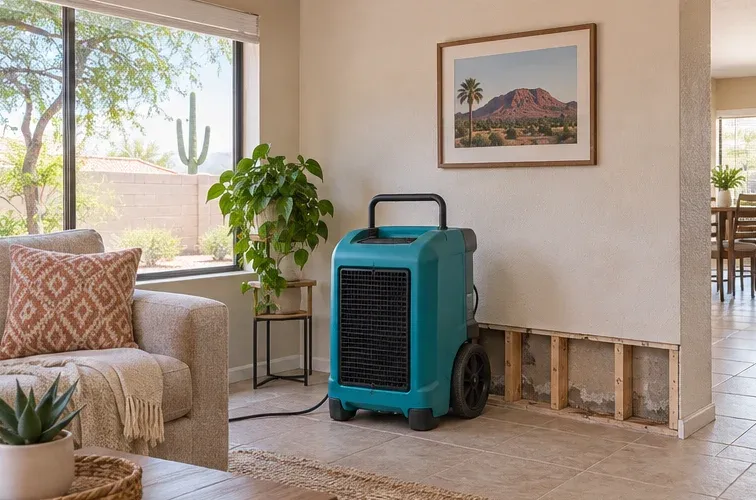
Teal dehumidifier running in a living room with the lower wall opened at the baseboard, a sofa with patterned pillows and a framed desert print

10 / 5 questions

Frequently asked questions

Still have a question?

Send the form. Someone from our team will call you back soon.

Get a call back

Q.01

Does mold start growing at exactly 48 hours?

There is no exact hour. The 24 to 48 hour window is the EPA's drying guidance, not a growth clock. The longer a porous material stays wet, the more likely growth becomes, and the window is the point where drying in place stops being realistic.

Q.02

Can I dry a wet wall with a fan alone?

A fan moves air across the surface. It does not pull moisture out of a cavity or lower the humidity in a closed room. A dehumidifier and an open cavity do more, and a meter tells you when to stop.

Q.03

Should I open the windows to dry a room in Tempe?

In dry months it can help. During monsoon season the outdoor air is humid, so a closed room with the AC and a dehumidifier usually dries faster than an open window.

Q.04

What if the water was clean?

Clean water still wets the same materials. The drying window is the same. What changes is the amount of cleaning needed on hard surfaces after they dry, not whether the assembly has to dry.

Q.05

Will homeowners insurance cover the drying?

That depends on the policy and the cause, and it is not a mold question. Photograph everything, keep receipts and call the insurer early. The scope and the meter readings are the documents an adjuster will ask for.

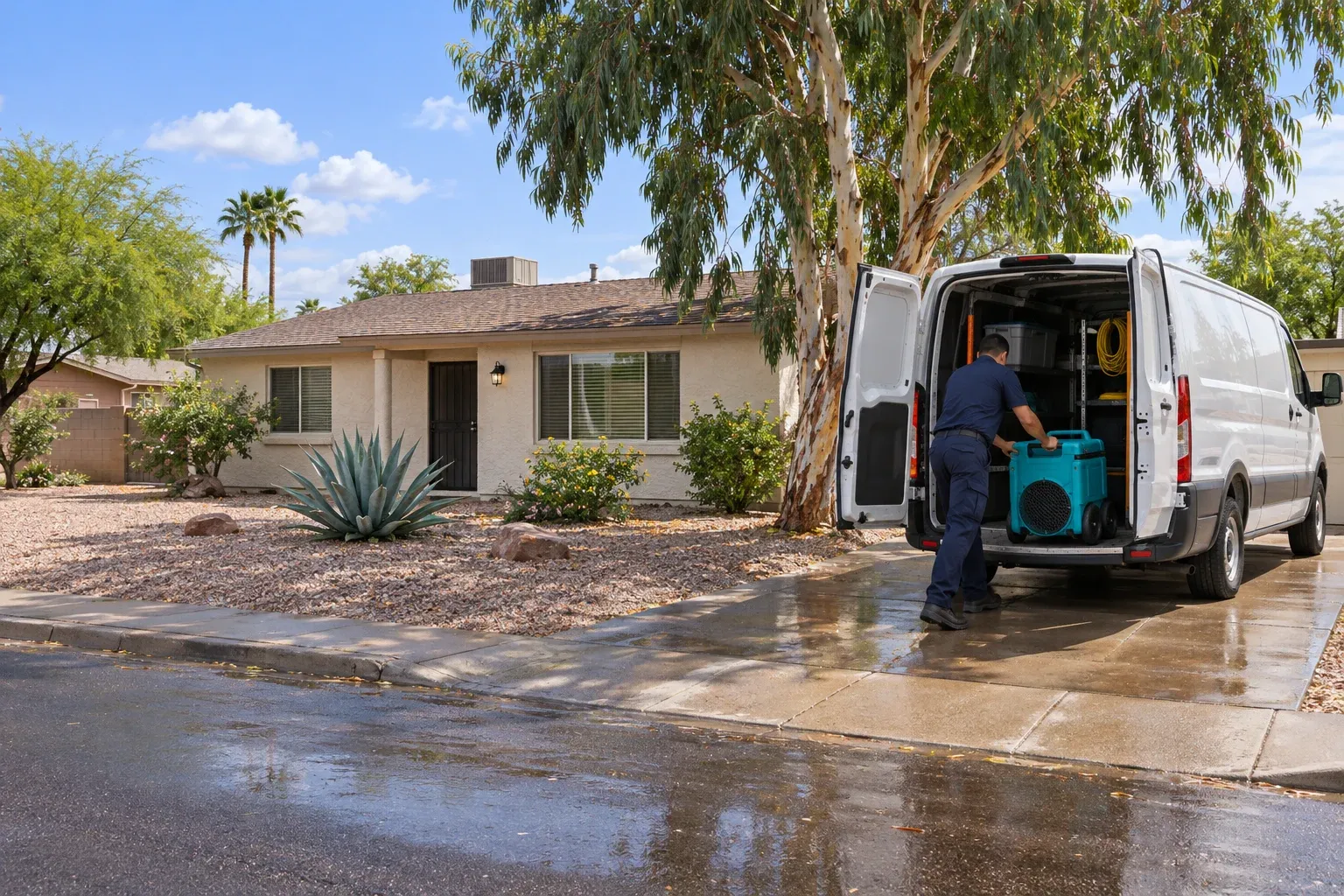
White cargo van with its rear doors open in a driveway, a man in navy work clothes wheeling a teal air machine out in front of a ranch house

Form open 24/7

Get a call back about mold in your home

Send the form. Someone from our team will call you back soon.

Mold in the house?Get a call back

Before you go: want a call back?

Send the request form and someone will call you back about the mold.

Get a call back

Get a call back

Send the form and someone from our team will call you back.