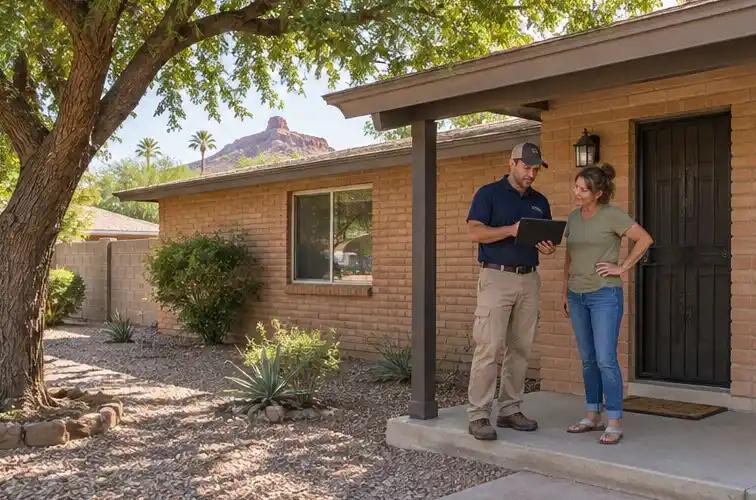
Man in a navy shirt holding a tablet talks with a woman on the walkway of a brick ranch house with a shade tree and a gravel yard

Tempe guide · 6 min read

Landlord Mold Checklist

The cheapest mold repair is the one found at turnover, with the unit empty and every cabinet open.

This checklist covers where to look and what to write down.

A landlord mold checklist for a Tempe rental works best at turnover, when the unit is empty and every cabinet is open. The list is short: water under sinks, the AC drain pan, the water heater closet, the bathroom fan and ceiling, the ceiling below the roof line, and the base of walls that back onto a bathroom. Photograph each spot, take a moisture reading, and fix the source before the next lease starts.

Timing matters because so many Tempe homes are rented. ACS 2024 5-year data counts 78,279 occupied homes, 57.7 percent rented, and 41.2 percent built before 1980. A 45-year-old supply line or a roof flashing patched twice can fail again, and the turnover window is when the repair is cheapest. Once a tenant lives with the result, the same job includes containment and schedule coordination.
01 / Good to know

The turnover walk, area by area

Set aside 30 minutes with a flashlight, a moisture meter, a phone and a notepad. Work from the wettest room to the driest so you do not track moisture through clean rooms.

  • Under every sink. Run the faucet, fill the bowl, then look at the supply line, the shutoff, the P trap and the cabinet base. A dark stain on the cabinet floor is a leak that has been running for a while.
  • Behind and beside each toilet. Check the flange, the supply line and the base of the wall. Rock the bowl gently and look for a wet ring at the floor.
  • The AC air handler and drain pan. Look for standing water, rust lines, a pan that drains uphill, and a condensate line with visible growth in it.
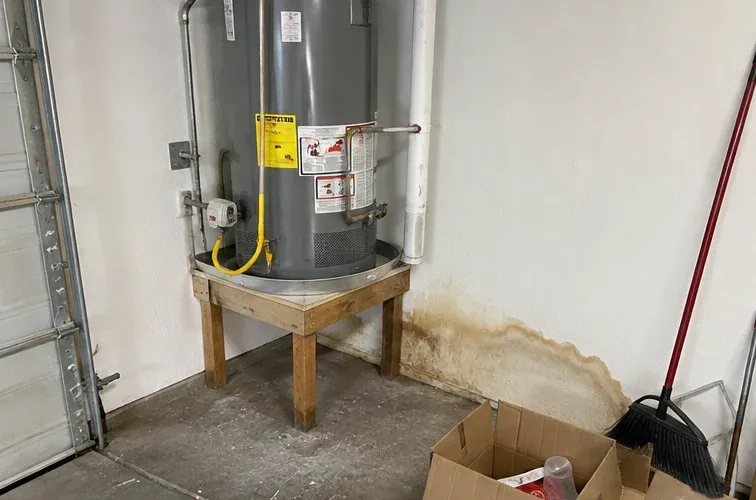
  • The water heater closet. Check the pan, the temperature and pressure valve, the fittings, the floor and the drywall behind the tank.
  • The bathroom ceiling and fan. Look for staining, peeling paint, a noisy fan, and a duct that ends in the attic instead of at the roof or wall.
  • The ceiling below the roof line. Look for brown rings, bubbling paint, a sag, or a dark line where the wall meets the ceiling.
  • Window frames and stucco after monsoon. Check cracked sealant and water tracks on the interior sill.
  • The refrigerator ice maker line and the dishwasher supply. A slow drip often shows only as a dark cabinet floor.
  • Carpet edges and baseboards in rooms that share a wall with a bathroom. A musty smell at the tack strip points at wicking from a wet wall or slab.

Write the readings and date on a sheet for the unit. A number from last year beats a memory of a smell.

Water heater on a wooden stand in a garage, brown water staining climbing the wall behind it, a broom and a cardboard box on the concrete

02 / Good to know

What the evidence usually means

What you seeUsual causeFirst move
Brown ring on a ceilingRoof or flashing leakRoof inspection before any drywall work
Wet cabinet floor under a sinkSupply line or P trapPlumber, then dry the cabinet
Rust in the AC drain panPan crack or clogged lineClear the line, check the pan
Musty smell at a carpet edgeWicking from a wet slab or wallMap the moisture across the floor
Peeling paint above a showerFan not moving airCheck the fan and the duct path

Two of these are not mold jobs until the water stops. A roofer and a plumber come before a remediation company, and the order should appear in the work order so nobody removes drywall over an active leak.

03 / 5 steps

The order of work

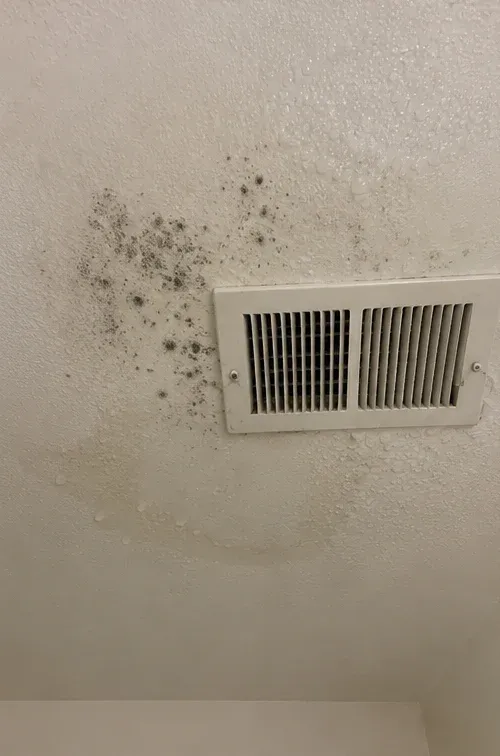
White wall with dark mold spots around a metal floor vent register
  1. Stop the water

    Plumber, roofer or appliance vendor, depending on the source.
  2. Dry the structure

    Air movers and a dehumidifier, with the EPA window of 24 to 48 hours in mind.
  3. Remove what cannot be dried

    Drywall, insulation, cabinet board, carpet and pad.
  4. Clean and verify

    HEPA vacuuming, surface cleaning, and a visual or clearance check before the wall closes.
  5. Rebuild and re-let

    Paint, trim and a final photo set.

Compressing steps 1 and 2 is a common way a small repair becomes a full room. Drywall over a wet cavity looks finished and can fail within weeks.

04 / Paperwork

What the vendor scope should name

A scope usually names:

  • the rooms and the square footage involved
  • what will be removed and what will stay
  • containment and negative air, with the work area defined
  • who repairs the moisture source, as a separate line item
  • the drying plan and the expected number of days
  • the verification step before rebuild
  • photo documentation at the start and at the end
  • debris removal and disposal

The Arizona contractor license page covers when a contractor license applies.

05 / Good to know

The file to keep per unit

The unit file is what turns a repair into a record. Keep:

  • photos, sorted by date
  • moisture readings with the date and the room
  • every notice from the tenant, and every reply
  • work orders, invoices and the scope
  • the verification or clearance document
  • one sentence on the cause

At the next turnover, the file answers the question before a tenant asks it. It also supports the conversation if the unit is ever sold, because a buyer will ask what was wet and what was done.

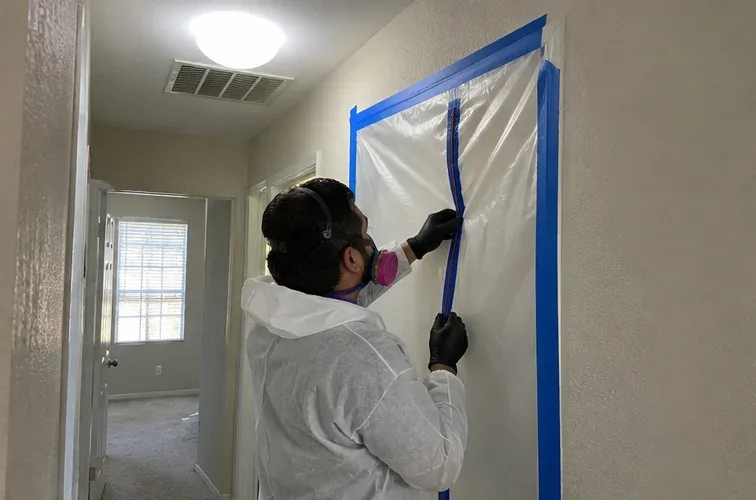
Worker in a white suit and respirator taping plastic sheeting over an apartment doorway with blue tape, a ceiling vent above

06 / Sources

When the building is the source

Roof leaks, shared walls and common pipes are building issues, not unit issues. In a condo or HOA property, the declaration decides who repairs what, and the association may own the roof or the pipe even when the damage appears inside the unit. Report in writing to the board, keep the date, and get the association's scope before authorizing work. The HOA guide covers that boundary.

In a shared building, the water can start in the unit above, beside or below. A ceiling stain in one unit and a dry pan in the same unit usually means the source is upstairs. The neighbor unit guide walks through the source conversation.

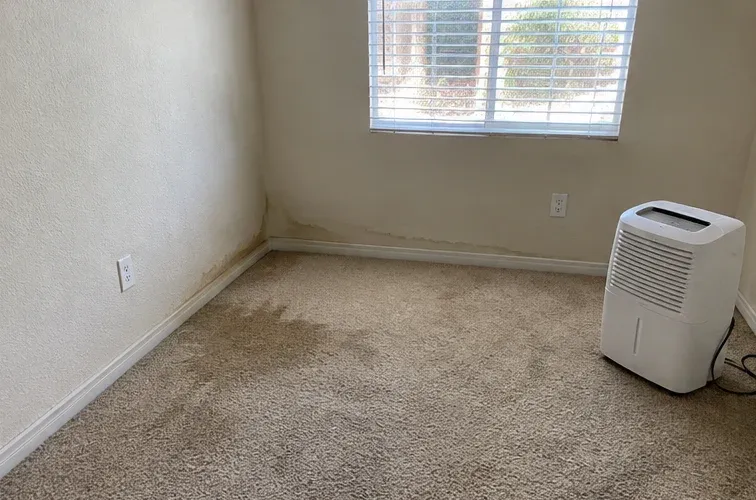
Empty room with beige carpet showing a darker damp patch along the baseboard, a white portable dehumidifier at the right and a window with blinds

07 / Good to know

Two mechanical checks worth doing every year

The AC drain line and the water heater closet are common sources of the interior moisture a landlord sees, and both are cheap to check.

On the AC, tip a cup of water into the pan and watch how fast it drains. If it drains slowly, the line is partly blocked, and the next clog will overflow into the closet or the ceiling. On the water heater, look at the pan for standing water and at the base of the tank for rust. A pan that is dry but stained has already overflowed once.

Neither check needs a tool beyond a flashlight and a cup of water, and both take less than five minutes. Repaint only after a repair has dried, using a stain blocking primer on a ceiling that was wet, never on an active leak.

09 / 6 questions

Frequently asked questions

Still have a question?

Send the form. Someone from our team will call you back soon.

Get a call back

Q.01

How often should a landlord inspect for mold in Tempe?

At every turnover, and after any monsoon storm or plumbing repair. Between tenants the unit is empty and every cabinet and closet is visible, which is when moisture problems are easiest to find and cheapest to fix.

Q.02

Does every turnover need a mold inspection?

No. A visual walk with a moisture meter catches many problems. A mold inspection makes sense when there is visible growth, a musty smell that does not clear with ventilation, or a leak that ran for more than a couple of days.

Q.03

Can a landlord just paint over mold?

Paint over active growth traps the stain and leaves the moisture in place. Fix the source, dry the material, remove what cannot be dried, then prime and paint. If growth returns through new paint, the source was not fixed.

Q.04

What should a landlord do when a tenant reports mold?

Respond in writing, inspect within a stated time, and put the repair plan in writing. Keep the tenant photos with the work order. A.R.S. 33-1324 requires fit and habitable premises, but the statute does not name mold.

Q.05

Who pays for the inspection?

That is a lease and negotiation question. National inspection ranges run about $300 to $1,000 (national cost guides). On a unit with a known leak, an inspection can be cheaper than removing drywall twice.

Q.06

Should the tenant move out during the work?

For a contained bathroom or closet job, usually not. For a room with extensive demolition, the answer may be different. The written scope can state the access and occupancy plan before the start date.

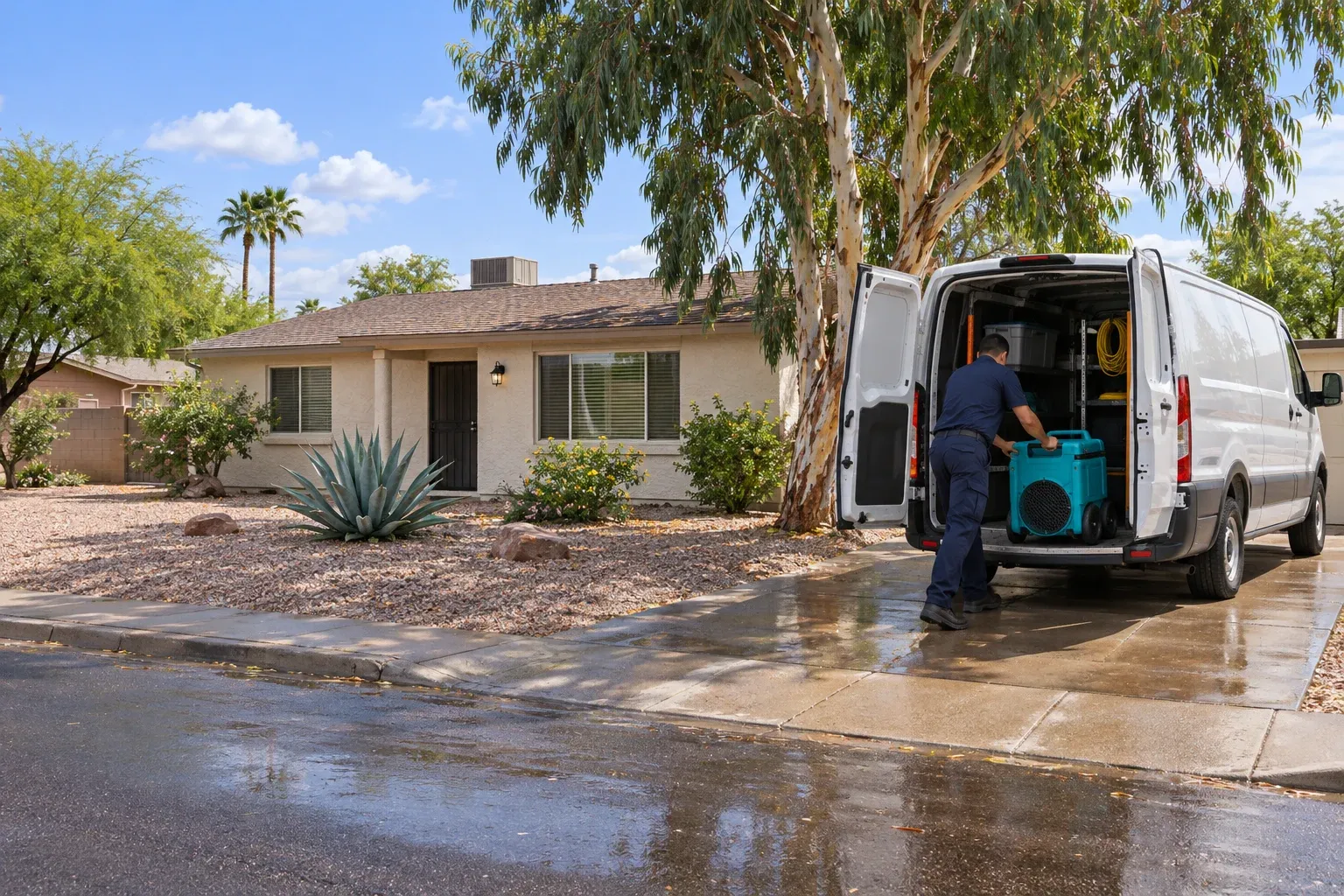
White cargo van with its rear doors open in a driveway, a man in navy work clothes wheeling a teal air machine out in front of a ranch house

Form open 24/7

Get a call back about mold in your home

Send the form. Someone from our team will call you back soon.

Mold in the house?Get a call back

Before you go: want a call back?

Send the request form and someone will call you back about the mold.

Get a call back

Get a call back

Send the form and someone from our team will call you back.