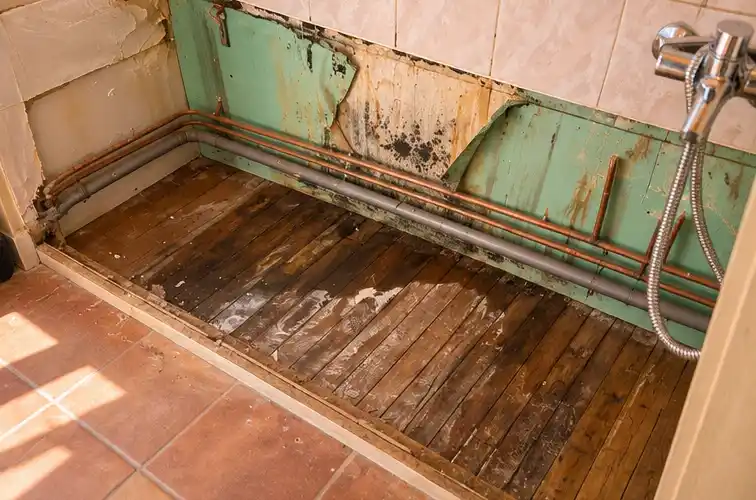
Opened shower wall showing dark mold and rust stains on the wood backing, a green wall panel and shower arm at the right, tile floor below

Tempe guide · 6 min read

Student Apartment Mold Tempe, AZ

Summer vacancy sets up mold in Tempe student rentals.

The unit sits empty through June and July, the AC is off, and the monsoon runs. By August, the bedroom smells musty and the bathroom ceiling has spots. That is the usual shape of student rental mold in Tempe, and the first question is not how to clean it. It is who on the lease reports it, because a joint lease and a by-the-bedroom lease produce very different notice trails.

In the ZIP code area that covers most of the Arizona State University area, 85281, ACS 2024 5-year data shows 76.3 percent of homes rented, 57.6 percent in buildings of 5 or more units, and 33.4 percent built before 1980. More than three in four homes are rentals, and many of them sit empty for part of the summer while the lease keeps running.
01 / Local risk

Why an empty summer unit grows mold

A closed unit in Tempe in July is a humidity box. The AC that normally pulls moisture out of the air is off or set high, the doors stay shut, and the monsoon adds water from outside. EPA guidance keeps indoor humidity below 60 percent, ideally 30 to 50 percent, and a unit with no cooling and no airflow can sit above that for weeks.

The moisture usually arrives in one of four ways:

  • A monsoon roof or window leak that drips into an empty room and dries before anyone sees it.
  • An AC condensate line that clogs while the system runs hard in June and July.
  • A bathroom with no fan, or a fan that vents into the attic, where showers run every morning during the semester.
  • A supply line or water heater fitting that lets go in a unit where nobody is watching the floor.

None of these need a tenant to cause them. They need a tenant to report them, and in June the tenant is often in another state.

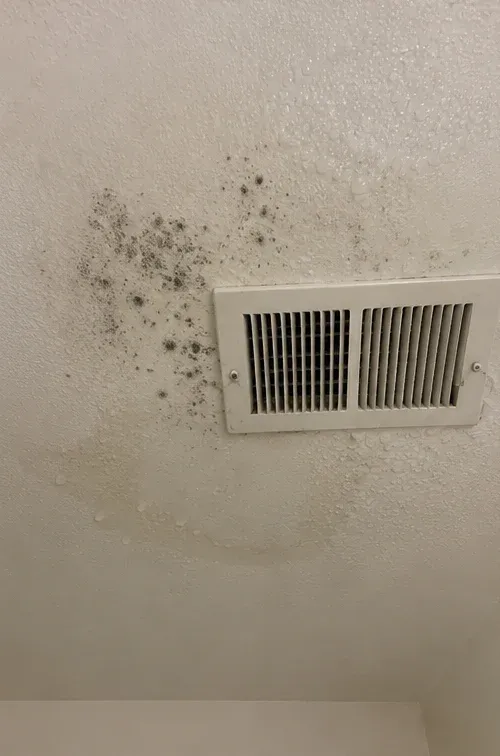
White wall with dark mold spots around a metal floor vent register

02 / Good to know

Who reports it on which lease

Student housing in Tempe is rented under several lease shapes, and the shape decides how notice works. The table is a general guide, not an interpretation of any specific lease.

Lease shapeWho can give noticePractical move
Joint lease, every roommate namedAny tenant can reportReport in writing and copy every roommate on the message
By-the-bedroom leaseEach tenant for their own room, manager for common areasReport the bedroom and the hallway or bathroom in separate messages
Sublet from a tenantThe tenant on the leaseSubtenant reports to the tenant, who reports to the owner or manager
Parent paying the rentThe student named on the leaseParent can help photograph and write, but notice should come from the tenant

On a joint lease, one message from one roommate can count as notice from the household, depending on the lease. That is useful, and it is also a trap: a roommate who reports a leak and gets no answer may assume someone else is handling it. Put the report in a shared folder and name one person to follow up each week.

03 / Good to know

The August walkthrough

Do this in the first hour, before furniture covers the evidence. Photograph each item and keep the set with the move-in condition report.

  • Mattress and box spring pulled away from exterior walls, looking for condensation or spotting on the wall behind.
  • Closet floors, especially closets on exterior walls, where the drywall stays cool.
  • The bathroom ceiling, the paint above the shower, and the fan grille.
  • Window sills and the track below each window, after a storm if possible.
  • Under the kitchen sink, around the disposal and the dishwasher connection.
  • The AC filter, the return grille and any closet that holds the air handler.
  • Carpet edges in bedrooms that share a wall with a bathroom.
  • A smell check in each room with the door closed for a few minutes.

If a room smells musty and nothing is visible, write that down. A smell note with a date is useful later, even if it proves nothing on its own.

04 / 6 steps

What to send when you find it

A student tenant report should be short enough that a manager reads it and complete enough that it becomes a work order. Include:

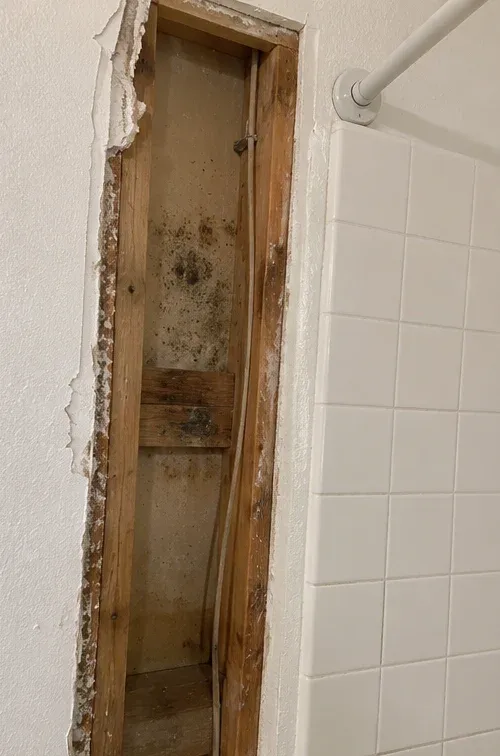
Opened shower wall cavity with wood framing and dark mold above a white tile surround
  1. The unit number and the room, not just the building address.
  2. The date the growth was first seen, and the date of any storm or repair before it.
  3. Photos with something for scale, plus one wide shot that shows the room.
  4. The moisture source if visible, such as a drip, a stain or a wet carpet edge.
  5. A specific request

    inspection, source repair, or both.
  6. A request for a written repair date.

Send it through the portal if there is one, and by email if the portal does not confirm receipt. Keep every reply. The rental mold guide covers the same steps for a single-tenant unit.

05 / Good to know

Roommate habits that create the problem

Some of the moisture in student rentals is behavioral, and it is worth naming without turning into a house meeting about blame.

  • The AC gets switched off when the last roommate leaves for a break, and the unit sits closed for two weeks.
  • A shower runs with the door open and the fan off, every morning, for a semester.
  • A slow leak under the sink gets a towel under it instead of a work order.

A short written house rule helps: report any leak the day you see it, keep the AC at a set point when the unit is empty, and run the bathroom fan during and after showers. Who pays for damage is a lease question, and a written record of when the problem was reported is the part a tenant controls.

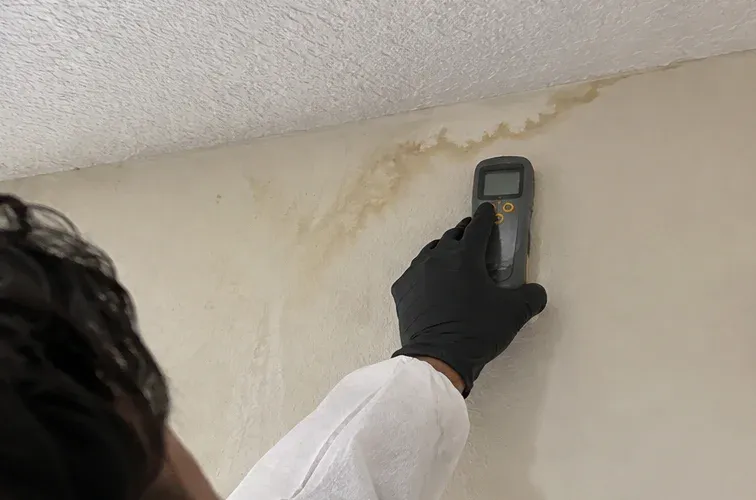
Gloved hand holding a moisture meter against a wall with brown water stains below a textured ceiling

06 / Good to know

Summer vacancy and sublets

A vacant summer room is the highest risk period of the student rental year. Four habits reduce it:

  • Leave the AC on at a set point rather than off. The system removes moisture even when the unit is empty.
  • Ask the manager in writing for a mid-summer walkthrough, especially after a storm.
  • Photograph the room before leaving, including the closet, the window and the wall behind the bed.
  • Give the manager a local contact who can let a vendor in.

A subtenant should get the same move-in photo set and the same reporting instruction. If the subtenant reports a leak to the tenant and the tenant does not pass it on, the delay lands on the leaseholder.

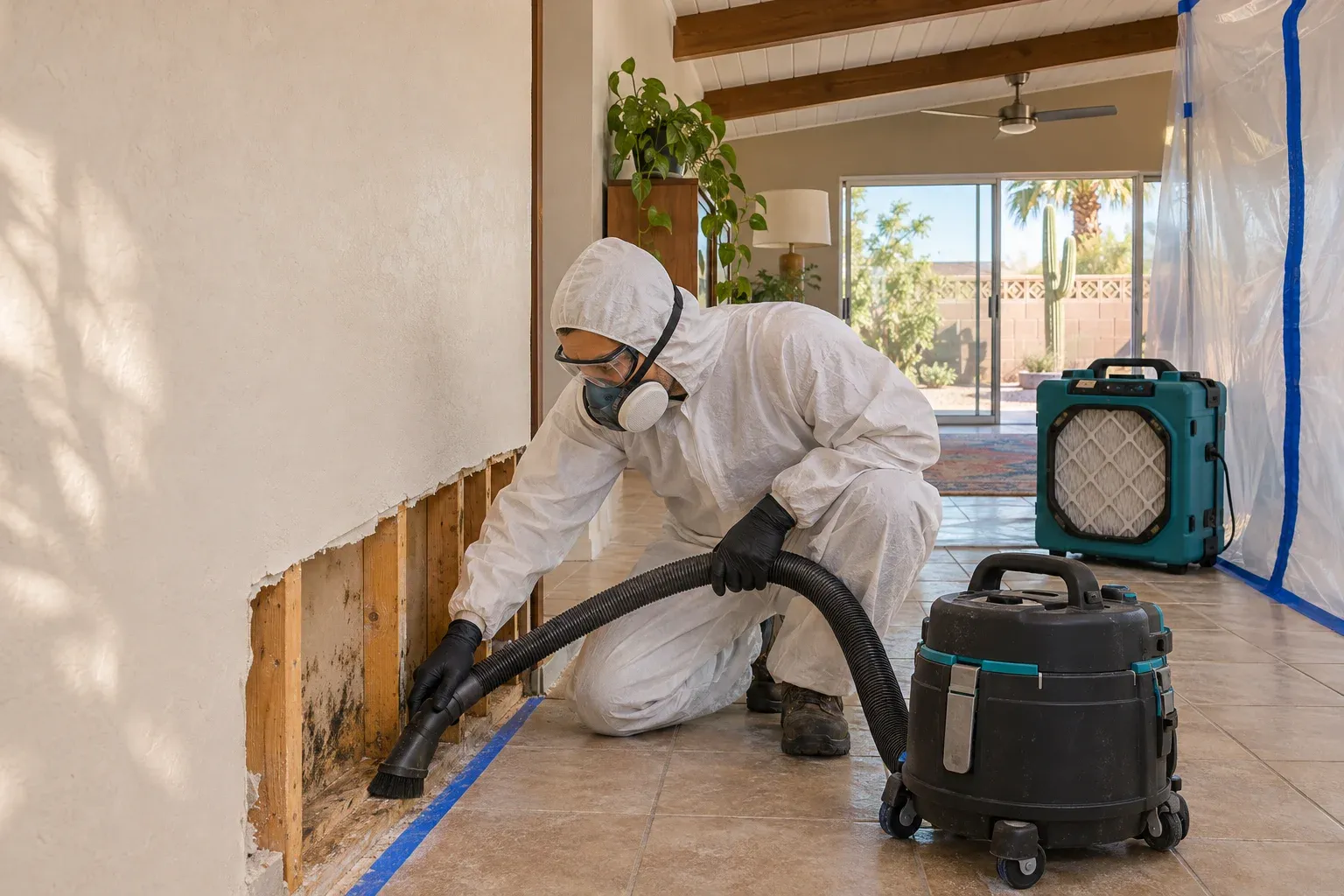
Worker in a white protective suit and respirator vacuuming along an opened lower wall, a teal air scrubber and blue-taped plastic sheeting behind

07 / Good to know

When the work starts

Remediation in a shared unit is a scheduling problem as much as a construction problem. The scope should name the rooms, the containment boundary, and the days when each roommate needs to be out of the way. A contained bedroom or bathroom job and a job that opens a shared wall can need different access, so the scope should say which rooms are involved.

The scope should be in writing before containment goes up and should say how the work is verified before the wall is closed. The bathroom mold page covers the most common student rental job in more detail.

09 / 6 questions

Frequently asked questions

Still have a question?

Send the form. Someone from our team will call you back soon.

Get a call back

Q.01

Is mold common in Tempe student rentals?

It is common enough that the summer vacancy is the risk period. More than three in four homes in the 85281 ZIP code area are rented, and many sit closed for weeks between semesters while the monsoon runs.

Q.02

Can one roommate report mold on a joint lease?

Often, depending on the lease. One tenant can usually start the notice for the household. Copy every roommate on the message and keep the reply in a shared folder so the follow-up does not depend on memory.

Q.03

What if the landlord says the tenant caused it?

Then the cause matters more than the argument. Photos, dates and moisture readings are the evidence. Ask for the cause in writing and compare it to the repair records.

Q.04

Should a student pay for a mold inspection?

Only with a reason. National inspection ranges run about $300 to $1,000 (national cost guides). If the growth keeps returning or the landlord disputes the cause, an independent report can settle the question before a deposit is withheld.

Q.05

Can the unit stay occupied during remediation?

The containment, access and occupancy plan belongs in the written scope. Follow any instruction from the property manager.

Q.06

What about a subtenant who finds mold?

The subtenant should report to the tenant on the lease in writing, with photos, and the tenant should pass it to the owner or manager that day. Keep both messages.

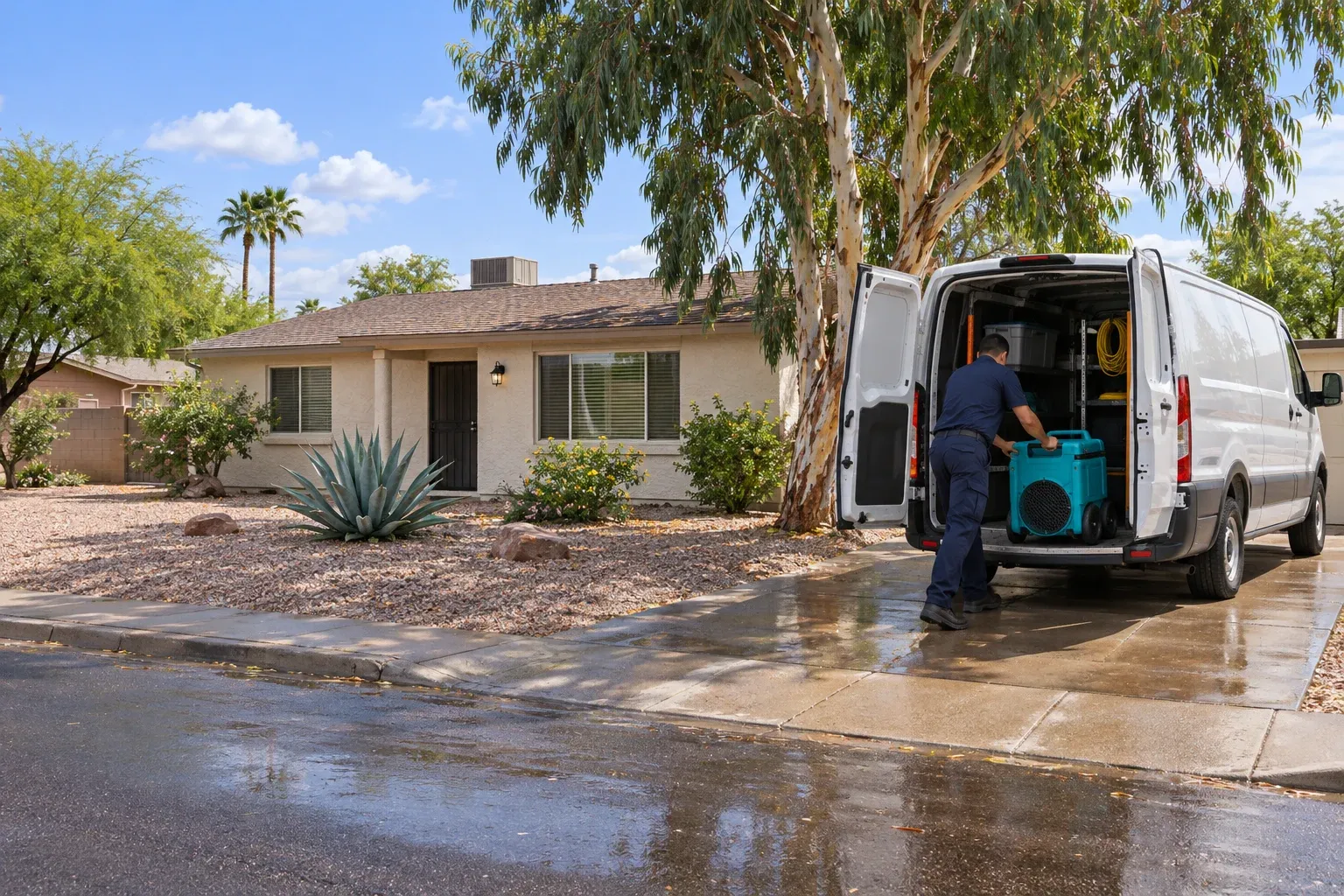
White cargo van with its rear doors open in a driveway, a man in navy work clothes wheeling a teal air machine out in front of a ranch house

Form open 24/7

Get a call back about mold in your home

Send the form. Someone from our team will call you back soon.

Mold in the house?Get a call back

Before you go: want a call back?

Send the request form and someone will call you back about the mold.

Get a call back

Get a call back

Send the form and someone from our team will call you back.