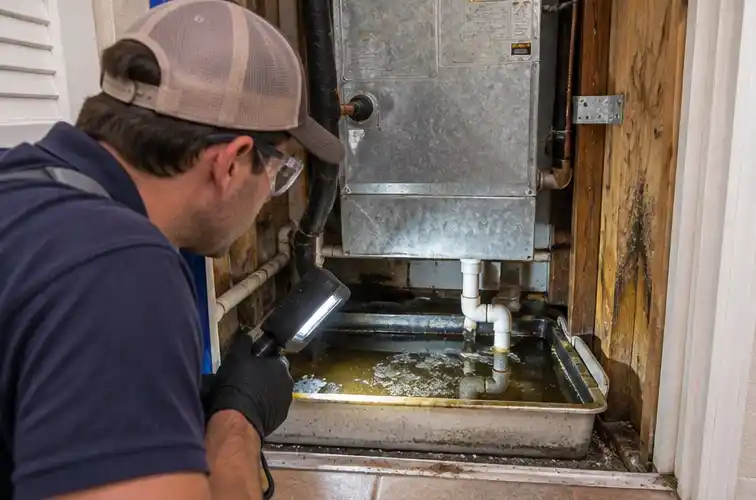
Man in a cap and safety glasses shining a flashlight into an air handler drain pan holding standing water, white drain pipes and a stained wall beside it

Tempe guide · 6 min read

Selling a House With Mold

Selling a Tempe home with mold comes down to three decisions: find the moisture source, choose between a repair and a credit, and put what you know in a written disclosure.

A buyer's inspector will see the stain on the ceiling or smell the closet, so a silent listing can trade a small repair for a large renegotiation. Handling it before the listing gives the seller control of the scope, the schedule and the paperwork.

The local housing stock makes this a common situation. ACS 2024 5-year data puts 41.2 percent of Tempe homes at pre-1980 construction and the median owner-occupied value at $455,400. Older roofs, older plumbing and older air handlers are common sources a buyer's inspector may flag, and each one can leave a stain that outlives the leak.

01 / Good to know

What a buyer's inspector looks for

A general home inspector is not a mold inspector, but the report will note the conditions that suggest moisture. Expect notes on:

  • staining or bubbling on ceilings, especially below a bathroom or the roof
  • a musty smell in closets, the garage or a bedroom with an exterior wall
  • peeling paint or soft drywall at the base of a wall
  • rust or standing water in the AC drain pan
  • a water heater pan with stains or a corroded fitting
  • caulk and grout failures in a bathroom, with staining at the curb
  • roof flashing, underlayment and stucco cracks after monsoon

An inspector may recommend further evaluation rather than name mold. That recommendation is what a buyer uses to reopen the price, so it is better to have the answer before the report arrives.

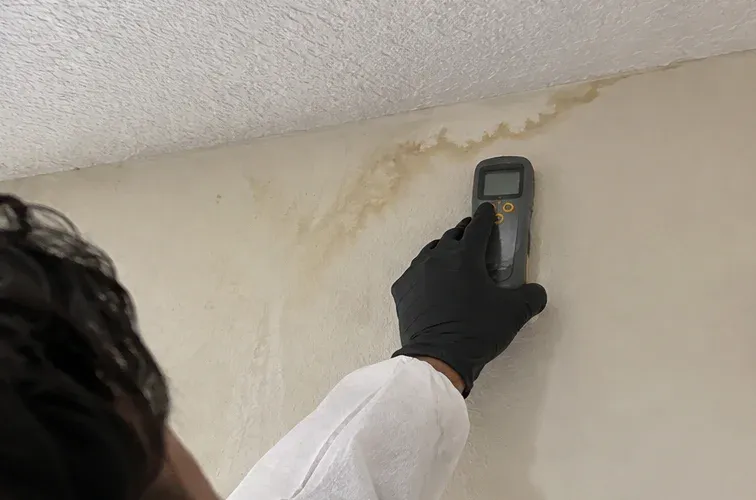
Gloved hand holding a moisture meter against a wall with brown water stains below a textured ceiling

02 / Costs

Repair, credit or price reduction

ApproachWhat it looks likeTrade-off
Repair before listingFix the source, remediate, rebuild, keep the fileHighest cost control, cleanest showing
Repair during escrowBuyer approves the scope, seller paysSlower closing, buyer watches every step
Credit at closingSeller gives money, buyer handles the workFast, but the credit can be larger than the repair
Reduce the priceListing reflects the conditionAttracts buyers who want a project

A credit is not automatically cheaper. Buyers can discount a known problem by more than the repair would cost, because they are pricing the risk and the inconvenience. A seller with a documented repair and a verification note is in a stronger position than one offering an allowance.

03 / 3 steps

What the disclosure should say

Arizona residential resale usually runs on a seller disclosure form, and the purchase contract adds its own questions. The form and the contract set what must be answered. A seller with a question should ask the agent or a real estate attorney.

Three rules make the answers easier to write:

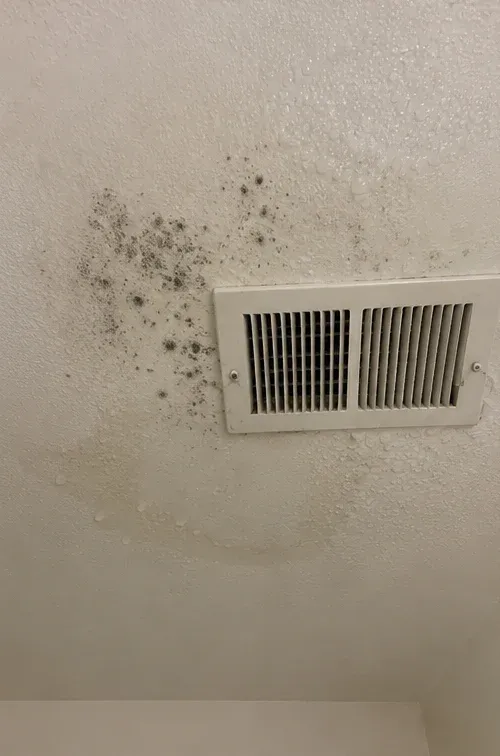
White wall with dark mold spots around a metal floor vent register
  1. Describe the condition, not a diagnosis

    "Staining on the hall ceiling below the second bathroom, repaired in 2024 after a supply line failure" is a fact. "No mold" is a conclusion the seller cannot support.
  2. Name the repair and the date

    A buyer who sees a receipt and a scope is less worried than one who sees a fresh coat of paint.
  3. Attach the documents

    The inspection, the scope, the invoice and any verification note belong with the disclosure, not in a drawer.

A seller who has never had the growth tested should not write that the home is free of mold. A seller who has a report should not summarize it in a way that goes beyond what the report says.

04 / Good to know

The file that supports the sale

Sellers who remediate before listing should build the same file a landlord keeps for a rental unit.

  • photos of the condition before any work
  • the moisture readings and the source finding
  • the scope with square footage and materials
  • the invoice
  • the verification or clearance document
  • photos of the finished repair
  • one paragraph on the cause and the fix

That file does three things. It answers the buyer's request for information, it supports the seller's answer on the disclosure form, and it shortens the appraisal and insurance questions that can stall a closing. At closing, hand a copy to the buyer. The next owner gets a baseline for the next repair, and the seller has a record that the condition was disclosed and fixed.

05 / Good to know

A pre-listing inspection is usually the cheaper path

A mold inspection runs about $300 to $1,000 (national cost guides) nationally. Remediation runs about $1,500 to $9,000 for a typical job, with whole home work at $10,000 to $30,000 and attic work at $1,500 to $9,000. The cost page has the full table by room and by square foot.

The inspection is worth it when there is a stain with no known cause, a musty smell that does not clear, or a leak that was repaired without opening the wall. It is not worth much when the growth is visible, the source is known and the repair is already scheduled. Sampling is usually unnecessary in that case, because there is no federal health-based standard to compare a sample against.

The mold testing page explains what a report contains.
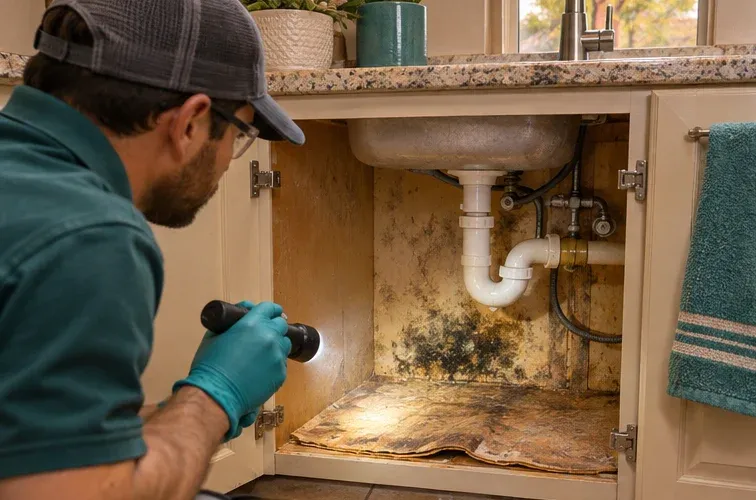
Man in a teal polo shining a flashlight at dark mold on the floor of an under-sink cabinet, a teal striped towel hanging at the right

06 / Safety

Fresh paint is not a repair

The most expensive mistake in a pre-sale cleanup is paint over active growth. It looks finished for a month and then returns, usually during the buyer's first monsoon. A buyer who finds a bloom under new paint has a much stronger complaint than one who was told about a 2023 leak.

The order is: stop the water, dry the cavity, remove the material that stayed wet, clean, verify, then prime and paint. Anything short of that sequence is cosmetic.

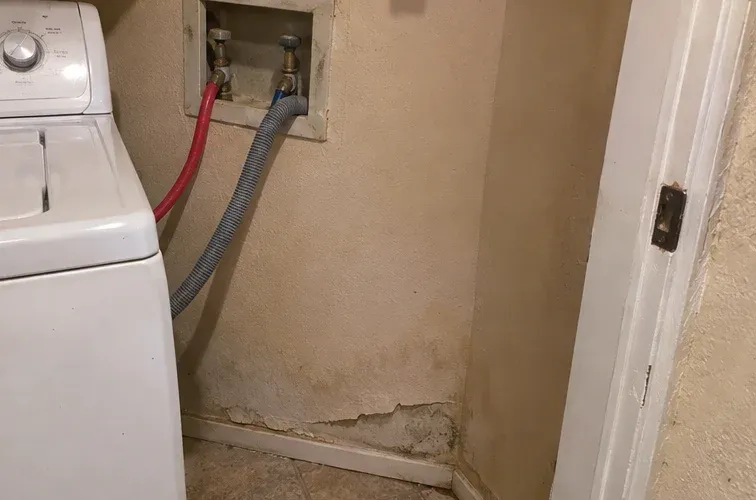
Laundry hookup with red and gray hoses behind a white washer, brown water stains and dark spots on the wall below

07 / Property types

If the property was a rental

A rental property for sale adds a second layer. The unit may have a history of tenant reports, and the buyer may ask for them. The landlord mold checklist covers the turnover file, and the rental mold guide covers the tenant notice trail. Both are useful at closing, because a buyer who sees a documented process tends to ask fewer questions about the walls.

A tenant in place during a sale has rights under the lease and under A.R.S. 33-1324, which requires fit and habitable premises but does not name mold. Showings and repairs should be scheduled with the lease in mind.

09 / 6 questions

Frequently asked questions

Still have a question?

Send the form. Someone from our team will call you back soon.

Get a call back

Q.01

Does a seller have to disclose mold when selling a house in Tempe?

Arizona resale usually includes a seller disclosure form, and the purchase contract adds questions of its own. The form sets what must be answered, and a seller should answer factually about conditions and repairs. Ask the agent or a real estate attorney about a specific transaction.

Q.02

Will mold stop a buyer from getting a mortgage?

It can complicate the appraisal or the insurance questions, depending on the lender and the condition. A documented repair with a verification note is the usual way to keep the file moving.

Q.03

Should a seller test before selling?

Test when the cause is unknown or the extent is unclear. When growth is visible and the source is known, a moisture inspection and a repair scope usually answer the buyer's question without sampling.

Q.04

Is a credit better than a repair?

A credit is faster, but buyers can discount a known problem by more than the repair costs. A completed repair with documents usually protects the price better. Compare the two numbers before choosing.

Q.05

What if the buyer's inspector finds growth after the contract is signed?

The contract and the inspection contingency set the options. In practice, the seller can repair, credit or renegotiate. A scope and a date from the contractor make the conversation concrete.

Q.06

How long does the work take before a listing?

A contained bathroom or closet job is often a few days plus drying. A room with drywall removal can run a week or more, plus verification. Schedule the inspection first so the scope and the timeline are based on the actual extent.

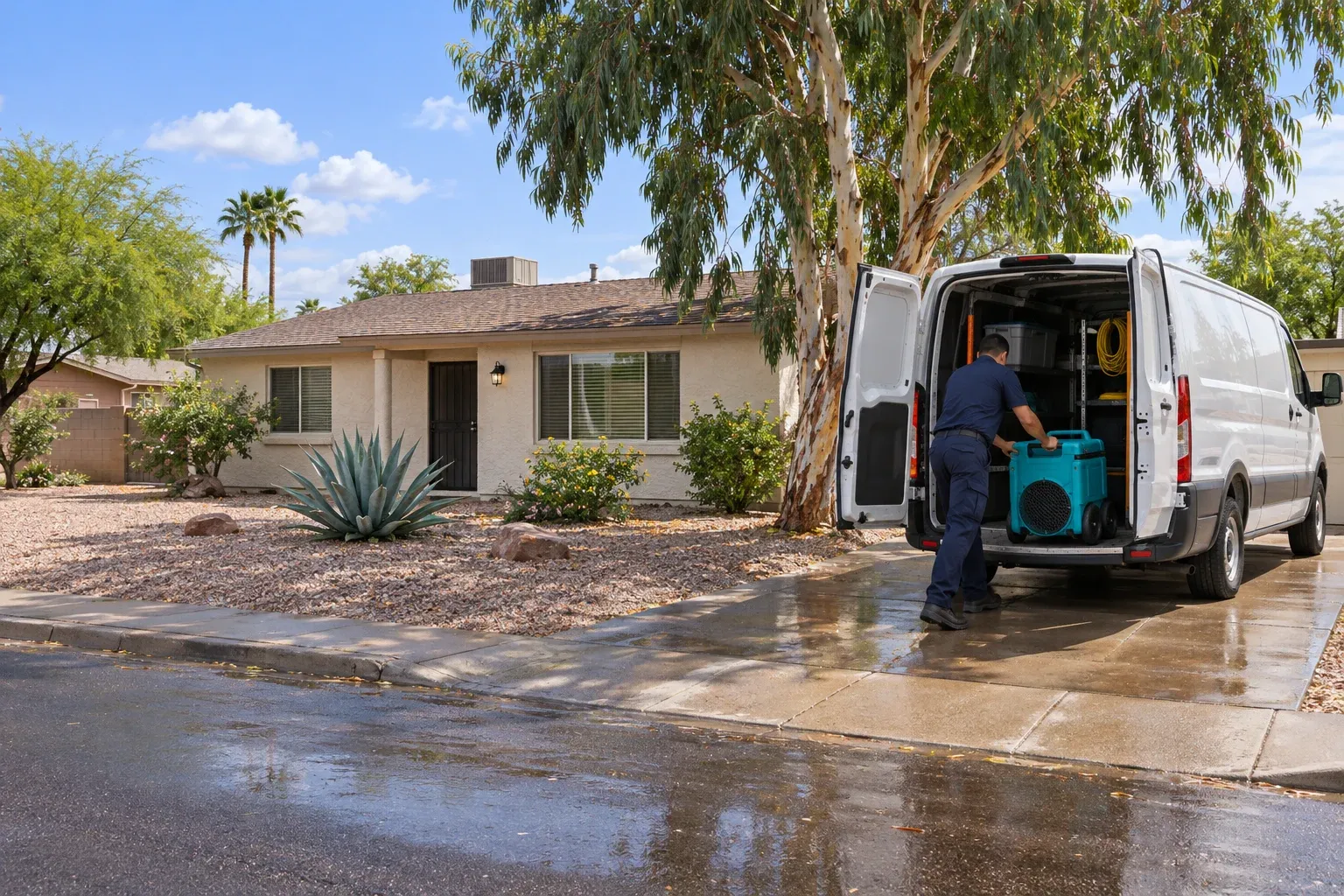
White cargo van with its rear doors open in a driveway, a man in navy work clothes wheeling a teal air machine out in front of a ranch house

Form open 24/7

Get a call back about mold in your home

Send the form. Someone from our team will call you back soon.

Mold in the house?Get a call back

Before you go: want a call back?

Send the request form and someone will call you back about the mold.

Get a call back

Get a call back

Send the form and someone from our team will call you back.