Woman in a teal polo holding a tablet beside an air sampling pump on a tripod in a condo living room with a city skyline and a hill in the windows

Tempe guide · 6 min read

How Long Does Mold Remediation Take?

The removal itself can be quick.

The schedule is set by drying, clearance and reconstruction, and by whether the water source is actually fixed.

A mold remediation timeline in Tempe is not measured by how long the drywall cutting takes. It is measured by how long the assembly takes to dry, how long the lab takes to return a clearance result, and how long reconstruction waits behind both. The EPA publishes one hard number in that chain: water-damaged areas and items should be dried within 24 to 48 hours. Everything else depends on the scope, the material and the access.

That is why two quotes for the same bathroom can promise very different schedules and both be plausible. One prices removal only. The other prices removal plus drying, clearance and a rebuild. The calendar follows the scope.

01 / Local risk

Why there is no single number

Remediation is a sequence of gates, not a task with a fixed duration. Each gate has to close before the next one opens.

  • The water source has to be found and fixed, or the job restarts.
  • The containment has to be built before removal begins.
  • The material has to come out before the cavity can be cleaned.
  • The cavity has to read dry before it can be closed.
  • Clearance has to pass before reconstruction starts.

A job that clears every gate moves quickly. A job that fails one goes back a step. Much of the variation comes from the water and the drying, not from the speed of the work.

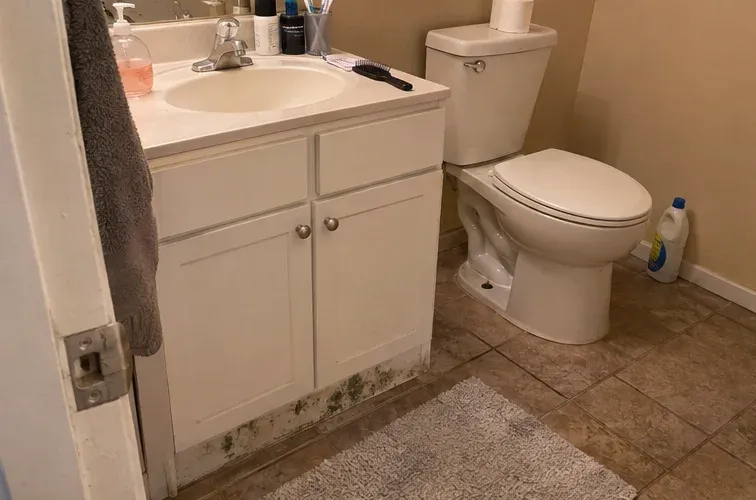
Bathroom with a white vanity, dark mold staining along the vanity base and the wall beside it, a toilet and a gray towel at the left

02 / Good to know

The stages and what starts each one

StageStarts whenEnds when
AssessmentThe request comes inThe scope and the water source are written down
ContainmentThe scope is approvedPlastic is sealed and negative air is running
RemovalContainment is upPorous material is bagged and out of the house
CleaningRemoval is doneStructural surfaces are HEPA vacuumed and wiped
DryingCleaning is doneMeter readings show the assembly is dry
ClearanceDrying is confirmedVisual inspection passes, and samples if required
ReconstructionClearance passesDrywall, trim and paint are restored

Each row is a gate, and the calendar is the sum of the gates plus the waiting between them.

03 / Timeline

The 24 to 48 hour window

The EPA's guidance is specific: dry water-damaged areas and items within 24 to 48 hours. That number is about the water, not the mold. It is the window in which wet drywall, insulation and wood can still be dried instead of removed.

In practice, that clock starts when the water arrives, not when the work starts. A roof leak that ran during a monsoon storm on a Tuesday and is reported on Friday has already spent the window. Material that might have been dried in place now has to come out.

Stop the water, start air movement, and send the form while the assembly is still wet. The mold after water damage page covers the first hours.

04 / Timeline

What adds calendar days

A water source that is not fixed. A common delay. Remediation on a live leak is temporary work, and a good scope will not close the cavity while water is still entering.

A concealed assembly. Growth inside a wall, above a ceiling or under a floor takes longer to access, contain and dry than a surface patch. The attic mold page covers the access problem at the roof deck.

Materials that hold water. Plaster, brick, concrete and dense wood dry more slowly than drywall. A 1950s Tempe house with plaster walls will not dry on the same schedule as a newer one.

Humidity during monsoon. From June 15 to September 30, outside air carries more moisture, so a drying plan that works in May may need more capacity in August.

Lab turnaround. If clearance includes air samples, the result comes back on the lab's schedule, not the contractor's.

Reconstruction sequencing. Drywall, texture and paint have their own drying times between coats. A clean, dry patch can still wait for paint.

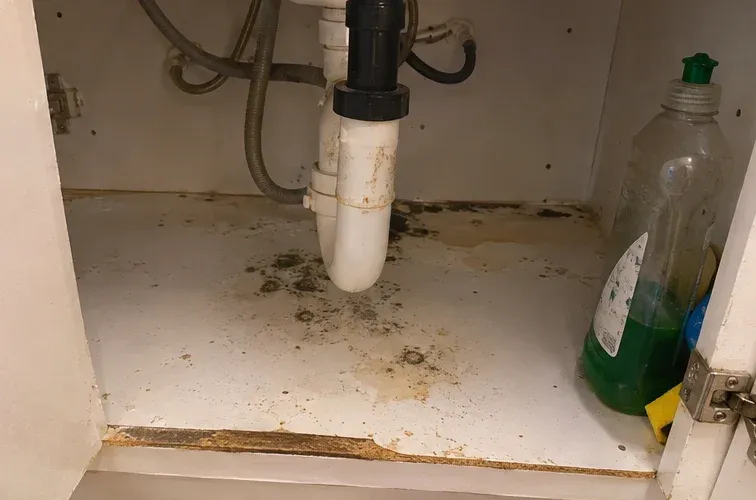
Under a sink, dark mold spots on the cabinet floor around a white drain pipe, a green dish soap bottle at the right

05 / Good to know

What shortens a job

  • The water source is found and fixed before the scope is written.
  • The affected area is small and the material is non-porous.
  • The attic and the air handler are accessible.
  • The scope is written clearly, so the work is not waiting for approvals mid-job.
  • Clearance criteria are agreed before the work starts.

If the clearance standard is decided after the work, a failed test becomes an argument. If it is decided first, it becomes a checklist item.

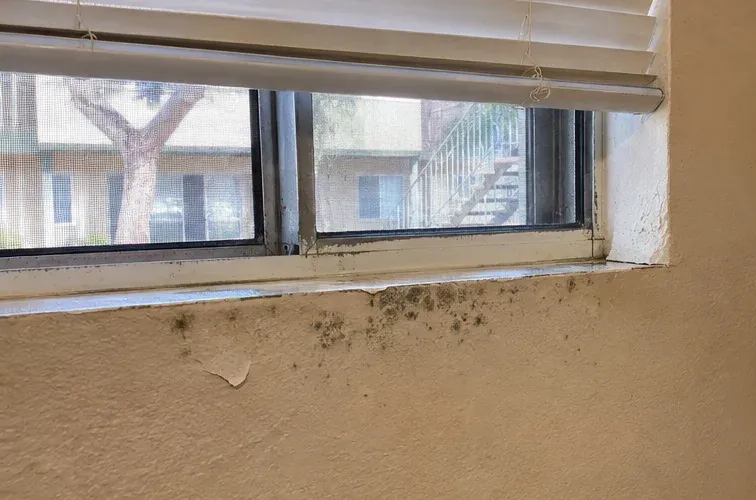
Metal-framed window with peeling paint and dark mold spots on the wall below it, apartment balconies seen through the glass

06 / 7 steps

A realistic sequence for a bathroom ceiling

This is the order, with the waiting points named rather than given invented durations.

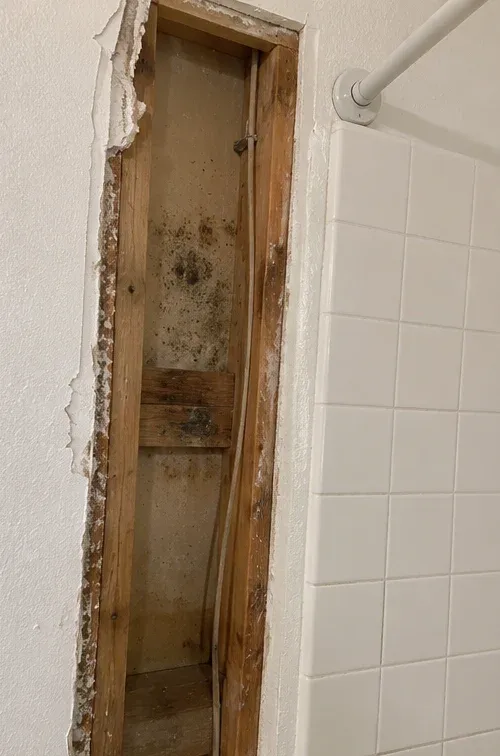
Opened shower wall cavity with wood framing and dark mold above a white tile surround
  1. First visit

    The inspector reads moisture at the ceiling and in the attic, checks the fan termination, and writes a scope. If the fan vents into the attic, that is the source.
  2. Repair the source

    The duct is extended through the roof or gable. This may happen before or during containment, depending on access.
  3. Containment

    Plastic and a zipper door go up, with negative air. The rest of the house stays usable.
  4. Removal

    The wet drywall and any insulation come out. The joists are HEPA vacuumed and wiped.
  5. Drying

    Air movers and a dehumidifier run in the cavity. The meter is checked until the framing reads dry.
  6. Clearance

    A visual inspection, plus air sampling if the scope calls for it.
  7. Reconstruction

    New drywall, tape, texture and paint. This is usually a separate trade and a separate line on the invoice.

Steps 1 through 4 can happen in a single visit on a small job. Steps 5 through 7 are where the calendar stretches, and none can be skipped without risking a repeat.

07 / Good to know

Clearance and reconstruction

Clearance is the gate most often misunderstood. It is not a final walkthrough with the contractor who did the work. It is a check against criteria: no visible growth or dust, and where specified, air samples compared with an outdoor control.

The independent clearance testing guide explains who can perform the check and what it covers. On the schedule, clearance adds a visit and, if samples are taken, the lab turnaround. Reconstruction cannot start until it passes.

08 / Good to know

If the job stalls

A job that stops halfway can be worse than one that never started. Containment left up, a cavity left open and a dehumidifier pulled early all leave the assembly vulnerable.

A stalled job usually sits at one of the gates:

  • The water source is not fixed.
  • The cavity does not read dry yet.
  • Clearance has not been done.
  • An approval is waiting on someone.

Which of these applies identifies the gate. In Tempe rentals, the gate can be approval: the tenant reported it, the manager ordered the work, and the owner has to sign. The rental mold guide covers that chain.

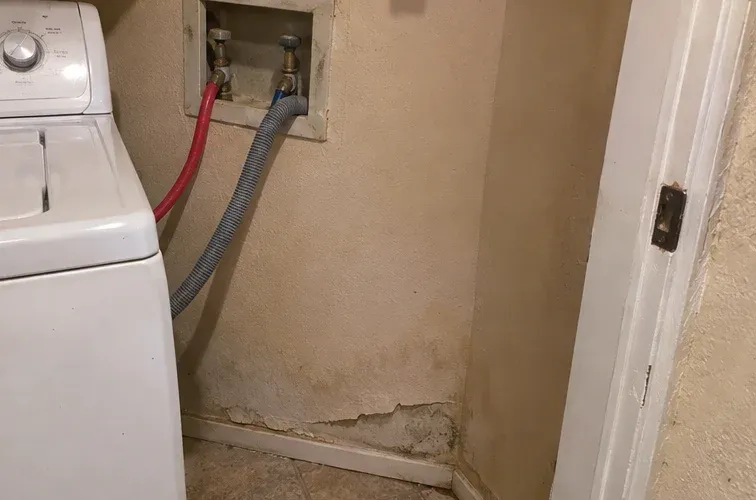
Laundry hookup with red and gray hoses behind a white washer, brown water stains and dark spots on the wall below

10 / 5 questions

Frequently asked questions

Still have a question?

Send the form. Someone from our team will call you back soon.

Get a call back

Q.01

How long does mold remediation take?

There is no fixed number. The work runs through assessment, containment, removal, cleaning, drying, clearance and reconstruction, and each stage has to finish before the next starts. The one published clock is the EPA's 24 to 48 hour window for drying water-damaged material.

Q.02

Can remediation be done in one day?

Removal on a small, accessible patch can be a single visit. Drying still has to be confirmed with a meter, clearance still has to happen, and reconstruction is separate.

Q.03

Why does drying take longer than removal?

Removal is mechanical and ends when the material is out. Drying depends on the material, the humidity and the air movement, and it ends only when a meter says the assembly is dry. Plaster and dense wood take longer than drywall.

Q.04

Does monsoon season slow the work down?

It can. From June 15 to September 30, outdoor humidity is higher, so drying equipment has more work to do and roof leaks are more likely to reappear. A scope written in May may need more drying capacity in July.

Q.05

Can I stay in the house during remediation?

Often yes, when the work is contained to one room and negative air is running. The scope usually describes how the containment is built, which rooms stay usable and how the work area is entered.

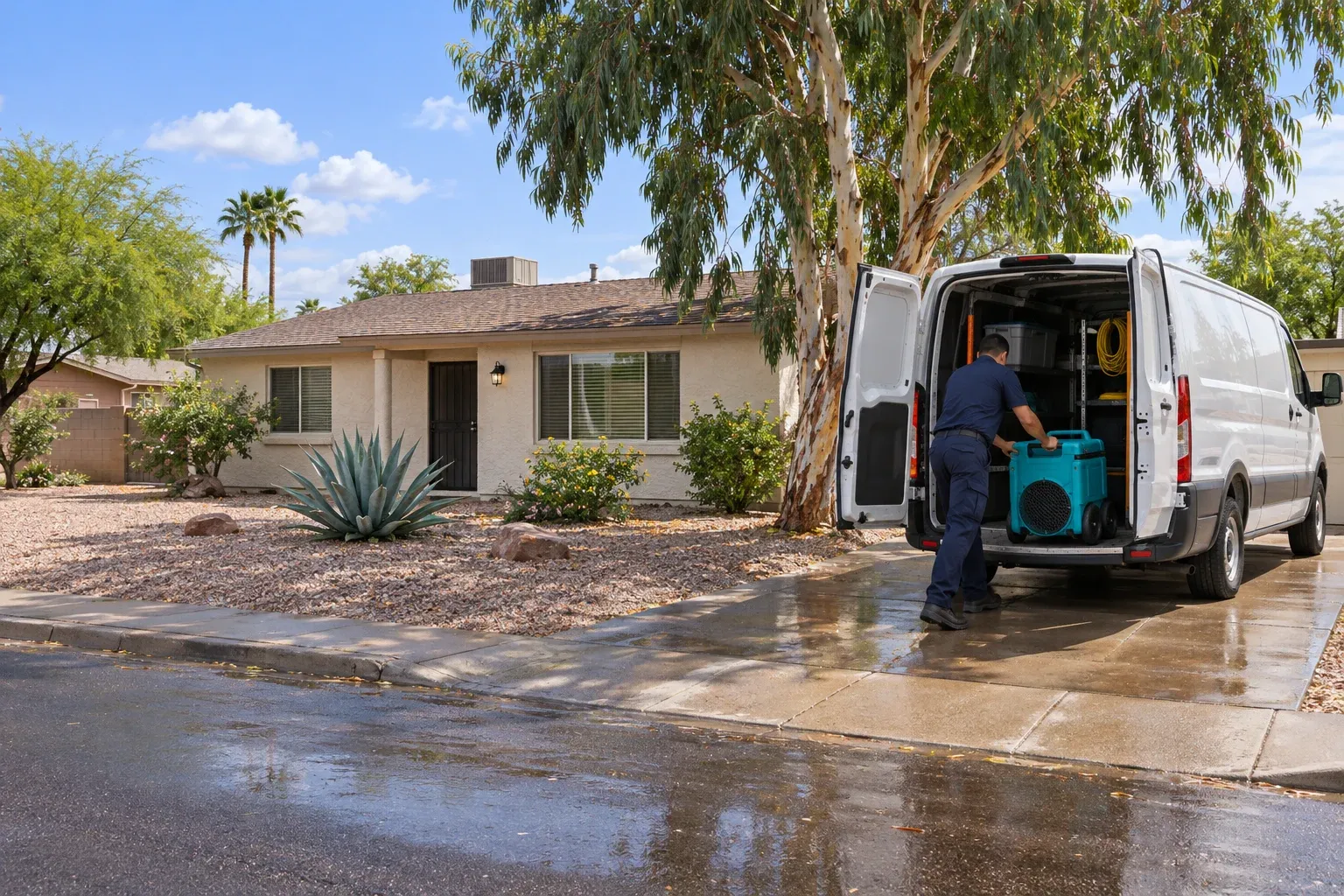
White cargo van with its rear doors open in a driveway, a man in navy work clothes wheeling a teal air machine out in front of a ranch house

Form open 24/7

Get a call back about mold in your home

Send the form. Someone from our team will call you back soon.

Mold in the house?Get a call back

Before you go: want a call back?

Send the request form and someone will call you back about the mold.

Get a call back

Get a call back

Send the form and someone from our team will call you back.