Q.01
Who should perform clearance testing?
The remediation company or a separate tester, as the scope names. A separate tester has no financial interest in the remediation outcome and is not bidding the reconstruction.
Tempe guide · 5 min read
A clearance test confirms the space is clean before rebuild.
Clearance is the check that ends a remediation. It records whether the work area met the criteria set before the work started.
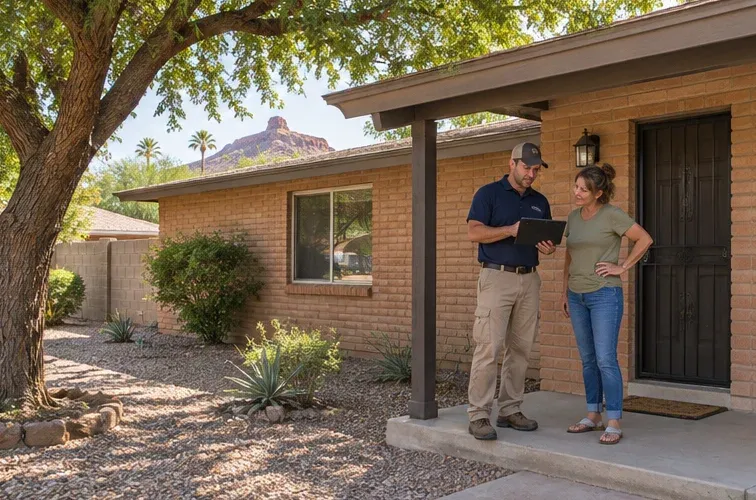
Independent clearance testing in Tempe is the step that decides whether a remediated space can be closed up. A tester inspects the work area, confirms that surfaces are clean and dry, and where the scope calls for it, takes air samples and compares them with outdoor air. The result is a report that says the space met the agreed criteria, or it does not.
The visit can be done by the remediation company or by a separate tester, and the report names who performed it.
01 / Safety
Clearance is a project check. It answers one question: does this space meet the criteria agreed before the work started?
It is not a diagnosis, and it is not a health clearance. EPA says no federal limits have been set for mold or mold spores, so no report can declare a building healthy. What a report can do is record that no visible growth or dust remained, that moisture readings were dry, and that air sample results were consistent with the outdoor control.
That distinction keeps the report useful. A clearance document states conditions and numbers and nothing beyond what was measured.
02 / Good to know
Two arrangements are common. In one, the remediation company checks its own work. In the other, a separate tester performs the visit and writes the report. A separate tester usually has no financial interest in the remediation outcome, is not bidding the reconstruction and is paid a fee that does not depend on the result. Which arrangement applies is set in the scope before the work starts.
03 / Good to know
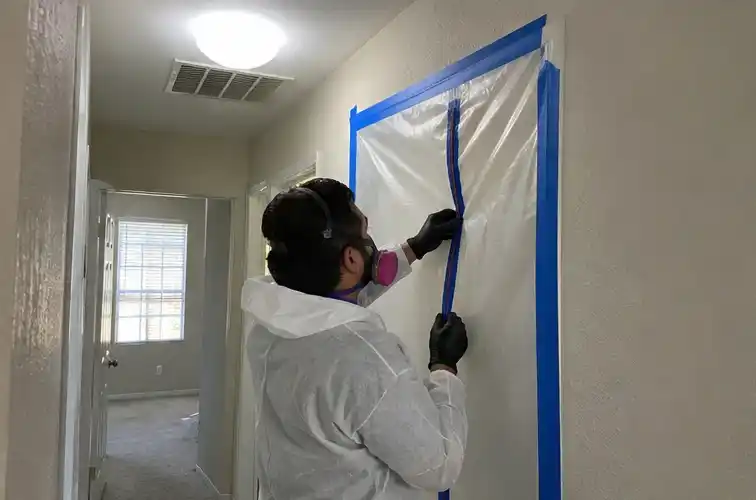
Visual inspection. No visible growth on structural surfaces, no dust on ledges and framing, and no debris left in the cavity. The containment should still be in place when the inspection begins, so the tester sees the work area as the removal left it.
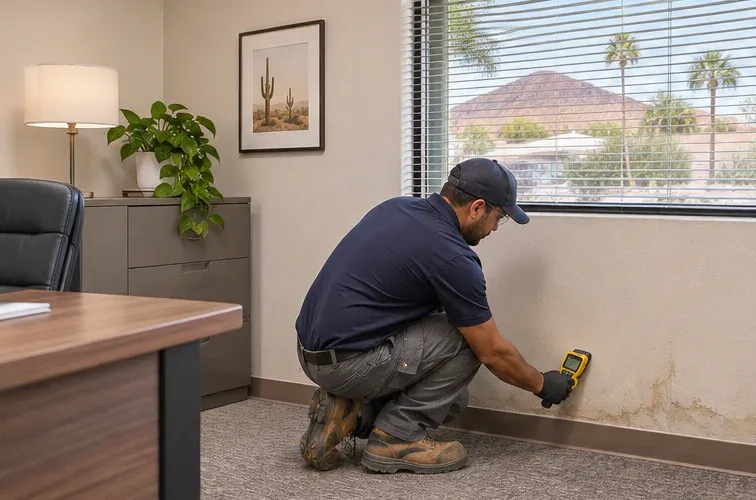
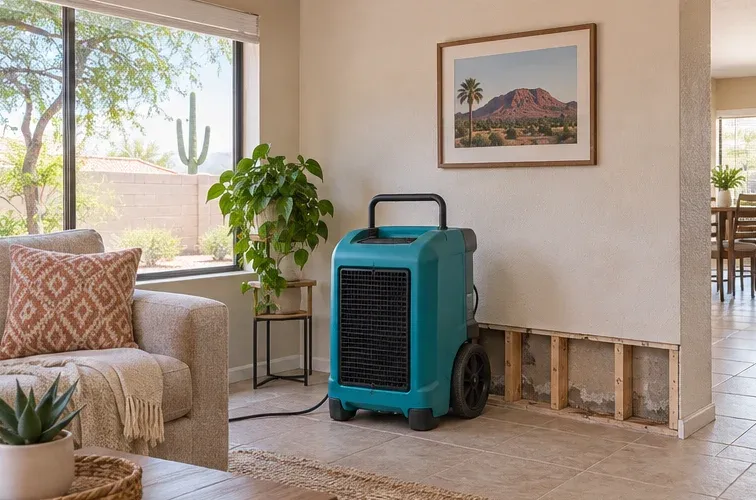
Moisture readings. The framing and the substrate should read dry. Clearance and drying are related but separate: drying is the process, and the meter reading is the evidence. A space that passes visually but still reads wet will grow again behind the new drywall.
Air sampling, where specified. Samples inside the work area and in an adjacent room, plus an outdoor control taken at the same time. The lab reports counts by genus, and the report interprets them against the control.
A written report. Sample locations, the lab result, the outdoor control, the moisture readings, photos and a clear statement of pass or fail against the agreed criteria.
04 / Good to know
Clearance is usually set before containment goes up, not after the work is finished. The scope lists these items.
| Item | What is set | Why it matters |
|---|---|---|
| Who tests | The remediation company or a separate tester | Named in the scope and on the report |
| When | After cleaning and drying, before reconstruction | Catches problems while the cavity is open |
| How many samples | Count and locations, plus an outdoor control | Prevents a vague result |
| What passes | The numeric and visual criteria | Records the standard the result is read against |
| What happens on a fail | Who re-cleans, who retests, who pays | Keeps the job moving |
A common project criterion is indoor counts that are comparable to or below the outdoor control, combined with a clean visual inspection and dry readings. It is a convention, not a regulation, which is why it is written into the scope.
05 / Good to know
A passing report is boring, and that is the point. It states the date, the rooms and cavities inspected, the moisture readings, the sample locations, the lab counts, the outdoor control and the conclusion.
It does not say the building is healthy. It does not promise that growth will never return. It says the work area met the criteria on the day of the inspection, which is what a clearance document can honestly claim.
06 / Good to know
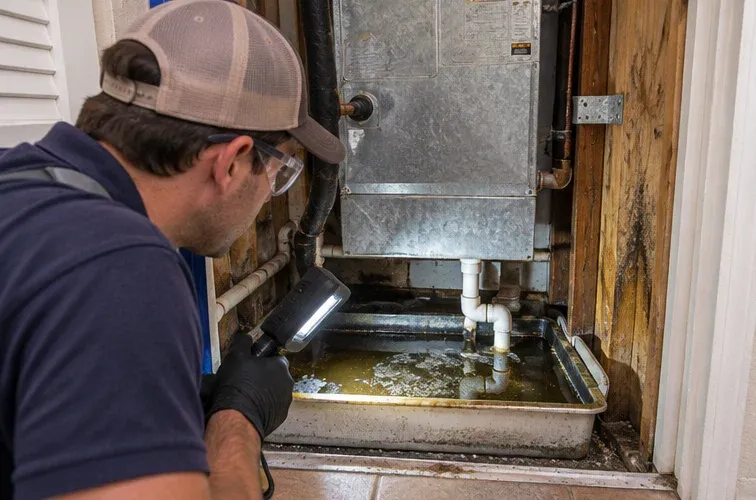
A failed clearance is information, not a disaster. It usually means cleaning was incomplete, the assembly was still wet, or the containment was breached.
Fix the cause and retest. The scope usually says who pays, because the answer depends on the cause. If the cavity was closed while wet, the problem usually traces back to the work. If a new leak started after the work, it traces to the building.
Reconstruction waits for a passing clearance. New drywall over a contaminated or wet cavity hides the problem and doubles the eventual cost. The remediation timeline explains why clearance is a gate rather than a formality.
07 / Costs
National ranges put mold testing alone at $250 to $500 and a full inspection at $300 to $1,000 (national cost guides). A clearance visit is narrower than a full inspection: one work area, a visual pass, moisture readings and a small number of samples. It can land at the lower end of those ranges, and the lab fee per sample is separate.
Compared with reopening a finished wall, the test is small.
08 / Local risk
In Tempe, 57.7 percent of occupied homes are rented. A clearance report is one of the few documents in a rental mold file that a landlord, a tenant and a property manager can all read the same way. It records conditions on a date without assigning blame.
For a sale, a clearance report answers the question a buyer will ask: was the work checked? The selling a home with mold guide covers the disclosure side, and the rental mold guide covers the written request.
09 / Safety
A hardware store dish placed in a room is not clearance. It has no outdoor control, no defined sample volume and no location plan. It can show that spores are present, and they almost always are. It cannot show that a work area met a criterion.
A visual walkthrough with no moisture readings is one part of the check, not the whole check.
11 / 5 questions
Q.01
The remediation company or a separate tester, as the scope names. A separate tester has no financial interest in the remediation outcome and is not bidding the reconstruction.
Q.02
It is commonly written into a scope, and it is a way to confirm the work area met the agreed criteria before the wall is closed.
Q.03
National ranges put testing alone at $250 to $500 and a full inspection at $300 to $1,000. A clearance visit on one work area can sit at the lower end, with lab fees per sample on top.
Q.04
Yes. Air sample counts can be elevated by dust, by a cavity that is still damp, or by containment that was breached. A fail means the cause needs to be found and corrected before reconstruction.
Q.05
No. It means the work area met the criteria on the day of the test. If a new leak starts or humidity stays high, growth can return. The clearance is a check on the work, not a permanent condition of the building.
Form open 24/7
Get a call back about mold in your home
Send the form. Someone from our team will call you back soon.