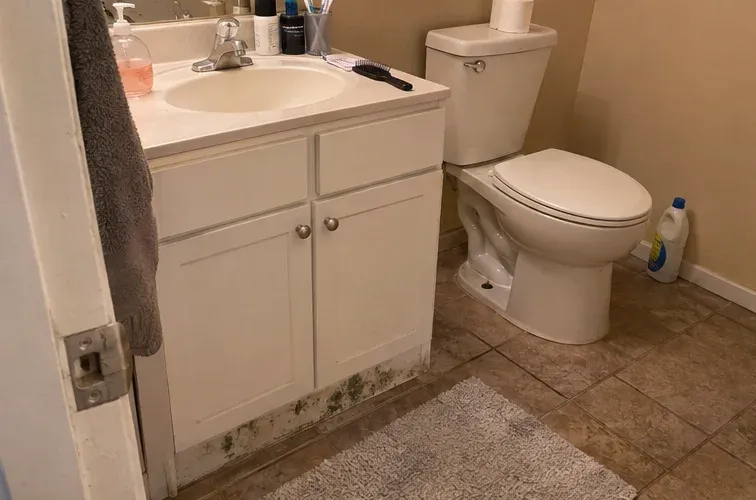
Bleach. The EPA does not recommend it as a routine part of mold cleanup and points to detergent and water for hard surfaces such as grout, glass or glazed tile. On drywall, ceiling tile, wood and fabric it adds water to a material that is already wet, and it does not penetrate the paper or the fibers. A bleached patch on drywall is still a wet patch.
Vinegar. The acid can slow surface growth on some materials. It evaporates, leaves no residue, and does nothing about moisture in the assembly. The smell also hides the musty signal you need to find the source.
Hydrogen peroxide. Similar to vinegar in effect and limits. Useful on a small hard surface, not a wall cavity.
Baking soda. It absorbs odor and is often mixed into a paste. It does not remove growth from a porous material, and a thick paste can hold moisture against the surface.
Essential oils and tea tree sprays. They smell strong and can make a room feel treated. There is no residual protection once the scent fades, and the water source is untouched.
Commercial fungicides and encapsulants. A labeled product can be appropriate on a specific surface after cleaning. An encapsulant seals growth in place. Neither removes the material, and a coating over a wet assembly traps the moisture that started the problem.
Ozone generators and UV lamps. These treat air or a surface the light can reach. They do not clean a wall cavity, and an ozone device is not a substitute for removing the source. The growth inside the assembly is unaffected.