Q.01
Does Arizona have mold?
Yes. The desert is dry, but monsoon storms, AC condensate, plumbing leaks and slab leaks all supply enough water for growth indoors. Tempe also has a large share of older homes, which have more of those failure points.

Tempe guide · 6 min read
Yes, Arizona has mold. Monsoon leaks, AC condensate, swamp coolers and slab leaks drive it, month by month.
Arizona has mold, and Tempe has the conditions that feed it. The dry air changes the timing and the hiding places, not whether growth happens.
Yes, Arizona has mold. Tempe has the conditions that feed it: a monsoon season that runs from June 15 to September 30, air conditioners that produce condensate all summer, and a housing stock where 41.2 percent of homes were built before 1980. The desert reduces how often a roof stays wet for days. It does not remove the water that comes from plumbing, cooling equipment and storm leaks, and it does not remove the mold that follows.
The misunderstanding comes from the outdoor air. Arizona is dry, and dry air dries surfaces fast. But mold grows indoors, in cavities and behind cabinets, where outdoor humidity matters less than a slow drip and a closed door. A Tempe house can have bone dry air outside and a wet wall cavity behind the shower for a month.
01 / Local risk
Three local facts work against the dry climate story.
The monsoon is short and intense. From June 15 to September 30, storms can drop a lot of rain in a few hours. A roof flashing that handles a light winter rain can fail under that volume, and the leak often starts inside the wall or above the ceiling where nobody sees it.
Cooling equipment makes water. An air conditioner pulls moisture out of the air and sends it down a condensate line. A house that runs the AC for five months makes a steady stream of water the whole time. When the line clogs, the water goes into the pan, then the closet, then the ceiling below.
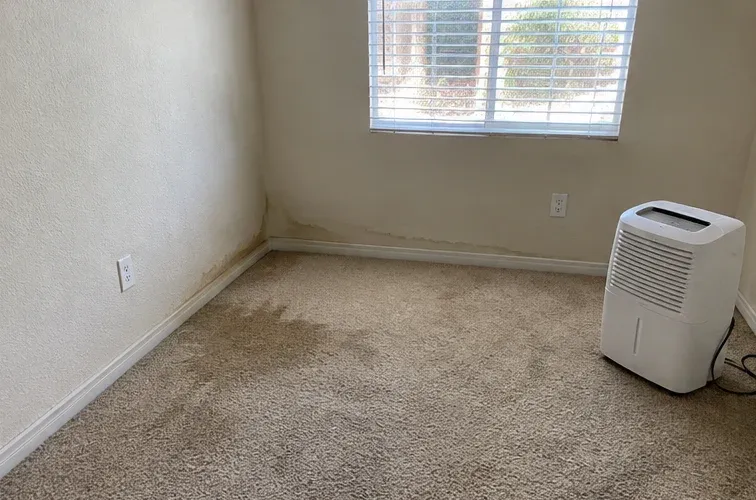
Evaporation hides the evidence. A puddle on a tile floor can be gone in an hour. The drywall behind the baseboard stays wet for days. In a humid climate, water announces itself. In Tempe, it often disappears from view before anyone looks.
That is why the local question is not whether mold can grow. It is where the water is sitting long enough to feed it.
02 / Sources
| Source | Season | Where it shows |
|---|---|---|
| Monsoon roof or window leak | June to September | Ceiling rings, attic sheathing, window sills |
| AC condensate and air handler | April to October | Closet floor, drain pan, ceiling below the closet |
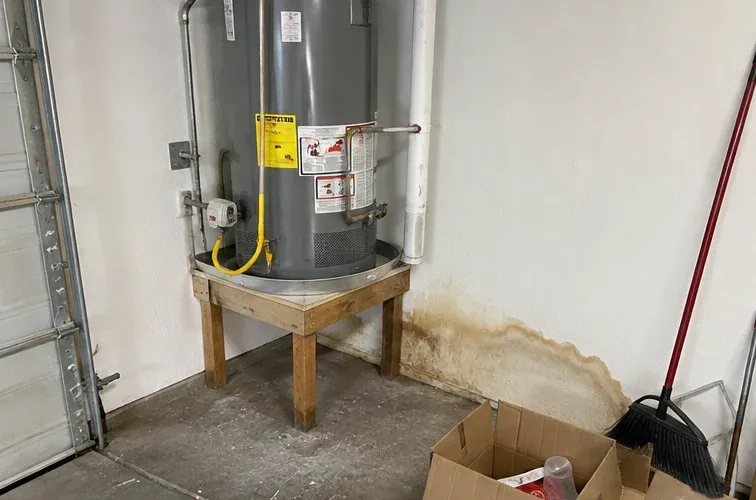
| Plumbing supply or drain leak | Any month | Cabinet floors, baseboards, wall cavities |
| Slab leak under the floor | Any month | Warm floor spot, wicking baseboards, high water bill |
Evaporative coolers belong on the list as well. A swamp cooler adds moisture to the air by design, and a unit that runs with a stuck float or a leaking pan wets the roof and the ceiling below it. A house that switched from a cooler to an AC may still have the old roof penetration and ductwork, which can leak in either direction.
03 / Good to know
March and April. The first hot weeks start the AC. A system that sat idle since October pushes dust and sometimes water through the drain line. A musty smell at the first run is worth a look at the pan.
May and June. The dry heat builds, the AC runs all day, and the condensate line works hardest. A partial clog that dripped slowly in spring can overflow now.
July and August. Monsoon. Roof leaks, window leaks, stucco cracks and patio door thresholds. Water enters during a storm and dries before the homeowner comes home.
September. The last storms and the first cool nights. This is a good month to inspect a roof and an attic, because the wet season has just ended and the damage is fresh.
October through February. Cooler, drier, and quieter. Plumbing leaks and slab leaks do not care about the season, and a heater that runs for the first time can show a roof or ceiling stain that was there all summer.
04 / Mold
Mold needs moisture, and most species also need a food source and a temperature range that a Tempe house provides year round. What the desert changes is the supply of water, not the ability to use it.
Three local patterns follow:
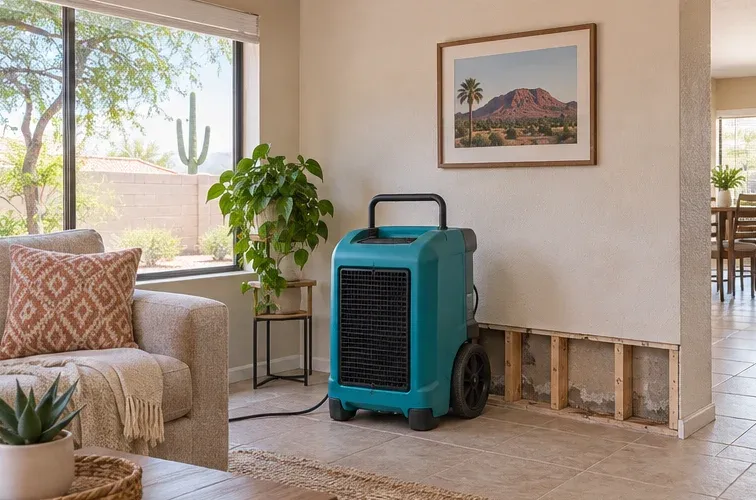
That last point is why a visual walkthrough alone misses so much in this climate. A moisture meter on the baseboard and the closet floor tells you more than the paint does.
05 / Good to know
EPA guidance keeps indoor humidity below 60 percent, ideally 30 to 50 percent. In Tempe, that is usually an air conditioning question, not a humidifier question. A house with the AC off and the windows shut in July can climb above 60 percent.
06 / Mold
A test can confirm that growth is mold and identify the genus. It cannot show a pass or fail against a limit, because EPA says no federal limits have been set for mold or mold spores. EPA guidance says sampling is usually unnecessary when growth is visible.
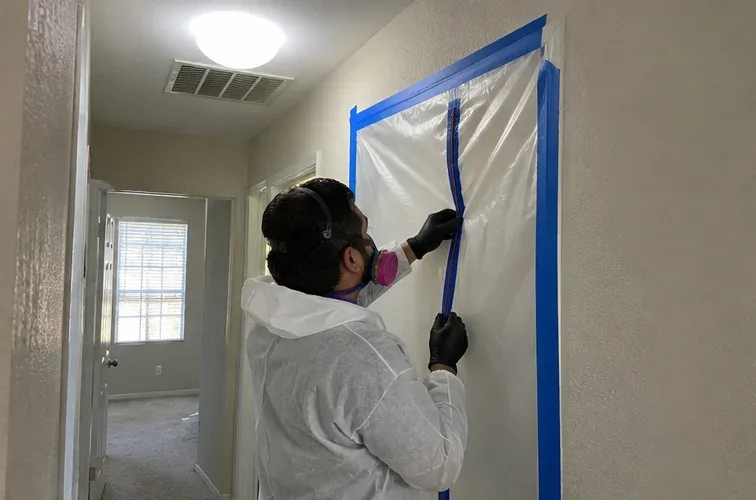
The useful test in a Tempe home is often a moisture inspection: find the water, map the extent, and decide what has to be removed. Sampling makes more sense when the growth is hidden, when a landlord and tenant disagree about whether there is growth at all, or when a sale requires documentation. The mold testing page covers the difference.
07 / Local risk
Tempe rents 57.7 percent of its occupied homes, and 41.8 percent of homes sit in buildings with 5 or more units. In a rental, the person who sees the growth may not be the person who authorizes the repair, and the delay is where a small leak becomes a room.
A tenant who reports water in writing, with photos and a date, shortens that delay. A landlord who checks the AC pan and the water heater closet at turnover can catch much of it before a tenant moves in.
The monsoon roof leak guide covers what to do in the week after a storm. The AC drain line guide covers the condensate problem that runs from April to October in many Tempe homes.
09 / 6 questions
Q.01
Yes. The desert is dry, but monsoon storms, AC condensate, plumbing leaks and slab leaks all supply enough water for growth indoors. Tempe also has a large share of older homes, which have more of those failure points.
Q.02
Because the water is local, not atmospheric. A wet wall cavity, a clogged condensate line or a leaky roof keeps the material wet for days, and the outdoor humidity does not dry the inside of a wall.
Q.03
Summer has the monsoon and the heaviest AC run, so many water problems start between June and September. Winter is quieter, but plumbing and slab leaks do not follow the season.
Q.04
It causes more roof and window leaks, and those leaks often go unnoticed in an empty room or a closed attic. The rain itself is not the problem. The water that stays in the structure is.
Q.05
Yes. The AC lowers humidity when it runs, but a clogged drain line, a wet closet or a plumbing leak can keep a material wet regardless of the indoor air. Cooling does not fix a water source.
Q.06
Usually not when the growth is visible. Sampling can identify the genus but has no federal limit to compare against, because EPA says none has been set. A moisture inspection is the more useful first step.
Form open 24/7
Get a call back about mold in your home
Send the form. Someone from our team will call you back soon.